avatarErika Burkhalter

Free AI web copilot to create summaries, insights and extended knowledge, download it at here

2247

Abstract

org/wiki/Asclepias">Milkweed</a> for the <a href="https://en.wikipedia.org/wiki/Monarch_butterfly">Monarch Butterflies.</a> They migrate up from Mexico each summer and, when they arrive, they need to lay their eggs on Milkweed. It is the only plant that the baby caterpillars can eat. There are several varieties of Milkweed, many native to only one region of the United States.</p><figure id="bba3"><img src="https://cdn-images-1.readmedium.com/v2/resize:fit:800/1*iQyWFK-JYkS-KVUqzpJRfQ.jpeg"><figcaption>Purple Milkweed. Photo ©Erika Burkhalter.</figcaption></figure><p id="f722">This orange variety is Oriental Milkweed. It is not native to Southern California, where I live, but it is often grown in gardens here. Most gardeners, however, do not realize that <a href="https://monarchjointventure.org/faq/when-to-cut-back-tropical-milkweed">Oriental Milkweed can, over the winter months, harbor bacteria that can kill the monarchs</a>. It is quite important to cut the Oriental Milkweed back almost to the ground each November.</p><figure id="5a15"><img src="https://cdn-images-1.readmedium.com/v2/resize:fit:800/1*tY3nHoxMSbGIiRTHacmnBA.jpeg"><figcaption>Oriental Milkweed. Photo ©Erika Burkhalter.</figcaption></figure><p id="4ffb">The curling stamen on this coneflower were just glowing in the late-afternoon sun. I often think that flowers are prettier in photographs when they are just beginning to show the signs of age than when they are brand-new.</p><figure id="536e"><img src="https://cdn-images-1.readmedium.com/v2/resize:fit:800/1*x0sfXXTiSFPGosmTgj0pqw.jpeg"><figcaption>Curling Stamens. Photo ©Erika Burkhalter.</figcaption></figure><p id="7193">My <a href="https://hort.extension.wisc.edu/articles/egyptian-walking-onions/">Egyptian Walking Onions</a> have been tromping around my garden for over twenty years now. Each spring and summer, they develop a bulb at the end of a thin stalk. The bulb gets to be too heavy for the stalk to hold up, and it drops to the ground, “walking” a foot or so away from where it sprouted.</p><figure id="46fa"><img src="https://cdn-images-1.readmedium.com/v2/resize:fit:800/1*kHahyu7NaUncuUGKQI0UGA.jpeg"><figcaption>Egyptian Walking Onion. Photo ©Erika Burkhalter.</figcaption></figure><p id="1

Options

89e">I hope that you enjoyed this “macro-journey” through my backyard. Perhaps it has inspired you to step into another realm for a few moments.</p><p id="5b86"><i>Erika Burkhalter is a yogi, neurophilosopher, cat-mom, photographer, and lover of travel and nature, spreading her love and amazement for Mother Earth’s glories, one photo, poem or story at a time. (MS Neuropsychology, MA Yoga Studies).</i></p><p id="c9cd">You might also enjoy:</p><div id="8e7e" class="link-block"> <a href="https://readmedium.com/oh-little-bee-how-i-love-your-energy-f0aadccc4b7a"> <div> <div> <h2>Oh Little Bee, How I Love your Energy</h2> <div><h3>Electrostatic fields and pollination</h3></div> <div><p>medium.com</p></div> </div> <div> <div style="background-image: url(https://miro.readmedium.com/v2/resize:fit:320/1*OrVLzCRFZ_1iBUW4VMjhRQ.jpeg)"></div> </div> </div> </a> </div><div id="c9db" class="link-block"> <a href="https://readmedium.com/the-tail-of-a-whale-cd3e551d4a45"> <div> <div> <h2>The Tail of a Whale</h2> <div><h3>The moment of a Humpback Whale “fluke”</h3></div> <div><p>medium.com</p></div> </div> <div> <div style="background-image: url(https://miro.readmedium.com/v2/resize:fit:320/1*qj6QIawRNhH84reKzFQZxA.jpeg)"></div> </div> </div> </a> </div><div id="3ab6" class="link-block"> <a href="https://readmedium.com/the-world-of-the-small-cb5e0820b208"> <div> <div> <h2>The World of the Small</h2> <div><h3>The wonders of macrophotography</h3></div> <div><p>medium.com</p></div> </div> <div> <div style="background-image: url(https://miro.readmedium.com/v2/resize:fit:320/1*XGFVBI-8UuJJcHO4xcusxQ.jpeg)"></div> </div> </div> </a> </div><p id="c5ad">Photos and story ©Erika Burkhalter. All rights reserved.</p></article></body>

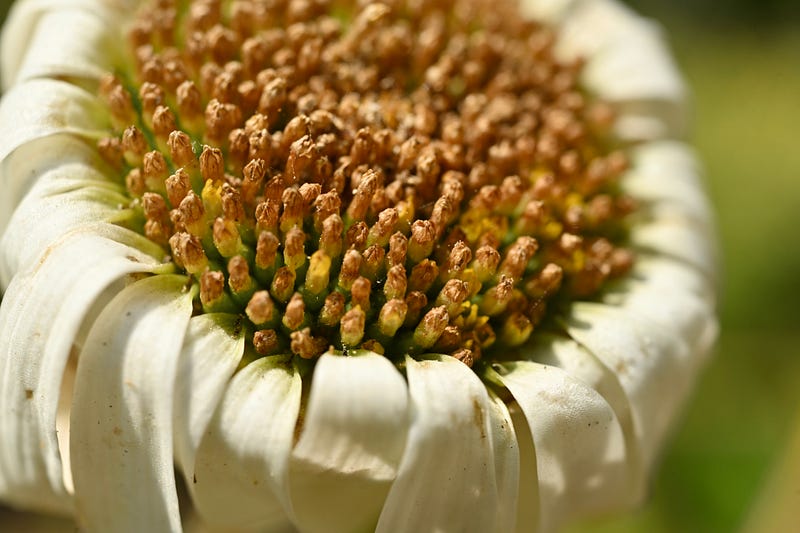
Dessicated Daisy Detail. Photo ©Erika Burkhalter.

Photography, Nature

Macrophotography in My Own Backyard

There’s no place like home

I love macrophotography (photographing the world of the very small) because it’s like getting a glimpse into nature through the eyes of a bee, a butterfly or a bird. So often, we get so stuck in our own perceptual patterns that we forget that we are not the center of the universe. Macrophotography allows me to shift my point of view for a while.

To the bee, below, this scabia flower must seem as big as a house. I loved the detail in his wings and the sparkle in his eyes. I used a 50 mm macro lens and a Nikon z7II for all of the photos in this article.
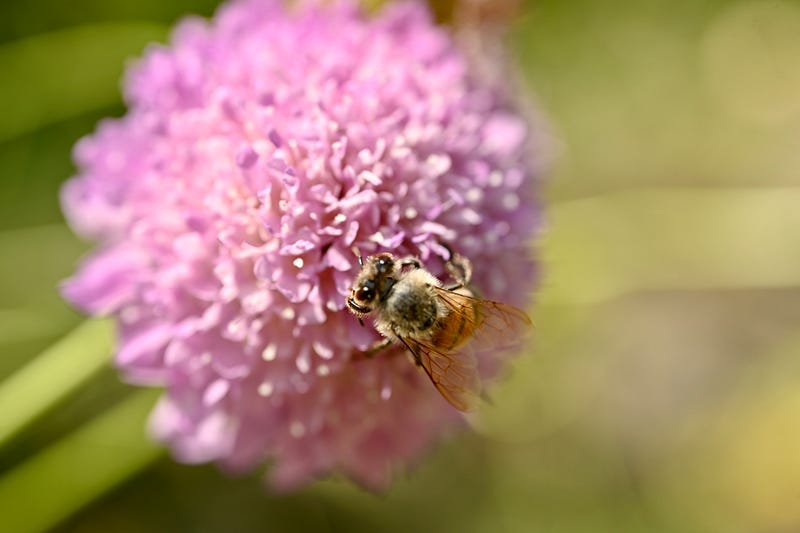
Bee on Scabia. Photo ©Erika Burkhalter.

A macro lens is a “fixed” lens, meaning that there is no zooming in or out. And the plane of what is in focus is quite shallow. You might notice in the “Glowing Hollyhock” below, that the center of the flower, where the pollen-encrusted stamen resides, as well as some of the veining in the petals, is in sharp focus, but the other planes are blurred.
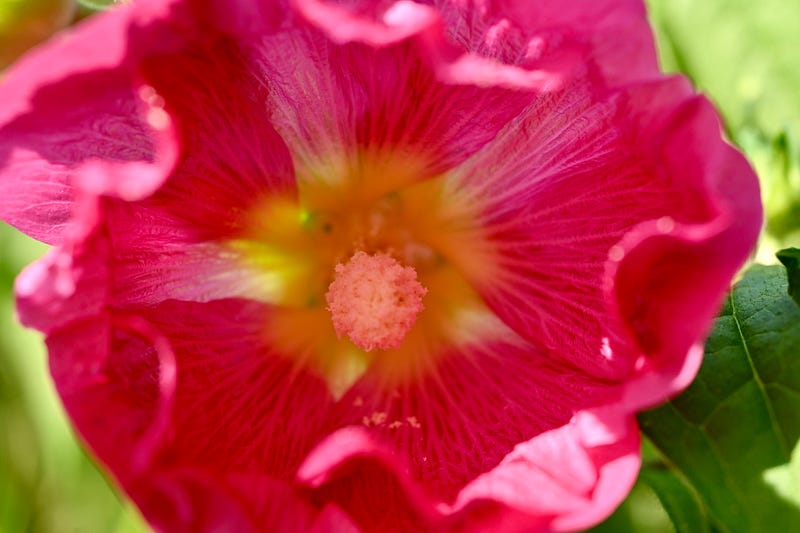
Glowing Hollyhock. Photo ©Erika Burkhalter.

I grow several varieties of Dahlias in my yard. You might recognize this one from “The World of the Small.” It was a tightly-fisted bud just last week. But, in a few short days, it has unfurled into wildly-striped tubular petals.
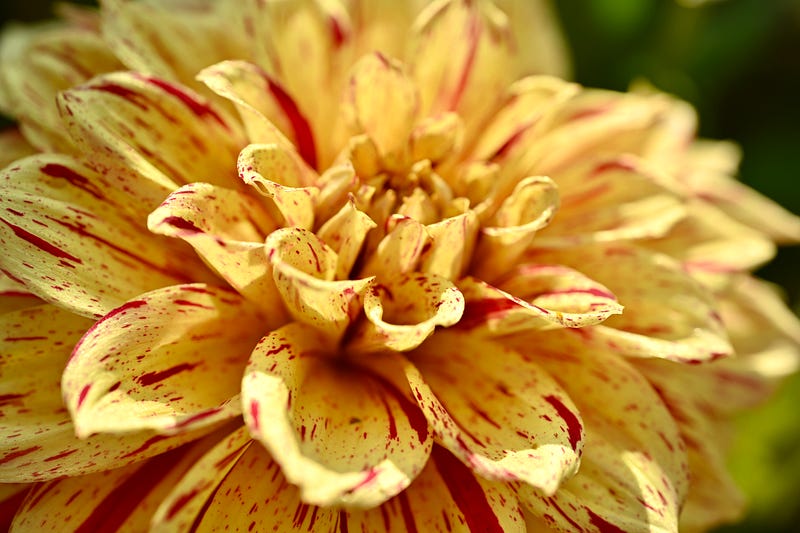
Tiger Strip Dahlia. Photo ©Erika Burkhalter.

I also grow Milkweed for the Monarch Butterflies. They migrate up from Mexico each summer and, when they arrive, they need to lay their eggs on Milkweed. It is the only plant that the baby caterpillars can eat. There are several varieties of Milkweed, many native to only one region of the United States.
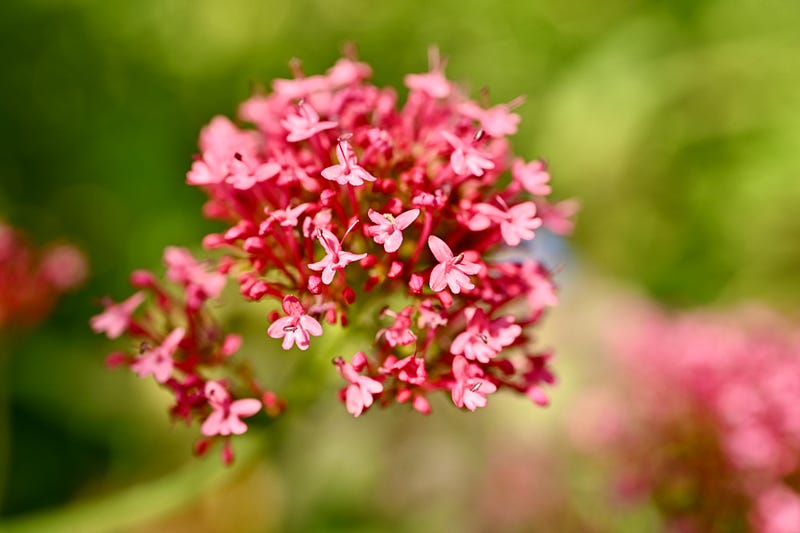
Purple Milkweed. Photo ©Erika Burkhalter.

This orange variety is Oriental Milkweed. It is not native to Southern California, where I live, but it is often grown in gardens here. Most gardeners, however, do not realize that Oriental Milkweed can, over the winter months, harbor bacteria that can kill the monarchs. It is quite important to cut the Oriental Milkweed back almost to the ground each November.
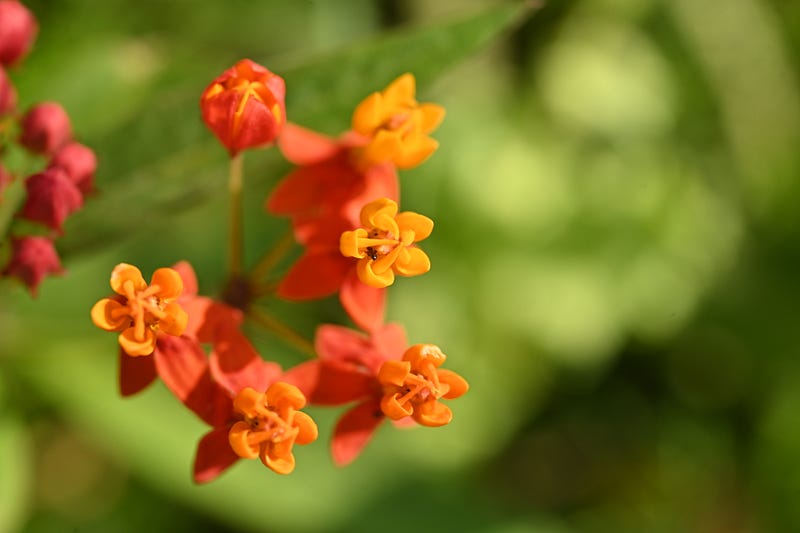
Oriental Milkweed. Photo ©Erika Burkhalter.

The curling stamen on this coneflower were just glowing in the late-afternoon sun. I often think that flowers are prettier in photographs when they are just beginning to show the signs of age than when they are brand-new.
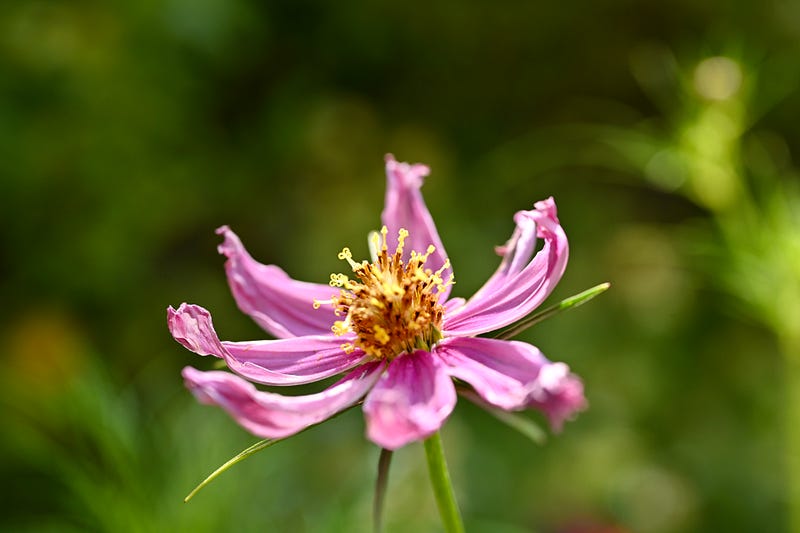
Curling Stamens. Photo ©Erika Burkhalter.

My Egyptian Walking Onions have been tromping around my garden for over twenty years now. Each spring and summer, they develop a bulb at the end of a thin stalk. The bulb gets to be too heavy for the stalk to hold up, and it drops to the ground, “walking” a foot or so away from where it sprouted.
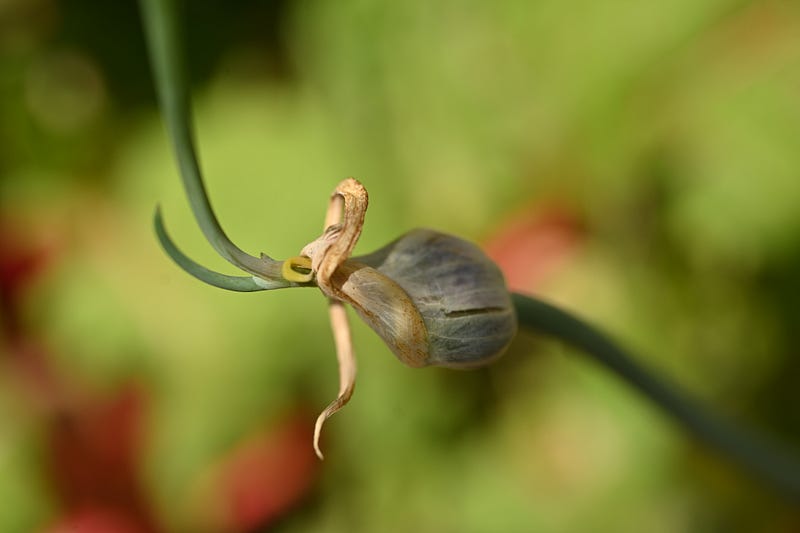
Egyptian Walking Onion. Photo ©Erika Burkhalter.

I hope that you enjoyed this “macro-journey” through my backyard. Perhaps it has inspired you to step into another realm for a few moments.

Erika Burkhalter is a yogi, neurophilosopher, cat-mom, photographer, and lover of travel and nature, spreading her love and amazement for Mother Earth’s glories, one photo, poem or story at a time. (MS Neuropsychology, MA Yoga Studies).

You might also enjoy:

Photos and story ©Erika Burkhalter. All rights reserved.

Photography
Outdoors
Photography Tips
Gardening
Flowers
Recommended from ReadMedium