
Nature, Photography, Science
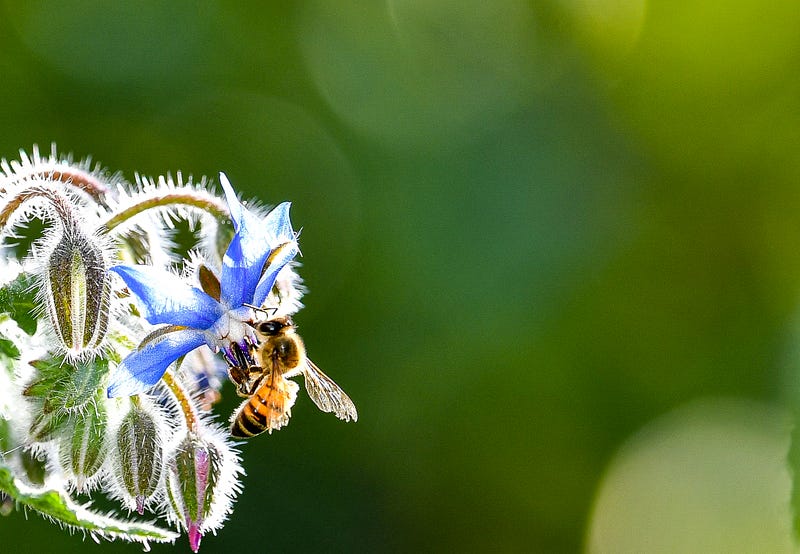
Oh Little Bee, How I Love your Energy
Electrostatic fields and pollination
Have you ever shuffled across a thick carpet, then reached out to pet your cat and been startled (and scared away the cat!) by a jolt of static electricity? We’ve all felt, or even seen, electrostatic sparks when we’ve pulled a shirt off over our heads or touched a balloon when the weather’s been dry for a few days.
The small shock you’ve felt is caused by your body equalizing the voltage between what you’ve just touched and the ground. And we’re not the only creatures who regularly encounter such jolts.
Flowers, like anything that moves, are surrounded by electric fields. These forces are small, small enough that you would likely never feel them when you touch them.
But bees do sense these charges. And they can tell by the charge, or lack thereof, whether a flower has already been pollinated by another bee.
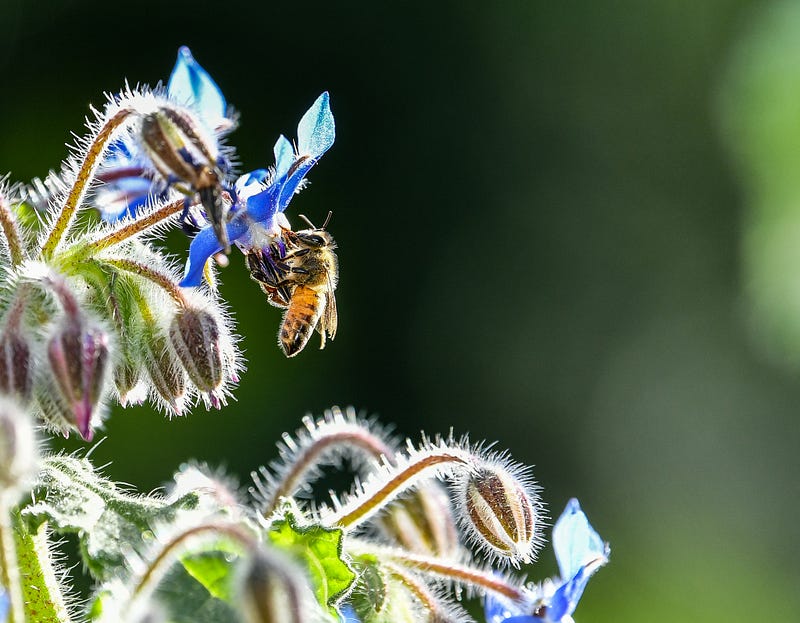
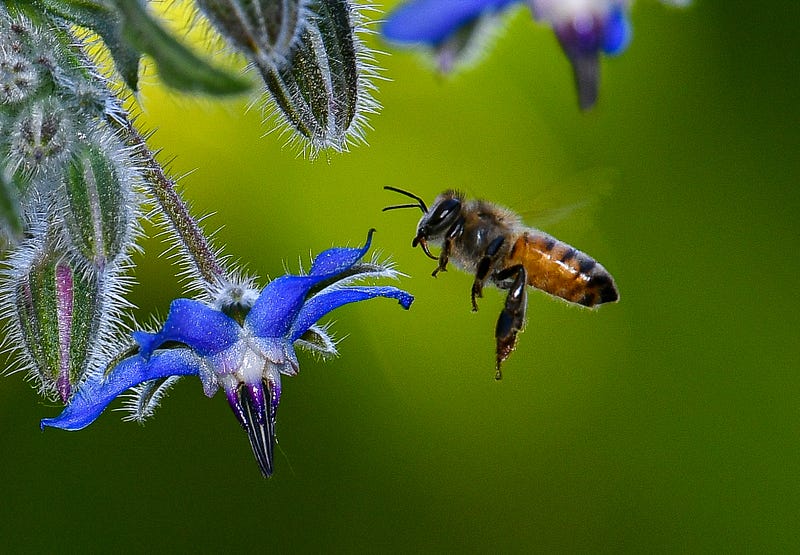
Bees’ bodies are covered with millions of tiny hairs which become positively charged when flying. This is tremendously helpful in gathering pollen because flowers gather a negative charge when swaying in the breeze. When the bee makes contact with the flower, negatively-charged pollen is electrostatically attracted to the bee’s hairs and sticks to them.
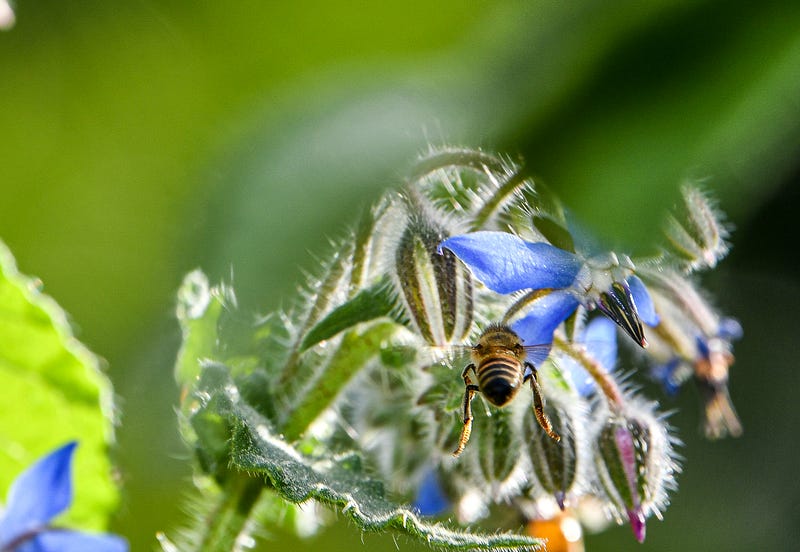
Bees can even learn to distinguish between fields produced by the shapes of different flowers. And they can tell whether a flower has been recently visited by other bees. Flowers are like electric billboards for bees.
In a study described in Nature, Daniel Robert, a biologist at the University of Bristol, UK, created an environment in which his team released bumblebees into an arena with artificial flowers, half of which were positively charged and carried a sucrose reward, and the other half of which were grounded and carried a bitter solution. Over time, the bees increasingly visited the rewarding charged flowers.
Robert concluded that being able to tell if a flower had a positive charge or not was very useful to the bees because it allowed them to not unnecessarily visit flowers which had recently been visited by other bees and which did not have a lot of pollen to harvest.
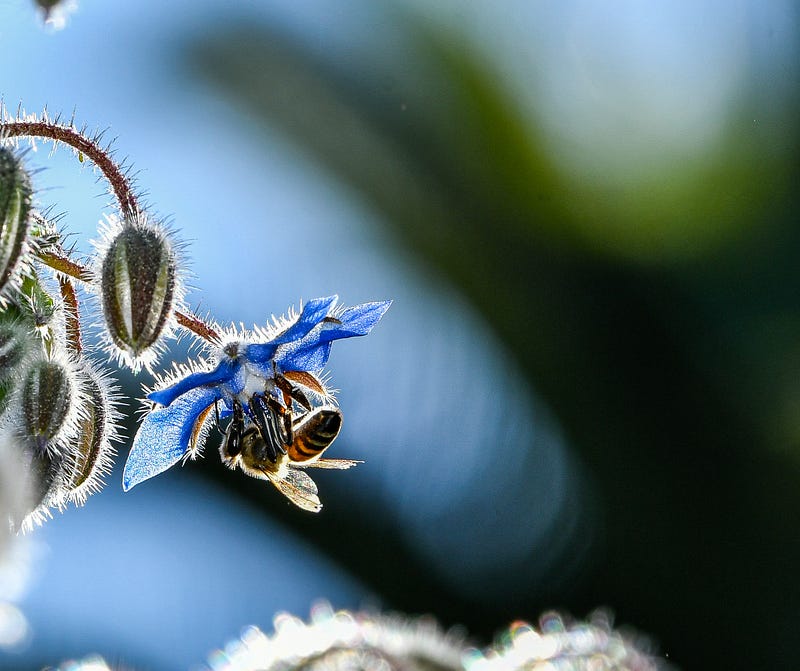
To imagine what it would feel like to a bee to touch a positively-charged flower, think about how the hairs on your arms stand on end when you touch a balloon which has recently been rubbed across fabric.
Thank you for reading. I hope that you enjoyed this glimpse into the wonderful world of bees.
You might have noticed that this piece is published in my new pub, “Butterfly Dreams,” which I created to showcase some of my photos, poems and musings. If you’d like to see more pieces like this, you can “follow” the publication.
Erika Burkhalter is a yogi, neurophilosopher, cat-mom, photographer, and lover of travel and nature, spreading her love and amazement for Mother Earth’s glories, one photo, poem or story at a time. (MS Neuropsychology, MA Yoga Studies).
You might also enjoy:
Photos and story ©Erika Burkhalter. All rights reserved.


