
Photography, Travel
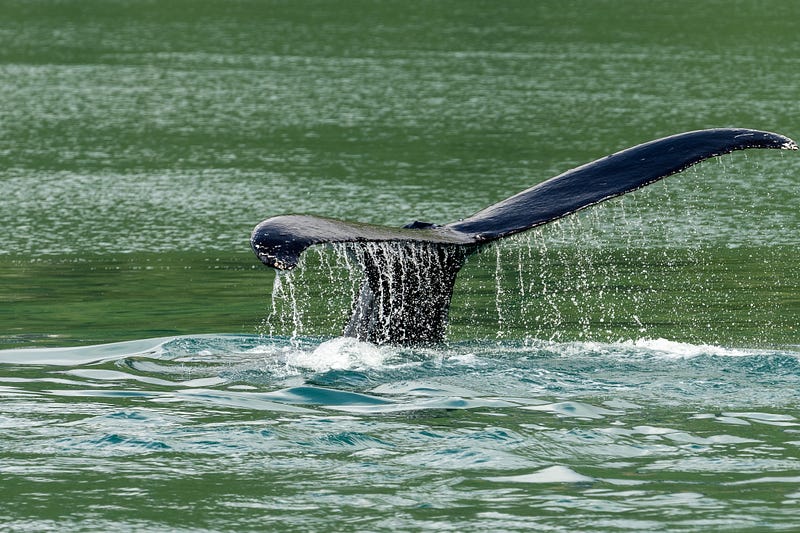
The Tail of a Whale
The moment of a Humpback Whale “fluke”
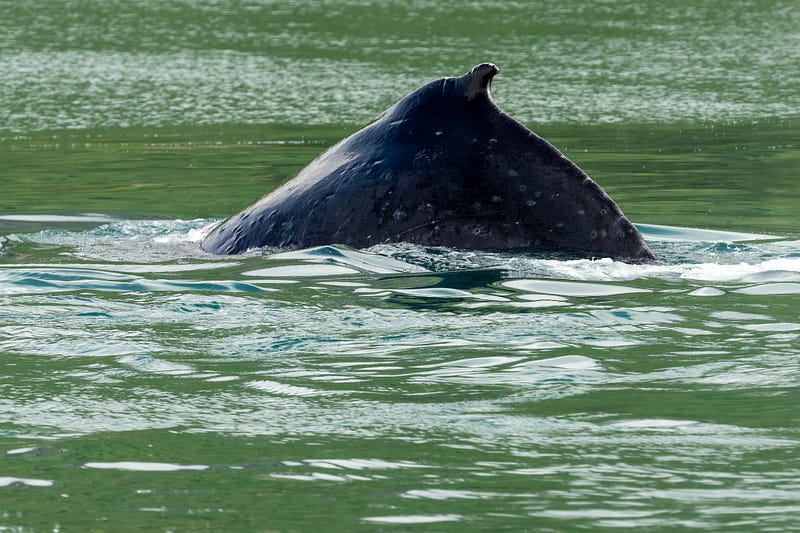
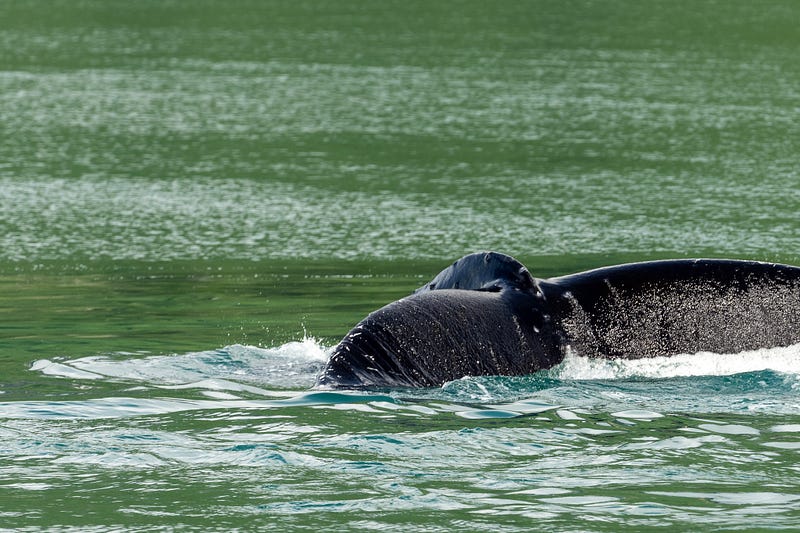
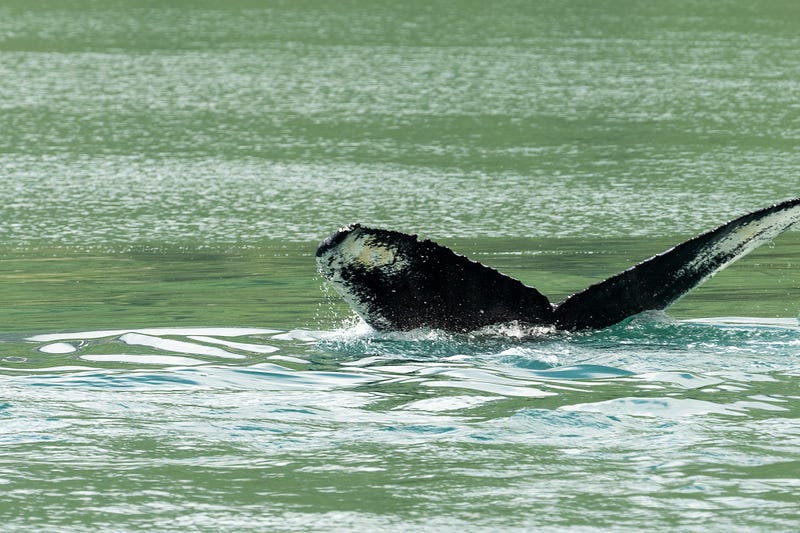
Humpback Whales are named for the characteristic “humps” on their back. The hump becomes quite evident as the whale gets ready to “fluke,” or show their tail just before they dive down into the depths.
Humpbacks range in length from 39–52 ft and weigh in at between 28–32 tons. They’re massive. The females tend to be larger than the males. And they’re highly intelligent. Alaskan Humpbacks have developed a specialized feeding technique called “bubble net feeding” in which they swim in a circle, blowing bubbles to corral the Herring into a tight “net.” Then they take turns diving down for their dinner. One tail goes up at a time as they take turns diving.
Only the Alaskan Humpbacks do this type of feeding. But they’ve taught it to all of the other Alaskan Humpbacks. We saw it happen over and over again while we were cruising through Glacier Bay National Park.
Before we left for our trip, we watched a National Geographic series on whales and were awed at the cleverness of these giants. So, when we saw them hunting this way in person, we were just amazed that we actually got to see it.
They also sing the most hauntingly beautiful songs. While we were watching a group of females (the whale pictured here was one of them), the captain of our boat lowered a microphone into the water and recorded their song. It gave me chills to hear it after we had just watched them perform their cooperative hunt.
Both the males and the females sing. But it is only the males who produce the long, complex song which they are known for. Whales within a population sing a single song. And, surprisingly, all North Atlantic humpbacks sing the same song. Those in the North Pacific sing a different song.
And, the songs change over time. The songs are culturally transmitted and can spread “horizontally” between neighbouring populations over the course of successive breeding seasons.
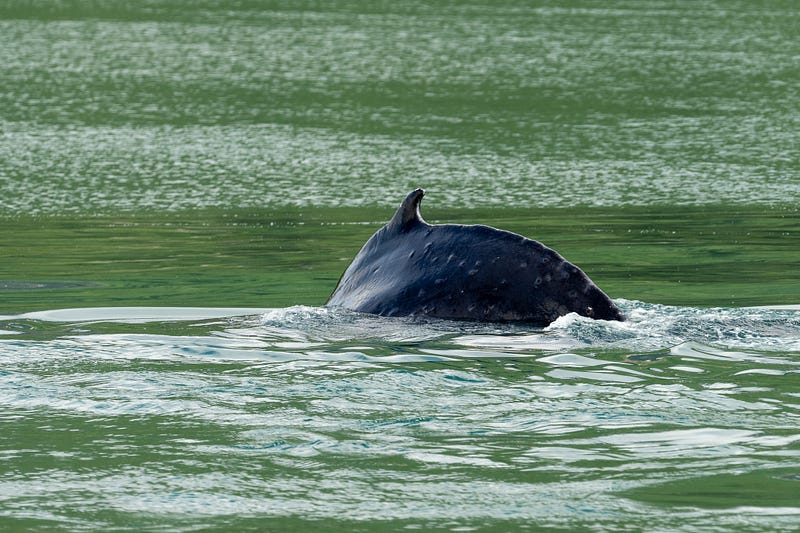
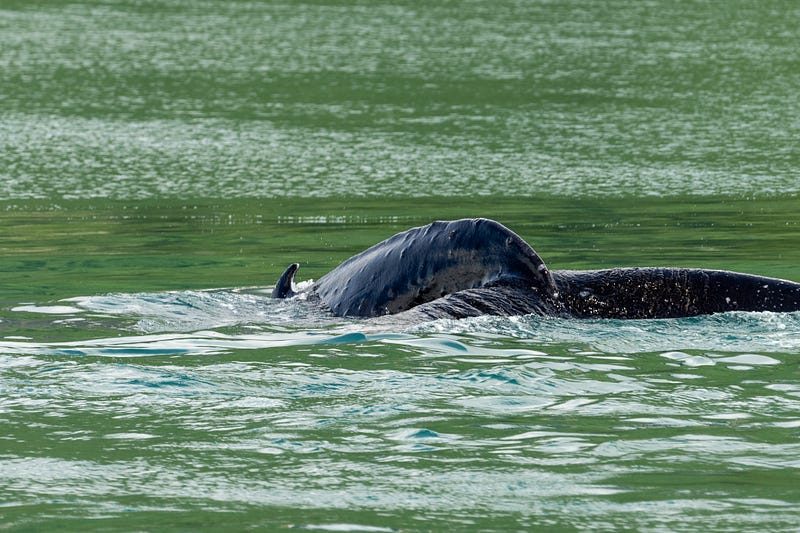
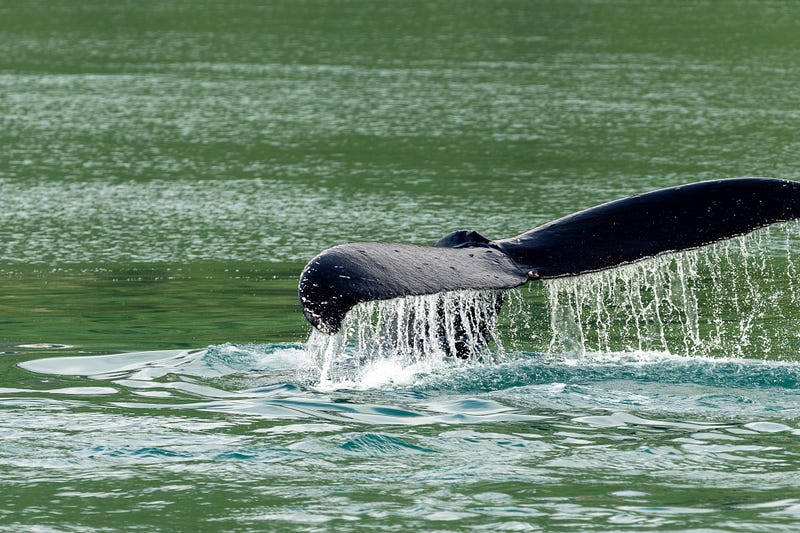
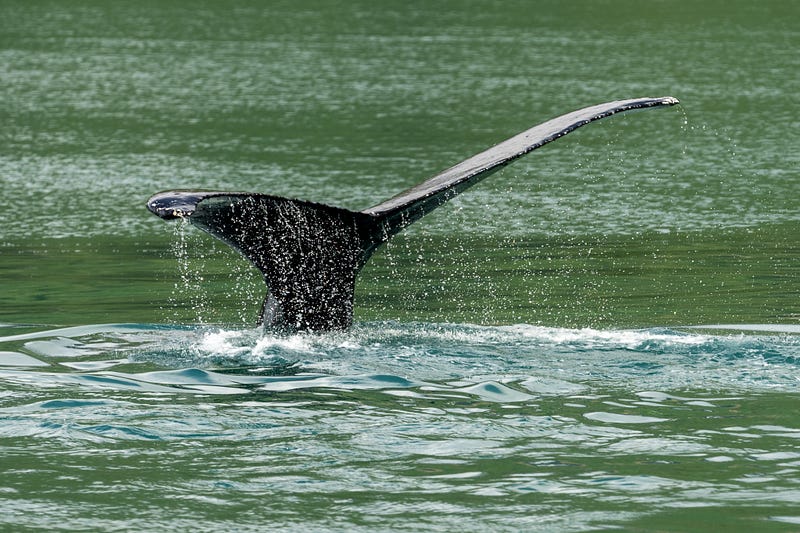
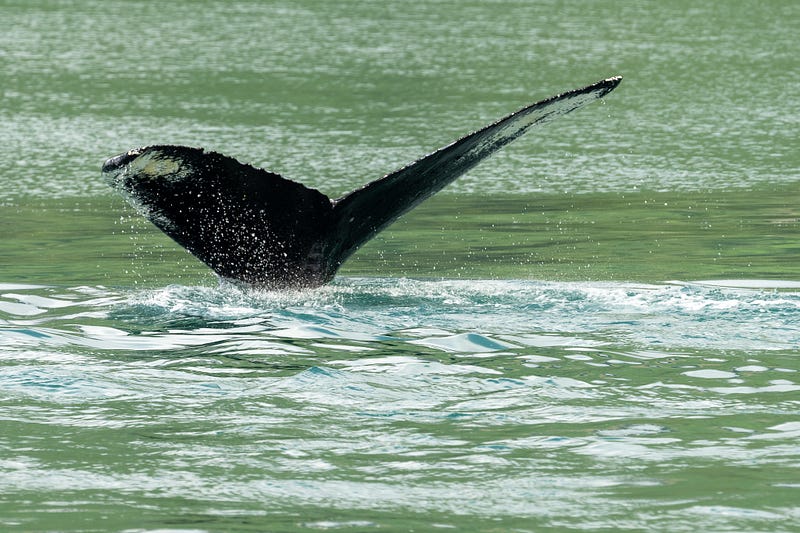
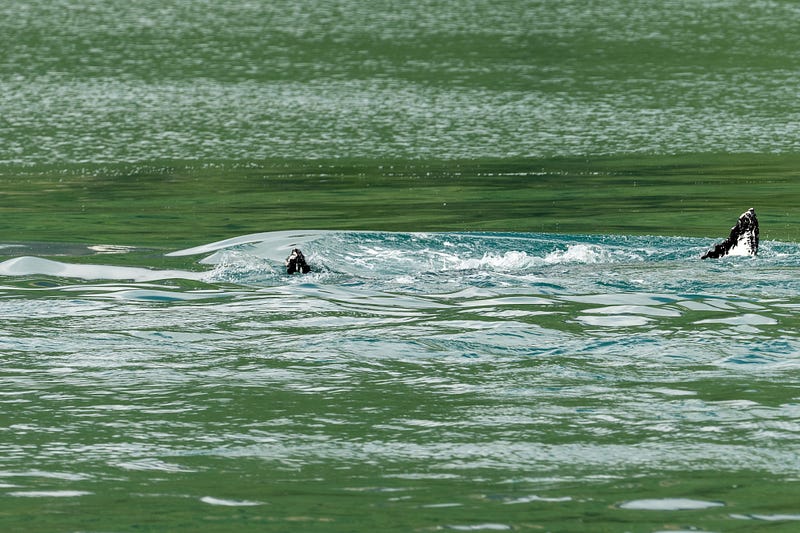
The following photos are of a single “fluke” by a female Humpback during a bubble-net feeding session with six or seven of her female relatives. After watching them a few times, I realized that there was a pattern to their dives.
When they first appear on the surface, they blow and then seem to sink. The second time, they look almost like they’re going down, but the tail never comes up. Then, the third time, when the net is “set,” they take turns diving through the school of herring.
I love the way their muscles bunch up along their back just as the tail is about to come up. I thought you might enjoy this series of shots, which shows the whole “fluke” from beginning to end. I had my Nikon z7II on continuous high in order to capture the sequence.
I hope you enjoyed this little glimpse into the world of Humpback Whales. Stay tuned for more stories and photos of the whole pod cooperative hunting.
Erika Burkhalter is a yogi, neurophilosopher, cat-mom, photographer, and lover of travel and nature, spreading her love and amazement for Mother Earth’s glories, one photo, poem or story at a time. (MS Neuropsychology, MA Yoga Studies).
You might also enjoy:
Photos and story ©Erika Burkhalter. All rights reserved.


