
Luff
Duff, fluff, and guff… sure! Luff… no way!
Today’s New York Times Spelling Bee letters:
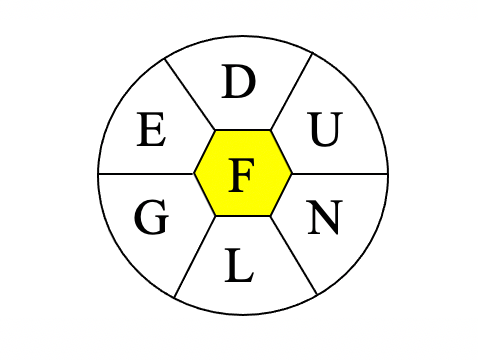
D, E, G, L, N, U, and center F (all words must include F)
Merriam-Webster says…
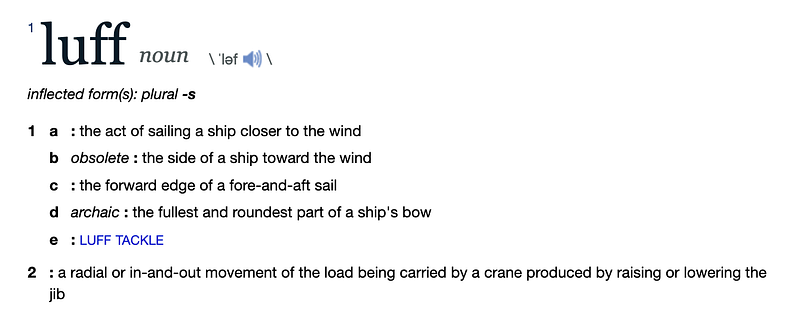
Silly little dictionary! Don’t you know that luff can’t possibly be a word if the New York Times says it ain’t?
For further fascinating facts, check out the Spelling Bee Master.
What’s your favorite dord* from today’s puzzle?
My Two Cents
I don’t know how all Spelling Bee enthusiasts go about playing the game, but I’m sure many of them probably do what I frequently do: try random letter combinations. It never hurts and the benefit can be twofold. You score points and add a new word to your vocabulary.
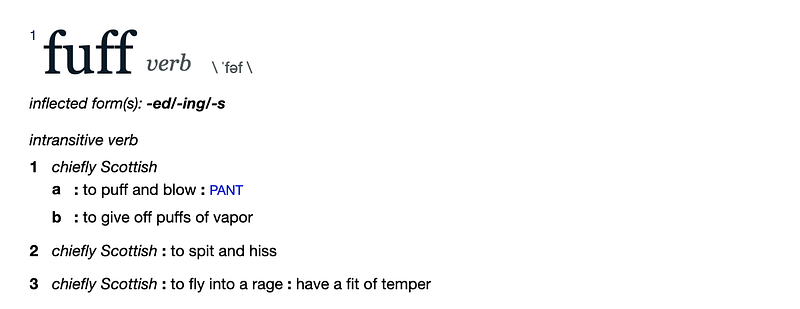
That’s what happened with luff today. I tried all possible consonant + uff combinations: duff, fuff, guff, fluff, nuff. Fuff is a word, by the way, just not one interesting enough to write an entire article about.
Nuff is not a word. And ‘nuff said about that!
But luff is. It’s a word, and a very important one if you’re on a sailboat.
Perhaps the New York Times doesn’t like sailboats. They’ve rejected plenty of sailing-related words before. Like carrack. Or xebec. But those are terms that aren’t used very often. Luff is still part of the modern yachtsman’s daily vocabulary.
Sail away
The top edge of a sail is called the head, the bottom is the foot, the trailing edge is called the leech, and the leading edge is called the luff.
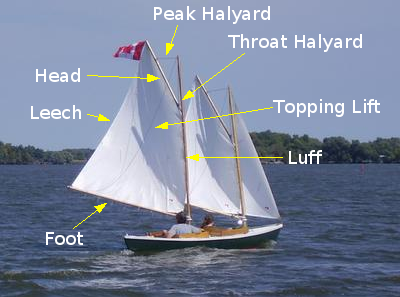
The above shows a gaff rig. The letter “a” is not in today’s Spelling Bee, but I’m sure if it were, gaff would also be rejected. Ha!
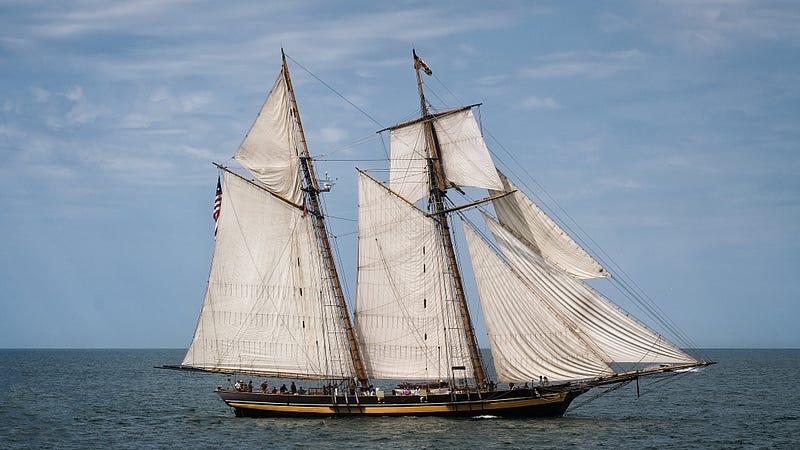
Here’s a photo of Reliance, a competitor in the 1903 America’s Cup and the largest gaff rigged cutter ever built. She was undefeated in her brief but glorious career, beating Sir Thomas Lipton (yes, the tea company guy).
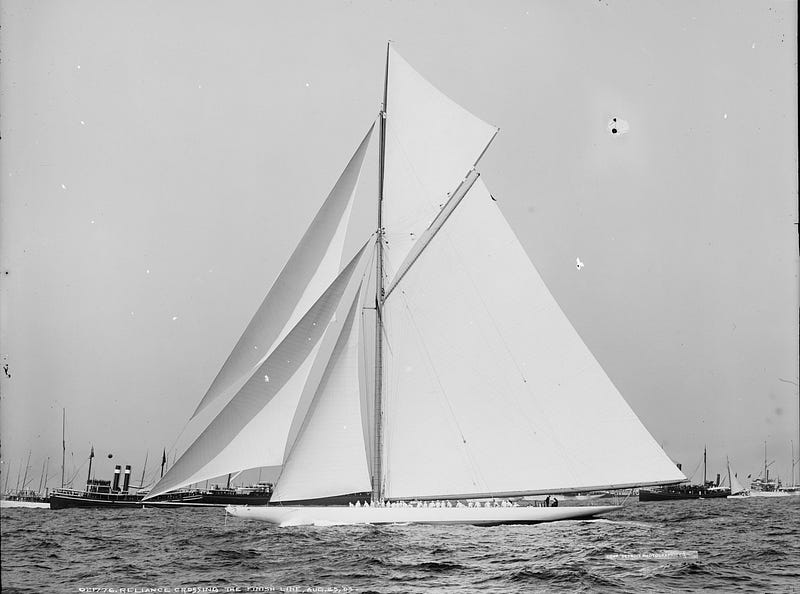
A gaff rig is “a sailing rig (configuration of sails, mast and stays) in which the sail is four-cornered, fore-and-aft rigged, controlled at its peak and, usually, its entire head by a spar (pole) called the gaff.”
That was clear, wasn’t it? No?
How about this definition of the verb luffing:
“When a sailing vessel is steered far enough toward the direction of the wind (“windward”), or the sheet controlling a sail is eased so far past optimal trim, that airflow over the surfaces of the sail is disrupted and the sail begins to “flap” or “luff” (the luff of the sail is usually where this first becomes evident).”
Yeah, that’s kinda complicated, too.
Hmmm, maybe that is why the Spelling Bee hates boat-related terms.
Okay, let’s move on to something more exciting. Cranes. Not the birds, but rather the monstrous mechanical machines.
Crane away
The dictionary provides an entry for the verb luff, too:
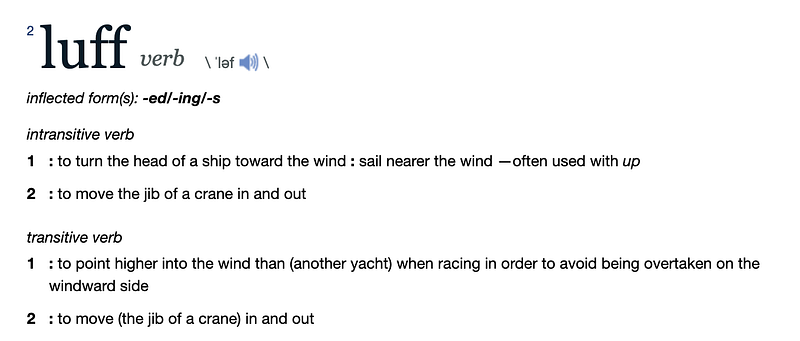
Both definitions 2 refer to the aptly-named level-luffing cranes. Their mechanism of action allows the hook to remain at the same level while the jib of the crane moves up and down. This is important in construction and shipbuilding, when you need to very carefully move something near ground level.
Here is a cool animation that shows the effect. Notice how the hook stays level across the horizontal line.
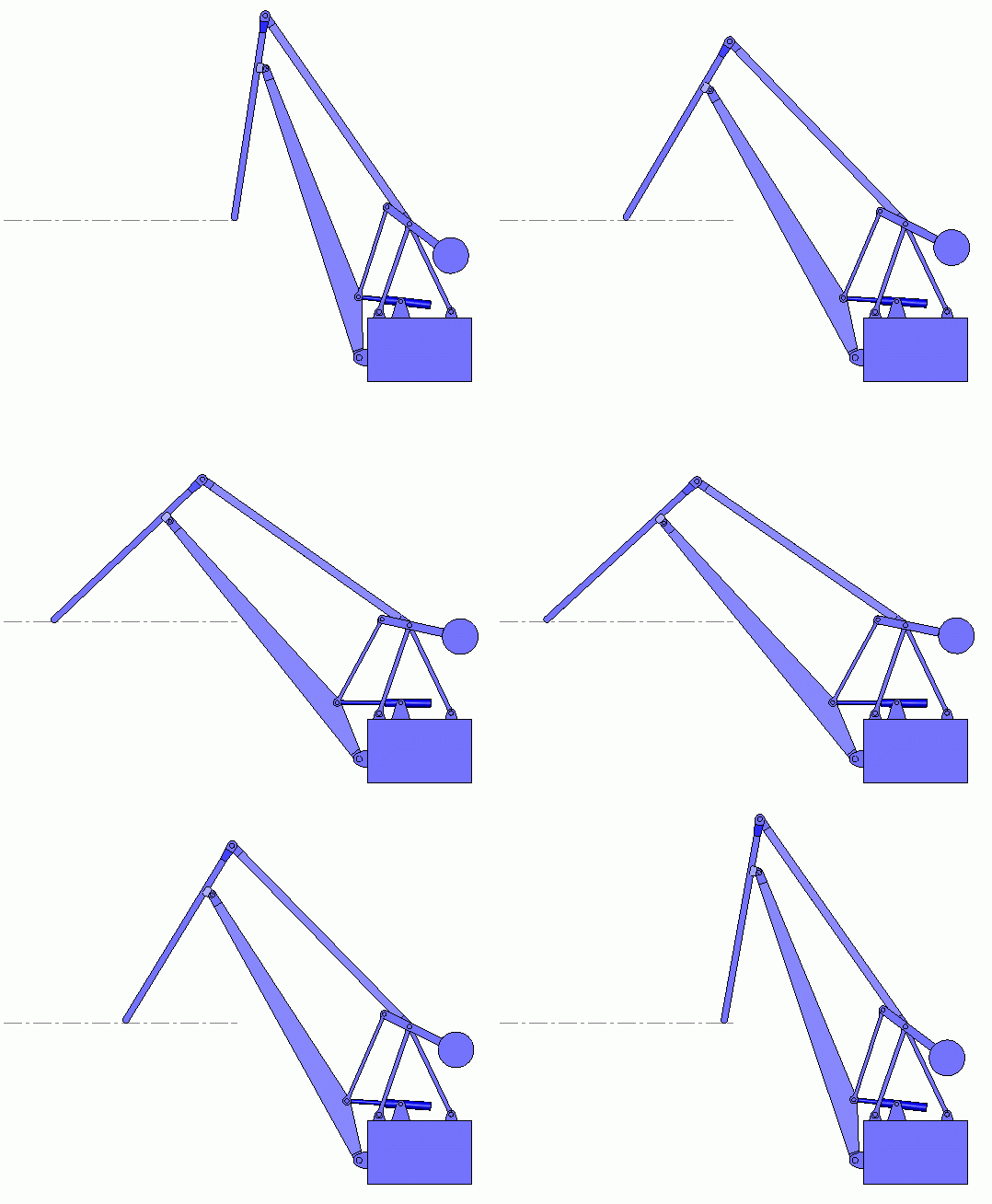
The above crane has a “horse head”, an additional section at the top of the jib that simplifies the crane’s action by using principles of geometry. Which means it was probably not designed by Sam Cooke.
This principle of luffing has also been applied to the crane’s driver cab itself, allowing it to angle as the crane moves. This gives the crane operator a better view and is particularly useful when unloading containers from ships.
Who knows why the Spelling Bee rejected yet another word related to boats. Even the fact that this term is also related to construction cranes did not seem to sway the opinion of Spelling Bee editors, who decided that luff is a dord.*
You can check out my previous entry on another dord* here:
*What the heck is a dord, you ask? Here’s the answer: