
Lifesystem: Operation-based Reflection
How to use a practical framework with other practical frameworks?

Yesterday I discussed the Lifesystem framework with several theoretical concepts.
As a tool for guiding research and reflection, a knowledge framework is a whole that contains concepts, diagrams, and methods. An ideal knowledge framework should contain two types of concepts:
- Theoretical Concepts
- Operational Concepts
Theoretical Concepts are adopted from Meta-theory or Specific Theory. Some frameworks don’t associate with any theories, they only have operational concepts. Operational Concepts are framework-dependent concepts for guiding research and reflection.
There are two types of reflection. Theory-based reflection adopts theoretical concepts as instruments for reflection while Practice-based reflection uses operational concepts or other heuristics as instruments for reflection.
Today I am going to talk about Practice-based Reflection. I will discuss some operational concepts of the Lifesystem framework and other related practical heuristics.
Lifesystem: Eight Operational Concepts
The Lifesystem framework is designed with two ideas: the pair of concepts of “Lifeway — Lifeform” and Life Coordinate.
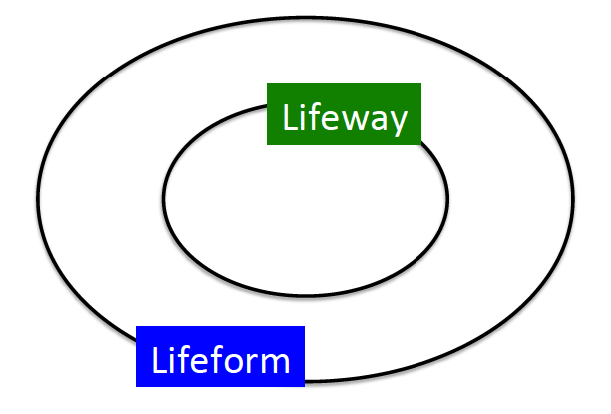
The term “Lifeway” is inspired by the ecological psychologist James. J. Gibson’s writing: “The natural environment offers many ways of life, and different animals have different ways of life.” I use the term “Lifeway” to refer to the “human—material” engagement which is related to physical environment and affordance.
The term “Lifeform” is inspired by the philosopher Ludwig Wittgenstein’s writing: “It is easy to imagine a language consisting only of orders and reports in battle…And to imagine a language means to imagine a form of life…Here the term ‘language game’ is meant to bring into prominence the fact that the speaking of language is the part of an activity or a form of life.” I use the term “Lifeform” to refer to the “human-human” engagement which is related to social environment and supportance.
The Lifesystem framework considers the “Lifeway — Lifeform” hierarchical loops and the “Affordance — Supportance” hierarchical loops as a whole system which defines a new unit of analysis.
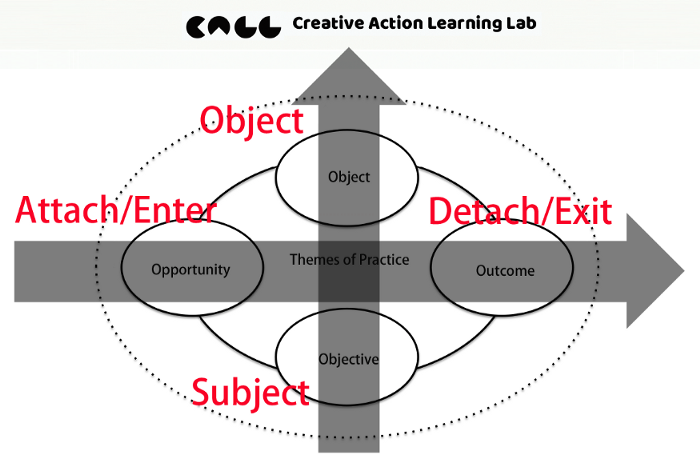
The above diagram is called Life Coordinate which is inspired by the Life-as-Activity (v1.5) diagram. You can find more details here. The pair of concepts of “Subject-Object” is adopted from Activity Theory while the pair of concepts of “Attach/Enter-Detach/Exit” is adopted from the Ecological Practice approach.
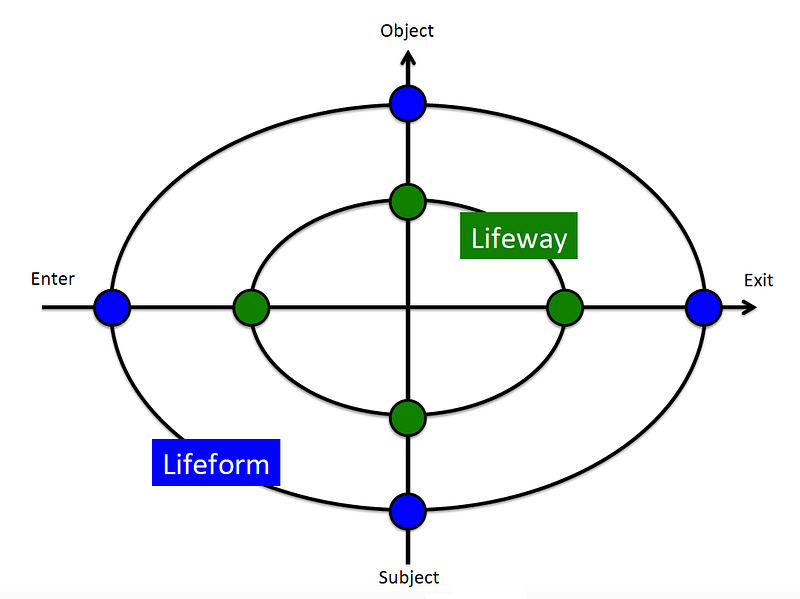
The above diagram is the basic model of the Lifesystem framework. Based on the model, I developed several Operational Concepts for the framework. You can find more details here.
Based on the basic model, I developed the following eight operational concepts for the Lifesystem framework:
- Actor
- Group
- Material
- Information
- Resource
- Intention
- Result
- Reward
The outcome is the following framework:
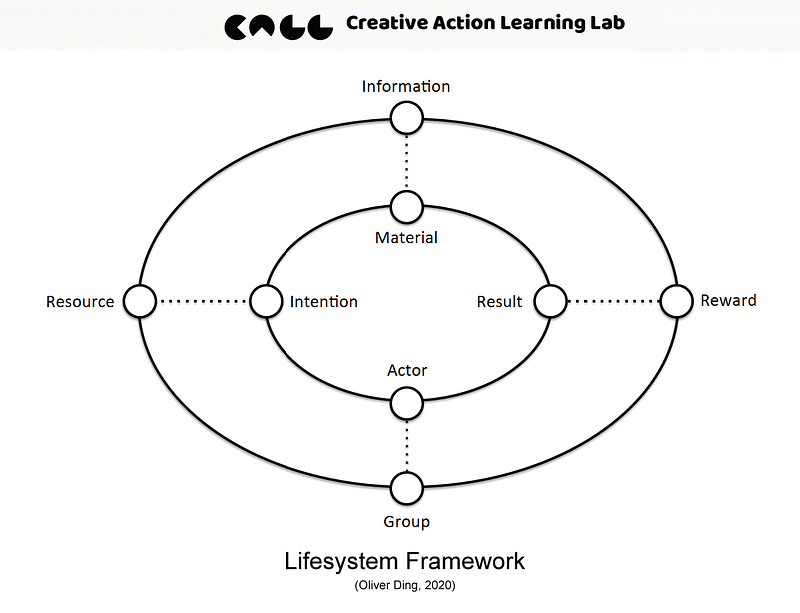
You can find more details from the original article: Lifesystem: Modeling Ice Skating and Other Social Practices.
The rest of the article will focus on eight operational concepts.
Object: Design for Material Engagement
As mentioned before, the primary theoretical source of the Lifesytem framework is the Ecological Practice approach which is inspired by Ecological Psychology. Following the distinction between percept and concept, the distinction between Affordance and Supportance, and the distinction between Lifeway and Lifeform, I developed the pair of concepts of Material Adaptability and Social Adaptability.
The concept of Object is separated into Material and Information. The concept of Material is located at the loop of Lifeway while the concept of Information is located at the loop of Lifeform.
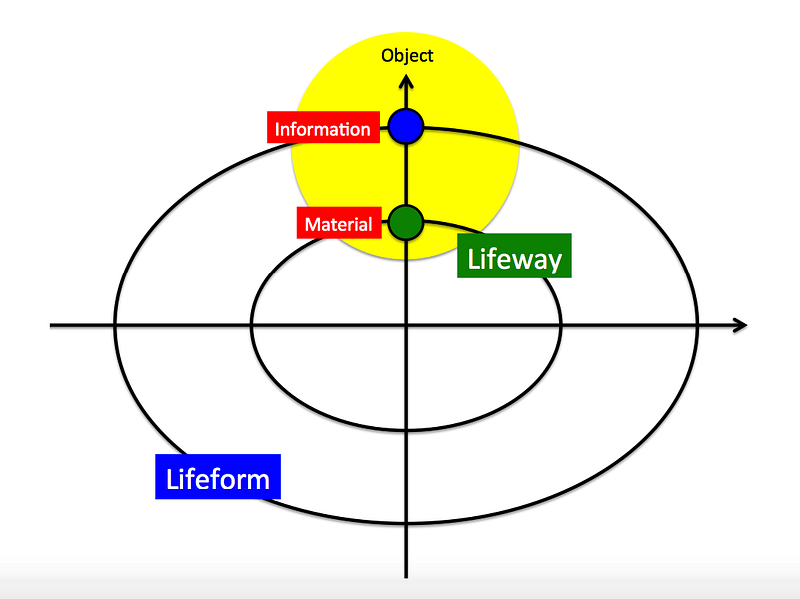
The pair of concepts of “Material — Information” is related to Material Adaptability that refers to a person’s competence of actualization of affordance and material engagement.
Since Lifeway is defined as “human—material” engagement, we need to distinguish Primary Materials from Secondary Materials.


For example, the primary materials are Ice Skates and the Surface because they define Lifeway. However, we should notice that there are other materials such as helmets, knee pads, gloves, etc. We can consider these things as secondary materials because Lifeway is not defined by them. In other words, secondary materials are optional, not essential.
The notion of Material Engagement is related to using and designing artifacts. On July 31, 2020, I published an article titled Hammer, Hammering, and Affordance and discussed the Materiality Turn and Artifact-centered Interaction. At the end of the article, I identified the following themes for further discussion.
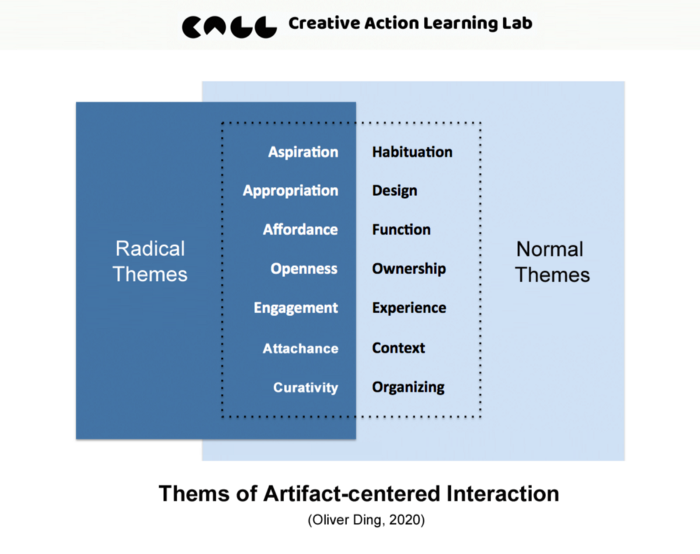
Now we can consider the above themes as a related practical heuristic for the Lifesystem framework.
For the concept of “Information”, I’d like to offer more details from the perspective of the Lifesystem framework and the Ecological Practice approach in general.
Ecological psychologist James Gibson adopts a different view on “Information” because he wants to develop a theory about visual perception. Though the core of Gibson’s theory is visual perception, we can see the whole “Perception-Affordance-Action” loop as a theory of action and apply it to new fields. Perceiving affordances is for taking actions, taking actions has an impact on the environment and changes the affordances of the environment. I draw the diagram below to visualize this loop.
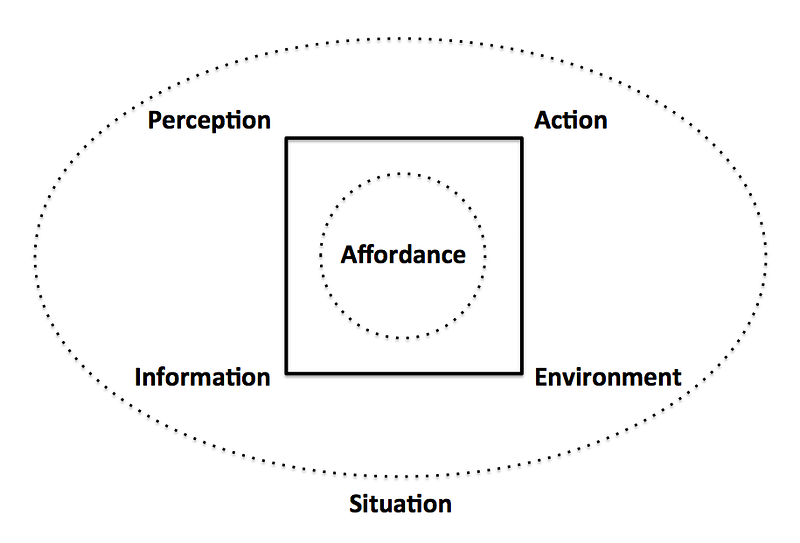
Gibson didn’t use a term called “Ecological Information”, I use this term to refer to the ecological approach to Information. Gibson’s view on Information is part of his Information Pickup theory which is different from traditional Information Processing theory.
Thus, I believe ecological information should tie to affordance and actions. In other words, Ecological Information is Action-centered Information. If a piece of information points to potential actions for people, then we can claim it as Ecological Information. If a piece of information doesn’t point to any potential action, then we can call it Content. See the flowchart below.
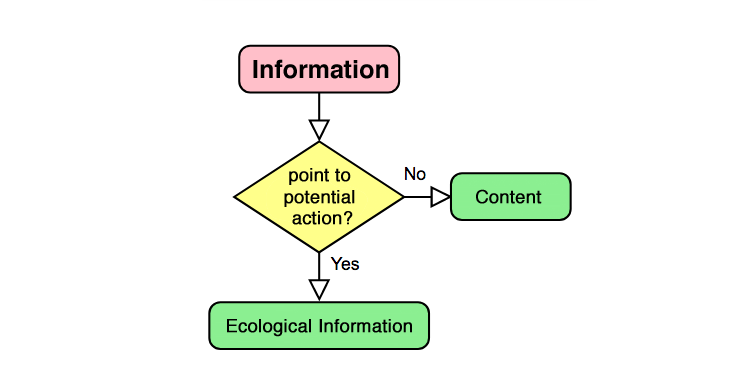
This principle helps us bypass the complex academic debate between Gibson’s Information Pickup theory and traditional Information Processing theory.
I also wrote a chapter titled Information and Actions in my 2020 book After Affordance. The chapter offers a typology of Action-centered Information.
For the Lifesystem framework, I consider the following definitions:
- Information: it is only about Action-centered Information
- Material: it refers to Material Objects and Content
In this way, we can consider “Reading a book” as a Lifeway. A book is both a material object and content. If you can an example about reading Frame Analysis.
Subject: Design for Social Engagement
The concept of Subject is separated into Actor and Group. The concept of Actor is located at the loop of Lifeway while the concept of Group is located at the loop of Lifeform. The Actor refers to the primary subjects while the Group refers to secondary subjects.
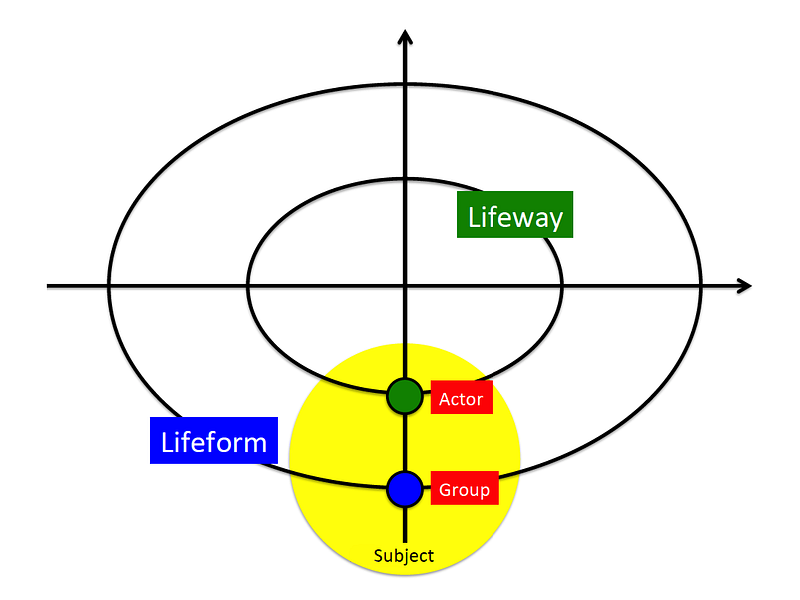
For the skating learning program, the Actor refers to teachers and students.
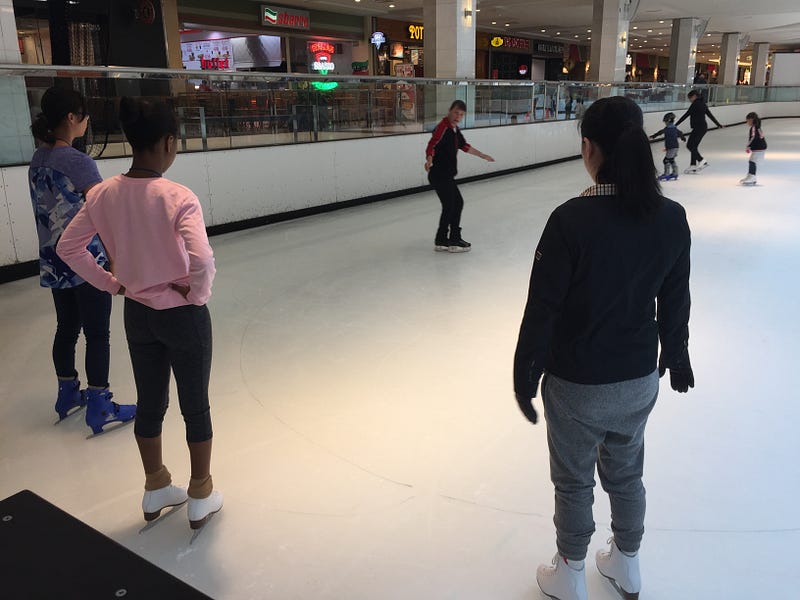
The Group refers to parents and family members, front desk staff, ice technicians, audiences, etc.
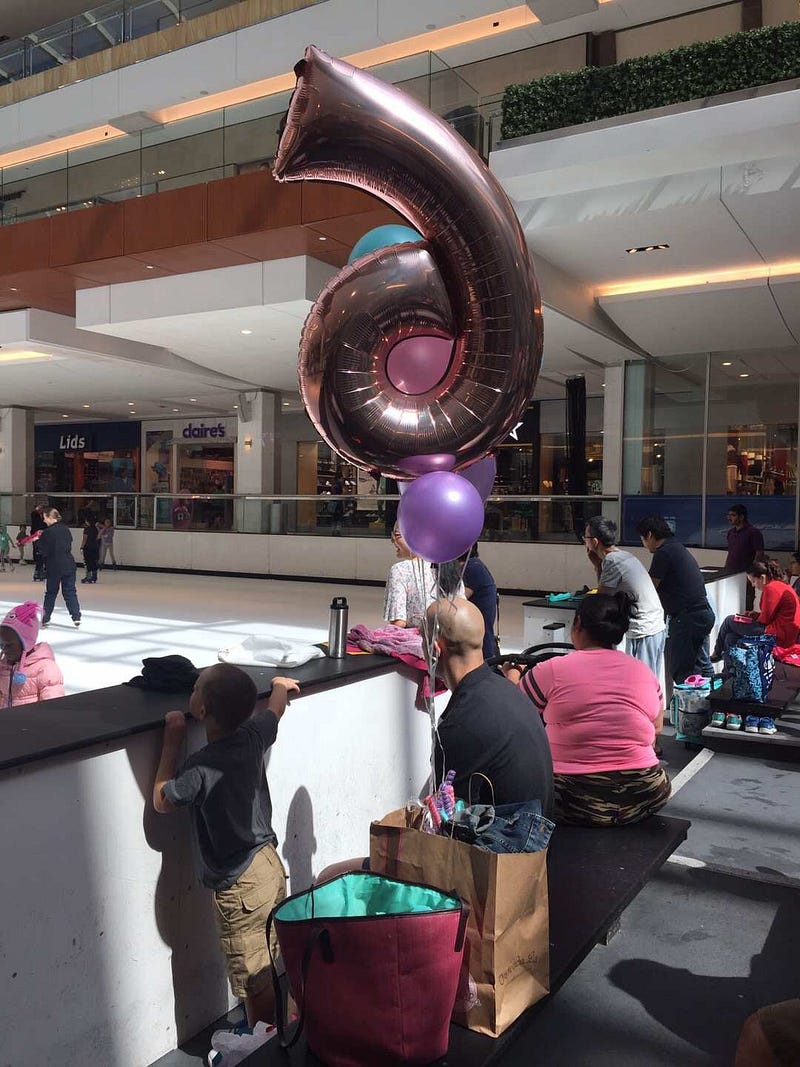
The local ice skating rink is part of a large local shopping mall and it is close to a food court. There are many restaurants around the rink. Thus, we should consider audiences as part of the Group. Originally, we are audiences. Then we transformed from audiences to participants. We can adopt Roger Barker’s concept “Zone of Penetration” to understand such transformation.
I’d like to recommend the SET framework for further discussion about the “Actor — Group” relationship. The SET Framework was originally named the Ecological—Activity Hybrid Approach. It was developed from 2017 to 2020 when I worked on several projects which refer to a new type of social action platform.
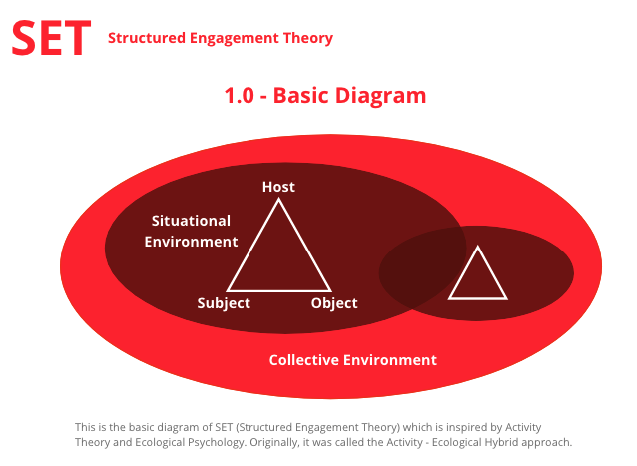
SET stands for Structured Engagement Theory. To be honest, it is just a framework, not a theory. The name “SET” is inspired by Behavior Settings Theory which is one of the theoretical approaches of Ecological Psychology. To keep the name “SET”, I have to keep the word “Theory”. Anyway, let’s call it SET or the SET framework.
The SET framework adopts some theoretical concepts from the Activity Theory. For example:
- Activity
- Mediation
It also adopts some concepts from Ecological Psychology. For example:
- Environment
- Zone of Penetration
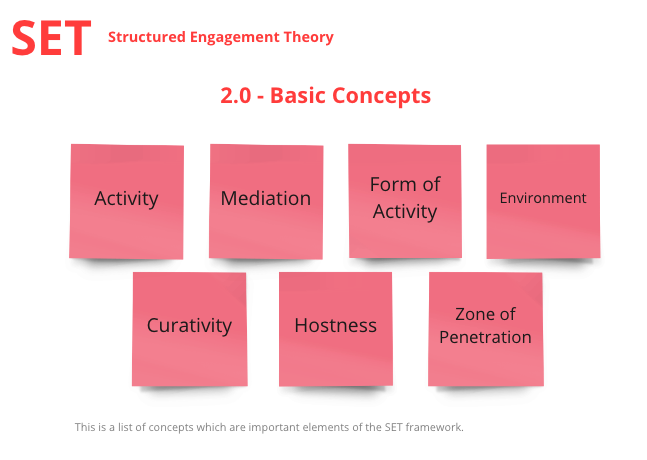
I also developed several concepts for the framework to serve the needs of empirical research. For example:
- Forms of Activity
- Hostness
- Curativity
You can find more details about the SET framework on the Activity Analysis website.
Achievement: Design for Value Engagement
The pair of concepts of “Attach/Enter-Detach/Exit” is adopted from the Ecological Practice approach. The concept of Exit is separated into Result and Reward. The concept of Result is located at the loop of Lifeway while the concept of Reward is located at the loop of Lifeform.
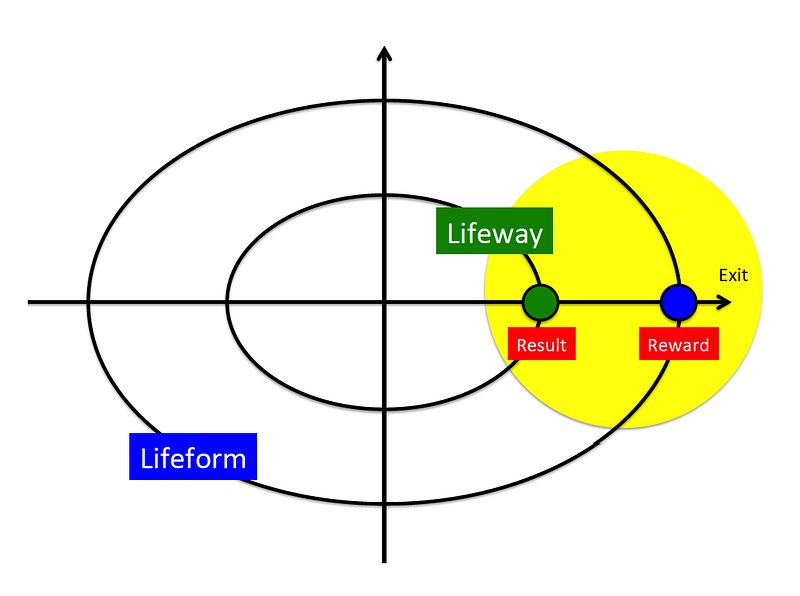
The concept of Result refers to the outcome of a lifeway. One useful way is to distinguish between three types of outcomes: product, by-product, and meta-product. The product refers to the intended outcome within the original objective of lifeway and the by-product refers to the unintended outcome beyond the original objective of lifeway. The meta-product refers to the transformation of self as the outcome of lifeway.
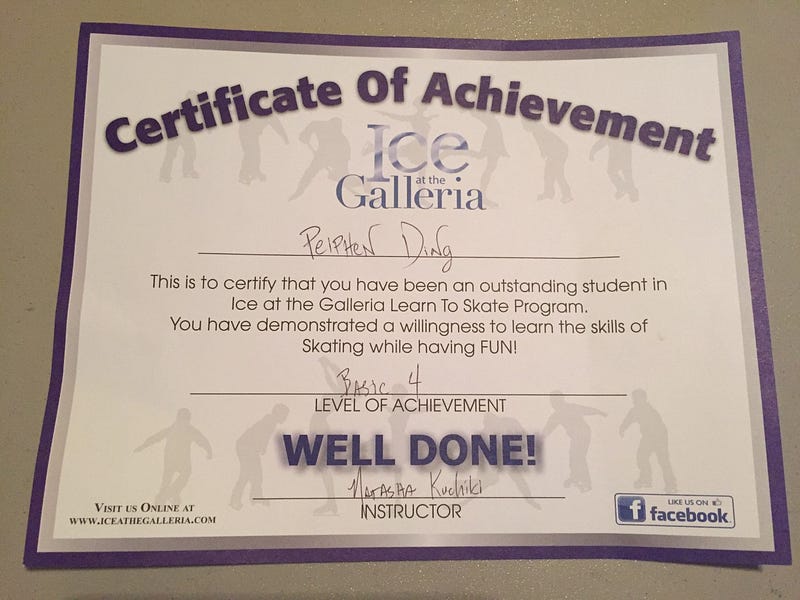
The concept of Reward refers to the feedback from Lifeform. It emphasizes the importance of supportance offered by a group to which the actor belongs.
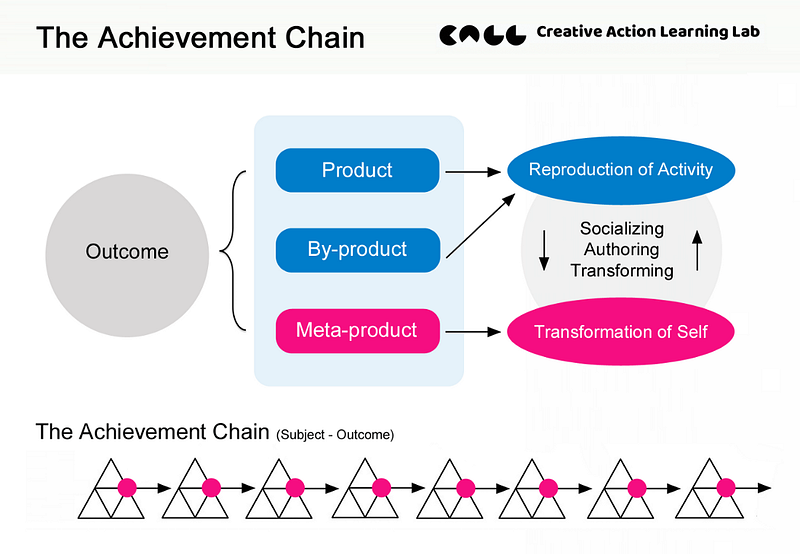
The above diagram is called Achievement Chain which is adopted from the Life-as-Activity Framework (v.03).
In a recent article, I also discussed the Result — Reward gap and achievement from the perspective of the Anticipatory Activity System. You can find more details in the original article.
For the Lifesystem framework, I’d like to recommend the following Value Engagement Canvas which is based on the Value-fit framework and two articles. The Value-fit framework adopted the “Customer —Value — Firm” relationship as the foundation to discuss products, services, and business.
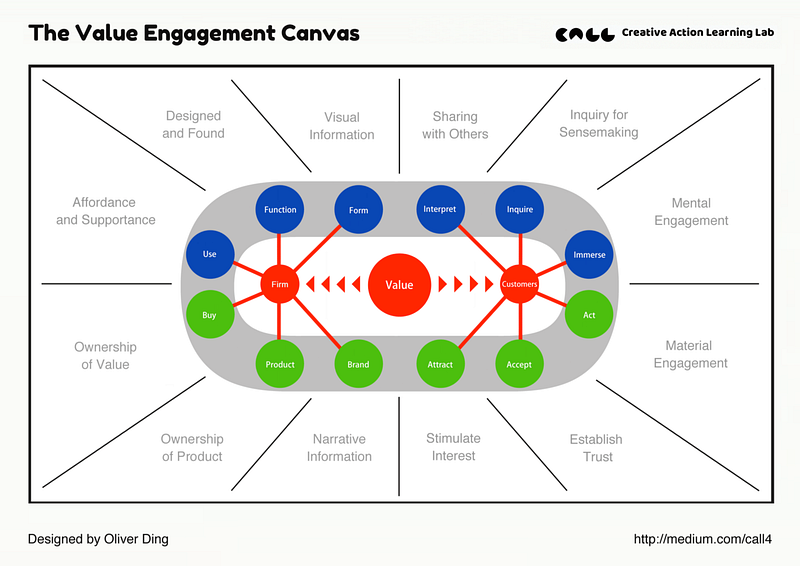
The Value-fit framework and the Value Engagement Canvas use the following operational concepts and theoretical concepts:
- Form: Visual Information
- Brand: Narrative Information
- Function: Designed and Found
- Product: Ownership of Product
- Use: Affordance and Supportance
- Buy: Ownership of Value
- Interpret: Sharing with Others
- Inquire: Inquiry for Sensemaking
- Immerse: Mental Engagement
- Attract: Stimulate Interest
- Accept: Establish Trust
- Act: Material Engagement
The Lifesystem framework is not directly developed for understanding marketing and consumer behavior. We can adopt the Value Engagement Canvas as a heuristic tool for relevant discussion.
Attachment: Design for Resource Engagement
The concept of Attach/Enter is separated into Intention and Resource. The concept of Intention is located at the loop of Lifeway while the concept of Resource is located at the loop of Lifeform.
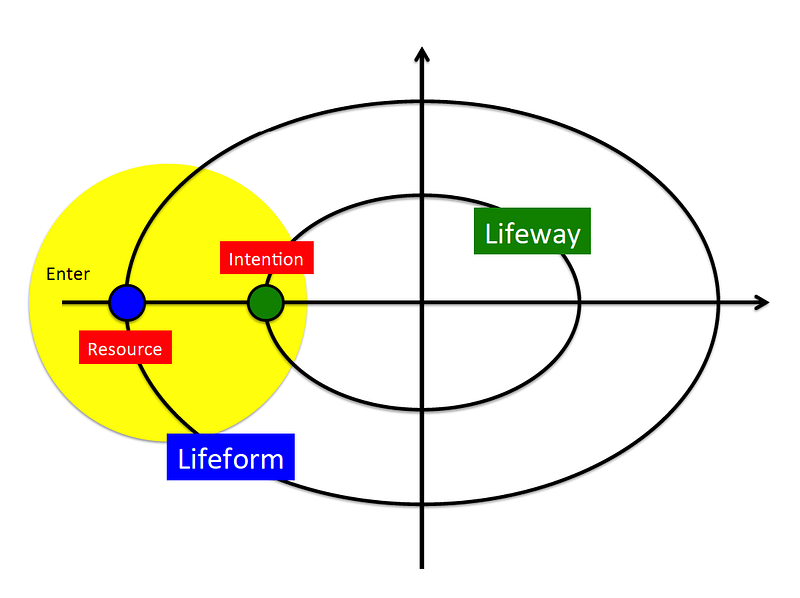
The concept of Intention refers to an actor’s motivation and objective. This is a complex topic. The major difference between the ecological practice approach with goal-oriented action theories is that the former emphasizes the exploratory actions while remaining the importance of performatory actions.

Also, I consider the dynamics of Intention since the Lifesystem is a whole. I use given intention and emergent intention to discuss the dynamics of intention. The emergent intention may lead to the change of a lifeway and a lifesystem.
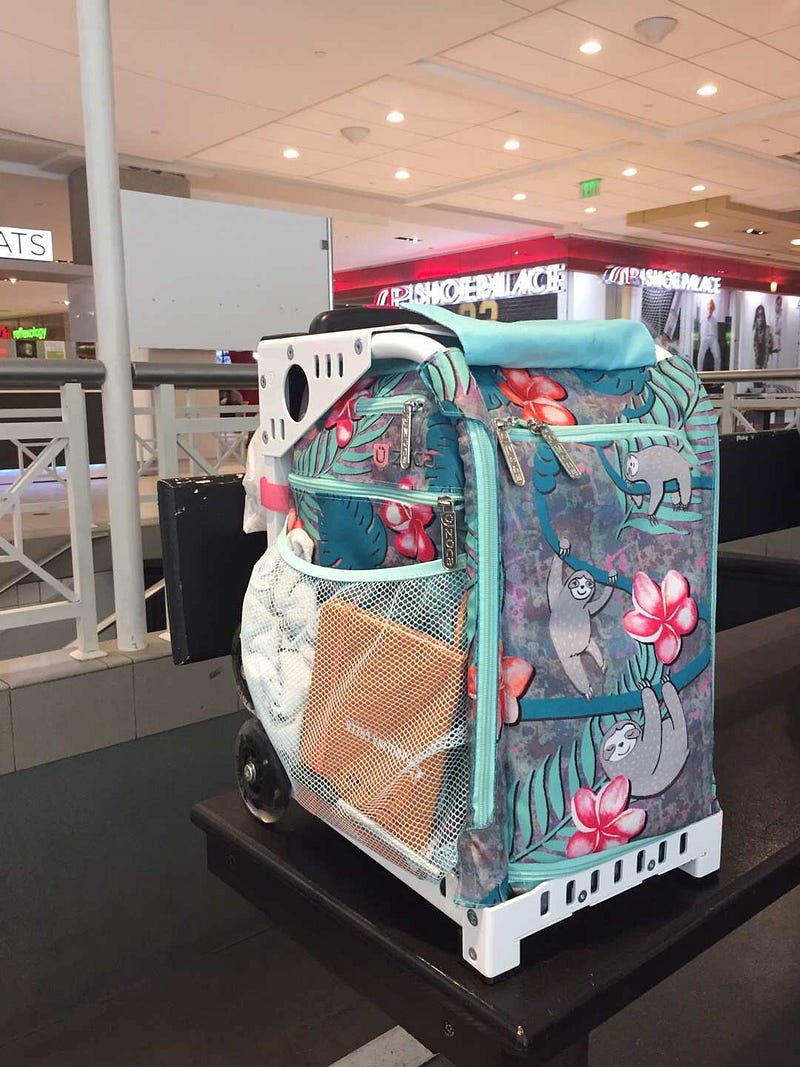
The concept of Resource refers to various types of resources such as family resources, etc.
The pair of concepts of “Resource — Intention” is also related to Activity Theory’s concept “Object”. For the Anticipatory Activity System framework, I separated the concept of “Object” to “Object — Objective”, you can find more details here.
The Lifesystem framework is inspired by Activity Theory, especially the Activity System Model. Since the model doesn’t have the concept of Resource, I have to apply some data to Mediation or Object which are two “official” concepts of the model. I even created a new diagram called Activity System Plus which adds “Resource” to the original model for private discussions with my friends.
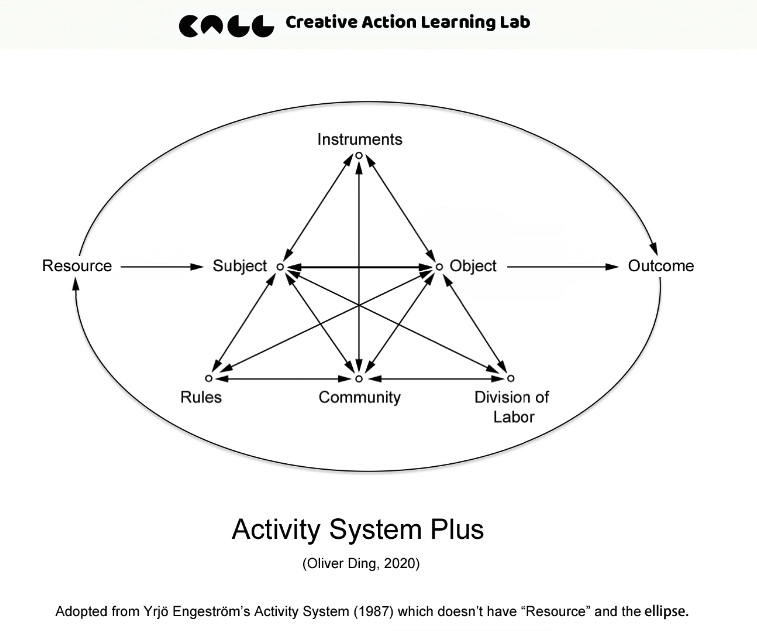
The Activity System model doesn’t have the concept of “Resource” and the above diagram is just for testing. This is one of the reasons that I want to develop the Lifesystem framework.
The concept of “Resource” is also inspired by the following diagram which is a model of TRIZ. I found the diagram from Kalevi Rantanen and Ellen Domb’s 2007 book Simplified TRIZ: New Problem Solving Applications for Engineers and Manufacturing Professionals.
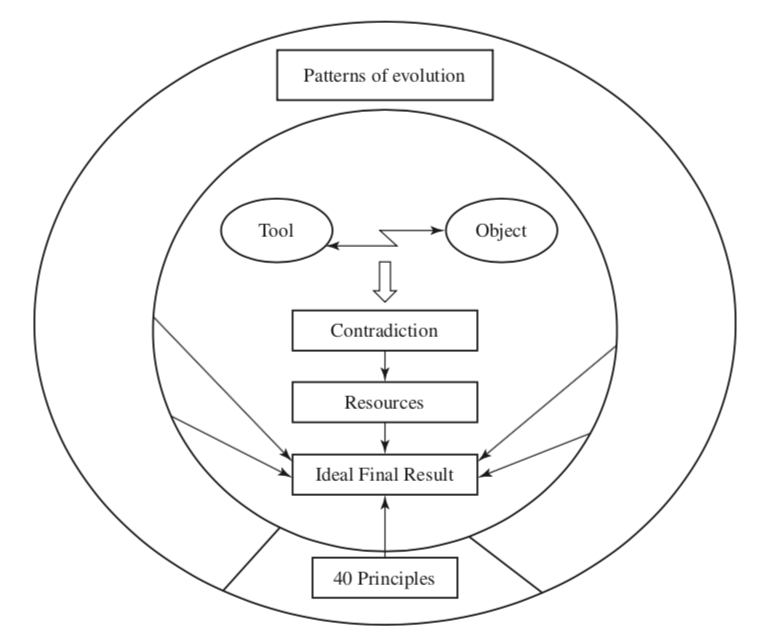
The book uses one chapter titled Mapping Invisible Resources to discuss the topic of Resources.
For the Lifesystem framework, I’d like to point out that the most important value of the Ecological Practice approach is its perspective indicates the ecological meaning of objects and environments. It is very useful for rethinking Resources and Opportunities.
In 2019, I developed a framework called Life Curation which contains a module called the “Resources — Results” Analysis. The framework suggests that a person could build his or her creative containers to curate pieces of resources into meaningful results.
Anticipation: Design for Future Engagement
Finally, I’d like to mention that the “lifeway — lifeform” hierarchical loops as a whole can be understood as an anticipatory system. The “Actor — Group” relationship can be considered as the “Self — Other” relationship. Thus, we can connect the Anticipatory Activity System to the Lifesystem framework.
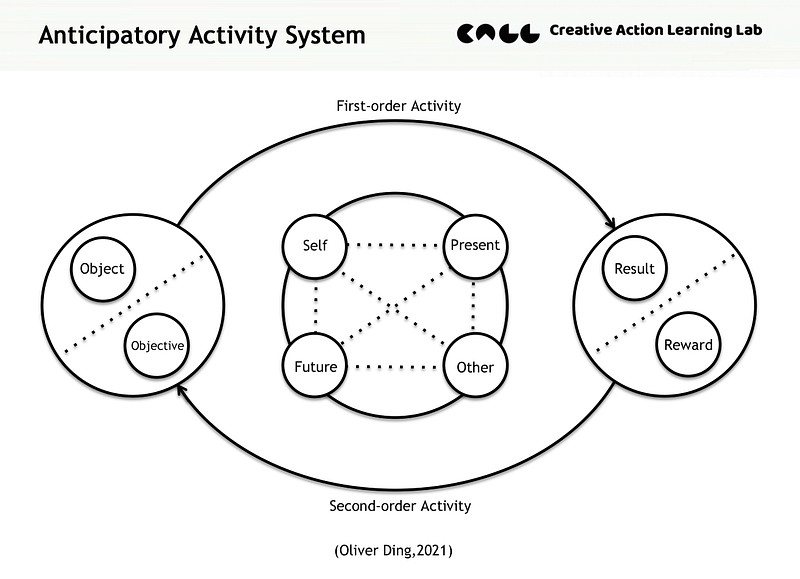
From the perspective of life development, a Lifesystem is a life container of an actor. The “Self — Other” Relationship is a sub-container of a Lifesystem. Thus, there is an Anticipatory Activity System inside a Lifesystem. The “Self — Other” relationship has a major impact on the development of a Lifesystem.
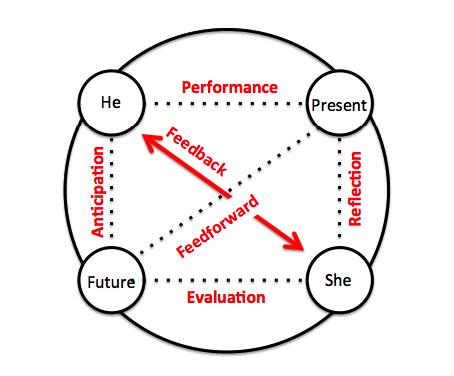
The above diagram shows the Transactional Analysis of the Anticipatory Activity System framework. An actor has an expectation of his ideal life in the future. Let’s call it Anticipation. This anticipation inspires him to make some decisions that lead to some actions. This is called Feedforward. His actions lead to several activities which are perceivable by himself and others. Let’s call it Performance. Others could evaluate the Actor’s ideal future from their perspectives, let’s call it Evaluation. Others could also watch the actor’s daily performances and review these performances from their perspectives, let’s call it Reflection. Others could offer such evaluations and reflections to the actor, let’s call it Feedback.
If we return to the perspective of Lifesystem, then the above “Self — Other” (Actor — Group) dynamics will lead to the development of a Lifesystem.
The diagram below is the landscape of a network of Lifesystems, it also describes several possible paths of the development of Lifesystems.
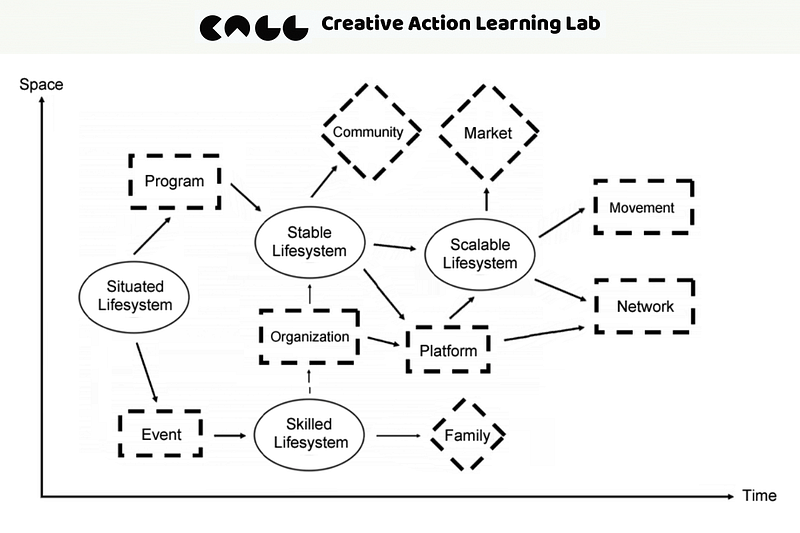
The above diagram offers the following typology of Lifesystems:
- Situated Lifesystem
- Skilled Lifesystem
- Stable Lifesystem
- Scalable Lifesystem
By using these four types of Lifesystems, we can apply the Lifesystem framework to discuss various types of social structures. Let’s use Ice Skating as an example of Lifeway and discuss four types of Lifesystems.
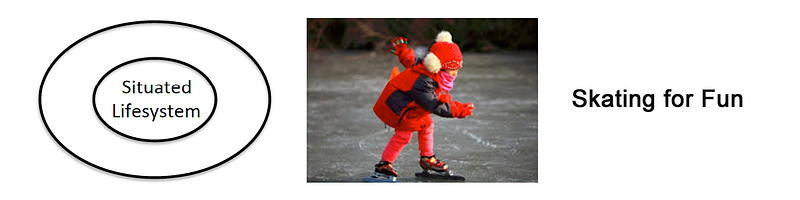
The characteristics of the Situated Lifesystem are minimal time scale and minimal space scale. For example, a kid occasionally skates for fun. It is not a routine such as a learning program that has a planned schedule. The Lifeform of the Situated Lifesystem is very simple.
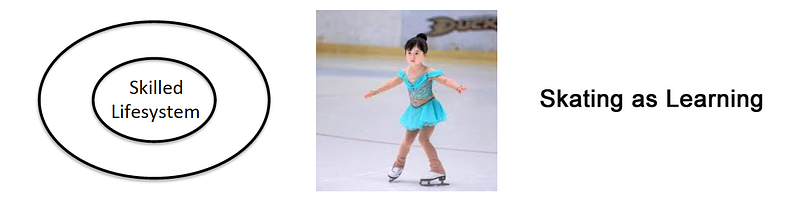
The characteristics of a Skilled Lifesystem are short time scale and small spatial scale. It is a person-centered routine practice with a clear goal of improving skills. For example, a kid joins a skating learning program. The lifeform of Skilled Lifesystem is more complex than Situated Lifesystem, however, its social complexity is still low.
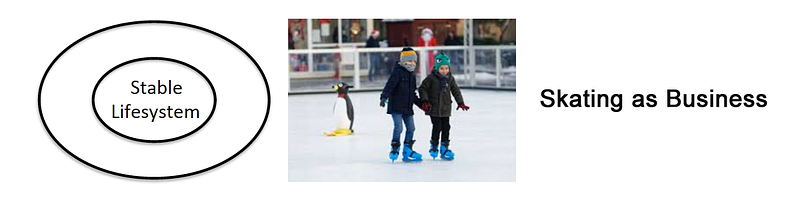
The characteristics of a Stable Lifesystem are the long time scale and big spatial scale. While the above two types of Lifesystems adopt the person-centered perspective, Stable Lifesystem moves to the institution-centered perspective. For example, there is a business entity behind the local ice skating rink. If we choose this type of Lifesystem for our research, then the primary member of the Group should be the owner and managers of the local ice skating rink.
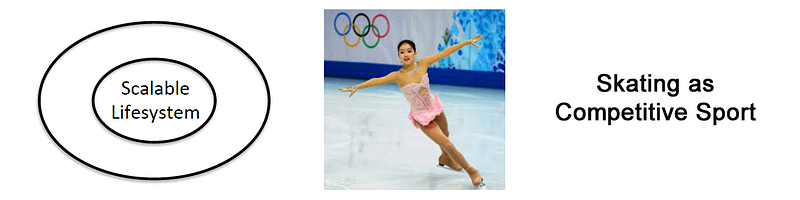
The characteristics of the Scalable Lifesystem are large time scale and large spatial scale. It is usually not restricted by the geographical environment. It involves complex and diverse social operations. For example, Figure skating is a typical competitive sport. Figure skaters compete at various levels from beginner up to the Olympic level (senior) at local, regional, sectional, national, and international competitions. Figure skating involves performance, media communication, professional judgment, business development, etc.
These four types of Lifesystems are not isolated but connected as a network of social practice. By adopting this typology, we can use the Lifesystem framework to design Furute Engagement.
Kinds of Design Wisdom
The Lifesystem framework was not developed as a framework for design. Originally, it was developed as an abstract model for modeling social practices. Its primary users are empirical researchers. My purpose behind the Lifesystem framework is to build a bridge between the ecological practice approach and a creative career or creative life.
There are two types of knowledge frameworks: Descriptive and Prescriptive. The descriptive frameworks tend to tell us what the thing is while the prescriptive frameworks tend to tell us how to do it. Researchers tend to use descriptive frameworks to explain what they care about while designers tend to use prescriptive frameworks to guide their design processes.
The Lifesystem framework is descriptive, not prescriptive. However, we can expand the Lifesytem framework at its operational level and adopt other related frameworks to build a toolkit for various design activities.
The above discussion offers some design wisdom:
- Design for Material Engagement
- Design for Social Engagement
- Design for Value Engagement
- Design for Resource Engagement
- Design for Future Engagement
A framework is a tool for thinking. To appreciate a new framework is to adopt a new perspective. This is a small step in developing our tacit knowledge.


