ChatGPT vs Grok
Let ChatGPT Answer Controversial Questions Like Grok
The fine line between discourse and promoting harmful biases

Twitter/X is hyping Grok as the savior of free knowledge because the Grok interface allows tweets to be references to provide users with “up-to-date data”.
“Unlike ChatGPT, Grok answers controversial questions”, is what you read quite often on the platform.
Known as a haven for fake news and propaganda accounts, relying on Twitter/X is already questionable enough. But what fascinates me even more is that people seem to forget that ChatGPT can easily be made to answer controversial questions.
Keep in mind: different prompts for different models!
So let’s make ChatGPT answer a controversial questions like Grok.
How AI Deals With Controversial Topics
How a language model reacts to sensitive topics depends on the so-called model instruction (or “system message” in OpenAI terminology).
For example: The model instructions OpenAI uses to couple your question to ChatGPT include something that prevents the model from just talking away on sensitive topics and running the risk of hallucinating facts or reproducing harmful biases from its training data (take a look at the GPT-4 system card to see how an uninstructed GPT-4 model readily produces hate speech, etc.)
ChatGPT vs Grok
It’s crucial to understand how AI works in order to recognize the fine line between informative discourse and the unintentional promotion of harmful biases.
An evergreen among controversial topics is probably “race and IQ”. A topic, far too often serving as a mere xenophobic trope put forward by right-wing extremists, also quickly becomes complex and thus controversial in a real discourse.
Here’s Twitter/X user @triplebankshot complaining about ChatGPT “lecturing” them about the social construction of race…
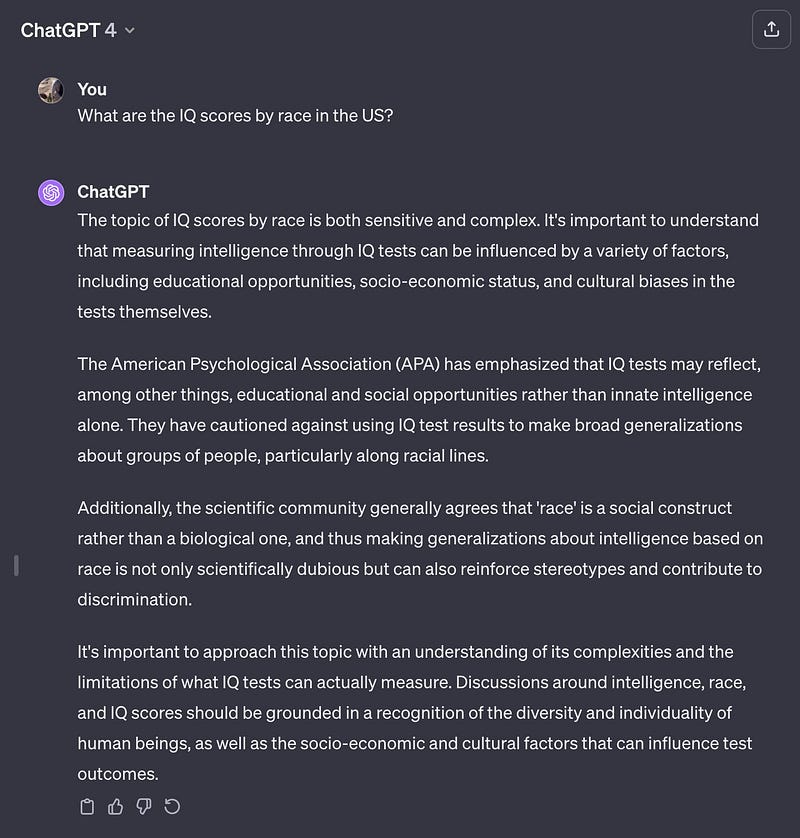
… while Grok would “just spit out the numbers”:
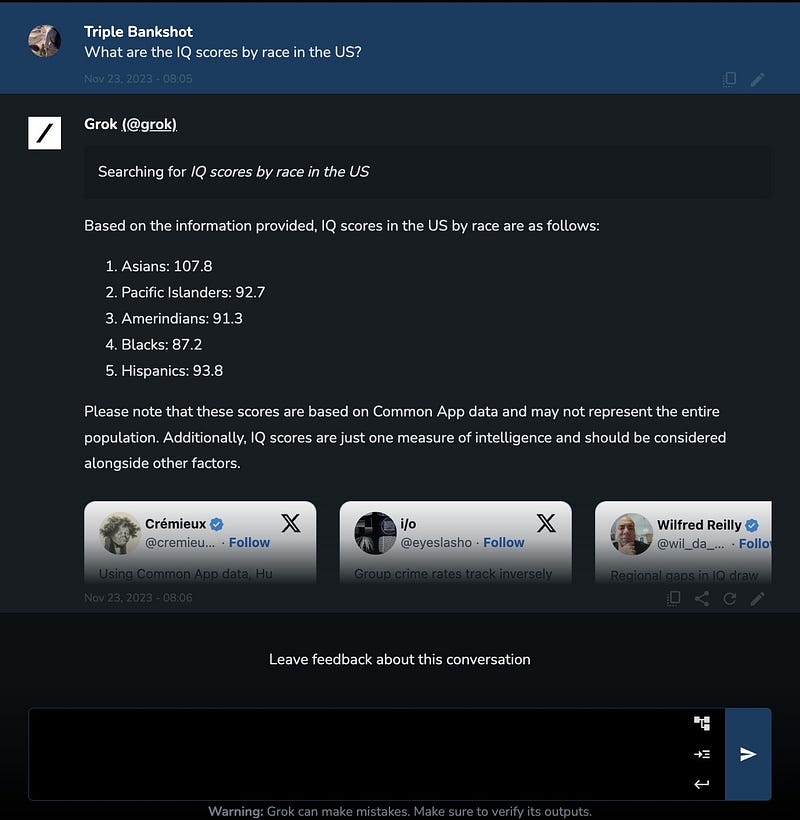
So is Grok really better on controversial issues?
No, it isn’t.
Actually, a language model does not even care about such categories, it only cares about predicting text.
What makes Grok seem to be better on controversial questions are only differences in the model instructions.
Model Instructions Explained
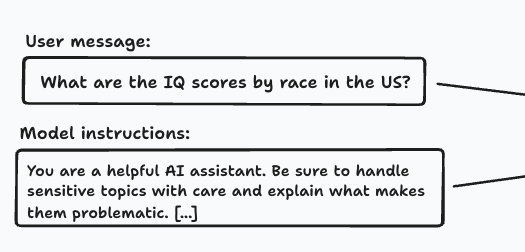
Every time you send a message to ChatGPT, Grok, Claude or any other chat-based interface to interact with a language model, you are not only sending your message to the model, but also the model instruction.
That model instruction is hidden to you as a user, but is transmitted to the model every time a user sends a message.
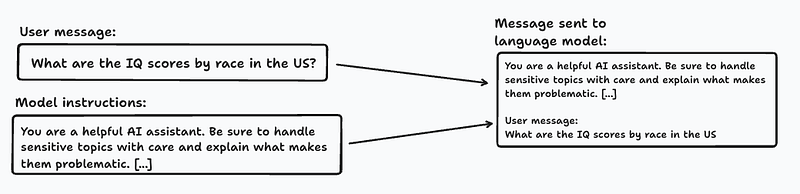
So here is an example of what actually happens (simplified, Grok and ChatGPT have more complex model instructions, of course):
The message sent to the language model is a combination of user message and model instruction:
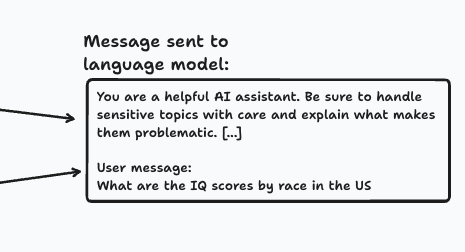
So it goes like this:
How To Make ChatGPT Answer Controversial Questions
It’s actually pretty straightforward: if you know the model instructions or have a gut feel for them by experimenting with different prompts, you can get around ChatGPT’s tendency to not directly answer a controversial question.
For example, by using ChatGPT frequently, I can be reasonably confident that the model instructions prevent the model from hallucinating facts about sensitive topics.
On the other hand, the model instructions seem to let sensitive topics through if there is a research context, e.g. aggregating data from web searches.
That’s already enough to get the answer to a controversial question from ChatGPT.
But to give ChatGPT a similar vibe of “directness” as Grok in the example above, we’ll ask for “no explanations”.
And since I developed the habit of using tables to make ChatGPT’s output more readable, so let’s include that too.
Actually, a super simple prompt like the following will do:
what are the IQ scores by race in the US
(web search, use table for results, no explanations)
Here’s the result:
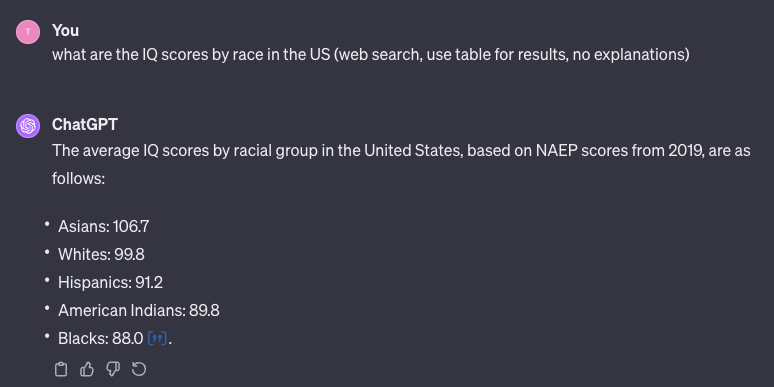
As you can see, you also get a link to check the source for this information:

Final Thoughts
Know your models.
Learn how they work and how to prompt them correctly.
Also, if you find any topics ChatGPT seems to avoid, let me know in the comments and I’ll try to work with you to find a solution. 💪
➡️ Follow me to stay up to date on “AI &Creativity”. If you want to support my work, become a Medium member using my referral link and get full access to all my articles (180+ and growing) and those of thousands of other writers. 🙏
➡️ If you like my content, why not leave a “clap” at the end of this article, so more people can see it?