
Lest We Forget: Topolski’s 20th Century
Feliks Topolski’s ‘Memoir of the Century’ was a labyrinthine installation of illustrations well worth remembering…
College trips to London were a termly highlight and my itineraries would include the tutor-recommended blockbuster exhibition, one or two of the big museums, a turbo-browse of a couple of choice record shops and Forbidden Planet, of course. I also made a determined effort to drop by a few venues that felt like they were ‘my’ discoveries. There were a couple of small Bond Street galleries that showed cutting-edge contemporary work… and, there was Feliks Topolski’s Memoir of the Century (1975–89).
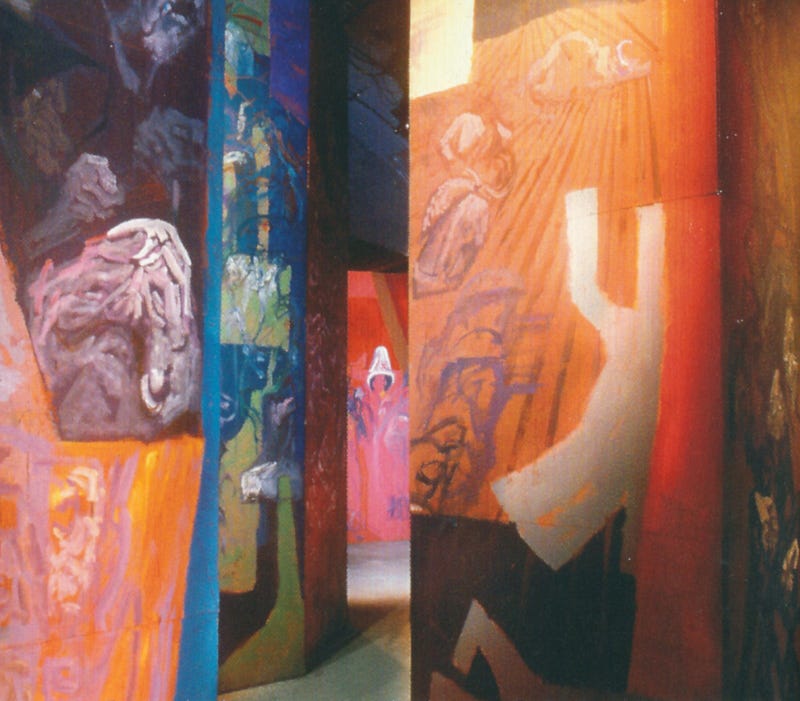
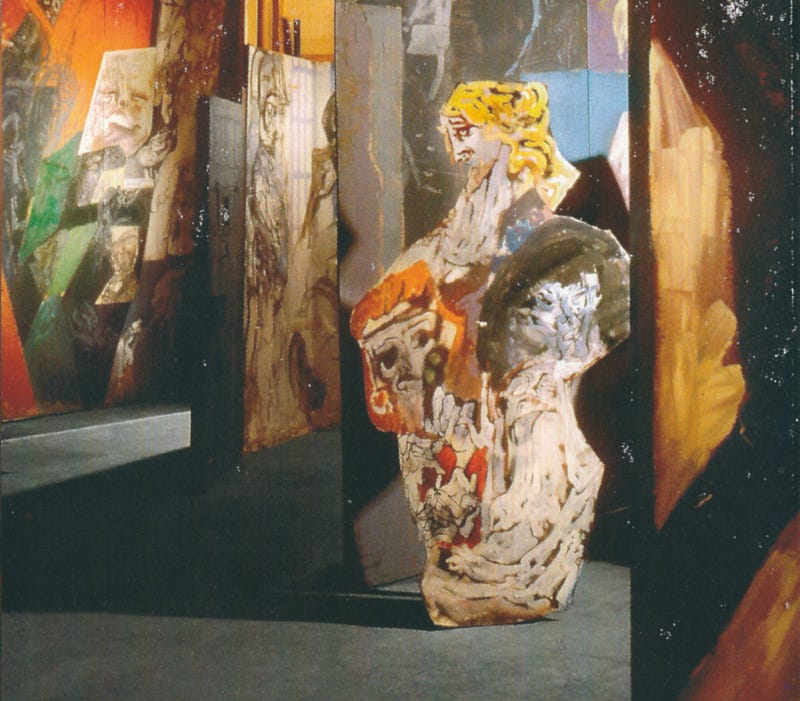
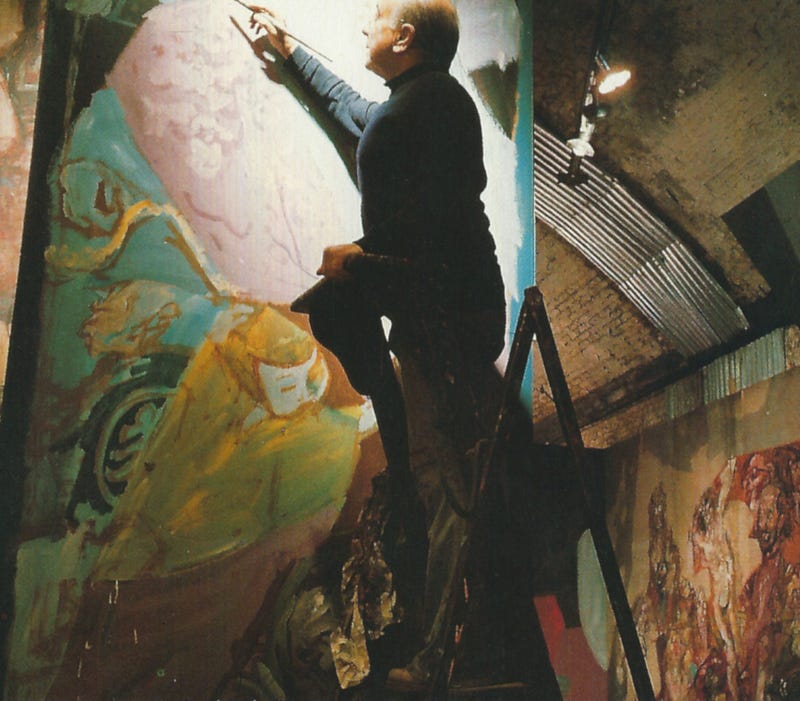
It wasn’t exactly a ‘hidden gem’, but you had to know it was there. Chances are that if you disembarked at Waterloo station for the South Bank Centre and its Hayward Gallery, you’d stroll past the arches of Hungerford Bridge and possibly miss the signage for Feliks Topolski’s studio. Which would be a shame because behind its unassuming facade there was an extraordinary exhibition of the artist’s life and works, brought together in a cohesive mixed media walk-though ‘collage’, 600 feet long and 12–20 feet high.
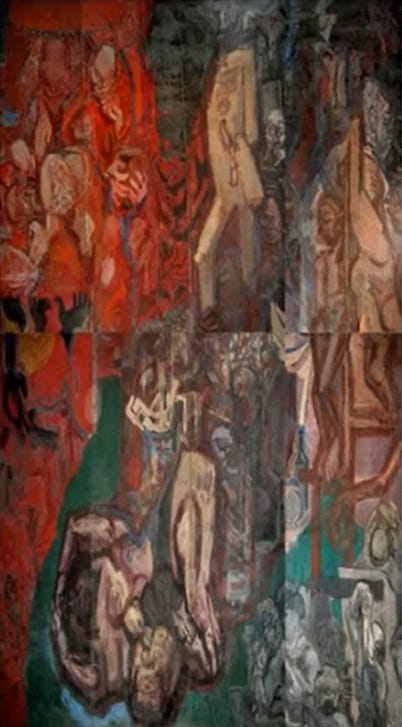
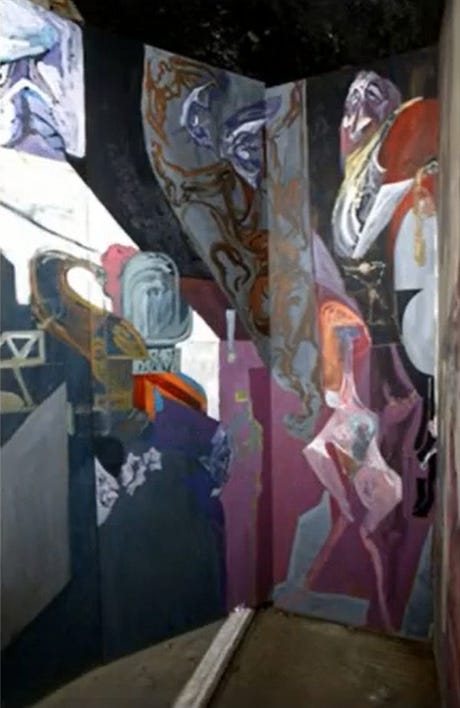
It was a Modern patchwork of sprawling abstract expressionism, figurative tableau, historic reportage, sculptural elements, realia, and a rotating panel here and there. The twentieth-century, unfolded before the visitor, the highs and lows, portraits of pop stars and despots, the headlines and backstories, trials, tortures, and triumphs… Feliks Topolski bore witness to all these things. He was there.
Polish-born Feliks Topolski used his training at the Warsaw Academy of Art to gain commissions for Polish newspapers that enabled him to travel far and wide during the 1920s. He had army training, as a cavalry officer, and during his travels as a reporter, he observed the changing attitudes that foreshadowed War.
In 1935 he gained Royal patronage as an official artist recording the Silver Jubilee of King George V. He was seduced by London’s multi-cultural mix, its pomp and parades, bowler-hatted business commuters rushing past street vendors, the super rich boasting their splendour, and the desperately poor in tenement ghettos. He saw an exotic ‘otherness’ that appealed to his own outsider sensibilities and he was quickly accepted into the lively inter-war arts scene.
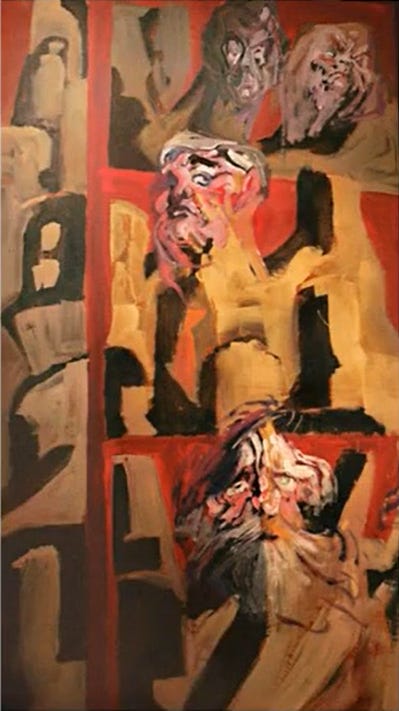
Early on, he met and collaborated with famous playwright George Bernard Shaw, providing illustrations for Geneva, first performed and published in 1938, and then In Good King Charles’s Golden Days, the following year. Shaw was a provocative personality and his often contentious comments were regularly reported in the newspapers. So, illustrating two of his new plays introduced Topolski to a broad audience.
When the Second World War broke out, he was unable to return to his Polish regiment, enlisting instead in the British Army where he was made an official war artist by both the Polish and British military and was contracted by Picture Post Magazine and Illustrated London News. He was sent to record events on every active front, and famously documented Operation Benedict, as part of the Arctic Campaign, and The Battle of Britain. He was with the allies when they entered the Belson murder camp. Recording the atrocities he witnessed there affected him deeply and indelibly. As the allies liberated Europe he continued to draw the destruction, the dead, the displaced, the soldiers, the people...
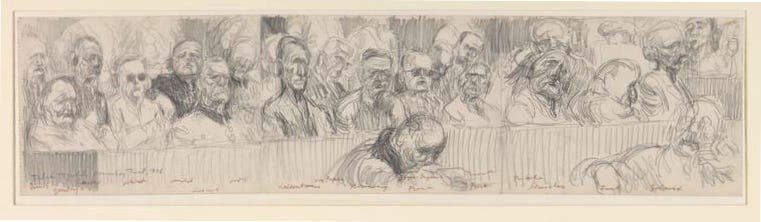
Shortly after the War, he was a courtroom artist at the Nuremberg Trials. He celebrated the potential of lasting peace by painting scenes from the first meeting of the United Nations, documenting the last days of the British Raj and the beginnings of an independent India as part of the League of Nations.
Around this time, Topolski was made a British citizen, representing the nation in the art competition at the 1948 Summer Olympics. He became an official Royal artist and was commissioned to produce the large mural, Cavalcade of the Commonwealth, for the 1951 Festival of Britain, and a 14-panel mural for Buckingham Palace commemorating the events of Queen Elizabeth II’s Coronation.
He set-up studio near the Festival grounds and saw the area grow from a post-industrial dereliction into what is now Europe’s largest centre for the arts known as the Southbank Centre, including the Royal Festival Hall, Saison Poetry Library, Queen Elizabeth Hall, the Purcell Room, and the Hayward Gallery. From this hub, he continued documenting the changing post-war British identity. His astute outsider eye often seeing subtleties other artists may have missed, placing his observations within the broad context of international social and cultural upheavals.
Topolski’s modest studio became a cross-cultural melting-pot and he was just as likely to be visited by royalty and celebrities as local tramps, or international dissidents. He was just as happy in the company of Shakespearian actors as rock stars, revered literary figures or hippies. It’s said he always met people ‘on the level’ as if he knew nothing about them and was resilient against prejudice, shunning any pre-perceived expectations. He travelled with Gandhi, breakfasted with Martin Luther King, hung out with the Black Panthers, partied with the likes of Elvis Presley, Pablo Picasso, Andy Warhol, and rock band ‘Hawkwind’!
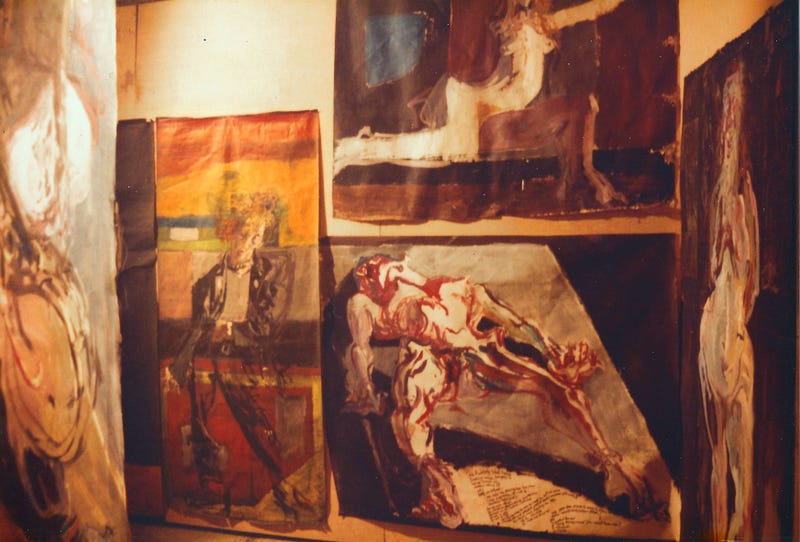
All the time, he was drawing. Topolski drew rapidly, looking at his subject rather than the paper. He would then work these loose’n’lively sketches into big paintings, influenced by his emotions and memories as well as the vigorous mark-making. Sometimes he would paint directly from memory onto large canvasses, often in oils and thick gouache, but also experimenting with household paints and introducing collaged elements that included newspaper clippings, fabrics, and even a cell door from the demolished Newgate Prison.
In addition to his high-profile professional commissions for the British Broadcasting Corporation and international news syndicates, he produced Topolski’s Chronicle documenting his unique view of major world events. He self-published this fortnightly broadsheet from the early 1950s to the late 1970s, eventually showcasing more than 3,000 drawings in its pages. He sold his Chronicle direct from his studio and to international subscribers, it was a non-profit venture, completely free of any editorial restraints.
It is this wealth of personal work that provided the basis of what would become his Memoir. In 1975, he expanded his studio into a series of neighbouring railway arches ‘just round the back’ of the Southbank Centre, and began compiling the major installation. He would transiterate the drawings from three decade's worth of Topolski’s Chronicle, adding hindsight and his own personal responses as he did so. It was a hugely ambitious, potentially endless project.
I was lucky enough to visit several times during the 1980s and witness the huge artwork growing and evolving into its final stages after its official opening to the public as Memoir of the Century, a free-to-visit ‘permanent’ public exhibition and educational resource. The panel I recall clearest was a portrait of Andrei Tarkovsky.
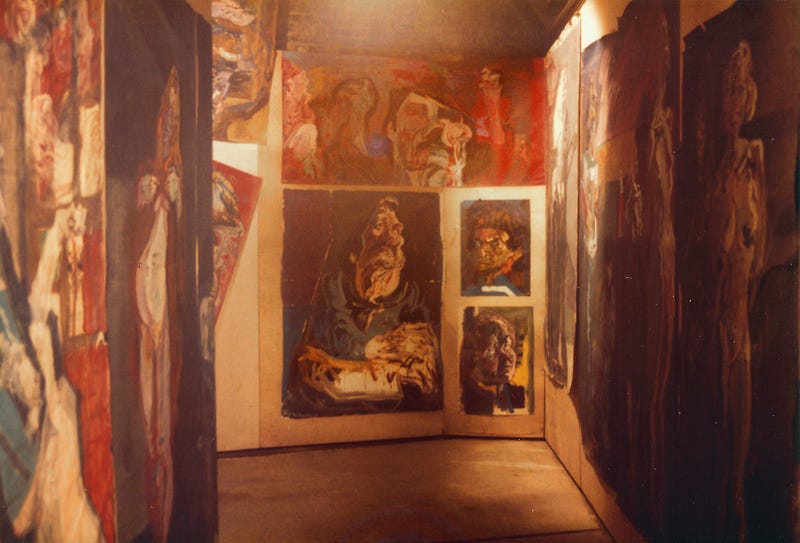
At the time, I had only recently discovered the Russian auteur and, to place things in context, I had yet to see his latest film Nostalghia (1983), and he had not yet made his final film, Sacrifice (1986). On one occasion, Feliks Topolski called down from the platform where he was painting a high panel, just to say ‘hello,’ and ask if I or my student pals had any questions. We didn’t then, but would now.
We knew we were walking through a unique work that challenged both artistic and social conventions in its styles and subjects. Perhaps we didn’t appreciate how privileged we were. Feliks Topolski had plans to make his installation an even more immersive experience with the use of projected films and a soundtrack. He collaborated with musician and film-maker, Bettina Gray who composed five segments of Music for Memoir of the Century intended be piped into the different zones, overlapping and mixing in the space as the visitor moved through it.
Topolski continued to innovate and work on Memoir of the Century until his death in 1989, shortly after he’d been recognised as a Royal Academician. What a life. What times he’d lived through, perhaps experiencing more things more deeply than most. It brought home what a tragedy the loss of a life’s experience can be, what a culture stands to lose when the unique memories of an individual are gone. But at least he’d left this amazing personal record of the times...
Alas, no curatorial care was secured for the installation after the artist’s death and it quickly fell into disrepair, suffering damage from pervasive damp and repeat flooding until it was closed to the public. Topolski’s long-time royal patron and personal friend, the Duke of Edinburgh, held fund-raising events that enabled restoration and the exhibition finally reopened, briefly, in 2009.
Due to rising rents and lack of further funding it was shut down the following year only to reopen as a cafe bar in 2014. Most of the installation was dismantled and moved to storage except for a few of the major panels that became the décor for the Topolski Bar. It was hoped this business venture would also help preserve the Memoir, for possible future exhibition if ever a suitable space and sponsor could be found.
We’re still waiting… Perhaps an immersive virtual version is now a viable alternative, making a digitised tour of Feliks Topolski’s Memoir of the Twentieth Century accessible to a world-wide audience, with clickable interpretive text and relevant news footage. That would be a fitting memorial…
* All images are used with license, or presented here for educational purposes under fair usage policy. Please credit the author-provided photographs by Remy Dean accordingly if used elsewhere.


