
NFTs and Generative Art
Lessons Learned Doing Generative NFT Art Drops
Things I did right, and things I did wrong!
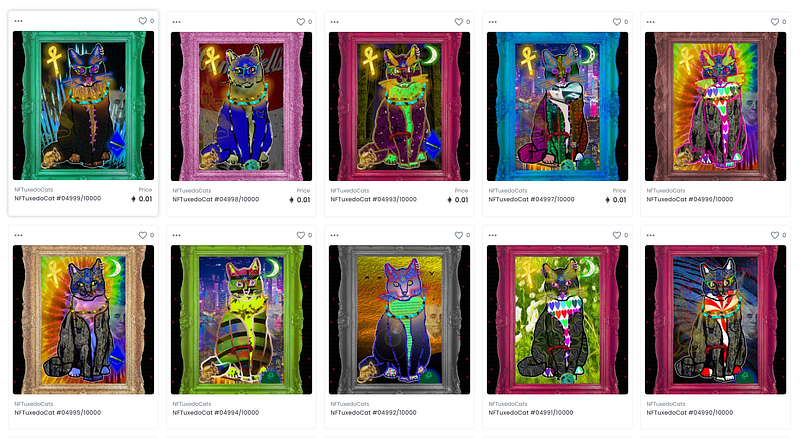
Less than two months ago, I got into generative NFT programming, just to see if I could do it. I really never expected anything else to happen :
- never expected anyone would actually buy one;
- never expected to video chat with perhaps 100 different business entrepreneurs, artists, promoters, and tech people worldwide (from at least, what, 10 different countries?);
- never expected my work life to transform from building web sites to coding generative art and studying ETH smart contracts.
Life just got crazy (and fast), all from screwing around with cat pictures.
Since then, scores of people from Discord, Twitter, Instagram, Facebook, Medium, and LinkedIn have asked me if I can help them with generative NFT programming. (And, the answer is YES!) And that’s what I’ve been busy doing ever since. For anyone wondering that, start here.
But for today, I want to talk about my first drop — what I did right and, more importantly, what I did wrong.
The Good
On the plus side, I got the art coding right. I mean, sure, I’ve since streamlined my system, as I needed something that could accommodate all types of clients. My first go was purely focused on one project. But, like all tech systems, they can usually be converted to support a wider array of users and situations. So, I spent a lot of time fine-tuning things and processes so that I can now more easily help others.
As a programmer, I feel super confident about the generational aspect of this, and have yet to hear an idea from a client that I couldn’t pull off (though some are more complex than others!). (Well, I take that back, actually. I don’t do 3D animated generative productions, so I’ve declined one or two inquiries. I am into some generative GIF work lately, though!)
Trends I’m Excited About
One thing I’m seeing more of lately, by the way, is generative sets that include multiple characters. One of my favorite upcoming drops (I’m not affiliated with them!) is called the Canine Cartel. Have a look at the sheer number of characters they have here:
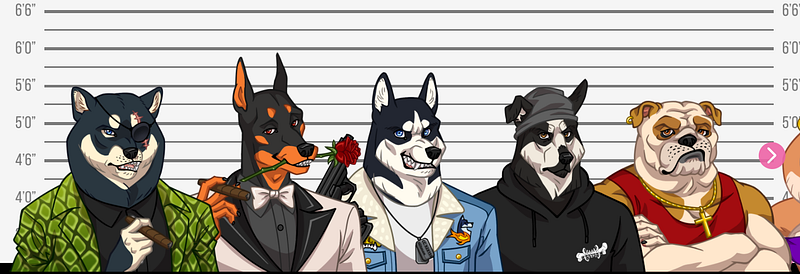
I sense that this is a direction in which generative sets are heading, or will be soon. It’s great from many angles: From a marketing / sales perspective, it’s likely people may well purchase more than one, in hopes of getting a certain breed. From an art perspective, it’s clearly more exciting because it could be one giant project for a solo artist or even a chance for a whole team of artists to collaborate unlike ever before. And from an overall aesthetic standpoint, it greatly enhances the sense of differentiation that (in my opinion) the best generative sets really produce.
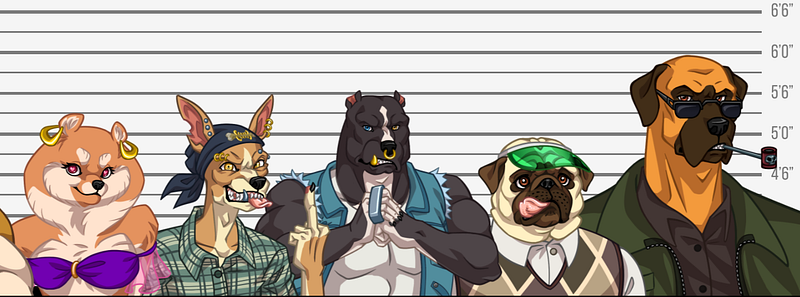
And they’re fun to code, too! From a generative NFT coding standpoint, I love projects like this, and hope to land some in the near future). (I have some great irons in the fire along these lines!) With my current projects, I have some nice complexity, for sure, but something like this would be super fun to code, especially if they all come from a single script where each *breed* has a rarity as well as all of the amenities or traits of that breed.
I’ve been doing more of this stuff in code lately — things like I’ll have a trait like a t-shirt be available. And then IF the t-shirt is there, then we pick something to show up on the shirt. With the breed aspect, it’s a whole layer more complicated. First you have the code select a breed, and then IF that breed is selected, you run trait X (specific to that breed) — and then IF trait X is there, maybe you run trait Y (also specific to that breed) as well sometimes.
Complex, yet also nice and orderly, just the way we coders like things in life, I guess.
Side Note for NFT Investors
Btw, I’m willing to bet anyone that the above-mentioned set will SELL OUT 100% on their launch date next week (Aug 24). Precisely 10,000 dogs will angrily attack the blockchain so hard, the whole ETH network’s going to need a rabies shot. And, at 0.05 ETH each, that’s about 500 ETH (~$1.5 million) in initial transactions that will be taking place from that web site. (UPDATE: If you had bet against me, you’d have lost, as they DID sell out, and fast! Watch it all happen in a separate article, right here.)
So, aside from anything I discuss here, do yourself a favor and grab yourself a dog or two on that day. All you need to do is get in line — be at your machine, and BUY some. After that, the secondary market hits, where collectors and those who missed out will pay 2x, 3x, 10x what you paid. So, if you want to make a few $$$, take my advice. :-) (Guess I need to do another article on NFT investing!) (UPDATE: In fairness, the floor price, as of 9–5–21, has remained at 0.05. So, they’ve not moved in value since the sale.)
The Pretty Good
I feel like I did okay-ish on marketing, all things considered. Since launching, I’ve learned quite a lot (and will touch on that below). I may have missed out on properly hyping and community-building, but in terms of day-to-day shilling all over the Internet, I feel like I did as good as the next solo guy. (And I’m not yet done! So, who knows?)
Financially speaking, I guess I did okay-ish as well. I mean, the cats generated a few hundred bucks, which is a few hundred bucks more than I started with in my ETH wallet. The real story for me was that these cats also opened doors to me that have put more ETH into that wallet. So, I can’t complain on the whole. But, it does offer a lesson to would-be NFT artists — success is not guaranteed, and making NFT sales generally takes work if you just have a set out there for sale and aren’t doing a whole event-type thing around your collection.
Pricing note: One thing that’s kind of noteworthy here is that NFTs live in the crypto space. And, that space can swing wildly in value. When I listed these cats, ETH was at around $2k per ETH, I believe. And so many of the early cats that sold brought in about $20 each. Now, those same cats (many listed at 0.01 ETH) will cost people $32 each (plus gas), so that’s quite a swing in price. As such, I’d recommend that before clients list items for sale, they put some thought into what the equivalent cash price is for their items, and maybe consider what that would be if the price were to swing crazily in one direction or the other. There may not be any great strategy here, but it’s something to think about, anyway.
The Bad
Launch Issues
Really, the worst thing I did with the NFTuxedoCats was I hadn’t yet gained an understanding of how to launch a generative set — whether that was through a manual process or through automated means, or via a mint-on-demand scenario. I simply didn’t know then how that should be handled, and instead of researching it properly, I more or less rushed in, just wanting to get some cats online and listed.
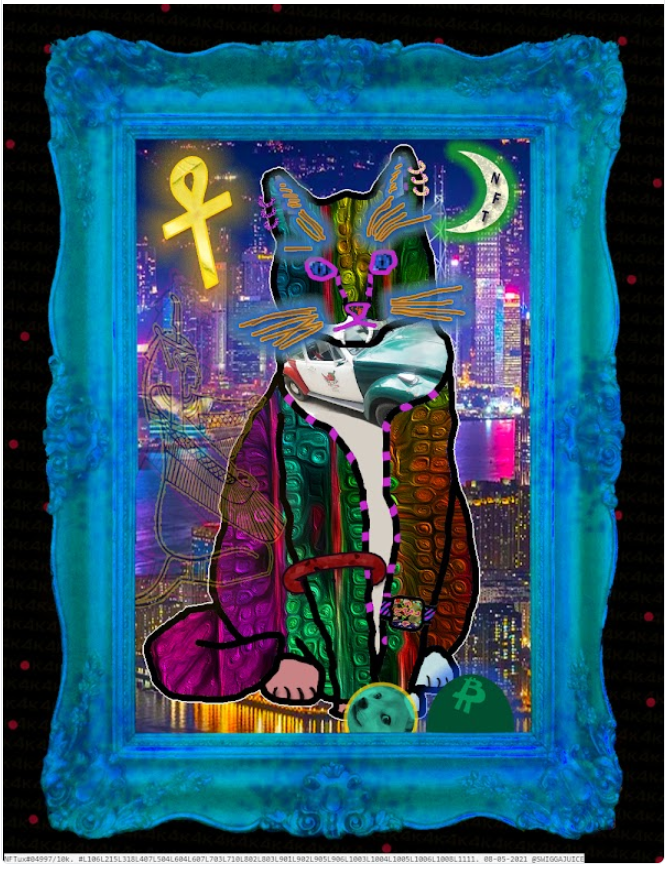
And yes, that worked out a bit, but I soon found out that manually listing NFTs with a ton of traits and variations is a herculean task, and a massive time-suck. (I think *maybe* if you were just doing 1,000, you could consider doing a manual listing. But 10k would be unbearable via this method.)
I’ve written before about some of my quasi-clever ways of addressing this problem (one being leveraging macro software). But, I wasn’t ultimately happy with that, either.
And again, this is way before I found out about smart contracts and whatnot!
Listing Issues
What’s worse: I eventually just wanted to get them all listed for sale. So, I backed my macro software off to do just uploading only, and that worked great for a long time. I would it upload (but not offer for sale) 100 or so per day, which was fine to just get them into the collection.
I thought to myself: Well, they’re there, so maybe people will just make me an offer if they find a cat they like. But that, too, was problematic. Once an offer came in via that scenario, I noticed something interesting: The seller pays gas on “make offer” transactions. (For normal purchases, the buyer pays gas.)
So, I had some situations where people would offer me like $30 for a cat, and the gas fee was like $35. So… lol, I’m selling cats for negative five dollars now? Not optimal. (So, if you’re reading this and doing manual uploads, do yourself a favor and make sure to list them!)
Marketing Miss Out
In addition to the tech side of the manual minting process I pursued, I feel like I missed out on a big marketing opportunity doing it this way, as the real action seems to be in pre-hyping a set, having a roadmap (something I also did not do, and will have to write about), and doing the mint-on-demand style initial offer. Though, in fairness, I suspect marketing is simply tougher for solo artists (or artist/coders) than it is for teams, as you’re just one person. It’s tough to build a community when you’re alone, right? So, this may indicate that forming a decent-sized team, with various skills to offer, is possibly the best bet.
Meta Miss Out
And finally, a huge faux pas (faux paws?) was, as I mentioned above, ignoring the property information — the metadata trait information for each cat. I’m going to do a separate article about NFT rarity, and just the whole game of it all. But, many collectors indeed like to know how rare an item is. And I basically ignored this with my first set. I figured people might like them from purely an aesthetic standpoint. In fact, there aren’t many “super rarites” in the set at all, as many of the items appear just purely by chance. (It’s just that there are so many possibilities with these cats, that I figured the rarity would be measured by how many or how few showed up. But, that’s not exactly how people gauge rarity.)
I’ve since, of course, come to understand the rarity game a lot better, and will be writing about that. I’ll always love the cats, though, as they were my first real NFT experience, and opened so many doors for me. And I’m slowly continuing to upload them, just so all 10k have their final home online (well, perhaps their penultimate home, as others may still buy them). I’m also planning to post the rarity data on another site after I’m done, as I think some people will still like sorting through all that.)
What’s in Store for NFTuxedoCats?
Well, I’ll continue to upload until I get to 10,000, as I’m just not the kind of person to leave things half-finished if I can help it. If possible, I’ll see if there’s some way to programmatically edit meta data on collections that use OpenSea’s shared contract (which is basically what you’re doing if you use the OS interface to start a collection instead of using your own ETH smart contract). If so, I’ll edit that meta data. Perhaps they’ll offer an API in the future or something for this.
I’ll likely also continue to list them for sale (thus avoiding that gas issue mentioned), and to market individual cats in the same ways I’ve always done, which does seem to work. I’ll also possibly look into developing a Discord for them, and maybe will do the ubiquitous “roadmap” plan for them. (Though, tbh, not all generative sets have one. I don’t believe the Cunning Foxes did, for example, and they managed to sell out.)
Ready to Get Started With a Generative Art Set?


