
Health and Wellness
It is Time to Stop Living in Fear
At some point, fear becomes more damaging than the event that brought it about

Things aren’t normal. This year has played out very differently than most any of us expected and people are being impacted in significant ways because of Covid-19.
If you spend any time at all observing the news, television commercials, radio broadcasts, electronic or social media, we are bombarded with information and opinion about Covid-19 and its impact. It is our current obsession.
It is hard not to experience emotion in response to what we see and hear, especially if it is focused on something negative such as a viral pandemic.
When the message is so pervasive across so many forms of media it is all too easy to become micro-focused on that particular topic; and to do so to the exclusion of any and all other pertinent information we need to live our lives effectively.
During such time we begin to only see trees, completely forgetting about the fact that we are surrounded by forest. That is what is happening across the world today, and it is creating havoc and harm for all of us.
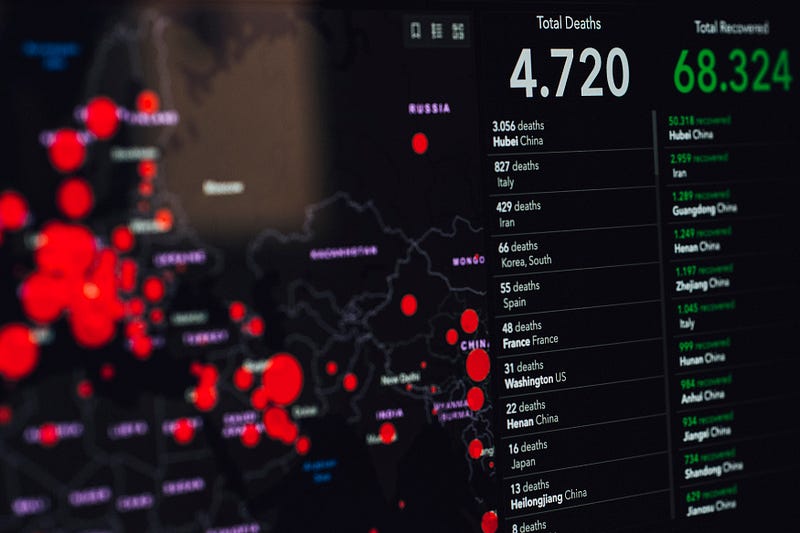
Statistics can be presented in such a way as to emphasize pretty much any point you wish to make. Savvy arguers use statistics effectively to compel and sway others to agree with their ideas. Today we are constantly being bombarded with statistics about the Coronavirus and its impact.
Some argue that it is no big deal, while others argue the opposite, often citing many of the same statistical sets and sources such as the CDC. At this point, I feel certain that even the most rational of us are having difficulty knowing just what to believe.
People are quick to compare the Coronavirus death toll to annual influenza numbers as well the Spanish Flu in 1918 to give us “perspective” on the impact of the current virus. Meanwhile there are plenty of others saying that numbers aren’t telling us the “whole” truth.
It is hard to know how to develop a reasonably formed opinion while being constantly barraged with all this disparate information.
But I do know this. We are all going to die. Nature currently has a win-loss record somewhere in the hundred bazillion to nothing range. 100%-win percentage. Something is going to get us in the end.
And most of us can establish a pretty good idea of what that may look like by examining our family history. The fact is that if your father died of a heart attack at age 35, Covid-19 should not necessarily be at the top of your danger list.
In my case, there is a strong family history of healthy hearts, but cancer is another story. With two similar age cousins deceased, and a younger sister now five years post successful treatment for colon cancer, if I am looking over my shoulder for any sort of specters, then statistically I should be much more concerned about cancer than Covid.
Yet, before I ever heard of Coronavirus, I was not cowering in fear of cancer. I lived my life everyday quite normally and only thought about it during annual physician checkups when we talked about when my next colonoscopy should take place.

The fact is that in spite of a mounting death toll from the virus, heart disease and cancer (among many others) remain the leading cause of mortality in the United States. That has not changed since last year when we only thought of Corona as a beer.
But none of us spent our days in fear of those things. We had normalized those significant causes of mortality as an accepted fate for many. A huge component of us being able to normalize those thoughts was the fact that we know that being freaked out about cancer and heart disease doesn’t do anything to reduce the risk of death.
The media coverage and information dump about cancer and heart disease has become a background noise rather than constant rallying cry.
Instead we take reasonable precautions and go about our lives. For any of us, and particularly for anyone in a high-risk group for either, we might adjust our diet, stop smoking, exercise more and seek out some clinical advice from our physician to reduce our risk exposure.
But we didn’t live in fear. Nor should we be doing so now in the time of Coronavirus. It is time for us to push the Coronavirus news and social media barrage into the background and step back and take a look around at everything else.
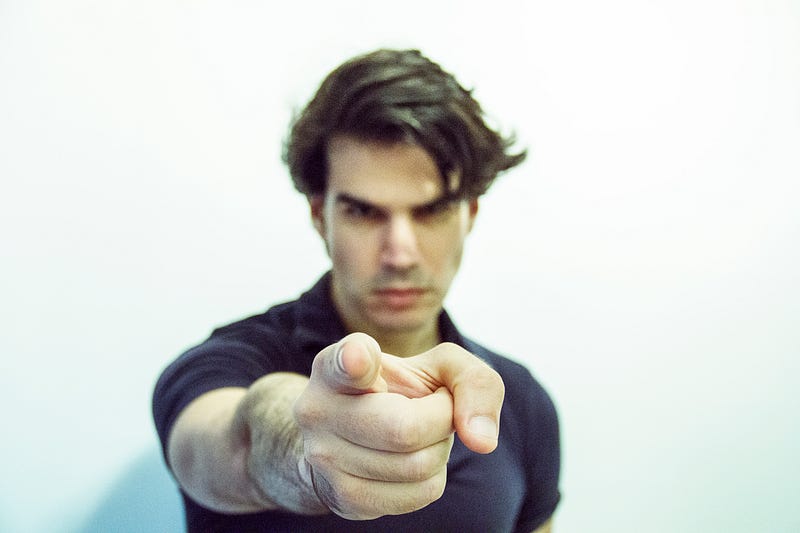
Some of the overt manifestations of fear are discrimination, stereotyping and finger pointing. We are seeing massive amounts of that today. There were plenty of dividing lines among us before Coronavirus and those are more evident than ever and now include a new “class” of people who are “at risk”, further dividing our communities into polarized factions.
We have turned discussions around reasonable precautions and risk reduction into battlegrounds of hate and derision. We scorn those that do wear masks or do just the opposite, depending on our particular point of view.
We deride and shame those that “violate” social distancing norms without knowing for sure what the true circumstances may be. Never mind that five months ago no one even knew what social distancing meant.
We have even managed to politicize nature. Coronavirus doesn’t have a liberal or conservative bias, but in the United States, many believe it does.
All of these events are deeply rooted in our fear. While it may be a characteristic of humans to turn our fears into stereotypes and discrimination, it is an ugly and repulsive trait. Never has it been any more so evident than in the wake of this global virus event.

The fact is that the existence of Covid-19 and its impact will normalize over time. This isn’t due to any sort of sugarcoating or gaslighting as some have suggested might happen in the wake of the pandemic, but rather just the way humans adapt to change.
What is new, unknown, and scary becomes known, a matter of happenstance, and normalized. It has happened before, and it will happen this time as well. At some point in the future, the Coronavirus will be a blip in the history books.
Take measles or polio. There are probably a few among us that can remember a time when those two viral diseases ran rampant. Certainly, there was a period of time when people were fearful of those diseases. According to Wikipedia, the 1916 polio epidemic caused widespread panic with people fleeing cities to escape exposure.
The other fact is that there is only so much you can do to avoid a virus. People are going to develop and transmit the disease to others. That is the way it works.
What you can do is LIMIT your risk of exposure. You cannot completely eliminate your risk. Like a lot of things, there are diminishing returns on any extremes you take to avoid exposure. Even if you lock yourself away high in your castle, there is still at least some element of risk that you might be exposed though some vector that you did not account for.
Most of us have settled into a zone where we are comfortable with our element of risk.
Maybe it is lots of hand washing, keeping distance and wearing a mask when appropriate — or maybe it is some similar, but different version.
We have definitely gotten to the point where worrying about what anyone else is doing is a completely pointless activity. You have settled into your inertial groove; so too, has everyone else.

That is why now is the time to dispense with the fear. There really isn’t anything to be afraid of anymore. We know what we know, and the virus is what it is.
It is time to move the barrage of media and opinion to the background. Change the channel on that radio or television that is blasting Covid-19. Ignore those social media posts and begin to concentrate on everything and anything else.
Begin to take the steps to move Coronavirus to the same place in your daily life where your concerns about automobile accidents, cancer and heart disease reside. Those are still scary and real. We need to do our risk assessments and make careful choices about all those things, plus now Coronavirus as well.
But, just like with cancer and heart disease, we don’t have to live in fear. Make that time of fear be over. Place it in the background of your life and start focusing on forest and not the Coronavirus tree.
We are going to normalize this pandemic. That is just the way it works. So rather than spinning our wheels and wringing our hands, let’s begin working towards that end sooner rather than later.
We all need a long break from the fear.
If you liked this article, you may also like:
Timothy Key spent over 26 years in the fire service as a firefighter/paramedic and various fire chief management roles. He firmly believes that bad managers destroy more than companies, and good managers create a passion that is contagious. Compassion, grace and gratitude drive the world; or at least they should. Follow me on Instagram, Facebook, and Twitter, and join the mail list.