
Health & Technology
How Disease Contact Tracing Methods Will Change Who Controls Your Health Information
Why Blockchain and Bluetooth technology will completely disrupt central medical record storage models
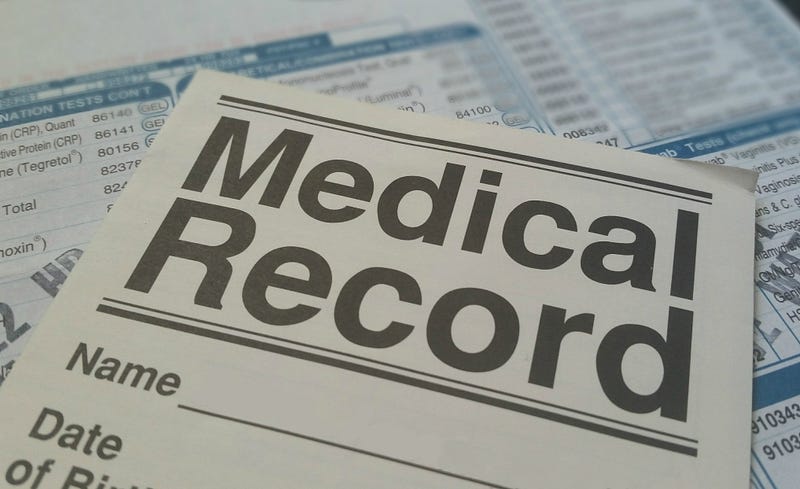
Who owns the information about your personal health? Odds are, it isn’t you. Rather, your health information resides in a centralized data bank called a Health Information Exchange (HIE), or similar information repository that is controlled by a large corporation, a government or other healthcare entity.
The various HIEs communicate directly with one another to share your health information when necessary, like when you visit a doctor in another state/county or just one that belongs to another health information network that the physician you used in the past.
Rapid access to your health data could save your life.
On the surface, this is a positive thing. If you are severely injured or incapacitated, a treating physician in an emergency department can instantly access your prior health records without relying on you or family to relay critical information that might affect your outcome. That is good.
Likewise, specialists can instantly obtain your health records from your primary care doctor even if they are in another health network, dramatically reducing the waiting time to obtain needed specialty care. Someone doesn’t have to manually deliver your records to the specialist, it is done immediately. That is good.
Problem
However, there are obvious downsides to this model. The first, and most glaring, is that someone else not only maintains, but physically (electronically) retains your health data.
Ownership
There is little that is more personal and uniquely identifying about us than our health care information, and yet we do not own it. At the core, that seems fundamentally wrong. Even patients that have only a minimal understanding of that concept were found to be resistant to centralized control of their health data in this study.
People want control over their own health data.
But even systems that employ what is termed as “Patient-controlled” local HIE models still retain the information in a central location. The individual has access and input, but no actual “control” of the information, as they do not possess and hold the information.
Risk of Exposure and Secondary Use
The other obvious downside is the risk of exposure of your private information to the public. You are completely reliant on another entity to safeguard your most private information and you have no control over what methods they employ to keep your information safe.
Not only is information safety in question, but also how the holder of the information uses the data. Lack of control over data collection practices, lack of transparency of use, absence of visibility when data is shared as well as the potential secondary use of medical records for data mining also populate the list of patient concerns about centralized data storage according to this study.
Even if the patient has some control over what goes into the record, they often have no control over secondary use of the data.
Solution Path
There are two current technologies that are likely to disrupt the current central storage repository model and allow for a decentralized retention of medical records by the patient.
Bluetooth
The first technology has been around for a while and provides a well-known and stable method for data exchange in a limited geographical area. Bluetooth allows for the transfer of data of short distances using short wavelength radio waves.
With a range of 1–100 meters, dependent on signal generation strength, Bluetooth allows mobile and fixed devices to communicate with one another when in range and enabled to do so.
One of the privacy and data safeguarding characteristics is the need to be within range to access the data. Therefore, there is a physical limitation to who may have access to your data over Bluetooth.
Blockchain
Blockchain technology allows for de-centralized storage of data that can be reconciled with other data sets because of the unique audit characteristics of how the system works.
Without getting too deep in specifics, blockchain allows for the local retention of large amounts of data that can be maintained anonymously, but yet can be verified, audited, appended, and utilized across networks while still maintaining the integrity and security of the original data. In other words, exactly the sort of security and anonymity a person would want to have with their health data.
Blockchain allows exactly the sort of security and anonymity a person wants to have with their health data.
Here is a brief primer on how blockchain technology is used in the exchange of electronic currencies such as Bitcoin:

Why Now?
Both Bluetooth and Blockchain have been around for a while, why can we now expect that their use will disrupt current centralized medical data storage models?
Inevitable evolution
Researchers, corporations and health care entities have been talking about the concept of decentralized medical data storage for a while, as documented in this study, and this one (as examples of many).
There are some logistical and technological hurdles to overcome, but none insurmountable. Essentially, until the outbreak of Covid-19 there hasn’t been enough financial incentive to push any interested stakeholders into overcoming the obstacles with any urgency.
In other words, this is was probably always an inevitable change, but now the future seems closer than ever thanks to the concept of disease contact tracing.
Contact tracing and Covid-19
With the outbreak of the communicable virus Covid-19 there has been a rush to develop a way to determine if a person has been in the proximity of someone that might have the virus and be contagious.
Apple and Google have joined forces to develop technology that uses Bluetooth to record the proximity of people based on their cell phone location. A person that opts in can then voluntarily update their profile to reflect whether they tested positive or have been symptomatic of the disease.
By collecting this proximity data, people can then be notified if they have potentially been exposed to the virus. There has been a significant struggle between governments and immunologists who want to have a centralized access to this data set, and the technology giants that have insisted that the data be stored locally on the users’ phones and not retained centrally.
People want to keep their health data private
The tech giants are winning. Not because they are tech giants per se, but rather because people want to keep their health data private. People are very reluctant to use disease contact tracing technology that centralizes the users’ data. People are much more likely to use systems that don’t store their health data at some central location that might share (knowingly or not) that information with unknown others.
Hurdles are being cleared
Because of the public urgency of the Covid-19 situation, many of the data engineering, technical and operational hurdles of storing health data in a decentralized fashion on users’ mobile devices are being conquered.
This is blazing a wide-open pathway for the decentralization of all healthcare patients’ data onto their own personal devices, rather than having it stored centrally. Change is now not only inevitable but comparatively imminent.
Incidental Benefit
Not necessarily inherent in the central data storage discussion, but a significant problem that can possibly be eradicated by decentralizing medical data storage is the fact that patients often do not entirely disclose their important medical history to their physician.
Fears of embarrassment and privacy issues often (possibly as much as 50% of the time) keep people from disclosing important health information such as depression, suicidal ideations, domestic abuse, and sexual assault.

Decentralization of medical data storage, as well as the ability for patients to have some self-orchestrated input to their health record can make a significant impact on addressing this issue. The idea of having something so intensely personal “out there”, somewhere where perhaps anyone might gain access, is a huge deterrent to patients reporting such issues to their physician.
Data decentralization will begin to address this incidental but critical problem.
Summary
Decentralization of personal medical data is on the horizon, and an unanticipated side effect of the recent Covid-19 situation is making that horizon closer now than ever before. The technology to make the potential into reality exists today. And major stakeholders in the hardware and software technology arenas are quickly addressing any technological barriers that are keeping us from getting there.
If you liked this article, you may also like:
Timothy Key spent over 26 years in the fire service as a firefighter/paramedic and various fire chief management roles. He firmly believes that bad managers destroy more than companies, and good managers create a passion that is contagious. Compassion, grace and gratitude drive the world; or at least they should. Follow me on Instagram, Facebook, and Twitter, and join the mail list.