avatarTimothy Key

Free AI web copilot to create summaries, insights and extended knowledge, download it at here

3973

Abstract

tps://www.ncbi.nlm.nih.gov/pmc/articles/PMC4703655/">2015</a>, the reduction of fever, even as practiced by physicians in the Intensive Care Unit (ICU) setting is, associated more with standard dogma rather than any evidence-based support of the practice.</p><p id="178e">Fever is one of the primary tools your body uses to fight off foreign invasive viruses or bacteria. Reducing a fever can inhibit your body’s ability to use this tool to fight the illness, effectively prolonging the time you are sick.</p><p id="f500">The definition of a fever is somewhat subjective, but generally accepted by medical professionals as 101 °F (38.3 °C). Even more subjective is the concept of ‘high fever’, but in a randomized study cited in the above article, 104 °F (40 °C) was used as a point to employ active cooling.</p><p id="736f">In the randomized study cited in the above article, ICU patients were separated into blind groups with fever suppression done on one group while fever was permissive up to the 104 °F cap on the other. Seven people in the fever-suppressed group died causing an immediate halt to the study.</p><p id="c6a6">Infer what you may, but my takeaway is that untreated fever is clearly favorable in an out-of-hospital (and in-hospital as well) setting up to a certain point, at which case medical intervention is likely necessary in any case.</p><p id="cd8d">Someone nursing a cold with a 101 °F fever should definitely consider ‘letting it ride’ so that their body can effectively combat their illness.</p><figure id="724e"><img src="https://cdn-images-1.readmedium.com/v2/resize:fit:800/0*mpL7RDqzZavqUQPU"><figcaption>Photo by <a href="https://unsplash.com/@kellysikkema?utm_source=medium&amp;utm_medium=referral">Kelly Sikkema</a> on <a href="https://unsplash.com?utm_source=medium&amp;utm_medium=referral">Unsplash</a></figcaption></figure><p id="0889">But wait, fever with a cold? Everyone knows that if you have a fever then it isn’t a cold, it’s influenza. <b>Right?</b></p><p id="7781">Not so much. The only real known fact correlating fever with any type of respiratory disease including rhinovirus (cold), influenza, and respiratory syncytial virus (RSV) is that children are more likely to present with fever than adults.</p><p id="fd3e">According to this study in Epidemiology and Infection from <a href="https://www.ncbi.nlm.nih.gov/pmc/articles/PMC5197931/">2017</a>, there is no known association of prevalence of fever and ability to predict the etiology of respiratory diseases. The study suggests some rationale for the higher occurrence in children being that adults have had longer to develop cross-strain immunity to viruses and therefore their bodies are more efficient in disposing with the pathogen absent a fever (or with milder elevated temperatures than those in children, relatively speaking).</p><p id="7b43">Other than that, one can have a fever with any respiratory virus. Or not. The cautionary portion for physicians is that a person can present with respiratory symptoms, absent fever, and still have influenza.</p><p id="70f0">The corollary for us lay-folk is that just because we have a fever, it doesn’t mean we have to flood our doctor’s office. It is probably simply our body reacting to the virus in a normal way. Of course, prolonged <i>and</i> worsening symptoms or excessively high fever (as noted above) are certainly reason to seek medical attention.</p><figure id="92b3"><img src="https://cdn-images-1.readmedium.com/v2/resize:fit:800/0*1ezRBe5nancpnvnI"><figcaption>Photo by <a href="https://unsplash.com/@chuttersnap?utm_source=medium&amp;utm_medium=referral">chuttersnap</a> on <a href="https://unsplash.com?utm_source=medium&amp;utm_medium=referral">Unsplash</a></figcaption></figure><p id="31f5">It is a very human reaction when you are hurt or sick, or even more so when someone we love is hurt or sick, to want to help. We want to DO something.</p><p id="bc9b">My suspicion is that much of our helpful-but

Options

-false medical folklore comes from this drive to help. To do something, just to feel like we are making things better. However, in many cases, we may be unwittingly be doing harm instead of good.</p><p id="ac45">The truth is that our bodies are kick-ass superheroes when it comes to repairing ourselves and warding off unwanted microscopic intruders. The vast majority of the time the only, <b>and best</b>, supporting role we can consciously play is to stay hydrated and get lots of sleep. Sleep is when our bodies do their best repair work.</p><p id="35f1">Sure, there are going to be times when you are sick or hurt but yet you absolutely have to function, for whatever reason. Probably a couple of Ibuprofen and/or an icing session might get you over the hump and have you on your feet for the needed time period.</p><p id="bb3e">But, the rest of the time, I submit to you that treating swelling or fever might be counter-productive to your long-term ability to heal and get back to 100%.</p><p id="6068">The interesting part is that, when you read the studies, you can see where even physicians don’t really know what’s best. It’s a split decision.</p><p id="f82e">We all get to make our own choices in this regard, I just encourage you to do so with reason, rather than because that is what you are “supposed” to do.</p><p id="c97d"><b>If you liked this story, you may also want to read:</b></p><div id="03a3" class="link-block"> <a href="https://readmedium.com/americans-are-clueless-about-healthcare-whos-to-blame-f014c6e03b79"> <div> <div> <h2>Americans are Clueless About Healthcare. Who’s to Blame?</h2> <div><h3>When faced with so much disinformation, do we give up on the truth?</h3></div> <div><p>medium.com</p></div> </div> <div> <div style="background-image: url(https://miro.readmedium.com/v2/resize:fit:320/0*OUq4Mq8eFp7hKxjt)"></div> </div> </div> </a> </div><div id="b870" class="link-block"> <a href="https://readmedium.com/the-wuhan-coronavirus-has-spread-to-the-united-states-15b5a744076a"> <div> <div> <h2>The Wuhan Coronavirus has Spread to the United States</h2> <div><h3>It’s Time to Panic, Right?</h3></div> <div><p>medium.com</p></div> </div> <div> <div style="background-image: url(https://miro.readmedium.com/v2/resize:fit:320/0*LtLCNgfjHWAfNALk)"></div> </div> </div> </a> </div><div id="c184" class="link-block"> <a href="https://readmedium.com/you-have-a-different-viewpoint-i-dont-like-it-but-i-am-listening-1b443463d920"> <div> <div> <h2>You have a different viewpoint. I don’t like it, but I am listening</h2> <div><h3>Why I choose to expose myself to opinions that run counter to my belief system</h3></div> <div><p>medium.com</p></div> </div> <div> <div style="background-image: url(https://miro.readmedium.com/v2/resize:fit:320/0*r1sOQ63W_AxJrqG2)"></div> </div> </div> </a> </div><p id="bdd4"><i>Timothy Key spent over 26 years in the fire service as a firefighter/paramedic and various fire chief management roles. He firmly believes that bad managers destroy more than companies, and good managers create a passion that is contagious. Compassion, grace and gratitude drive the world; or at least they should. Follow me on <a href="https://www.instagram.com/key3writer/">Instagram</a>, <a href="https://www.facebook.com/keytimothy242/">Facebook</a>, and <a href="https://twitter.com/keytimothy242">Twitter</a>, and join the <a href="https://mailchi.mp/a35d63b4962a/timothykey">mail list</a>.</i></p></article></body>

You Need to Put Ice on That!

And other folklore masquerading as good medical advice

Photo by Oliver Sjöström on Unsplash

You sprained your ankle. Oh no! You need to put ice on that immediately!

Right?

I mean, come on man, RICE — Rest, Ice, Compression and Elevation. You have GOT to get that swelling down, or else…

Or else, what?

There isn’t any proven medical evidence that suggest that soft tissue swelling after exercise or injury is counter-productive to healing. In fact, the opposite is true.

Swelling is the body’s natural reaction to tissue insult and is the way we heal ourselves. There is some evidence that cryogenic treatment of soft tissue injury may actually prolong healing according to this meta-analysis of cryogenic treatment studies published in the Journal of Emergency Medicine in 2008.

In short, the analysis concludes that there is no compelling evidence either way concerning the efficacy of short-term icing, but that over exposure to cold likely inhibits the body’s ability to heal effectively.

Still want that ice? Well, maybe. If it offers some numbing of pain that allows you to get moving again or provides a placebo effect of feeling like you have done something, then perhaps. But keep in mind that icing a soft tissue injury is elective at best and likely not indicated in most cases.

So, throw me that Ibuprofen then. I mean, right?

Photo by Mark Fletcher-Brown on Unsplash

Again, maybe not. The same holds here that Non-Steroidal Anti-Inflammatory Drugs (NSAIDS) such as Ibuprofen or Naproxen may serve to hinder long-term healing as well.

According to this article in The Pharmaceutical journal from 2006 the short-term benefits of pain and swelling reduction offered by NSAID use post injury may be significantly outweighed by the negative long-term effects.

So again, if you just have to get moving to make it to work then perhaps short-term and as-necessary use can be justified. But generally, we just need to let our body heal, free from outside interference. And in particular, it is probably quite worthwhile to weigh any benefit against known negative side effects of NSAIDS such as stomach upset and increased risk for heart attack or stroke (Harvard Medical School).

So, at least we can use Tylenol or Ibuprofen to reduce our fever when we are sick, right?
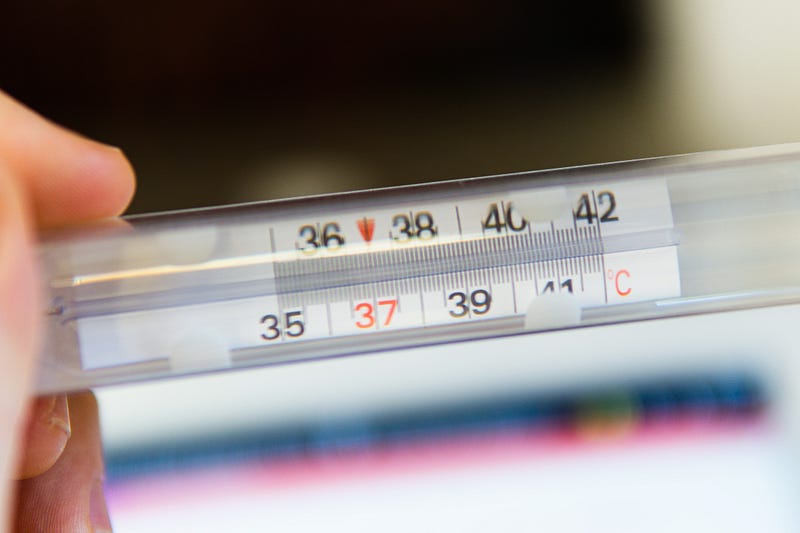
Photo by Matteo Fusco on Unsplash

Well, in continuing with our theme, you could. But maybe you should reconsider. According to this article in The Journal of Thoracic Disease from 2015, the reduction of fever, even as practiced by physicians in the Intensive Care Unit (ICU) setting is, associated more with standard dogma rather than any evidence-based support of the practice.

Fever is one of the primary tools your body uses to fight off foreign invasive viruses or bacteria. Reducing a fever can inhibit your body’s ability to use this tool to fight the illness, effectively prolonging the time you are sick.

The definition of a fever is somewhat subjective, but generally accepted by medical professionals as 101 °F (38.3 °C). Even more subjective is the concept of ‘high fever’, but in a randomized study cited in the above article, 104 °F (40 °C) was used as a point to employ active cooling.

In the randomized study cited in the above article, ICU patients were separated into blind groups with fever suppression done on one group while fever was permissive up to the 104 °F cap on the other. Seven people in the fever-suppressed group died causing an immediate halt to the study.

Infer what you may, but my takeaway is that untreated fever is clearly favorable in an out-of-hospital (and in-hospital as well) setting up to a certain point, at which case medical intervention is likely necessary in any case.

Someone nursing a cold with a 101 °F fever should definitely consider ‘letting it ride’ so that their body can effectively combat their illness.

Photo by Kelly Sikkema on Unsplash

But wait, fever with a cold? Everyone knows that if you have a fever then it isn’t a cold, it’s influenza. Right?

Not so much. The only real known fact correlating fever with any type of respiratory disease including rhinovirus (cold), influenza, and respiratory syncytial virus (RSV) is that children are more likely to present with fever than adults.

According to this study in Epidemiology and Infection from 2017, there is no known association of prevalence of fever and ability to predict the etiology of respiratory diseases. The study suggests some rationale for the higher occurrence in children being that adults have had longer to develop cross-strain immunity to viruses and therefore their bodies are more efficient in disposing with the pathogen absent a fever (or with milder elevated temperatures than those in children, relatively speaking).

Other than that, one can have a fever with any respiratory virus. Or not. The cautionary portion for physicians is that a person can present with respiratory symptoms, absent fever, and still have influenza.

The corollary for us lay-folk is that just because we have a fever, it doesn’t mean we have to flood our doctor’s office. It is probably simply our body reacting to the virus in a normal way. Of course, prolonged and worsening symptoms or excessively high fever (as noted above) are certainly reason to seek medical attention.

Photo by chuttersnap on Unsplash

It is a very human reaction when you are hurt or sick, or even more so when someone we love is hurt or sick, to want to help. We want to DO something.

My suspicion is that much of our helpful-but-false medical folklore comes from this drive to help. To do something, just to feel like we are making things better. However, in many cases, we may be unwittingly be doing harm instead of good.

The truth is that our bodies are kick-ass superheroes when it comes to repairing ourselves and warding off unwanted microscopic intruders. The vast majority of the time the only, and best, supporting role we can consciously play is to stay hydrated and get lots of sleep. Sleep is when our bodies do their best repair work.

Sure, there are going to be times when you are sick or hurt but yet you absolutely have to function, for whatever reason. Probably a couple of Ibuprofen and/or an icing session might get you over the hump and have you on your feet for the needed time period.

But, the rest of the time, I submit to you that treating swelling or fever might be counter-productive to your long-term ability to heal and get back to 100%.

The interesting part is that, when you read the studies, you can see where even physicians don’t really know what’s best. It’s a split decision.

We all get to make our own choices in this regard, I just encourage you to do so with reason, rather than because that is what you are “supposed” to do.

If you liked this story, you may also want to read:

Timothy Key spent over 26 years in the fire service as a firefighter/paramedic and various fire chief management roles. He firmly believes that bad managers destroy more than companies, and good managers create a passion that is contagious. Compassion, grace and gratitude drive the world; or at least they should. Follow me on Instagram, Facebook, and Twitter, and join the mail list.

Medical
Health
Healthcare
Self Improvement
Self-awareness
Recommended from ReadMedium