
Is There Such a Thing as Collective Responsibility?
Even when the object of the protests is warranted and deeply felt, destroying property and putting lives at risk is wrong.
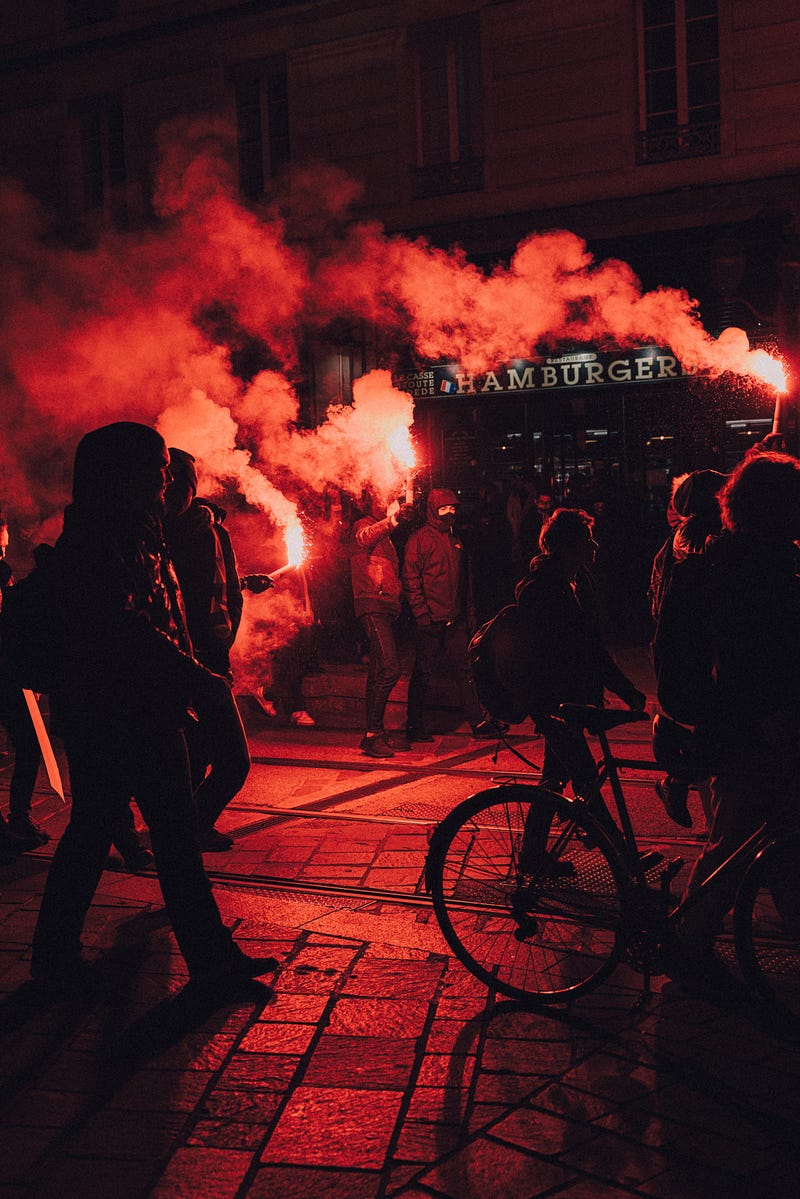
As columns of sunlight shift through the glass, distant sirens rise over the noise. These are the sounds of anger and frustration confronting a wall of hopelessness, where emergency lights splash the buildings, where frightened citizens don’t see an end in sight, at a time when questions and fears arise in the face of the current social issues, job loss, and the pandemic. Nothing we think makes any difference. Where, then, is optimism in the face of doom and chaos?
After every test of catastrophe, we have developed a tenuous grasp on the art of wishing. For a universal beginning, for the birth of new time.
After all, we are the inheritor and interpreters of the past, the guide, and the pioneer in the future. The history of civilization has been the adventure of human reason. Thought lifts us. The restlessness of our insatiable wants agitates us into action. But today there’s something hysterical in the air, something menacing.
Is there such a thing as “collective responsibility”?
There are reasons that inspire some people to join in collective action. Some would say that moral obligation is indeed a critical factor in the protesters’ choice to join the rally, followed by identification with the protesting group’s values and beliefs. Motivated to change the economic and political systems on which they are dependent. They act as their morality dictates, often ignoring the costs of their actions.
One’s choice of whether to join a protest is ideological by nature. First, it reflects one’s attitude towards an existing social system. Second, political protesters and counter-protesters are often attracted to radical left-wing or far right-wing ideologies.
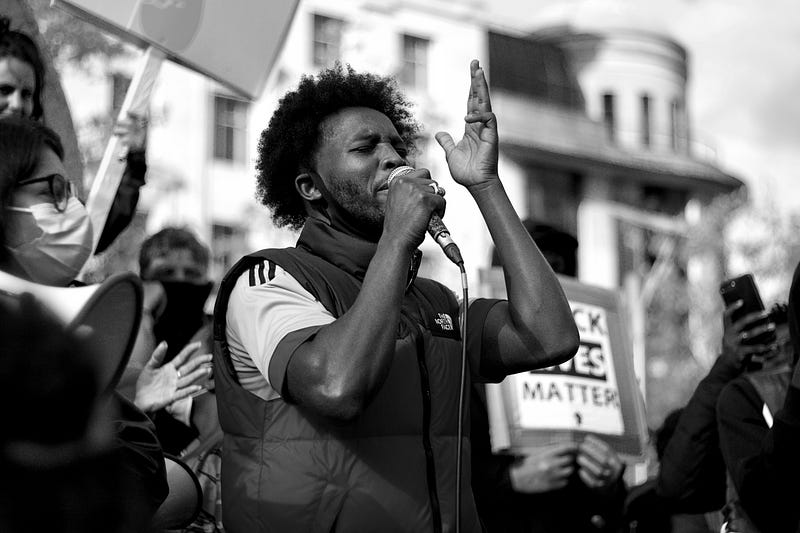
In his statement on his U.S. House website, John Lewis directly addressed protesters.
“To the rioters here in Atlanta and across the country: I see you, and I hear you,” he wrote. “I know your pain, your rage, your sense of despair and hopelessness. Justice has, indeed, been denied for far too long. Rioting, looting, and burning is not the way. Organize. Demonstrate. Sit-in. Stand-up. Vote. Be constructive, not destructive. History has proven time and again that non-violent, peaceful protest is the way to achieve the justice and equality that we all deserve.”
Can a collective group be morally responsible?
Lately, we’re seeing buildings and cars engulfed in flames; broken windows, and looted storefronts that leave community facades altered. According to Frank Bruni, a New York Times Op-Ed columnist, “ . . . [this] era of leaderless protest, can be difficult to discern intentional disruption from random destruction.”
In everyday speech, one often hears references to people’s “moral responsibility,” where they have some duty or obligation to their beliefs. For the most part, social and political opinions are grounded in moral concerns about right and wrong. But to pronounce moral judgment is an enormous responsibility. It requires the most rational process of thought, and not an act which engages in name-calling, shaming, labeling, and sometimes even violence.
I believe that collective wrongdoing can be translated into individual guilt and responsibility. Individual members of the group can legitimately be considered morally responsible to the extent that they allow the group to influence their behaviors, which does not satisfy the ideal condition of moral responsibility.
Immoral behavior applies in principle equally to all, irrespective of the rank or level of authority that a person holds. From the president down to governors or mayors of cities and towns.
All actions begin with intentions
Demonstrations have a rich history woven into America’s fabric with a certain amount of success in creating the change protesters demand. There are examples where riots led to genuine institutional shifts, new laws, and change for the better. Some memorable demonstrations in American history include Boston Tea Party, Women’s Suffrage Parade, Youth Climate Protests, to name a few.
There’s a legitimate debate to be had about reform proposals. But moral utterances that sound like screams that echo and bounce off the walls and are used as weapons to mobilize others to support a cause undermines good arguments for changing the way things work in America.
Violence by protesters can lead the public to support them less
As violent protests against police brutality have roiled the country, so has a debate over the looting and property damage they have left in their wake. Some believe that violent protest has a positive impact on political and policy change. They say that nonviolent protest brings awareness to an issue; violent protest brings urgency to a problem.
Popular sentiment on social media suggests you’re either willing to forgive or overlook the rioting, or you’re not in sync with the protesters. The anger behind the protests and riots is real. But research from the past suggests that the path to meaningful change, particularly for racial justice, is typically more successful through peaceful means.
No one will dispute that societal advancement comes when we apply standards and morals. Morally, we know not to defend stealing and damaging property, making it easy and even necessary to reject such behavior. The looters lose their voices, their actions shameful, indefensible, and wrong. Atlanta Mayor Keisha Lance Bottoms said it succinctly: “We as a people are strongest when we use our voices to heal our city instead of using our hands to tear it down,”
History is not only scenes of politics and carnage, but as a struggle to understand and reshape the broken, those who carve marble into forms. Help people mold into better instruments of the future. It is in the lasting contributions made by exceptional men and women — the scientists, artists, musicians, philosophers, and those who make us a little better. Those who take the journey out of our limited views of reality.
For now, it’s unclear whether the uprisings of 2020 will solve the long-standing issues of racial injustice fought again and once again on America’s streets. Still, when many races rally together rather than face-off, the arc of history may be bowing toward justice.