
Is There Still Some Potential Left in Cryptocurrencies?
Bitcoin (BTC), Ethereum (ETH), Bitcoin Cash (BCH), Litecoin (LTC), Monero (XMR), IOTA (MIOTA) — cryptocurrencies are the new evergreen in modern media. Spectacular success stories and profits of millions and even billions have been reported. However, what can we expect in the near future? Is there still some potential left in cryptocurrencies from an investment perspective?
What Is a Cryptocurrency?
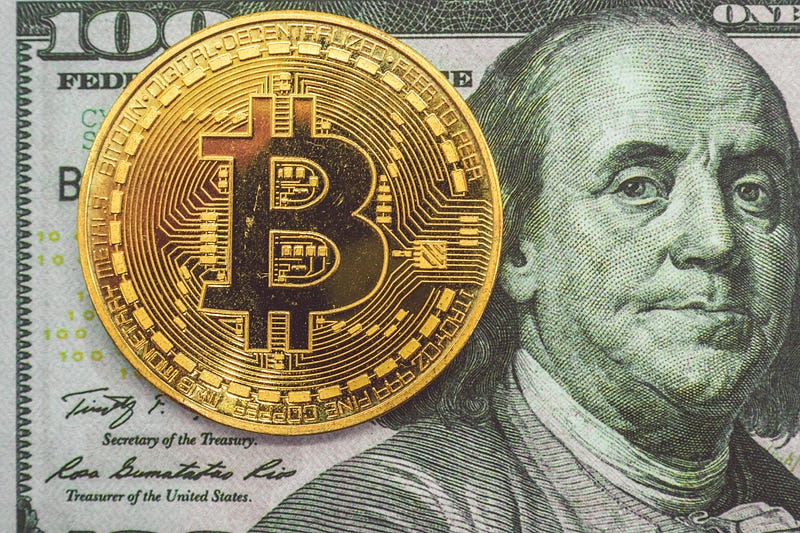
“Cryptocurrency” is the terminology for virtual currencies based on the blockchain.
No banks are required for the payment transactions. Financial institutions are replaced by a decentralized network whose participants manage transactions and generate new units of the currency. All cryptocurrencies are technically being based on blockchain technology. See my article: Is The Blockchain Ready? Use Case and Real Value
The first cryptocurrencies came up back in 2008 after the financial collapse. The economic crisis has triggered the desire for a currency that is not controlled by a central instance. Thus, a currency that won’t collapse if (as happened in 2008) banks do.
Improving technology
The technology has been improved and developed since Bitcoin appeared. This paved the way for currency alternatives that offer many advantages over Bitcoin and have their own focal points.
For example, Litecoin is faster than Bitcoin, Ethereum can be used not only for currency transactions but also to conclude contracts, so-called “smart contracts” (amazing feature!), and Ripple can be used by banks to speed up regular transfers.
Bitcoin-Boom.. and Burst
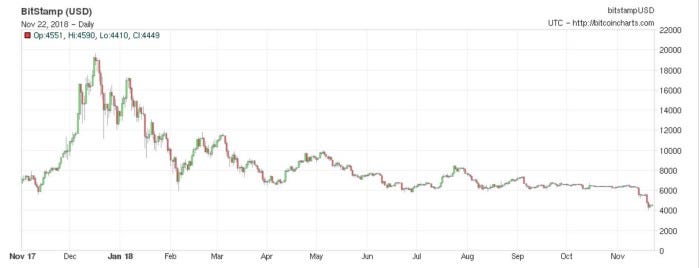
Along with technological progress, the Bitcoin boom took place. By mid-December 2017, a single Bitcoin was worth nearly $20,000. In the months that followed, the value plummeted. By the end of 2018, a Bitcoin was worth less than $3,000 — an 85% drop in value. Nevertheless, the record-breaking asset value of the alternative currency made the market particularly interesting for speculation and created incentives for developing more cryptocurrencies and conducting new issues of crypto units.
New ideas, plans, and business models for cashless digital currencies are constantly emerging. Whether cryptocurrencies linked to diamonds (“Carat”) or oil (“Petro “), cryptocurrency awarded as a reward for good deeds (“Hullcoin “), or a currency that is simply a parody of Bitcoin (“Dogecoin “) — crazy.
Innovations go through various stages of development. The technological initial spark is followed by a phase of euphoria, which is then replaced by a phase of disillusionment. Always. When hitting rock bottom, more mature solutions with real added value emerge. That’s how it works. The blockchain sector saw such euphoria in the second half of 2017, with visionaries already dreaming of a revolution of the world. The flagship of blockchain technology at the time was cryptocurrencies. Due to the hype, these reached unimaginable highs at the time. The inevitable Bitcoin crash casts a shadow of skepticism over the blockchain sector since then. What remained, was the continuous further development of the technology. [..] Since the Bitcoin crash in 2017, blockchain technology has been viewed more critically and realistically. — Is The Blockchain Ready?, Maximilian Perkmann, 2020
Downsides
Volatility
The value of a cryptocurrency is based on trust and acceptance. However, unlike established currencies such as the euro, the dollar, and alike, there is no control instance. There is only a technical system in which anyone can participate and for which the stability of the currency plays no role.
Between January and April 2018, all cryptocurrencies together lost about seventy percent of their market capitalization. Increasing regulatory attempts by various countries, such as South Korea, unsettled investors, and made them withdraw billions from the heated crypto market. As a result, the prices of individual currencies collapsed as quickly as they had risen.
Cryptocurrencies are extremely volatile and prices can change with radical speed. So, if you really want to trade cryptocurrency, you need to invest not only capital but also a lot of time and attention in your investment. If you can keep a cool head with daily price fluctuations in the double digits, an investment in cryptocurrencies may be an interesting speculative addition to the other investments in your portfolio.
Manipulation
People who own a large stake in a currency can use it to manipulate prices to their advantage. In the case of cryptocurrencies, there are neither laws that prohibit this nor control bodies that prevent such approaches.
As a FIAT Currency
Buy coffee and toast in the supermarket with Bitcoin, Ethereum & Co? Cryptocurrencies as a regular type of payment have not become widely accepted yet, even if it is basically already possible.
Using cryptocurrencies as a regular payment system is still quite problematic, as there are no fixed exchange rates and the rates fluctuate greatly. In this respect, it is often risky for retailers to accept cryptocurrencies, for example. Nevertheless, more and more online stores are offering to settle open invoice amounts with cashless digital currencies. The page coinmap lists all stores that accept cryptocurrencies.

So far, the virtual currencies have mainly been stored in so-called “wallets”, digital purses, and secured with private keys in the form of numeric codes.
Future
The EU Commission is trying to walk a fine line. The Brussels authority wants to regulate crypto assets in the future and thereby reduce risks for the financial markets. At the same time, the new regulation called “MiCa” (Markets in Crypto-assets regulation for EU crypto-assets and their service providers) is intended to provide a reliable legal framework in which the innovative financial products can develop well. “The future of the financial world is digital”, Valdis Dombrovskis ( European Commissioner for Trade) said. In that case, it may be possible that cryptocurrencies are widely being accepted. But.. who and how can one regulate cryptocurrencies without destroying the initial idea?

Etherum 2.0
Ethereum, the world’s second most important blockchain, is now five years old and is about to undergo its biggest transformation ever.
With Ethereum 2.0, among other things, the consensus procedure is to be changed from the computationally intensive proof-of-work procedure to a so-called proof-of-stake procedure. In the long term, the changes are also intended to increase the transaction capacity from currently 15 transactions per second to several thousand transactions per second.
Blockchains that function according to “proof of work” are power-hungry. Bitcoin is criticized for this because the mining of coins worldwide already consumes as much energy as the whole of Algeria and has a CO2 emission that can be compared with that of Myanmar. Ether is also created through mining — mainframe computers crack complicated numerical puzzles, and their operators are rewarded with more and more ETH for providing the computing power.
With Proof of Stake, this is supposed to change. When blocks are written, it will no longer be those with the greatest computing power who are rewarded, but in principle everyone who participates in the network. In the process, an algorithm determines which participants are selected to validate blocks and receive the rewards for using them. The new ETH are distributed on a pro-rata basis. Simply said, if you have 1% of all ETH, you get 1% of the rewards.
To be able to write the blocks, you won’t need mining rigs anymore, just a decent computer. However, it should also be noted that a smartphone or conventional notebook won’t be enough, but you won’t have to run huge mining rigs to be able to mine ETH. This should drastically reduce power consumption. “Proof of Stake is very welcome from an environmental point of view. This solves the previous, rightly criticized problem that mining consumes an extremely large amount of electricity,” says blockchain expert Bernhard Blaha of Cryptix
The upgrade to Ethereum 2.0 is divided into three phases. With the third phase (planned to launch in 2022), smart contracts can also be used in the ETH 2 chain.
Staking
Coin staking is basically a byproduct of proof-of-stake (POS). With proof-of-stake, on the other hand, the miner is selected at random from a pool of node operators. To qualify as a node operator, the miner must deposit a certain minimum number of coins in his wallet. The number of coins can vary greatly depending on the blockchain. In some cases, the coins must also be stored for a certain period of time before they are approved for staking.
Put in simple words: by “staking” coins you receive rewards. My current stakes return about 5% to 13% p.a.
Should You Invest in Cryptocurrencies?
To come back to the title’s question. Cryptocurrencies are still really volatile and not anywhere regulated. Meaningly, investing poses a huge risk. If you are not able to take the risk, you should not invest in cryptocurrencies. Nonetheless, I think it is a good diversification for anyone's investment portfolio. I’ve tried to bring together the different outlooks of the cryptos at the moment. With the upcoming ETH2, the possibility of “staking” and the first touching point with Brussels, there is definitely some potential left
My opinion
I guess it’s only a question of time until our next fiat currency evolves based on the blockchain. The blockchain brings so many advantages and basically replaces our huge, bloated financial construct. I see the future of currencies in an anonymous, decentralized, and totally automated manner.
Also, Read
- Crypto Trading Bot
- Uniswap API — How to get Uniswap data?
- Deribit Review | Options, Fees, APIs and Testnet
- FTX Crypto Exchange Review
- Bybit Exchange Review
- The Best Bitcoin Hardware wallet
- Crypto Copy Trading Platforms
- Bitsgap vs 3Commas vs Quadency
- The Best Crypto Tax Software
- Best Crypto Trading Platforms
- Best Crypto Lending Platforms
- Ledger Nano S vs Trezor one vs Trezor T vs Ledger Nano X
- BlockFi vs Celsius vs Hodlnaut
- Bitsgap review — A Crypto Trading Bot That Makes Easy Money
- Quadency Review- A Crypto Trading Bot Made For Professionals
- PrimeXBT Review | Leverage Trading, Fee and Covesting
- Altrady review
- Ellipal Titan Review
- SecuX Stone Review
- BlockFi Review | Earn up to 8.6% interests on your Crypto
- Best Crypto APIs for Developers
- Best Blockchain Analysis Tools
- Crypto arbitrage guide: How to make money as a beginner
- Top Bitcoin Node Providers
- Best Crypto Charting Tool
- What are the best books to learn about Bitcoin?
Get Best Software Deals Directly In Your Inbox


