Is Positive Discrimination Good for Female Entrepreneurs?
A discussion about gender-typical products and Services for Female Entrepreneurs

Having studied and written about Female Entrepreneurship, with a focus on Trends, Technology (Digital), Funding and Policy, I came across the tag “Positive Discrimination”.
So what does it mean?
Well, I interviewed the Head of Enterprise at a Local Enterprise Office (LEO) in Ireland to learn more.
“Set up as the ‘first-stop-shop’ for new start-ups and small businesses looking to grow. Designed to help a new entrepreneur become startup ready”
— Dlrcoco.ie
Trends in Female Entrepreneurship
As regards trends, it was highlighted that the ratio of male versus female entrepreneurship “remains at 2:1”, supported by statistical evidence in recent publications. According to the Global Entrepreneurship Monitor “men are more active early-stage entrepreneurs than women in Ireland”, 10.3% compared to 4.2% for women (GEM, 2014).
The Head of LEO acknowledged that “it’s improving slightly but still there’s a long way to go” which is why the Local Enterprise Office “has initiatives that are specifically geared towards supporting women in Business” (Curley, 2016). For example, initiatives like ‘Enterprising Network for women’ and the ‘National women's Enterprise day’ are designed to showcase “Women as role-models running businesses in the hope that it encourages others; in terms of a network sometimes women prefer working with other women” (Curley, 2016).
In contrast, she described the “old schoolboy network” male effect as being “very Cliché but fact”, whereby deals occur on the golf course or at other male-dominated events, however, “we want both men and women to start business”, but ideally on an even keel (Curley, 2016).
One initiative entitled “Start your own Business for Women” raised questions: “What’s the difference?”, almost having the undesired trend “where people are almost put-off by it”. That said a local initiative last year, aimed at aspiring entrepreneurs under-30, highlighted a widening of gender divide within this demographic given that the number of female entrants was “disappointingly low, somewhere between 20–25%” (Curley, 2016).

Women tend to start “service-orientated” businesses, local services, like hair-salons or indeed professional services, “rather than export or growth-orientated businesses in terms of employment numbers” (Curley, 2016), as a result, investment leans towards male-dominated sectors. This raises the argument as to whether or not a new local salon, Law firm or Accountancy practice, led by women (or men) is entrepreneurial.
Starting a business that offers the same Value Proposition as a local competitor is not considered entrepreneurial (Schumpeter), organizations competing in a Red Ocean (Kim et al, 2011).
Enterprise Ireland also developed a fund to encourage women to apply for finance. On a number of occasions, this and indeed other initiatives were described as “positive discrimination”, forcing the issue (Curley, 2016).
Technology
Leading on from the observation thus far, that women tend to start service-orientated Businesses, a gender gap is also emerging in the technology sector in Ireland. In 2015 “research conducted by the Irish Venture Capital Association shows that €415m raised by Irish tech firms last year, just €2.3m went to female-led companies” (Independent.ie, 2016).
Also, the Financial Times looked at the UK internet economy, driven and dominated by men, in which “women occupy just 17 percent of the tech jobs in the UK”, having “reached a plateau in the past five years” this is disproportionate relative to the sector growth. “Worse still, fewer than one in 10 of these women are in leadership positions ” (Financial Times, 2016).
In response to my question, suggesting that female entrepreneurs focus on gender-typical products, the Head of LEO argued that all entrepreneurs focus on “what they are familiar with and what they know”, regardless of gender. For any entrepreneur “experience and track record is important as is industry knowledge. The fact that there are fewer women working in Tech in the first place means that there’s going to be less coming out of it”.

The reason why women set up businesses to meet women's needs is because “who else is going to do it? A Man is hardly going to say — I really need this product” (Curley, 2016).
This argument is underpinned by Michelle Mone, Entrepreneur and founder of Ultimo, the Women's’ underwear brand. In 2015 Mone resigned from Ultimo, a business she started 20 previous. A business that designs and develops female underwear garments. She “left the board of Ultimo and its parent company MJM International after making an estimated £20 million from the firm” (Mail Online, 2015).
The point is this — it’s highly unlikely that a Male Entrepreneur could have achieved what Kylie Jenner achieved in the Cosmetics Industry or any industry for that matter — at least they’re few and far between.
“Ups, downs and sideways = Startup 😉”
— Sharon Keegan, Found of Peachylean.com
Gender-typical services and products, for women only, in addition to policy, designed for female entrepreneurs only, could reinforce or contribute to social stereotypes, albeit unintentional.
An Irish female entrepreneur and owner of another Cosmetics company, commented when interviewed: “I had a vision, I followed my dream — I’m passionate about what I do”, discrediting yet somewhat validating the gender-typical argument.
Westhead (2011) observed that women have “communal qualities, expressiveness, connectedness, relatedness, supportiveness and kindness”, a perfect fit for the eCommerce world with respect to ‘empathy’ and the ‘customer journey’ (Westhead, 2011). If “women spend more money online”, compared to their male counterparts, then “women are deciding on the majority of purchases”, therefore “it’s imperative that site owners respond to their interests and needs” (Huffingtonpost.com, 2016).
This logic suggests that Gender-typical businesses are more likely to succeed if built by women, for women and vice-versa for men. On the other hand, this also raises the questions as to why gender-disparity in entrepreneurship exists today. This is a challenge for female entrepreneurs.
“Look within. I always believe that you have enough to start from where you are.”
— Tara Fela Durotoye, Founder at House of Tara
Further investigation into Technology, like coding, for instance, revealed insightful observations: “The ratio of male to female participants in CoderDojo from the ages of 8–11 are on a par, 50/50, after which the balance shifts” (Curley, 2016). This indicates that there’s something else at play, considering that modern research shows that “girls outperform boys” in STEM (Science, Tech, Engineering & Maths) tests, “even in countries where women’s liberties are severely restricted. New research shows that girls outperform boys in mathematics, reading and science literacy in 70 percent of countries, regardless of levels of national gender equality” (Turner, 2015).
As such, social, economic, psychological and even physiological factors are all playing a part in this phenomenon shift.
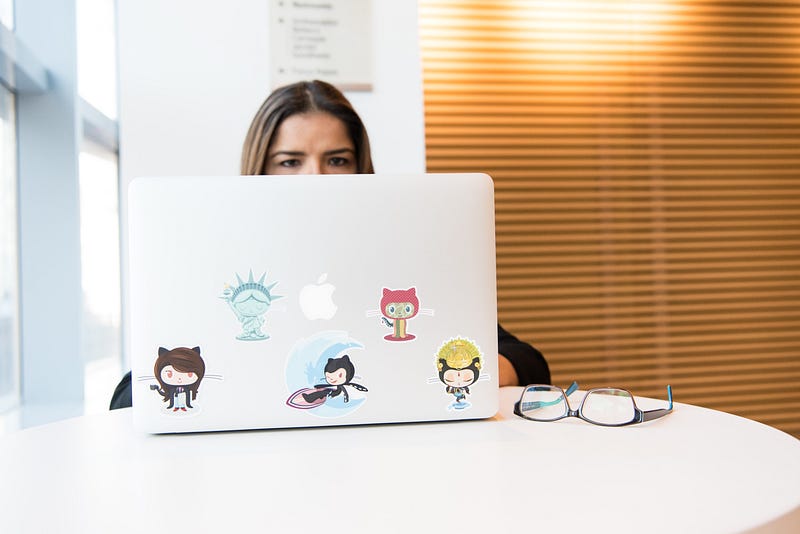
It’s worth noting that “female tech founders” are on the rise in Ireland, but there remains a distinct “lack of female participation in top executive roles”. For example, of the “88 companies to receive venture capital funding in Ireland last year, just four lists a female chief executive”. Former Google executive, Sheryl Sandberg, claims that women are “dismissed as ‘non-leaders’ in the workplace” (Independent.ie, 2016).
Niamh Bushnell, a Former Dublin Commissioner for startups, said: “I don’t know what’s stopping us, but there are a lot fewer women doing technology things and that’s a big factor”. Niamh continued that “I didn’t know this before I came back from New York, but I heard in the past few months that in the UK every single student has to learn coding skills from seven to 16 through primary and middle school. If the walls of difficulty and fear and all of that was taken away from the image of tech and computer science it would prompt a massive surge of female entrepreneurs.” (Siliconrepublic.com, 2015), pointing towards a cultural anomaly.
Indeed Ireland has an array of female tech leaders, like Louise Phelan, former Head at Paypal EMEA and Fionnuala Meehan at Google, Managing Director of SMB sales (EMEA). Bushnell added that there are “great female entrepreneurs in start-ups like Restored Hearing, Love & Robots, Pharmapod and Frockadvisor” (Siliconrepublic.com, 2015).
That said there is an extreme underbalance in the Tech sector as a whole, whereby less than 1% of funding in the industry is invested in female entrepreneurs.
Funding
“Female applicants seeking funding or grants through initiatives with upto €50,000 available, typically request €18,000 or at most €22,000, whereas men will ask for the full €50,000” (Curley, 2016).
This resonates with Social (Athinson) and Psychological (McLelland) factors, an element that Westhead would associate with “risk-aversion” (Westhead, 2011). Likewise, as noted above, this is most likely embedded in Irish culture, with an element of physiological factors given the correlation with “communal qualities” and “kindness” (Westhead, 2011).

If women don’t ask for the full amount on the table then there’s more to share with others. Men on the other hand it seems, don’t think like this.
Education
Education plays a role, not simply by informing Women of what types of funding are available, rather “starting early” in the Education system. “Initiatives target Primary and Secondary schools (High School), unlike before. Education, therefore, plays a role to break the stereotypes that cause this imbalance, to begin with” (Curley, 2016).
By targeting ’Cause and Effect’, influential bodies like the Local Enterprise Office can have an impact on the domestic landscape to ensure that entrepreneurship is nurtured equally, over time. Multinational Corporations recognize the value in Equality and Diversity at the workplace, many of which are actively promoting the issue, which was labeled above — “Positive Discrimination”.
LEO is a supporter of Multinational Corporations (MNCs) and continues to encourage Foreign Direct Investment (FDI), led by Enterprise Ireland.
“This creates a mutually-beneficial Ecosystem, through which people grow, develop and upskill, enhancing the calibre of future entrepreneurs.” (Curley, 2016).
A triple-helix effect.
The fact is that “most women in Ireland only consider Entrepreneurship as a viable career option, later in life, at a time when they start a family and look at opportunities to improve work-life balance”.
I would agree given that FDI has in recent years led to the emergence of the “Digital Republic”, our equivalent to “Silicon Valley” in the US, creating sustainable jobs in the wake of the “Celtic Tiger”. Also, multinationals like Google, Facebook, Accenture, and Microsoft are not only participating in but supporting and investing the start-up culture in the Tech sector in Ireland.
The impact of MNCs since 2008 had an immediate effect on job-creating, with steady growth. The implications of such investment have coincided with the success of domestic Startups like Intercom, HostButlers and the WebSummit.
Policy
By comparison, the recent decision in Ohio (US) to legislate policy specifically for female entrepreneurs may not achieve the desired effect considering that “Gender-biased policy can raise eyebrows”, with negative connotations. However, the lesser of two evils may be relevant to ignite entrepreneurial parity, where “Positive Discrimination” is worth the effort.
“For all initiatives I instruct my team to achieve 50/50 in terms of male to female participation. I was negotiated down from 60% in the favour of women. If we don’t take the steps to have an influence change is unlikely to occur” (Curley, 2016).
This is a valid point, without action “change is unlikely to occur.”

Looking as Irish society, it wasn’t that long ago that women were given permission to vote, relatively speaking, less than 100 years.
Also, as recent as the early 1970s married women were forced to vacate their position of employment. With this in mind, policy could well be outdated and an overhaul is needed.
Purely from a testing or feedback perspective, nations like Ireland could benefit by closely monitoring the effects of gender policy in the US. Further still, policy-makers could engage early with US representatives to enhance the impact of such a policy, if Ireland were to adopt the same position in the future.
Integration in the early school years is an unofficial policy, undocumented at government level but underway on a local level. The impact of this effort may not be revealed for a generation, warranting a longitudinal study on the implications unfolding each year going forward on Female Entrepreneurship and the link, or disconnect, from STEM results.
Conclusion
There are certainly positive and negative trends in Female Entrepreneurship across Ireland and beyond.
Firstly, the most obvious negative is highlighted by the overwhelming disparity in the Tech sector. While the uptake in jobs in this sector is male-dominated, the transfer of skill sets formed during early education (STEM) shows that there is a gap of concern, a loss of talent.
Social, cultural, economic and psychological factors do have an impact, therefore it’s fair to argue that government policy doesn’t go far enough to nurture the transition into early career development. Local initiatives are making efforts to reverse this trend in order to enhance probabilities for the next generation.
There’s insufficient evidence to validate whether Positive Discrimination initiatives are effective or ineffective at this stage, but trends in Gender-biased products and services in Entrepreneurship is likely to be a mainstay going forward. What is clear is that the overall ratio of 2:1 changes at certain stages for women. For example, in CoderDojo the ratio is equal, from ages 8–11. This widens to 3:1 based on the results from ‘Under-30’ initiatives. While male participation shows consistency, female fluctuates around life stages, which is not catered for anywhere in policy.

I’d recommend trialing a Female only policy, like Ohio (US), to gauge if governance can accelerate a move towards gender parity. Grant funding should also be tailored to suit, one possibility is to remove the option to undervalue an application by replacing it with a banding metric. So for example, if a female entrepreneur seeks and secures finance of €28,000 from a grant band limit of €50,000, the balance of €22,000 could be held in escrow for a period of time, bridging the effects of gender behavior with respect to risk-aversion, or perceived risk.
Other stakeholders like MNCs and FDI organizations do bring value to the table, where efforts from the commercial sector have significantly improved over the last decade. To solidify the impact of such efforts the Author proposes the creation of a ‘Triple-Helix’ team of specialists, made up of experts from Industry, Government and the Education sector.
Also, the Dublin Commissioner for Start-ups office should be rolled out nationwide, working in parallel or as a member of the ‘Triple-Helix’ team. Existing teams and boards are fragmented, weakened further by the underrepresentation of Entrepreneurs from the modern generation.
At a recent e-commerce event hosted in Ireland, not one of the key mentors or presenters is part of the development team for Government policy. This is a poor reflection of the disconnect that exists between policy-makers and Entrepreneurs in an area identified by the Government as an opportunity for Irish business — Online Retailing.
Also, the IEDR reported that in 2015 “91% (of businesses) cannot process sales online and 68% cannot process payments online (IEDR, 2015).
While this has improved in 2019, the gap is still too wide. 12 months ago the IDER reported that just 3 in 10 businesses can take online payments.
It’s fair to conclude that while work is in progress, much more can be done for the advancement of Female Entrepreneurs. Considering that many start as Remote Workers, a lonely beginning, they draw from an inner-courage to change the world … well at least have an impact. On that note, let me remind you of the quote from the founder of Peachy Lean:
“Ups, downs and sideways = Startup 😉”
— Sharon Keegan, Found of Peachylean.com