
Hippopotomonstrosesquippedaliophobic Longiloquence
The Word Collector — Part 44
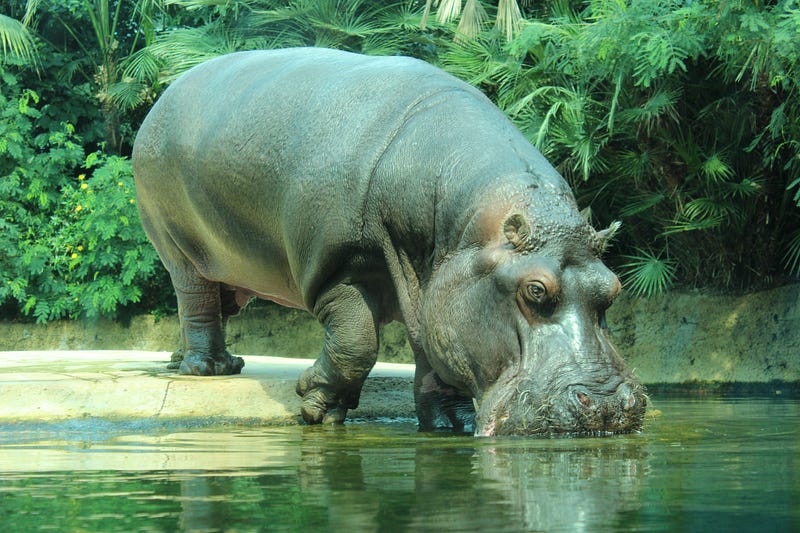
This is the latest in a series about new words and phrases, specimens collected during expeditions into the deepest, darkest literary and media wilderness, and displayed for your entertainment, elucidation, and enlightenment. These are new to me, but of course, you may know some or all of them already, in which case you are welcome to marvel at my ignorance, an inexhaustible seam of material to be mined.
Hippopotomonstrosesquippedaliophobia- is a rather brilliant and apt word for the fear of long words! The 36-letter word was first used by the Roman poet Horace in the first century BCE to criticise those writers with an unreasonable penchant for such examples.
Longiloquence — this is the habit of speaking at great length, similar to ‘long-windedness’. So when a politician is banging on with excuses for why nothing works in the UK any more, this might be an example. The first known entry of the word is in the journal of Scottish literary figure, Henry Cockburn in 1836. The word was seen in a BBC quiz on unusual words.
Snaccident — the accidental consumption of an entire packet of biscuits, something a few of us on Medium may be able to relate to. This glorious word was seen in the book “Word Perfect” by Susie Dent which I have started on (the book not the packet).
Quidding — this turned up as the answer to a clue in a quiz about horse-related terms. In equine context, it means when a horse chews something and spits it out due to discomfort in its mouth. I never thought I would start to become an expert in such terminology, but it is one of the perils of my daughter’s pony ownership.
Oodie — heard in conversation about a birthday present, an oodie is essentially a wearable blanket comprising an oversized hooded sweatshirt and an equally oversized kangaroo pocket. They are lined with light, ultra-soft and heat-retentive fabrics.
Ugsome — a Scottish adjective meaning horrible; disgusting; offensive, loathsome, repellent. Also from “Word Perfect”.
Huffle buffs — a rather lovely Scottish expression, these are old, warm, comfortable clothes that you put on when you want to relax. From “Word Perfect”.
A snick-up — a succession of sneezes. Also from “Word Perfect”.
Crambazzlement — The state when you’ve had far too much drink and cannot function properly. Also from “Word Perfect”. The word originated in Yorkshire dialect in which it meant someone prematurely aged by drink.
Mumpsimus — a traditional custom or idea adhered to although shown to be unreasonable; a person who obstinately adheres to old customs or ideas despite evidence that they are wrong or unreasonable. Also from “Word Perfect”.
Ultracrepidarian — a noun meaning someone who has no special knowledge of a subject but who expresses an opinion about it (whoops!). Also from “Word Perfect”.
Contronym — (also known as a Janus word after the Roman God of this name who had two faces), this means having two quite opposite possible meanings, such as the way that the words wicked, sick or bad have their usual traditional meanings, but are also used in slang to mean the opposite, something that is really good! Also from “Word Perfect”.
Crapulous — a literary adjective meaning caused by or showing the effects of alcohol. From “Word Perfect”. So one could suffer a snaccident while suffering from crapulous crambazzlement.
Grogblossom — a tell-tale redness of the face arising from too much alcohol. Also from “Word Perfect”.
PISA — this is an acronym used in the field of education. The Programme for International Student Assessment is a worldwide study by the Organisation for Economic Co-operation and Development in member and non-member nations intended to evaluate educational systems by measuring 15-year-old school pupils’ scholastic performance in mathematics, science, and reading.
Blue zones — in this context, these are regions in the world where people are claimed to live, or to have recently lived, longer than average. Five blue zones suggested are: Okinawa Prefecture, Japan; Nuoro Province, Sardinia, Italy; the Nicoya Peninsula, Costa Rica; Icaria, Greece; and Loma Linda, California, United States. The term was heard in a BBC Radio 4 programme about longevity. There may be an inverse correlation between such zones and the frequency of snaccidents.
Polythelia -the condition of having a third nipple, caused by a mutation in inactive genes, apparently found in 1 in 18 people.
Dunbar’s Number — this phrase turned up in an interesting article by Marc Suroviec:
The number was popularised in Malcolm Gladwell’s book “Tipping Point”. Dunbar’s number is a suggested cognitive limit to the number of people with whom one can maintain stable social relationships, in which an individual knows who each person is and how each person relates to every other person. It is suggested that this number is around 150 people, the sort of number that might have existed when we all lived in small tribes or villages. Further reading —
Nolo — this neologism stands for “no or low alcohol”, and is used in the context of alcohol. It was seen in an “Observer” article about the growing popularity of “nolo” wines.
A tiding — the collective noun for a group of magpies. From Susie Dent’s “Word Perfect”.
“Live selling” — influencers are going round shops filming themselves reviewing products and getting sales on channels such as Facebook and YouTube — apparently this new practice is very popular in parts of Asia. The word was seen in an “Observer” article about the trend.
The following ten examples are from a BBC quiz to which I shared a link recently, though if you are anything like me, you may have already forgotten what they mean:
Rantum scootum — Rantum-scootum means reckless. It’s thought to be a variation of the rare American word ‘rantum-scantum’, and its earliest known use was in an 1885 Harper’s magazine.
ooflessness — Ooflessness means poverty, and is British slang which, ironically, originated in Sydney, Australia. It’s first known to have appeared in an Australian newspaper called ‘The Bird o’ Freedom’ in the late 1800s reading “Being oofless ’twas a case of lock and key’.
Labefy comes from the now obsolete word labefact and means to weaken or impair. It is referred to as Labefied in the past tense. For example, “a layoff that would labefy her upper body strength”.
Abernuncate — this means to pull up by the roots, items such as weeds. The earliest known use was in a 1721 English dictionary by a lexicographer (a person who compiles dictionaries) called Nathan Bailey. It is labelled in the OED as ‘rare and archaic’, meaning that there are none or only one example in printed sources.
Dunderwhelp — Once defined by the OED as ‘a dunderheaded ‘whelp’, a contemptible blockhead’ — dunderwhelp is now defined as a stupid or foolish person. Its origin is thought to be Dutch combined with a British element. It’s thought to first feature in a tragicomedy called ‘Women Pleased’ in 1647 and read “You know what a dunderwhelp my master is”.
Abditory — a borrowing from the Latin word ‘abditorium’, a word the Romans used to describe a hiding place. Abditory replaced abditorium, but the definition stayed the same — a safe repository for valuables.
A jill-hooter — If you know your animal sounds, you will know that an owl’s call is a ‘hoot’, so a jill-hooter is, of course, an owl. It was once thought to be the name for a female owl and has had many variations throughout history including gill-hooter, jilly-hooter and gillie-howter. Its first recorded use was by a physician and natural philosopher Walter Charleton in 1668..
Nescious — ignorant or not knowing. A word that was the OED’s word of the day in December 2017, nescious is thought to be the origin for the word ‘nice. The word is thought to combine two Latin words, ‘ne’, which is ‘no’, and ‘scire’, which means know. Translated, the word means ‘who has no knowledge’ and so is best used as ignorant.
Crinosity is the state of being hairy. As with most words in this quiz, its origins are Latin from the word crinositas, but it is apparently not recorded in Latin texts.
I hope you enjoyed this collection, and do share any favourites of your own in the comments.
As always, thank you for reading.
Previous articles from The Word Collector:
Part 43 — Stravaiging Shiznit
Part 42 — Model Collapse And Dezinformatsiya
Part 41 — A Flapdoodle of rapid unscheduled disassembly
Part 40 — Mulesing, Merkins, Quislings, Tallywags And Refoulment
Part 39 — Blowing off the hinky cobwebs
Part 38 — A Dreich Case Of Psychoterratic Solastalgia
Part 37 — A Cockamamie Collection Of Highkey Zhuzh
Part 36 — Keggers, Kerning, Çay and Crickets
Part 35 — Murmuring judges and anhedonia
Part 34 — A-quomodocunquizing-borborygmus
Part 33 — Going Monk Mode In Taumatawhakatangihangakoauauotamateaturipukakapikimaungahoronukupokaiwhenuakitanatahu
Part 32 — Turpitudinous Tourons
Part 31 — Hurkle durkle, medicanes and misophonia
Part 30 — Immortal earworms
Part 29 — Government on the RAAC
Part 28 –Saved by a deus ex machina
Part 27 — Pre-Lapsarian Yakers
Part 26 — Fegans, Jorts, Rababs And Scotch Bonnets
Part 25 — Fissiparous Hegemony
Part 24 — Lollygag And Booktok
Part 23 — Patronymics And Samovars
Part 22 — Medium Is No Chronofage If YRMIRY
Part 21 — Everything Is Eellogofusciouhipoppokunurious
Part 20 — Hexakosioihexekontahexaphobia And The Matthew Effect
Part 19 — A Nappuccino And Some Typo-Squatting
Part 18 — Yeeting Detritovres
Part 17 — An Inverted Pyramid Of Piffle On The Bed Of Procrustes
Part 16 — Having The Jones And Partisan Acrimony
Part 15 — Spycops In The Boondocks
Part 14 — Harlots, Stochastic Parrots, And The Devil’s Cufflinks
Part 13 — The Things We Make Exceptional
Part 12 — “Semper Fidelis” And Semantic Symbiosis
Part 11 — Heliophobic Hikikomori
Part 10 — Lenticular Clouds And Peque Peques
Part 9 — Big Red Boots And Nepo Babies
Part 8 — A Patina Of Smilies
Part 7 — Atavistic frou frou
Part 6-Mouth Breathers And Pearl Clutchers
Part 5 — The Lexophile’s Latest List
Part 4 — Revenge of the word collector
Part 3- An Etymological Extravaganza
Part 2- Return Of The Word Collector
Part 1 — A Moment In The Sun

To join a new Facebook group “Medium Matters” where writers can support each other and share articles.
Mastodon- you can find me here


