avatarNuno Fabiao

Free AI web copilot to create summaries, insights and extended knowledge, download it at here

7220

Abstract

age unemployment and inflation- the Federal Reserve was born.</p><p id="068a">The Fed’s main goal was to expand or contract the supply of a single national currency- the US dollar.</p><p id="bc39">As the dollar was tied to gold, the Fed should manage and avoid booms that lead to bursts. At least, that was the plan.</p><p id="c7a1">16 years after the Federal Reserve was born came the 1929 Great Depression. This major crisis would have a massive impact on monetary policy worldwide. Soon, the Fed had printed all the money it legally could to normalize the deeply depressed American economy.</p><p id="8be0">So, in 1933, President Roosevelt issued an executive order forcing all the US citizens to sell their gold to the Fed at a fixed price or go to prison.</p><p id="5dd5">Gold flowed in, and dollars were spread across the globe.</p><p id="536e">This was probably why we now have the global international trade system as we know it.</p><p id="00ac">The World War II devastated the all world, except the United States of America. The US had created the most significant military and industrial superpower, and the US dollar had become the world’s most trusted currency.</p><p id="1d1d"><a href="https://readmedium.com/the-money-reset-has-already-begun-shocking-details-f327870260b">Central banks worldwide pegged their national currencies to the dollar and started to devalue their own currencies. So, there would be more dollars outside the US than in the American vaults.</a></p><p id="1ed3">To avoid an international crisis through lack of gold reserves, Nixon suspended the dollar’s convertibility temporarily into gold or another reserve asset in the interest of monetary stability.</p><p id="8c31">The dollar was now backed solely by the full faith of the United States government.</p><h1 id="83d1">Debt is the worst poverty.</h1><p id="79a5">The modern monetary system had created nations of debtors.</p><p id="6972">Not just personal debt, but corporate debt and government debt. Today, the wealth of one nation is a gigantic hole of money that we owe to someone else that is never going to be paid back.</p><p id="a47f">To be in perspective, today, the US pays 400 billion dollars in interest to its creditors every single year.</p><p id="ec31">When a country spends more money than it collects in taxes, it simply borrows more or creates more.</p><p id="15aa">Before 1974, to create more debt, governments issued bonds backed in gold reserves, but not anymore. Today, governments create currency by first creating bonds. Then, these bonds are sold in the markets, generating funds for governments.</p><p id="4163">Large banks buy bonds to flip them, selling them to the Federal Reserve at a profit. The Fed doesn’t have any money. Yet, when a bank buys a bond and takes it to the Federal Reserve, the Fed accepts it and pays the banks a fee. The money isn’t exchanged; it simply appears in the bank’s balance sheets. Pure magic.</p><p id="816d">These secret transactions are made in the name of national security, but nobody knows how it is done.</p><p id="f553">But knowing that the Federal Reserve is not a government agency, it’s a private entity, and its shareholders are banks, which earn an annual dividend of 80 billion, things get nasty, right?</p><p id="03eb">The magic money machine answers to no one. At least, no one that we know of, anyway.</p><blockquote id="12a4"><p>The Federal Reserve has been given the impossible task of running the credit and monetary system as though we are the Soviet Union. It’s the central planner of the key aspect of Capitalism, which is how money and credit are allocated.- Gene Epstein, from Barron’s Financial Weekly</p></blockquote><p id="5a87">Even with the best intentions, the Federal Reserve, a mysterious entity, will tend to make mistakes. And as we don’t know who they really are and transparency is not their primary focus, in future bursts, we’ll tend to discredit the institution and new systems will tend to arise.</p><p id="3fc2">After the 2008 Great Recession, we observed the creation of digital money- the Bitcoin Standard.</p><p id="ba6d">In 2009, a man, woman, or group of people created by the nickname of Satoshi Nakamoto, a <a href="https://bit.ly/3b8cXUi">9-page-white-paper</a> that defined:</p><blockquote id="91f4"><p>A purely peer-to-peer version of electronic cash would allow online payments to be sent directly from one party to another without going through a financial institution.</p></blockquote><p id="4cde">Governments getting involved in money has good things and bad things associated. It’s a good thing because money is what makes the economy moving forward, and the economy serves people, serves citizens worldwide. It’s bad because manipulating the supply of money has short and long-term consequences.</p><p id="515f">The long-term debt cycles tend to happen in periods of 70 years, and we’re about to face the last inning of a great debt cycle.</p><p id="10e1"><a href="https://readmedium.com/how-inflation-is-stealing-your-wealth-the-audacious-tool-to-fight-the-wrong-narrative-55af5626b6a4">The other thing is inflation. Central banks tend to control inflation by issuing money slowly into the economy. But 2% inflation means that your one dollar this year has to buy the power of $0.98 the following year.</a></p><p id="0903">If you work every year to earn money, using your time to do so means the government is devaluing your time and energy at 2% a year, every year of your life. So, inflation is the higher hidden tax created by central banks to control the economy by devaluing your time and energy.</p><p id="63da">The real problem with this system doesn’t really have to do with central banks. The real problem is that the power to create money is in the hand of the banks, the same banks that provoked the financial crisis in 2008. And those who perpetrated the crimes in the 2008 financial crisis are all still working in the same business as we speak.</p><p id="ae79"><b>The problem with money is trust and morality</b>.</p><p id="1130">If we lose trust and the system loses morality, citizens start to look at other options. And that’s where the cryptocurrencies begin to get attention.</p><p id="dcc8"><a href="https://readmedium.com/warren-buffett-vs-the-blockchain-network-a-deep-reflection-of-a-transition-mindset-b7e56e2243a1">All the new money created by banks is debt, but it’s also digital money. So, the transition from this system to a future one that uses cryptography will not be a massive technological shift.</a></p><h1 id="083c">The Bitcoin Standard.</h1><p id="f950" type="7">Bitcoin was created to serve a highly political intent, a free and uncensored network where all can participate with equal access.- Amir Taaki</p><p id="f644">The Bitcoin Protocol was built over the <a href="http://www.queen.clara.net/pgp/art6.html">principles of cryptography</a>. The protocol defines the procedure followed by a Bitcoin transaction from its creation. Then, it’s validated and has a final confirmation.</p><p id="8407"><a href="https://readmedium.com/money-revolution-is-knocking-at-your-door-why-you-should-be-an-early-adopter-660a8974ed0e">Developers and coders all over the world built the bl

Options

ockchain infrastructure that supported the Bitcoin network. As a result, it’s fully decentralized and transparent.</a></p><p id="ff2e"><a href="https://medium.datadriveninvestor.com/the-catastrophic-end-of-nations-a-naive-hope-for-bitcoin-evangelists-f1931de3abbe">Bitcoin maximalists are frequently accused of dogmatic cult positions.</a> However, being early adopters and the first to benefit from the speculative exponential growth that Bitcoin has been following in the last years, we observe two different aspects of this Bitcoin trend.</p><blockquote id="f392"><p>The greed that has corrupted Wall Street and the Fed, producing our sorry situation of bailout capitalism and casino economics, has worked its way into crypto land. The lust for power and wealth, it’s sad to say, has started plaguing new-age finance.- <a href="https://readmedium.com/20600512d13b">Concoda</a></p></blockquote><p id="edbe">Maximalists are the ones that have been marketing on social media the advantages of the Bitcoin standard. Developers and coders have been in the back office creating a new digital infrastructure built on multiple blockchains, with the final goal of disintermediating the financial sector and other sectors of different industries.</p><p id="b3a0"><a href="https://readmedium.com/game-changer-every-american-will-be-able-to-buy-bitcoin-through-their-current-bank-337b4b9fb85d">One of the most exciting things about technology is that all the players have to adapt to survive when a disrupting innovation arises.</a></p><p id="10c7">In some states of the US, senators are buying Bitcoin to their balance sheets, and most recently, Federal Reserve Chair Jerome Powell met with the chief executive of cryptocurrency exchange operator Coinbase, Brian Armstrong.</p><p id="c195">The Fed announced plans for a white paper examining whether it should develop a digital currency of its own. As a result, we can be facing the arises of the CBDCs (Central Bank Digital Currency) worldwide. That means banks would not be needed to monetize cryptocurrencies.</p><p id="becd"><a href="https://medium.datadriveninvestor.com/the-future-will-be-decentralized-2696fc4898b0">Bitcoin maximalists believe in a totally decentralized monetary system, managed by code and working with the simple rule of supply and demand. Yet, I haven’t read any kind of study that assures me that this system would work worldwide.</a></p><p id="72eb">The best explanation was made by Jeff Booth in his book The Price of Tomorrow, where Booth explains that we should embrace deflation and let the prices go down and let a decentralized system take care of the world economy.</p><p id="1f9d">China is leading the CBDCs trend by creating its own. <a href="https://cnb.cx/3hZrvb5">They may test its digital currency with foreign visitors at the 2022 Beijing Winter Olympics.</a></p><p id="8ded">The Americans are working hard to keep the pace with the crypto world.</p><p id="eb43">What makes the Bitcoin a breakthrough?</p><p id="3e02"><a href="https://readmedium.com/bitcoin-a-free-market-flag-vs-a-suffisticated-marketing-brand-846a86892a78">It tackles an ancient human dilemma and solves a science problem. Of course, any shared information or data can be flawed or corrupted or faked. But we need to know, in our traditional mindset, who’s behind our currency; it’s the trust issue.</a></p><p id="f94c">And we also need to feel that the system we work in is morally trustworthy.</p><p id="8ad4">In finance, we rely on trusted players, like banks and financial institutions. We trust in their digital ledgers of credits and debits.</p><p id="1e5b"><a href="https://readmedium.com/bitcoin-for-billions-not-for-billionaires-the-staggering-story-of-the-lightning-network-worldwide-333fc2c1fb25">A new financial system that can cut these middlemen could be faster, cheaper, and more secure.</a></p><p id="0042">But the one million dollar question is, <i>Will It Work in the Near Future</i>?</p><h1 id="626b">Final Thoughts</h1><p id="1181">It’s not that the financial world will change. It’s already changing.</p><p id="eb71">Money as a technological tool is being redesigned as we speak. The Federal Reserve, the European Central Bank, the Bank of China are all working hard to take advantage of the cryptographic innovation that started with a simple 9-page-white-paper.</p><p id="4f4c"><a href="https://readmedium.com/how-tokens-will-build-political-enlightening-communities-all-over-the-world-ae92827358e1">Nobody knows how the new system will work, who will be the winners, but for sure, the citizens will be the first to benefit from it.</a></p><p id="d6d4"><a href="https://readmedium.com/the-exponential-age-is-coming-understanding-it-will-be-your-most-valuable-financial-hedge-fc38dd4c4474">We’re in the first inning of the Exponential Age</a>. The age of<a href="https://readmedium.com/how-can-you-take-advantage-of-the-third-industrial-revolution-2d71ce9db440"> The Internet of Things</a>, where everything will be connected with everyone.</p><p id="1c1c">Money is the ultimate technology, and because of that, we need to find better ways to use it, especially for the two-thirds of the entire world population that hasn’t got access to a banking account.</p><p id="7c36"><a href="https://readmedium.com/its-not-the-corporations-that-will-hold-the-power-in-the-future-but-communities-or-tokens-aff9dd7f55c3">Commercial banks are at risk of extinction, as central banks lean to create CBDCs and manage the money supply and monetary policies directly through digital wallets into citizen’s mobile phones.</a></p><p id="e62e">Bitcoin maximalists want to eliminate banks and central banks and let the code and digital protocols manage the all financial system.</p><p id="ef3a">Governments and central banks will fight for control in their intent to stabilize the financial system and avoid future bursts.</p><p id="5176">The Bitcoin community passed through significant drops but did survive. Since the early days, private interests aggressively attacked Bitcoin, but Bitcoin reached the one trillion dollar market cap mark and survived.</p><p id="7ce7">Will it survive? Will it turn mainstream?</p><p id="40b0">Can the government keep the power to manage money? Will commercial banks and central banks survive?</p><p id="3d2d"><a href="https://readmedium.com/the-gamification-of-the-entire-economy-how-the-new-world-is-being-designed-2ad065343527">History taught us that technology only serves a higher purpose to human beings. And money is technology.</a></p><p id="0676">Whatever will be the future, it will bring better solutions to humans problems because the technology did that in the past and will keep doing it in the future.</p><p id="47ec"><i>This article is for informational purposes only, it should not be considered Financial or Legal Advice. Consult a financial professional before making any major financial decisions.</i></p><p id="044b"><b>Sign up for my email list</b> and join the happiest readers on Medium. <a href="https://nunofabiao.medium.com/subscribe">https://nunofabiao.medium.com/subscribe</a> <i>(This is where you get exclusive access to my daily activities, experiences, and daily thoughts)</i></p></article></body>

If You Don’t Understand What Money Is You’ll Never Have Enough

First, know what money is, then find your own purpose for it.
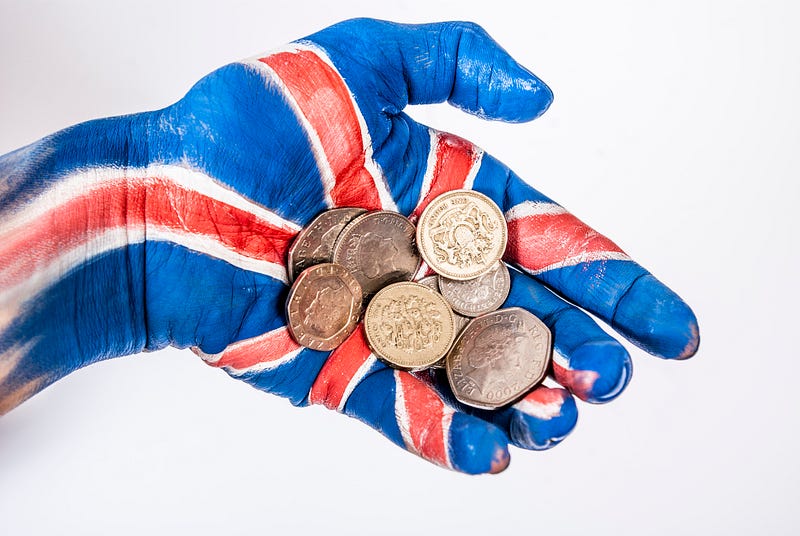
Photo by Elena Mozhvilo on Unsplash

In the long term, as far as capitalists concern, people want predictability, people want stability. From the back of that, they can plan. That’s very hard to plan in the long term when there’s such a level of volatility.- Gautam Dhillon, CEO of The Treasury Outsourcing Company

In every corner of the world, we need food, shelter, water, energy, and money.

Half of every transaction every human being does evolve money in exchange for goods or services. Money is the root of our motivation to reach our goals but also a powerful way of destruction.

A long, long time ago, we created currencies. And if you think money is a strange concept of trust between human beings of the modern age, you’re absolutely wrong.

The first recorded liquidity crisis and government bailout happen in the year 33 a.D. in Rome. Then, the largest empire the world saw was destroyed by a banking disaster.

Directly from the National Treasury, Emperor Tiberius used the money to bail out banks and companies. Does it look familiar to you?

Economic cycles remote centuries ago and keep happening all the time. But, unfortunately, humans are not capable of finding a perfect system, and they probably never will.

Money is a great servant but a bad master.- Francis Bacon

When our ancestors traded a piece of meat for a lambskin, credits and debits naturally were formed. Whenever is a trade between two parties, there’s a trusty exchange happening.

Money is a technology that’s older than the wheel.

When some tribe had to trade greats amounts of something, that would have to be a specific agreement about its value. So there’s where commodity money enters.

There were many commodities, but each one had to have five characteristics:

  • Scarcity.
  • Recognizability.
  • Divisibility.
  • Fungibility.
  • Portability.

In ancient Rome, it was salt. The Aztecs used cacao beans. Shells in Africa and China. Even in the remote Yap island, they used gigantic stone rocks.

Metal, rare stones, fish, if it had the five characteristics of commodity money, someone would use it as a currency.

So, now that you know that money is as old as cavemen let’s see if we can understand how we got to this system we live in today.

Democracy is the worst form of government except for all the others.

The first physical coins were created 2,500 years ago in China and Turkey. They had the five characteristics of a commodity.

Coins, in some cases, are the only thing left of entire ancient civilizations.

As markets begin to develop, money arises naturally. People who had eggs to trade for chicken, or salt for olive oil, now had one way, through coins, to do the exchange. If the population trusted their kings or emperors that they didn’t cheat on the metal content, coins would work.

The market economy was born.

And with that, money and political power were irretrievably linked and centralized. So growing the money supply at a predictable pace would allow economic stability.

Taxes started to be a weapon to build castles and finance wars. But also to sponsor extravaganzas from the royalty. That was when the debasement of currencies took place.

The currency of France was debased every 20 months for 200 straight years.

To avoid future constraints, wise merchants as the Medici family in the 15th century in Florence created the paper money, in the form of debt, or promises of future payment, to avoid gold and silver being constantly transported from one place to another.

As intermediaries, the Medici had created the first printing money machine.

The Medici’s fortune and power financed the Italian Renaicense, elected popes, and married Medici family members with royalty.

Power, money, and influence ran through church and state. This merchant family proved that creating money paper could be highly profitable. For the first time, merchants’ paper money started to threaten the crown’s coins.

Wealthy merchant families started to finance expensive wars because one year’s taxes weren’t enough to pay the bills. So kings and queens had to borrow money against future taxes. That was when government bonds were created.

So, the rich merchants and Goldsmiths (wealthy metalworkers) had become powerful financiers and bankers. As a result, sovereign debt and deficit spending had been born.

In 1694, the Bank of England was privately owned and had the monopoly on issuing banknotes, a paper that could be produced for an equal amount of gold from the government coffers. This central bank soon also managed the entire debt of the crown.

Money has been a took of sovereignty for centuries. Being able to issue currency gave you the power, but it also gave the value to that monetary supply but backing it with the force of the state.- Andreas Antonopoulos, technologist, bitcoin advocate, and the author of Mastering Bitcoin.

When the Americans won the independence from the British, they wrote in their just born constitution the right to coin money. This currency’s value was tied to gold in government vaults- they were managing money under the gold standard.

People want predictability, people want stability, but from 1781 until the panic of 1907, the financial system of the US was an economic disorder. From state banks, private banks, private currencies, government currency, and a vicious cycle of fast growth, recessions, and depressions, regular boom and bursts almost destroyed the American dream.

In 1913, bankers and politicians decided that a permanent central bank was the best solution to manage unemployment and inflation- the Federal Reserve was born.

The Fed’s main goal was to expand or contract the supply of a single national currency- the US dollar.

As the dollar was tied to gold, the Fed should manage and avoid booms that lead to bursts. At least, that was the plan.

16 years after the Federal Reserve was born came the 1929 Great Depression. This major crisis would have a massive impact on monetary policy worldwide. Soon, the Fed had printed all the money it legally could to normalize the deeply depressed American economy.

So, in 1933, President Roosevelt issued an executive order forcing all the US citizens to sell their gold to the Fed at a fixed price or go to prison.

Gold flowed in, and dollars were spread across the globe.

This was probably why we now have the global international trade system as we know it.

The World War II devastated the all world, except the United States of America. The US had created the most significant military and industrial superpower, and the US dollar had become the world’s most trusted currency.

Central banks worldwide pegged their national currencies to the dollar and started to devalue their own currencies. So, there would be more dollars outside the US than in the American vaults.

To avoid an international crisis through lack of gold reserves, Nixon suspended the dollar’s convertibility temporarily into gold or another reserve asset in the interest of monetary stability.

The dollar was now backed solely by the full faith of the United States government.

Debt is the worst poverty.

The modern monetary system had created nations of debtors.

Not just personal debt, but corporate debt and government debt. Today, the wealth of one nation is a gigantic hole of money that we owe to someone else that is never going to be paid back.

To be in perspective, today, the US pays 400 billion dollars in interest to its creditors every single year.

When a country spends more money than it collects in taxes, it simply borrows more or creates more.

Before 1974, to create more debt, governments issued bonds backed in gold reserves, but not anymore. Today, governments create currency by first creating bonds. Then, these bonds are sold in the markets, generating funds for governments.

Large banks buy bonds to flip them, selling them to the Federal Reserve at a profit. The Fed doesn’t have any money. Yet, when a bank buys a bond and takes it to the Federal Reserve, the Fed accepts it and pays the banks a fee. The money isn’t exchanged; it simply appears in the bank’s balance sheets. Pure magic.

These secret transactions are made in the name of national security, but nobody knows how it is done.

But knowing that the Federal Reserve is not a government agency, it’s a private entity, and its shareholders are banks, which earn an annual dividend of 80 billion, things get nasty, right?

The magic money machine answers to no one. At least, no one that we know of, anyway.

The Federal Reserve has been given the impossible task of running the credit and monetary system as though we are the Soviet Union. It’s the central planner of the key aspect of Capitalism, which is how money and credit are allocated.- Gene Epstein, from Barron’s Financial Weekly

Even with the best intentions, the Federal Reserve, a mysterious entity, will tend to make mistakes. And as we don’t know who they really are and transparency is not their primary focus, in future bursts, we’ll tend to discredit the institution and new systems will tend to arise.

After the 2008 Great Recession, we observed the creation of digital money- the Bitcoin Standard.

In 2009, a man, woman, or group of people created by the nickname of Satoshi Nakamoto, a 9-page-white-paper that defined:

A purely peer-to-peer version of electronic cash would allow online payments to be sent directly from one party to another without going through a financial institution.

Governments getting involved in money has good things and bad things associated. It’s a good thing because money is what makes the economy moving forward, and the economy serves people, serves citizens worldwide. It’s bad because manipulating the supply of money has short and long-term consequences.

The long-term debt cycles tend to happen in periods of 70 years, and we’re about to face the last inning of a great debt cycle.

The other thing is inflation. Central banks tend to control inflation by issuing money slowly into the economy. But 2% inflation means that your one dollar this year has to buy the power of $0.98 the following year.

If you work every year to earn money, using your time to do so means the government is devaluing your time and energy at 2% a year, every year of your life. So, inflation is the higher hidden tax created by central banks to control the economy by devaluing your time and energy.

The real problem with this system doesn’t really have to do with central banks. The real problem is that the power to create money is in the hand of the banks, the same banks that provoked the financial crisis in 2008. And those who perpetrated the crimes in the 2008 financial crisis are all still working in the same business as we speak.

The problem with money is trust and morality.

If we lose trust and the system loses morality, citizens start to look at other options. And that’s where the cryptocurrencies begin to get attention.

All the new money created by banks is debt, but it’s also digital money. So, the transition from this system to a future one that uses cryptography will not be a massive technological shift.

The Bitcoin Standard.

Bitcoin was created to serve a highly political intent, a free and uncensored network where all can participate with equal access.- Amir Taaki

The Bitcoin Protocol was built over the principles of cryptography. The protocol defines the procedure followed by a Bitcoin transaction from its creation. Then, it’s validated and has a final confirmation.

Developers and coders all over the world built the blockchain infrastructure that supported the Bitcoin network. As a result, it’s fully decentralized and transparent.

Bitcoin maximalists are frequently accused of dogmatic cult positions. However, being early adopters and the first to benefit from the speculative exponential growth that Bitcoin has been following in the last years, we observe two different aspects of this Bitcoin trend.

The greed that has corrupted Wall Street and the Fed, producing our sorry situation of bailout capitalism and casino economics, has worked its way into crypto land. The lust for power and wealth, it’s sad to say, has started plaguing new-age finance.- Concoda

Maximalists are the ones that have been marketing on social media the advantages of the Bitcoin standard. Developers and coders have been in the back office creating a new digital infrastructure built on multiple blockchains, with the final goal of disintermediating the financial sector and other sectors of different industries.

One of the most exciting things about technology is that all the players have to adapt to survive when a disrupting innovation arises.

In some states of the US, senators are buying Bitcoin to their balance sheets, and most recently, Federal Reserve Chair Jerome Powell met with the chief executive of cryptocurrency exchange operator Coinbase, Brian Armstrong.

The Fed announced plans for a white paper examining whether it should develop a digital currency of its own. As a result, we can be facing the arises of the CBDCs (Central Bank Digital Currency) worldwide. That means banks would not be needed to monetize cryptocurrencies.

Bitcoin maximalists believe in a totally decentralized monetary system, managed by code and working with the simple rule of supply and demand. Yet, I haven’t read any kind of study that assures me that this system would work worldwide.

The best explanation was made by Jeff Booth in his book The Price of Tomorrow, where Booth explains that we should embrace deflation and let the prices go down and let a decentralized system take care of the world economy.

China is leading the CBDCs trend by creating its own. They may test its digital currency with foreign visitors at the 2022 Beijing Winter Olympics.

The Americans are working hard to keep the pace with the crypto world.

What makes the Bitcoin a breakthrough?

It tackles an ancient human dilemma and solves a science problem. Of course, any shared information or data can be flawed or corrupted or faked. But we need to know, in our traditional mindset, who’s behind our currency; it’s the trust issue.

And we also need to feel that the system we work in is morally trustworthy.

In finance, we rely on trusted players, like banks and financial institutions. We trust in their digital ledgers of credits and debits.

A new financial system that can cut these middlemen could be faster, cheaper, and more secure.

But the one million dollar question is, Will It Work in the Near Future?

Final Thoughts

It’s not that the financial world will change. It’s already changing.

Money as a technological tool is being redesigned as we speak. The Federal Reserve, the European Central Bank, the Bank of China are all working hard to take advantage of the cryptographic innovation that started with a simple 9-page-white-paper.

Nobody knows how the new system will work, who will be the winners, but for sure, the citizens will be the first to benefit from it.

We’re in the first inning of the Exponential Age. The age of The Internet of Things, where everything will be connected with everyone.

Money is the ultimate technology, and because of that, we need to find better ways to use it, especially for the two-thirds of the entire world population that hasn’t got access to a banking account.

Commercial banks are at risk of extinction, as central banks lean to create CBDCs and manage the money supply and monetary policies directly through digital wallets into citizen’s mobile phones.

Bitcoin maximalists want to eliminate banks and central banks and let the code and digital protocols manage the all financial system.

Governments and central banks will fight for control in their intent to stabilize the financial system and avoid future bursts.

The Bitcoin community passed through significant drops but did survive. Since the early days, private interests aggressively attacked Bitcoin, but Bitcoin reached the one trillion dollar market cap mark and survived.

Will it survive? Will it turn mainstream?

Can the government keep the power to manage money? Will commercial banks and central banks survive?

History taught us that technology only serves a higher purpose to human beings. And money is technology.

Whatever will be the future, it will bring better solutions to humans problems because the technology did that in the past and will keep doing it in the future.

This article is for informational purposes only, it should not be considered Financial or Legal Advice. Consult a financial professional before making any major financial decisions.

Sign up for my email list and join the happiest readers on Medium. https://nunofabiao.medium.com/subscribe (This is where you get exclusive access to my daily activities, experiences, and daily thoughts)

Bitcoin
Economy
Technology
Politics
Blockchain
Recommended from ReadMedium