
I’ll Never Raise a Child in Japan. Here’s why.
Growing up Southeast Asian in Tokyo

My earliest memory of growing up in Tokyo is in kindergarten hiding behind the trunk of a giant tree.
“She has to be somewhere,” someone whispered.
“I bet she’s hiding again,” another snickered.
Cautious as a rabbit, my ears followed the murmur until it faded. I then sped past a group of children giggling with their friends to find another hiding spot — usually the bathroom.
No one looks for you in the bathroom, not even the teachers. It was perfect.
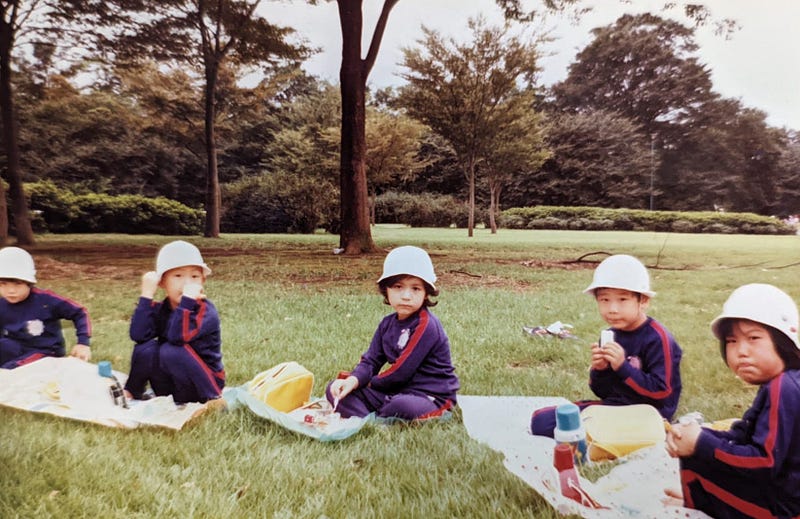
Hide and Seek
Random kids on the streets would yell gaijin! gaijin! (foreigner, foreigner) and point at me like it was a public service announcement. I came to know it meant I was different and that was a curse.
One day, my sister and I were eating ice cream while walking home from school. A bunch of schoolboys stomped toward us.
A chubby boy placed his face inches from my sister’s and growled, “Stop eating Japanese ice cream!” He then slapped the ice cream right out of her hand.
Splat! went the tasty treat and off we dashed as I let go of my ice cream, leaving a remnant of a battlefield.
From that day on, we didn’t dare step on the same path and took a longer route home.
Hiding became an underlying theme in my childhood. From an early age, I understood I wasn’t the right breed. Nothing about me was right — not my nose, eyes, or skin.
I learned looking different was dangerous.
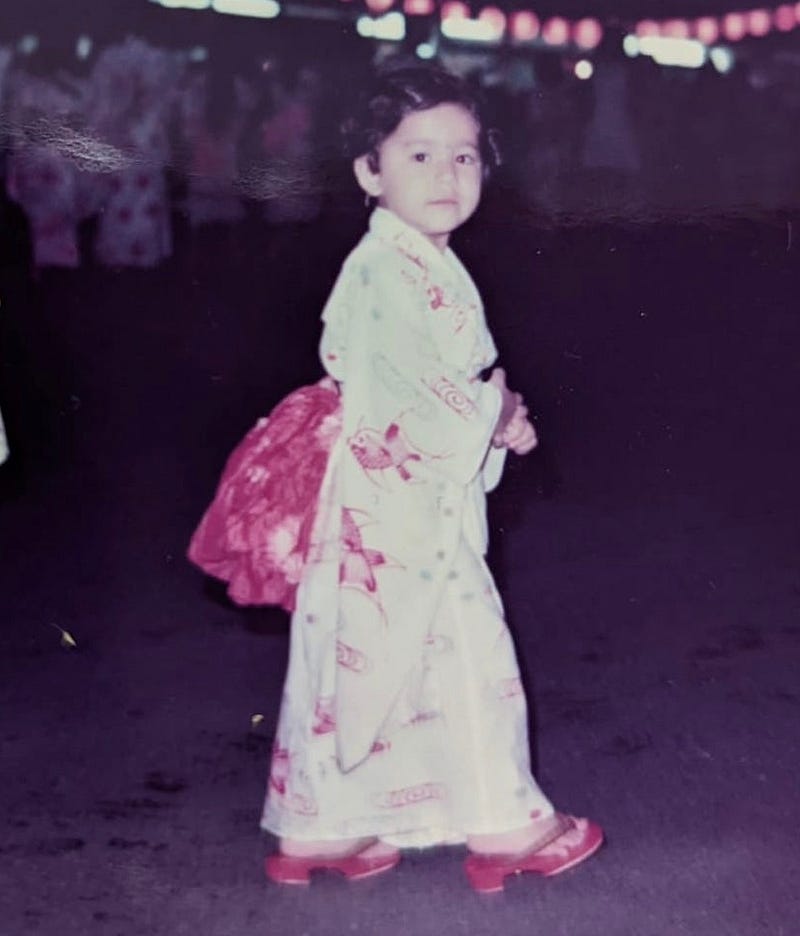
Existential crisis
Kids get bullied all the time and I’m no special in that regard. The problem is every nook and corner, not only school, was a war zone. When the whole country hates you for the way you look, you’re a prisoner.
Japan was the only home I knew. My only connection to Nepal was my parents and my Nepali relatives, whom we visited every two years.
My mother learned Japanese and spoke it fluently. Her friends visited our home and praised us — Nihongo jyouzu ne! (You’re so good at Japanese).
Cringe. Yes, I speak like a native. Of course, I do. I was a toddler when I moved here.
The conversation followed with:
Mom’s friend: Nepal is such a beautiful country. I’d love to go there.
Me: Yes, it’s a beautiful country.
Mom’s friend: Do you miss it?
Me: Uhm…I guess…
Mom’s friend: Of course, you must miss your family there.
Me: Well, not really. I grew up here so…
Mom’s friend: Oh…I’m so impressed with your Japanese.
Me: Well, I grew up here so…
Mom’s friend: It’s a difficult language to learn.
Me: Uhm…
The conversation didn’t flow exactly like this, but you get the gist.
They meant well, but it felt offensive as though my outer layer was all they saw. Didn’t they get it that Japan is also my country? That I am partially a Japanese at heart? That I moved here at two?
I learned I’m just a temporary visitor.
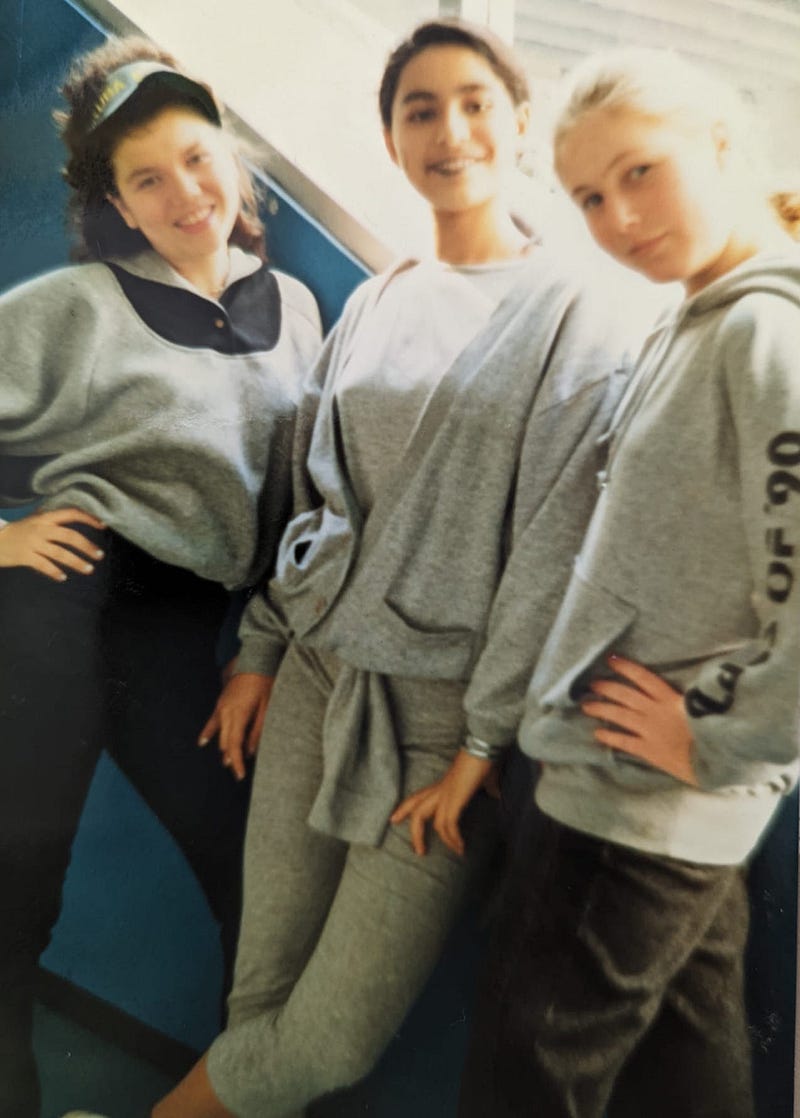
White knights in shining armour
After the Japanese kindergarten, my parents enrolled me in an international school. I used my white friends as shields, following closely beside them. The Japanese stared at them too, but in a good way. They gawked at them like starstruck fans.
The hafus (one Japanese and one non-Japanese parent) had it best, though. Some of my hafu friends were scouted on the streets by talent agents looking for models. On TV, they were revered like gods with their faces plastered in commercials, train stations, and bulletin boards.
Walking with the right crowd meant no harm would come to me. Walking alone meant danger. I wore props like my sunglasses even on cloudy days. It helped.
I wanted to look more Japanese. At night, in front of the mirror, I stretched my eyes to the sides, hopeful. I despised my nose. It was sharp and stood out like a nail. I wanted to hammer it in so it would mold into the right shape.
I learned the Japanese proverb ‘The nail that sticks out gets hammered down’ applied to me.
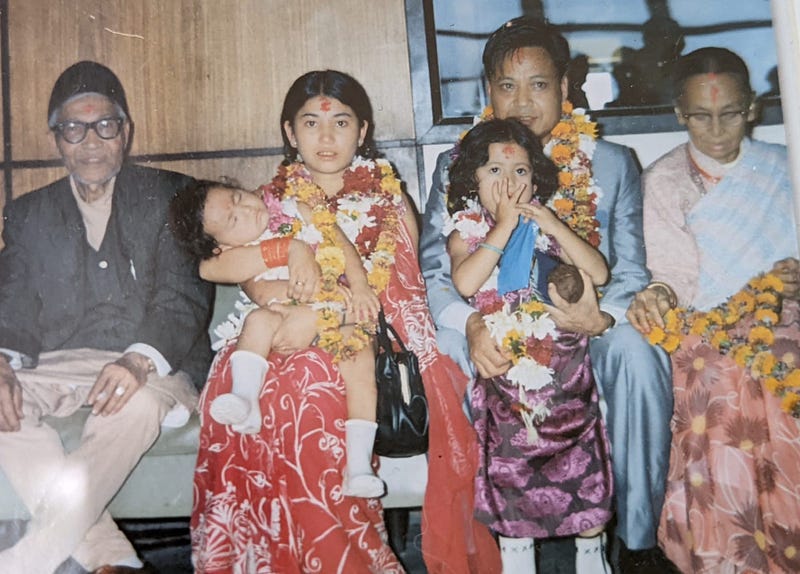
Erased identity
My father was an intelligent man who grew up poor in Nepal. After getting an academic scholarship and graduating with a master’s from an ivy league in New York, he landed a position as a civil engineer in Tokyo.
My point is he contributed to the Japanese economy. Like most Japanese salaryman (office worker), he commuted 1.5 hours to work by bus and train one way, and came home late working overtime.
As soon as he retired, my parents moved back to Nepal. They could have applied to become a permanent resident in Japan, but they opted out. Years later when I asked my mom why, she replied, “The country wasn’t habitable” and didn’t elaborate further.
Since my childhood in Japan, I’ve renewed my passport several times. This means there is no trace of me having lived in Japan — that’s 17 years vaporized. I’m now a tourist in the country where I grew up. It feels like exile, like part of my identity vanished.
I learned I’ll always be an outsider.
I’m not alone
According to the Japan census statistics, 98% of the population in Japan are Japanese followed by Chinese 0.5%, Korean 0.4% and others 1%.
No wonder it’s difficult to comprehend that someone who doesn’t look Japanese can be ‘Japanese’. And unlike countries like the US, a foreigner born in Japan can’t be a citizen. The only way is through Japanese blood.
In a homogenous country, naturally people who look different attract more attention. Hafus, even with their stunning looks, don’t have it easy. They are mercilessly discriminated for not being Japanese enough, like Haitian/Japanese tennis player Naomi Osaka.
In 2015, Japanese ministry sent out a survey to foreigners living in Japan. They found one in three foreigners are discriminated because of their background and 40% experienced housing discrimination.
Foreigners aren’t an exception. Ijime (bullying) among Japanese school kids is an epidemic. To cope, many commit suicide.
Good news is that in 2013, Japan passed the ijime prevention law after a second grader committed suicide and the school denied having any previous knowledge of bullying, which proved false.
The law requires schools to take the required steps to prevent bullying by discovering it at an early stage.
But, to this day, the country still lacks any laws prohibiting racial, ethnic, or religious discrimination and those based on sexual orientation or gender identity.
As a mother to a mixed-race 3-year-old boy (half German), I will never raise my child there. He’s fluent in Japanese, but I will never send him there. And I hope he never works there.
Never — that’s the word I associate with my motherland.
It’s about survival.
*I grew up in Japan from 1975–1990.
Note: After I wrote this story, USK (Yusuke Koyama) wrote a poem about this story. What a talented poet! Read below:


