
I Tracked My Time For 365 Days in 30-Minute Logs in 2023 — Here’s What I’ve Learned
Was it worth it?
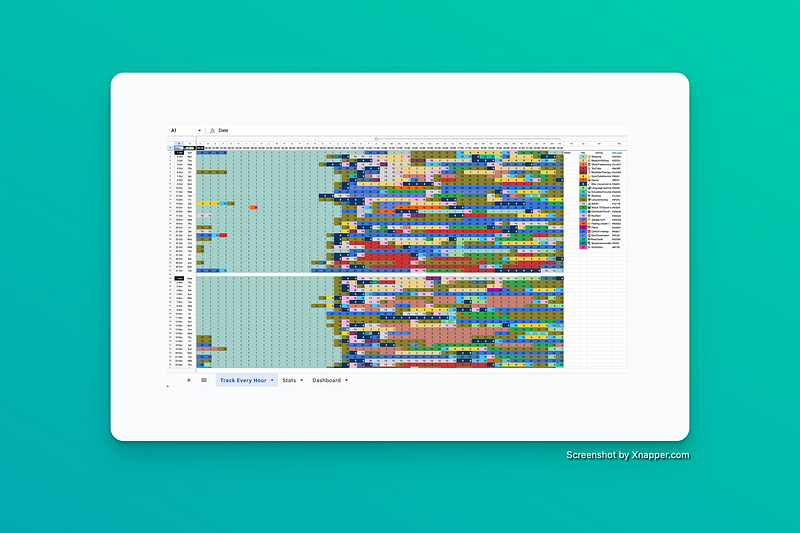
Previously, I tracked and analyzed how I spent my time for 3 months.
What if I tracked my time for an entire year?
Would I learn anything beyond the insights from the 3-month experiment?
Table of Contents
· Tools used (all 100% free) · 1. Which patterns emerge from looking at the mosaics? · 2. What are my averages and totals per month? ∘ 2.1 Hours of daily sleep ∘ 2.2 Bedtimes ∘ 2.3 Hours scrolling or binging the internet ∘ 2.4 When do I start to binge-watch series and waste my own time? ∘ 2.5 Hours spent on the YouTube channel ∘ 2.6 Hours spent on writing ∘ 2.7 Hours spent reading a book ∘ 2.8 Hours spent learning a language ∘ 2.9 Hours spent on furthering my education ∘ 2.10 Dance classes taken · 3. How I kept up with time logs every day · 4. Was tracking my time in 30-minute logs for 1 year worth it? · 5. What I’ve learned from the experiment · 6. Most important realizations · 7. How this exercise can help you
Tools used (all 100% free)
- Toggl Chrome extension
- Zapier automation to create tracked Toggl time logs on Google Calendar
- 30-minute Time Tracking Google Sheets Template
- Habit Tracker Google Sheets Template
- Dance, Sports & Fitness Class Google Sheets Template
1. Which patterns emerge from looking at the mosaics?
I placed my daily activities under 24 categories and gave each activity a background color.
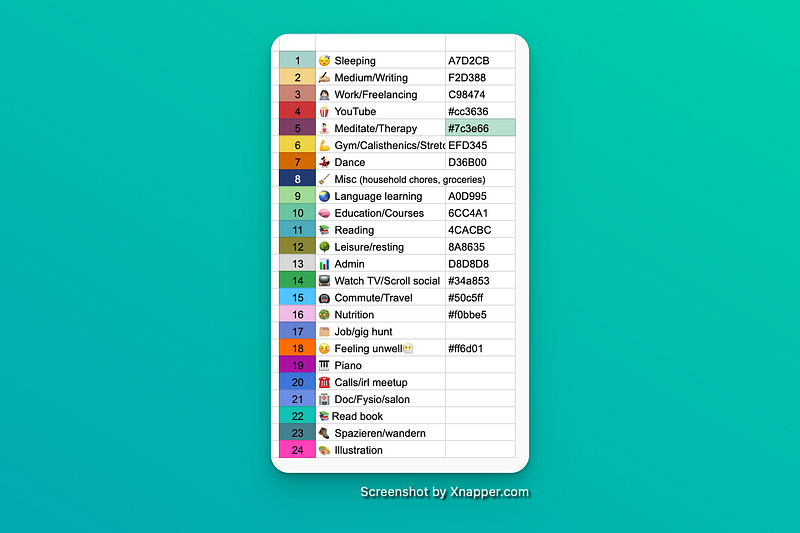
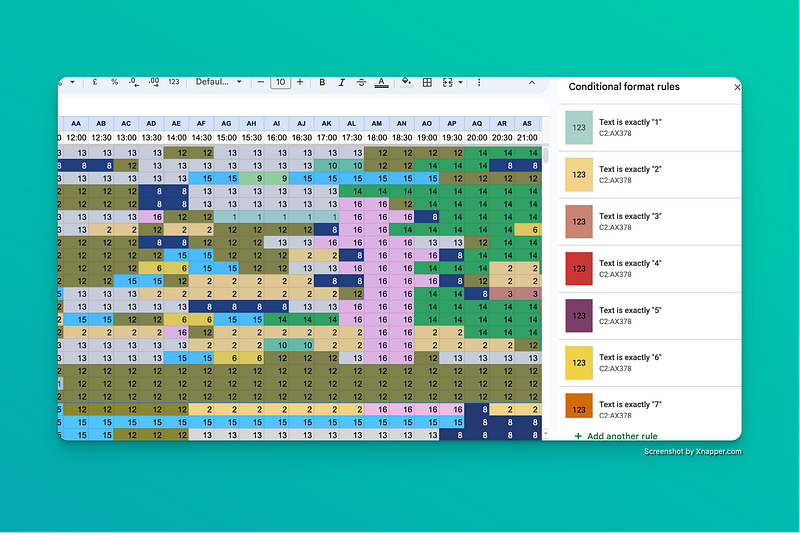
I manually changed these colors in my spreadsheet by selecting ALL mosaic blocks (range C2:AX378) > right click > View more cell formatting > Conditional formatting.
The conditional format rule: if the text in cell X is exactly this number, then give it this background color.
Let’s examine the colored blocks.
I didn’t really have a daily routine. Each day looked different.
I focused on one activity for several days or weeks, then switched to a different project. Call it structured chaos.
For example, look at the blocks with freelancing (3), followed up by more video creation activities (4 in red).
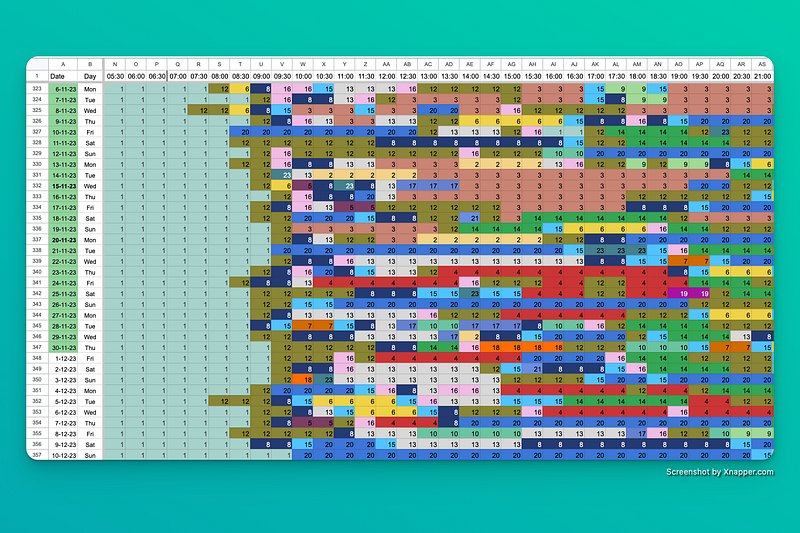
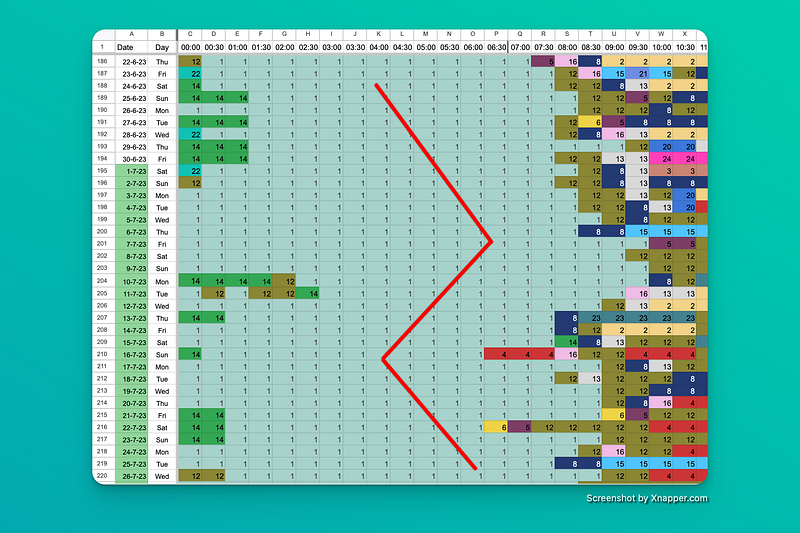
My sleep (1 in light green) and wake-up times ebb and flow. Sometimes I get up later, sometimes earlier. It’s not fixed to a schedule.
The binge-watching (14 in dark green) often happens late at night, right before bed, unnecessarily pushing my bedtime back even further.
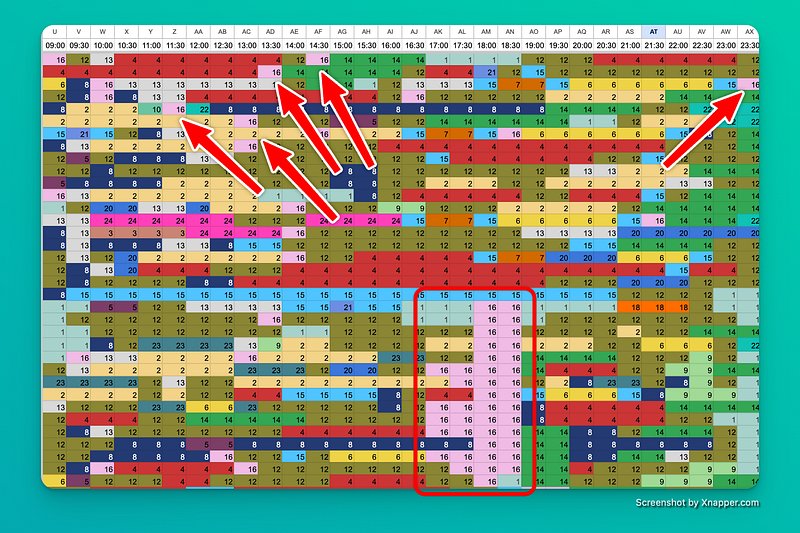
Compare the arrows (alone at my apartment) to the rectangle below (visiting relatives) pointing to eating (16 in pink).
- When I visit my relatives, I eat at set times.
- When I’m at my apartment, my eating habits are all over the place and lack structure.
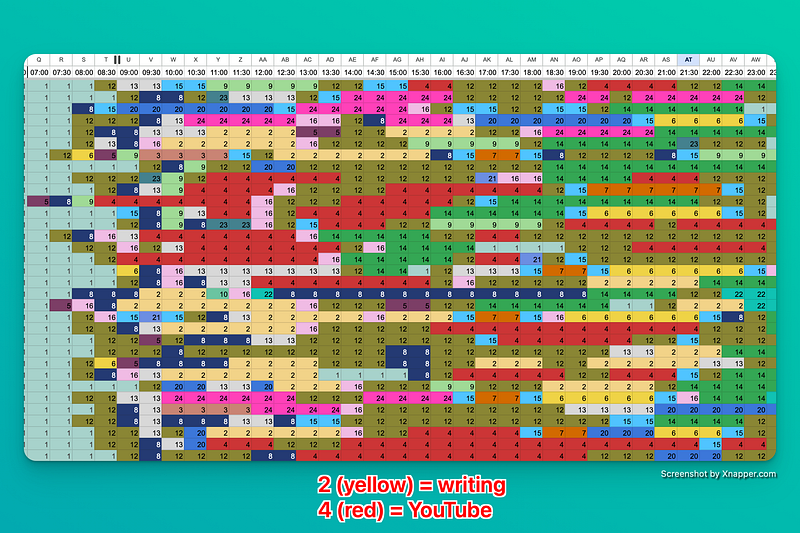
I juggle two main personal projects:
- Writing (2 and 3)
- YouTube (4 in red)
Periods of heavy writing alternate periods of heavy filming and video editing. It’s (maybe too) challenging for me to do both at the same time, on TOP of my daily habits, habits I need to stay a functioning, sane human being.
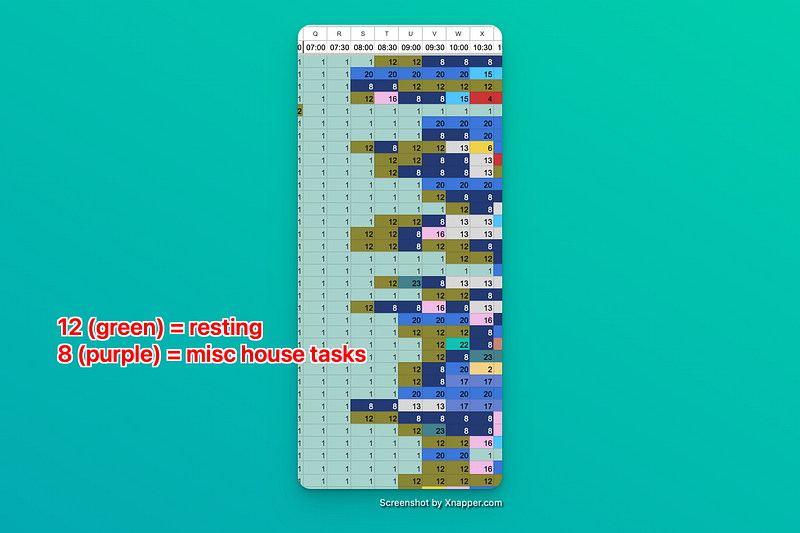
I’m not a morning person. I never jump straight out of bed.
My brain needs time to wake up before I can get going. You see this below in the mosaics with
- The many light green blocks (1) are sleep
- Then resting (12 in darker green), plainly staring at the ceiling
- And doing miscellaneous tasks to get the day going (8 in purple)
There are short periods in which I do manage to jump out of bed, do my
- Morning stretches (6 in yellow, takes around 16 minutes)
- And meditate straight after (5 in purple, takes 16–19 minutes).
But these periods don’t last.
I’ve learned it works better for me to reserve exercise for the late evening. I do plan to continue doing my meditations during my morning routine.
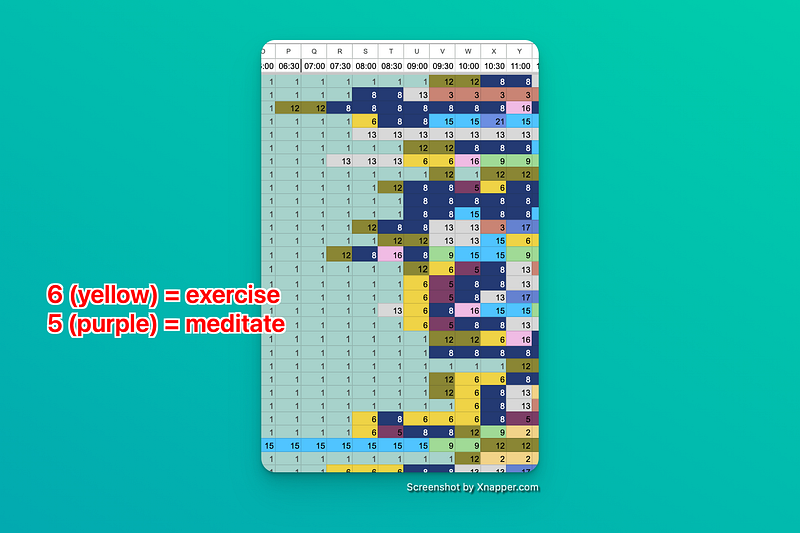
When I work on a freelance project (3), this typically consumes all my energy and attention. Client satisfaction is important to me (and essential to the livelihood of the freelance business).
I tend to dump personal projects temporarily and only take time to rest, write, or go to the gym.
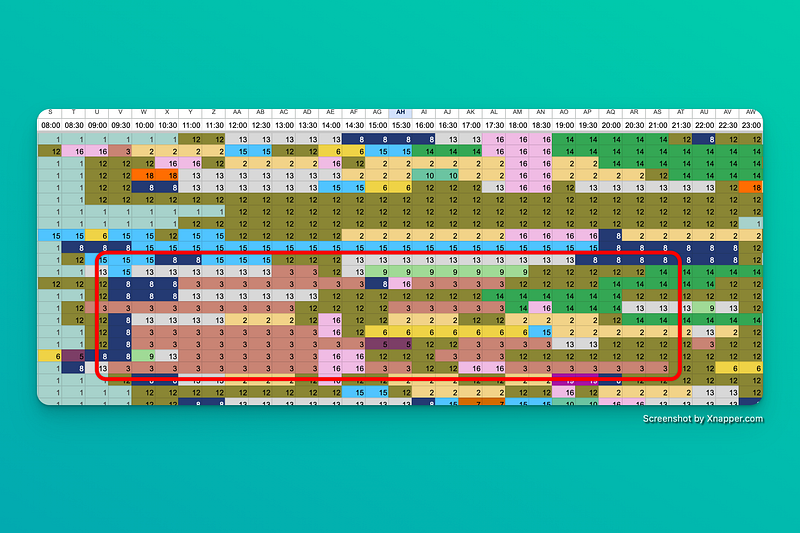
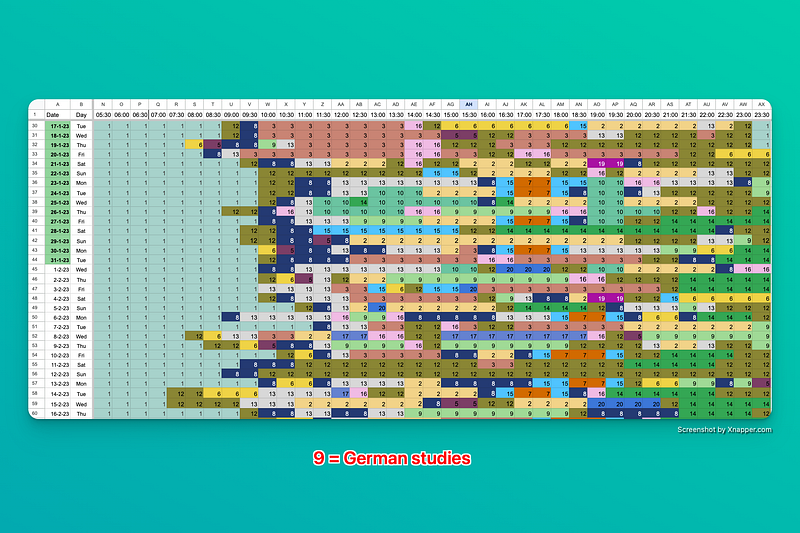
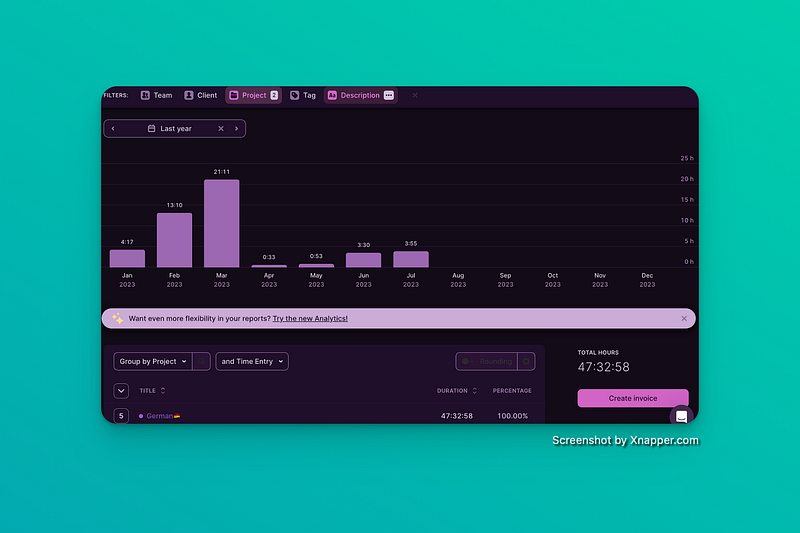
From January to July, I was able to get around 45 hours of studying German (9 in light green) thanks to
- A weekly course on Thursdays
- And Saturday meetups with classmates to practice our spoken German.
Planning language training ahead helps ensure I actually do it.
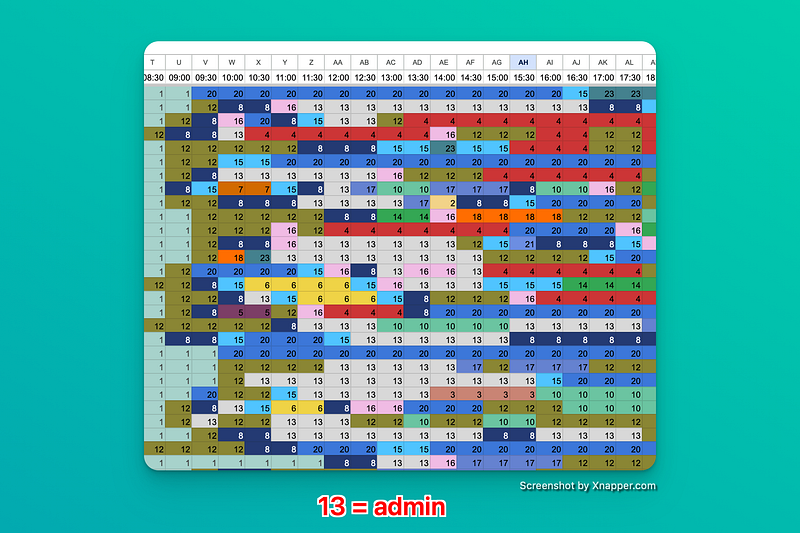
I spent a lot of time on admin crap (13). Think
- Emails
- Planning
- Archiving files
- Filling out the fields on this damn spreadsheet.
Many of these things can be automated. I haven’t taken the time yet to sit down and omit what can be omitted.
2. What are my averages and totals per month?
2.1 Hours of daily sleep
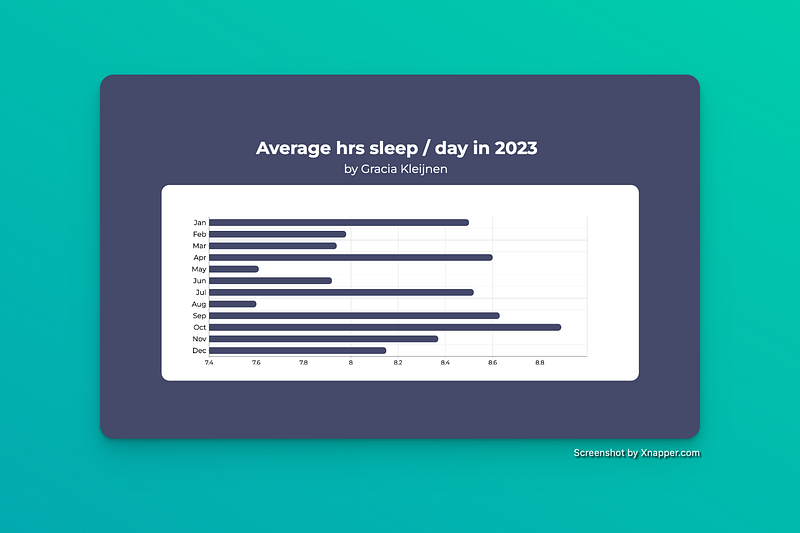
This looks very decent, ranging from 7.6 to 8.9 hours of sleep per night.
2.2 Bedtimes
Let’s look at one month. I won’t bore you with bar charts for every month of the year. I’m nocturnal and they all look similar.
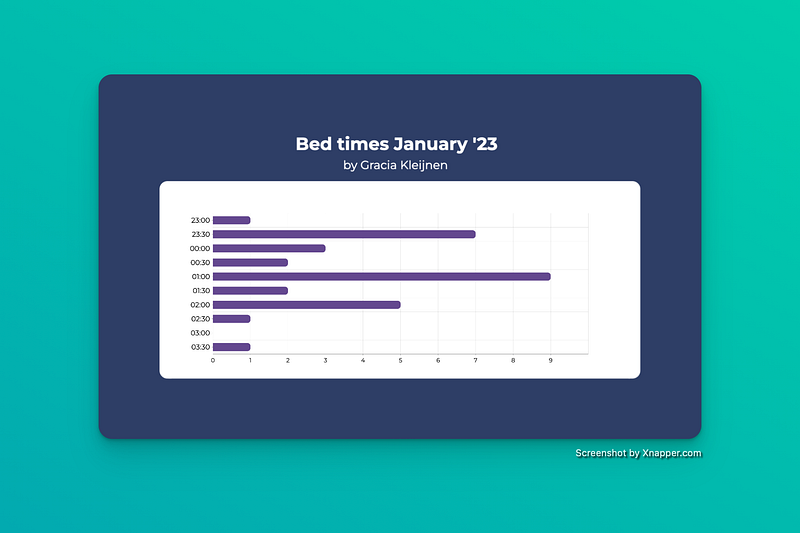
My typical bedtime is usually between midnight to 1 AM. Overall, this is a bit too late. If I need around 8 hours of sleep and want to start my days earlier, I should calculate this into the time I go to bed.
To aid my body in falling asleep earlier, I should not touch a screen after 11 PM — although this didn’t always go to plan.
2.3 Hours scrolling or binging the internet
429 hours in the past year.
That’s a little over 8 hours per week. Ouch.
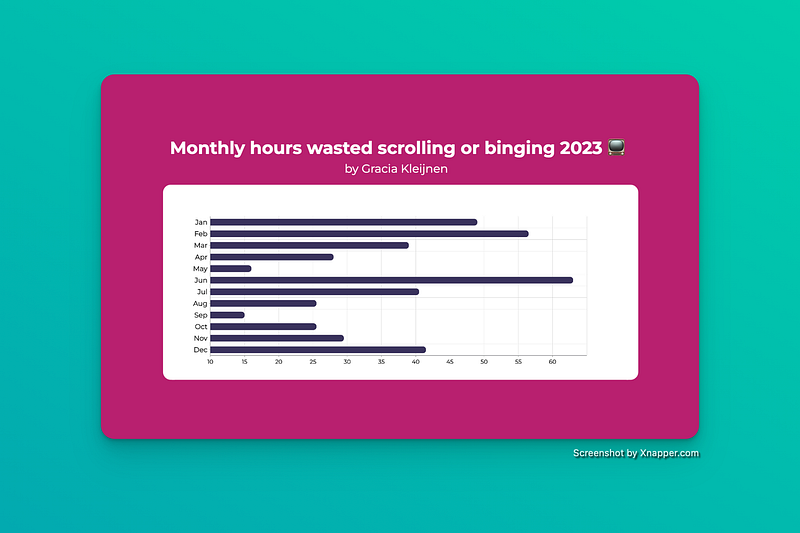
On average, that’s 0.49 to 2.1 hours per day gone down the drain.
Embarrassing, but the numbers don’t lie.
2.4 When do I start to binge-watch series and waste my own time?
- When I visit relatives, we watch TV during and after dinner. When I stick around, the hours add up quickly. I break the spell by getting up around 30 minutes after finishing dinner and doing the dishes.
- In the late evening, when I’m out of willpower
- When I eat a meal, I sometimes watch a show. When I’m comfily sitting on the couch with some food, I keep watching…
- When I’m feeling under the weather and unable to do anything else
- To “wind down” after signing off on the final delivery of a freelance assignment
- After sports, when I come home tired and touch a device, it means game over
2.5 Hours spent on the YouTube channel
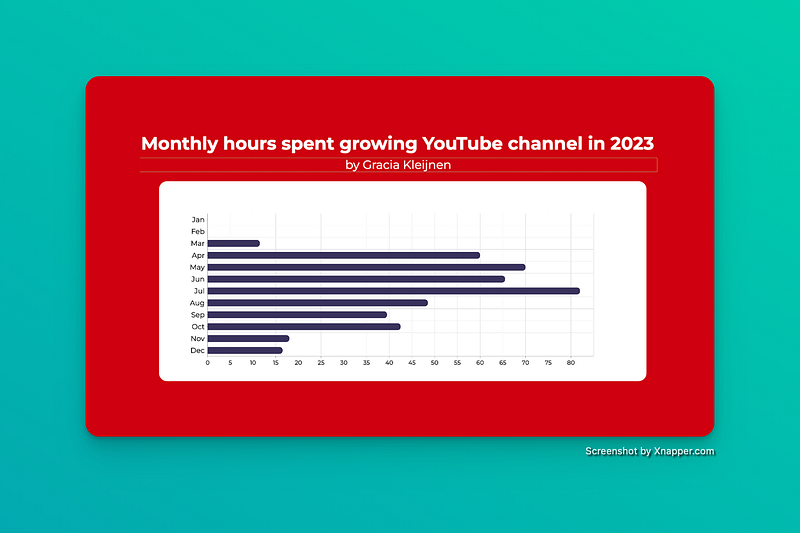
Each month I spent this much time on the channel:
- January: 0 hours
- February: 0 hours
- March: 2.5 weekly hours
- April: 15 weekly hours
- May: 17.5 weekly hours
- June: 5.4 weekly hours
- July: 20 weekly hours
- August: 12 weekly hours
- September: 9.75 weekly hours
- October: 10.5 weekly hours
- November: 4.25 weekly hours
- December: 4 weekly hours. I dedicated December to learning the basics of Figma and a 15 days of UX writing challenge which took up most of the month.
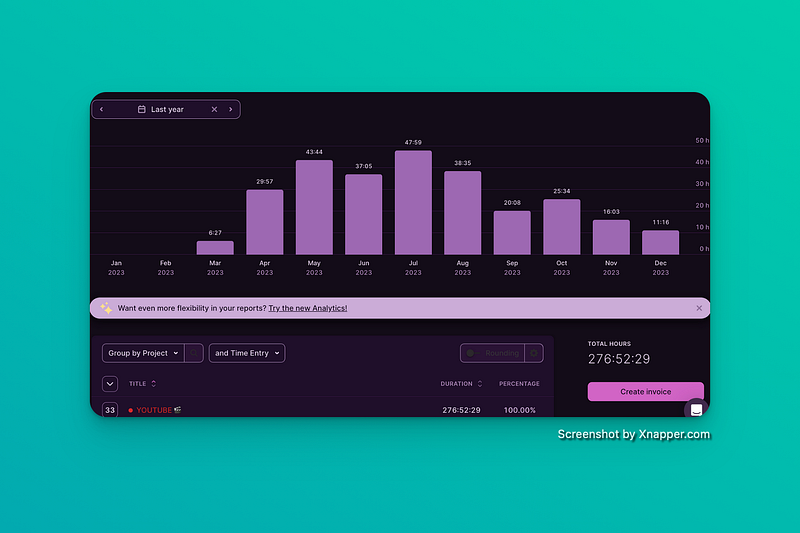
The charts look about right. What doesn’t look right, is how consistent I was. Divide 276 by the number of weeks, and I’ve “only” spent 5.3 hours per week on the channel. That’s not enough to
- Gain momentum
- Feel satisfied with the time I spent on the project.
My YouTube productivity peaked during the summer. Throughout the winter months, I lost steam a bit.
Side note: There will be discrepancies between the 30-minute logs in Google Sheets, and the exact time tracked in Toggl. For the 30-minute time logs, I choose the category that fits the 30 minutes best, or what I spent most of the 30 minutes on.
2.6 Hours spent on writing
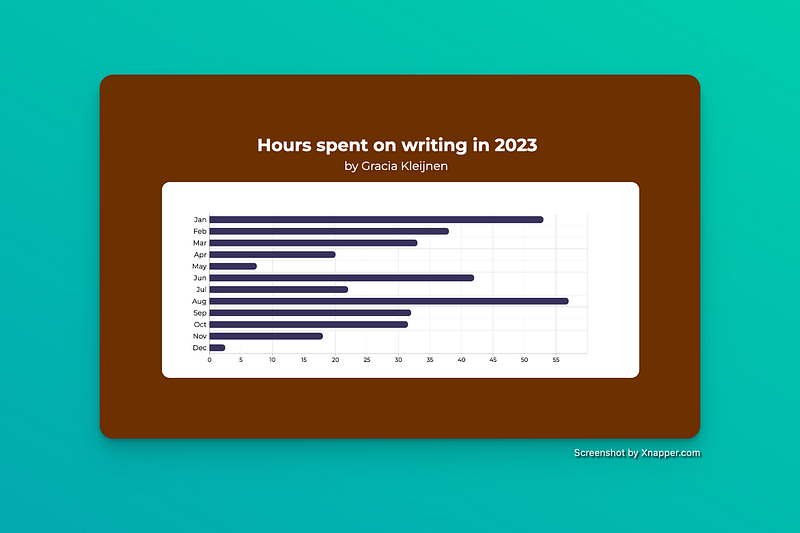
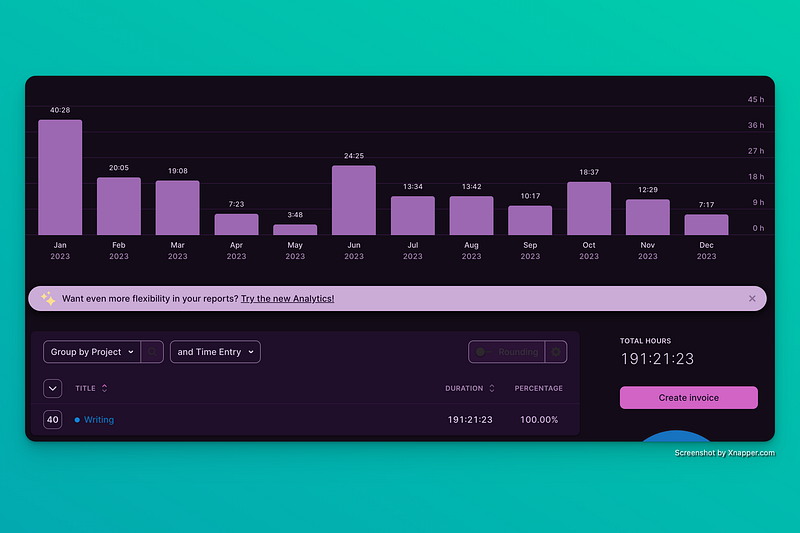
I was surprised to find out I spent 3.7 hours per week on average on personal writing projects.
When I wrote blogs about learning UX writing, I tracked this under “UX,” and not under “Writing,” although I spent quite some hours here.
To get a more accurate representation of how much I write, I should be more diligent in choosing a category in Toggl Track.
2.7 Hours spent reading a book
I only read 5 books from start to end in 2023 according to Goodreads.
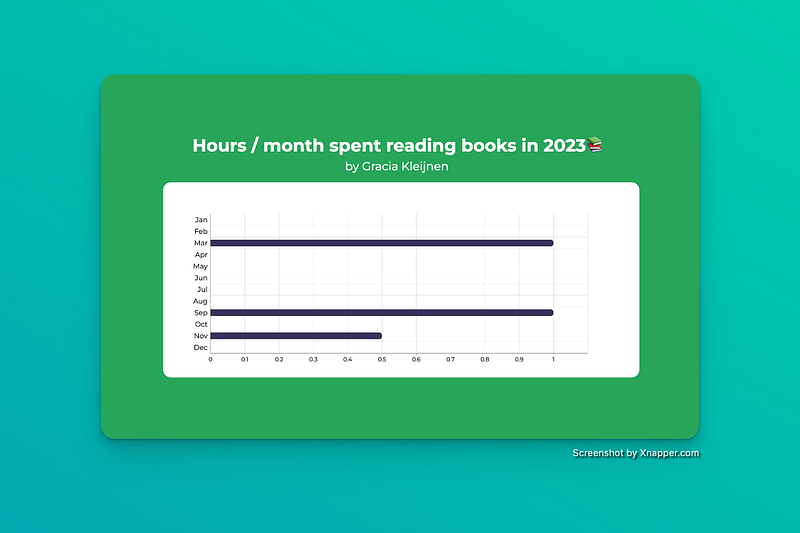
In 2024, I won’t be tracking how much time I spend reading.
Even though I won’t set a book goal either, I will tell you there are around 35 unread books on my bookshelf.
2.8 Hours spent learning a language
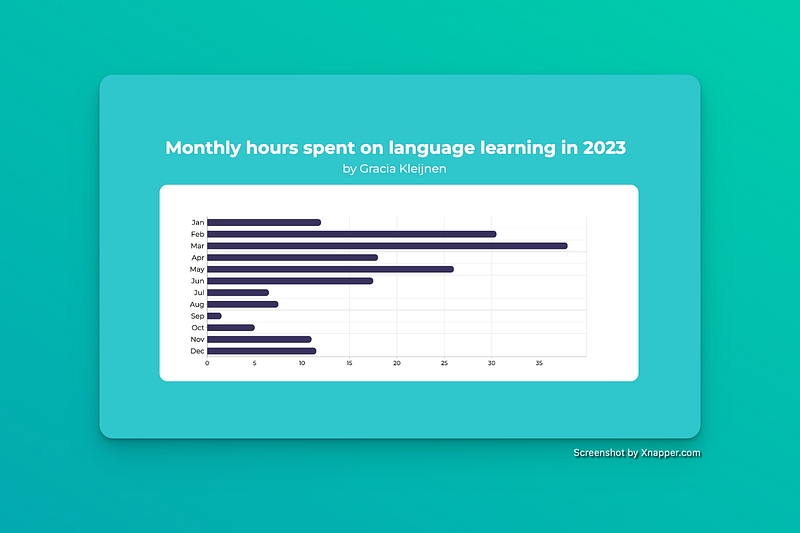
This looks about right. The first half of 2023 was the most intensive due to my weekly German language course.
A few hours every week do add up at the end of the year!
I kept up my weekly German studies, leading up to a second attempt of the Goethe C2 exam, which I passed in September.
The last few months of 2023 were less intense.
- I switched to casually studying Mandarin Chinese again,
- And started to learn European Portuguese on the Memrise app.
My only goal: sit down and study for 1 minute. Why? If I sit down for one minute, I always think, “Well, I’m doing this now, I might as well carry on.”
2.9 Hours spent on furthering my education
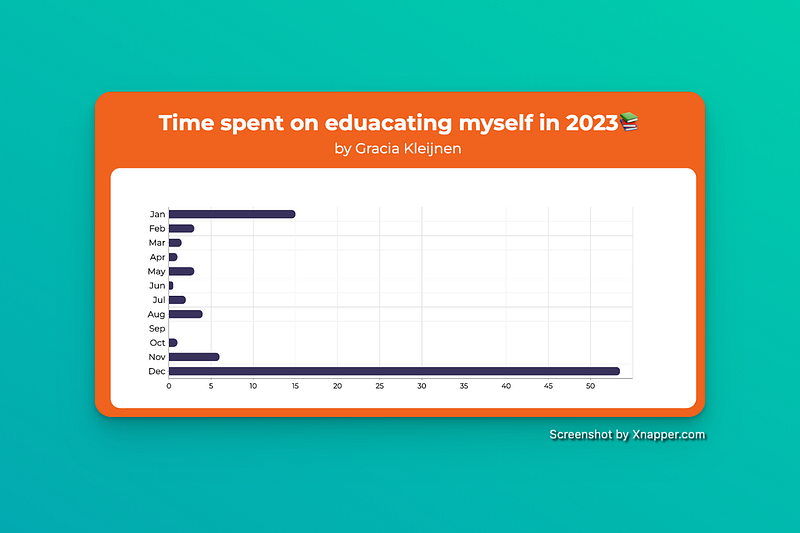
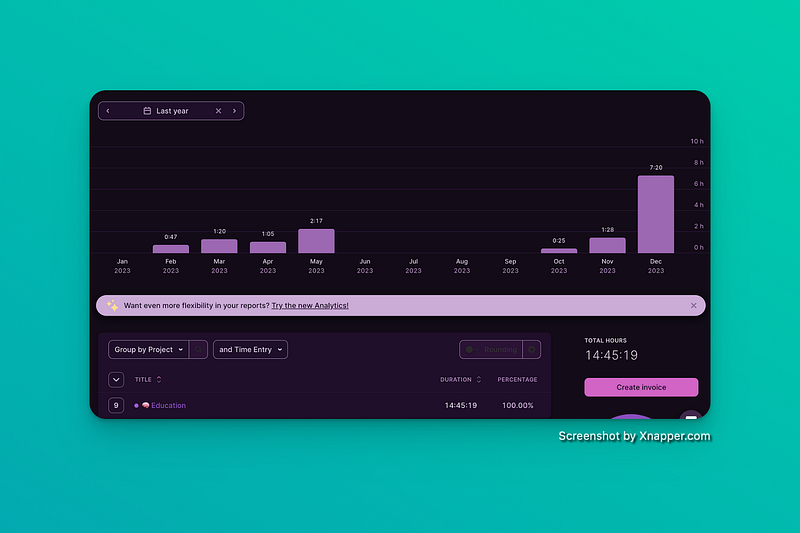
Here I tracked deliberate time put aside to take a course, or deliberately practice, for example, writing out blog headlines. In December there’s a peak due to the 15 Days of UX Writing Challenge.
2.10 Dance classes taken
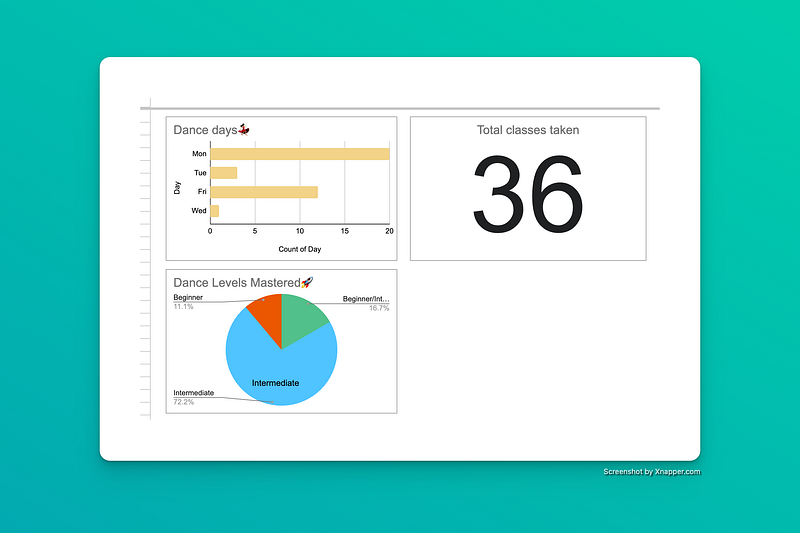
I tracked classes with my Dance, Sports, and Fitness Class Tracker Template.
Despite a dance break from mid-September onwards, I still took 36 classes in 2023.
3. How I kept up with time logs every day
I incorporated this into my morning routine. I extracted data from
- Logging what I did at the moment
- To-do lists in my paper notebook
- Tracked Toggl Time logs
- The calendar
- Or, worst case, my memory, which meant I had to guess.
4. Was tracking my time in 30-minute logs for 1 year worth it?
No. Hell no, haha.
I’ve spent hours on this tedious, manual task of putting numbers in a spreadsheet throughout 2023 to color my Mosaic, time I could’ve spent on my projects.
The 30-day experiment was enough.
Heck, even one week would’ve been enough.
Continuing it for an entire year just confirmed what I already knew.
5. What I’ve learned from the experiment
I got the confirmation that I:
- I still waste up to 2 hours per day on random crap. I’d rather invest this time in my projects
- Need ± 8 hours of sleep
- Must block 1 hour every month to automate mundane work, or I’ll continue to waste too much time here
- Need a slow, gradual wake-up. Think, journaling, meditation, doing my daily language learning habits. I’d love to wake up and roll into the gym, but pulling heavy weights is better reserved for the evening
- Spend 5.3 hours per week on the YouTube channel. I want to increase this to at least 15 hours
- Will rack up the hours and build skills, if I spend time on something useful every day
6. Most important realizations
1. I can’t have it all
Over the years I’ve been trying so hard to juggle multiple projects at once.
But I’m starting to see that it leads to doing none well and not getting anywhere, with any of them. Whenever I focused on writing, I neglected the videos, and vice versa. Moving forward, I want to do less, but better.
I choose to prioritize one project.
It’s fine to do other things “on the side.” But they can’t all get the same amount of attention.
2. Stop over-optimizing
By tracking my productive time with the Toggl Track Chrome extension, and having these logs created in my Google Calendar where I can see them, I have a good enough idea of whether I’m on the right track.
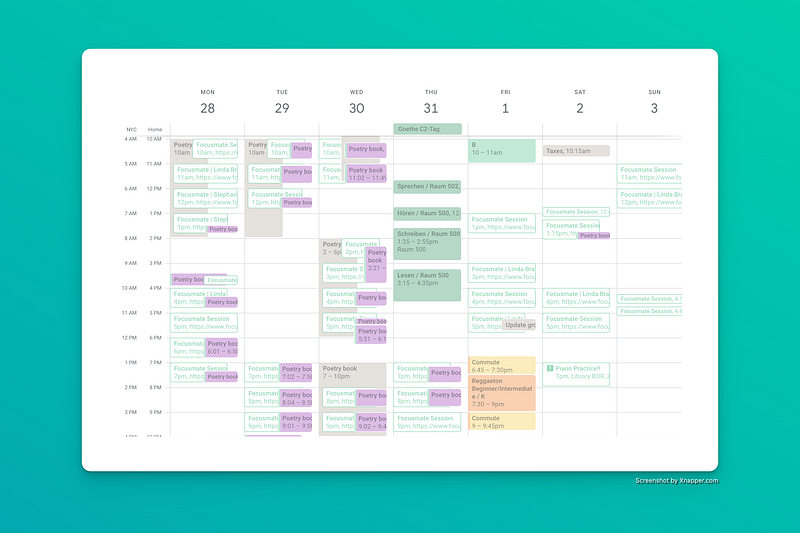
Get this automation for free on Zapier.

7. How this exercise can help you
You may uncover patterns and habits you weren’t aware of.
I recommend to
- Pick a regular week or two in your life (not all 52)
- Diligently track these 1–2 weeks
Then be done with it.
That’s why I designed the Time Tracking Spreadsheet that ya’ll have access to with space for 3 months. It’s more than enough.
What if I want to track the entire year?
If you must track an entire year, it makes more sense to do a review once per week, or month.
You can use your weekly or monthly findings to write a yearly review instead of analyzing this huge chunk of data all at once.
Trust me, you’ll have it easier.


