
I Found a Pre-School of The Future
How, why, and what we can all learn from it
As I wrote recently, looking for a new pre-school for my daughter in California has been an uphill battle.
Inspired by husband’s native Denmark, I wanted my daughter to play outside for as long as possible, without formal learning, and myself to have enough child-free hours in the day to actually get work done. Our current arrangement of 3.5 hours of daycare a day gives me just enough time to run home, shower, clean, panic about my life and run back.
What I kept finding instead were “quality” pre-schools with very short hours and expensive tuition, asking for extra yet if you wanted “aftercare” (anything after lunch). Still, none of them came close to Scandinavian early childhood programs, wonderfully outdoorsy and subsidized by the government.
It didn’t help that our city of Santa Monica houses a lot of high-earners who are, it seems, willing to pay $30,000 a year for their child’s basic care. My husband nearly fell off the chair when he heard the numbers. But then little surprises him in America anymore.
Finally, accidentally, I struck gold.
Googling “nature schools in my area” for the 100th time, I stumbled upon a website advertising a “nature school” with a peculiar name (borrowed from the art world) in what seemed like a home-based pre-school. I was skeptical but continued to dig deeper.
I’m glad I did. Because what I found delivered not only what I was looking for but also taught me a few things about what a school, and a society, of the future should look like.
So here’s how you build an alternative school. Because the world needs alternatives.
Community-focused
While any school might be called community-minded, a few truly focus on integrating into their surroundings. Yet our community is one of the most important (and often overlooked) factors in our well-being and happiness levels.
More than ever, we need to get get back and give back to our communities to create and maintain a sense of stability for ourselves and our children.
In the “School of the Future” (as I call it), the kids are active participants in their environment, delivering mail to local residents, taking turns shopping at the local Farmers Market, going on day trips by Metro and spending time in local parks and a community garden. Residents within the school’s zip code are given priority admission, and those residing within the zip and receiving a scholarship are guaranteed a spot (lucky us!).
From their website:
Our community needs us and we play a part in shaping it… We play at the park, we walk and ride the Expo, we shop at the Farmers Market and grocery store, all to experience life in our city. These experiences inform our envisioning of the better Santa Monica we can be.
This got me thinking that community-building and participation should be taught in schools to students of all ages.
Social responsibility, starting locally, is the first step to building, re-building and rejuvenating our troubled society, one neighborhood at a time.
Social justice-focused
As I toured the school, I was surprised by how many books and toys were celebrating diversity of every kind (it was the first time I saw a wheelchair doll). I learned that one of the program’s main values was social justice and embracing our differences.
From toys, to teachers, to admissions and learning practices, this much was obvious: diversity was being celebrated here because, as the school’s website explained, “children learn best in diverse settings.”
And because, I may add, embracing our differences is the only way forward for the country torn apart by injustices.
After all, they conclude, “the needs and wants we share in common far outweigh our differences.”
What could be better than making this the motto for all early childhood educators out there?
Environment-focused
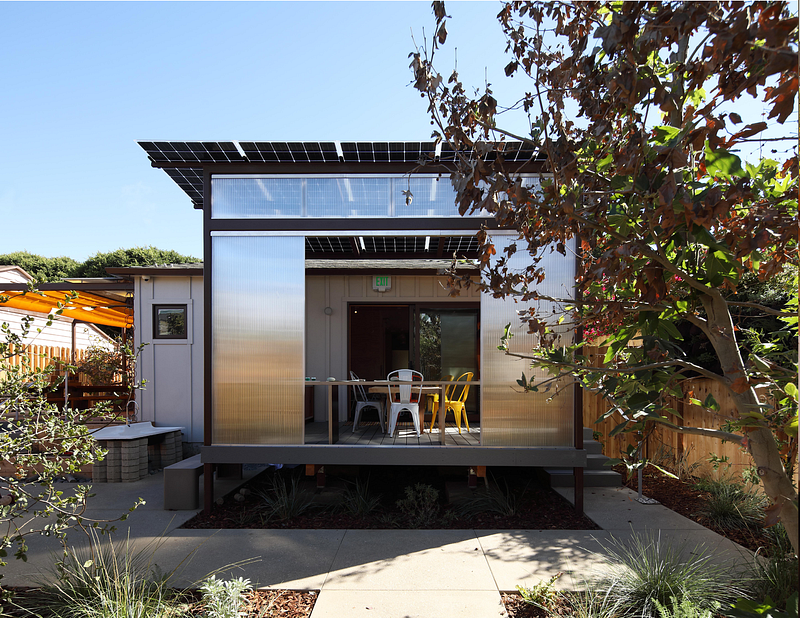
My daughter’s new school, like many schools in my husband’s native Copenhagen, happens to be housed in an innovate purposefully-built building (“An environment rich with evocative objects and exposure to the real world, flexible with room for play and discovery, diverse spaces and multi-sensory experiences”).
Ever since living in Denmark, I’ve become obsessed with Danish approaches to design and architecture, promoting happiness through beautiful surroundings. Be it a hospital, a library or (especially) a school, rest assured Danes will put a lot of thinking into both sustainability and aesthetics of their buildings.
When I learned that the school I was looking into to was sustainable, I was intrigued. This after all, was the first one I’ve seen in the U.S.
A certified California Green Business and LEED Gold certified, it is, in plain speech, a “green” construction, a “sustainable school that acts as a model for others.”
Even better, it’s also the first WELL certified preschool in the world, which means they are required to:
- promote clean air and reduce or minimize the sources of indoor air pollution,
- promote safe and clean water through the implementation of proper filtration techniques and regular testing,
- have available fresh and wholesome foods, limiting highly-processed ingredients, and support mindful eating,
- adhere to illumination guidelines that minimize disruption to the body’s circadian system, enhance productivity and support good sleep quality,
- promote the integration of physical activity into everyday life by providing opportunities and support for an active lifestyle and discouraging sedentary behaviors,
- consider thermal, acoustic, ergonomic, and olfactory comfort to optimize the indoor environment, and
- optimize cognitive and emotional health through design, technology, and treatment strategies.
This to me, is Denmark in a nutshell. And I always say that their ways are the ways of the future.
Nature-focused
I fell in love with nature education while living in Denmark, but it’s been difficult trying to find a local pre-school in the U.S. that shared my new values.
Luckily, my daughter’s new school understands that, “the sciences, maths, arts, languages, technologies, every field of endeavor seems to have roots in the natural world,” and that children benefit from direct contact with it.
Here, “natural elements, functions, and systems inspire the curriculum, as children naturally wonder, “How does that happen?” and “Why does it do that?” Their natural curiosities exist before children can even articulate such questions, and allowing time to be in nature and to interact with nature stimulates their intelligence.”
Simple, yet powerful.
With a climbing tree, a well, and large rocks in the garden, a produce garden and a composting station, daily trips to the park and a local community garden, the kids get to spend the majority of their days in nature, rain, or shine (and boy, did we have a lot of rain this season!).
This is what a childhood should be like.
The snow outside my window in Los Angeles reminds me that, more than ever, we need kids who will grow up with a deep respect and understanding of the natural world and reverse the damage we’ve done to it so far.
Respect of parents’ time
As in my husband’s native Scandinavia, where all daycares and kindergartens mimic parents’ work hours, our new school offers no part-time program, instead focusing on providing care as it should be: full-time. This means mothers get to work, too. While knowing that their kids are having a fantastic time.
On top of that, there are no fundraisers (I checked) or any other organized events outside the classroom time, aside from a one-hour monthly meeting for parents to bond and talk (because — community).
It’s about time we embrace the fact that women are an invaluable resource in the workplace. And for them to do their jobs, full-time quality childcare at reasonable prices is a must. Most developed countries have figured out this much.
Respect of food
I love the idea of culinary education for children. This means teaching them about different foods eaten together in proper settings. That is how eating is done in Europe. Yet in our current preschool, as in most schools in the area, lunches are brought from home in boxes and eaten without plates.
I was ecstatic to find out that in my daughter’s new school, “children may be involved with all aspects of the snacks and lunches from planning, shopping, preparing, table-setting, serving and eating, to composting, clean-up and loading the dishwasher.”
This means all meals are included in the tuition and prepared on site, to be eaten at a beautiful table with proper plates and silverware. Ingredients are sourced from a local farmers’ market, their own garden and the community garden.
I’m sold.
It’s about time we in the U.S. re-evaluate our relationship with food and even learn to grow our own, if no better options are available. Until the day comes when healthy foods become more affordable than junk food in America, we have to take matter into our own hands.
As I toured the grounds, I couldn’t help but feel that this school was indeed a special place and a passion project of its creator who was on a mission to build a different kind of environment for children and their parents. I hope it becomes a blueprint for others. Until then, I’m ecstatic to be a part of this experiment.
As far as the tuition goes, all this comes at a fairly standard price for our neighborhood, though not as expensive as some schools with shorter hours. We got offered a decent scholarship, making this the best deal in the country, as far as I’m concerned.
And I truly, simply can’t believe that in six months, I will have eight hours to myself every day.
I’m sure tears are coming. And they won’t be my daughter’s.