
What Shocked My Danish Husband About Parenting in the U.S.
Childhood should be simple. Yet in the U.S., it’s often not
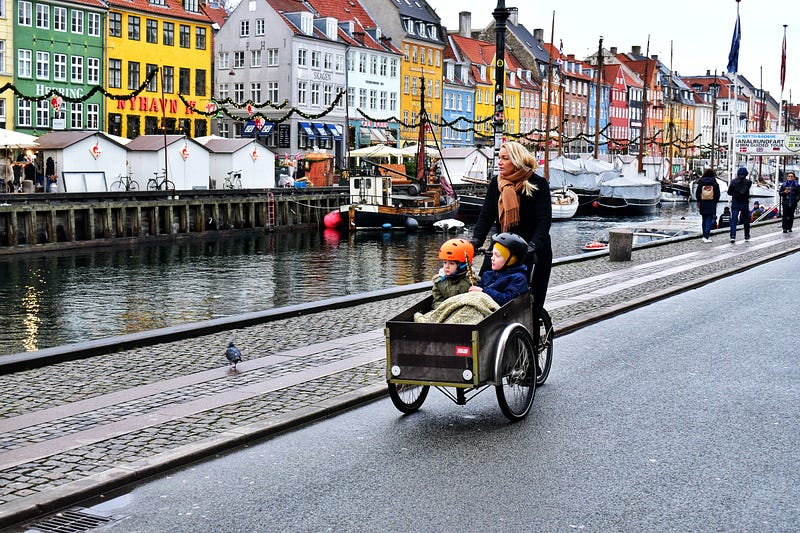
Childhood is a complicated business in the U.S., as my Danish husband learned for himself when he moved from Copenhagen to New York and then California two and a half years ago, with two daughters in tow and another one on the way.
Here are just some of his observations.
Stay-at-home moms
In modern-day Denmark, my husband told me, it’s almost unheard of for a woman to be a stay-at-home mom.
Incredible parental support from the government, true gender equality, and world-famous Scandinavian work-life balance mean that daycare is of high quality and affordable, women never have to choose between careers and child-rearing, and short and flexible work hours make combining the two easy.
When discussing my work options after the birth of our daughter in the U.S., my husband was genuinely surprised to find out that many women here chose to stay home with their kids instead of returning to work. He was equally puzzled by the idea of a nanny because they simply don’t exist in Denmark.
That was before he found out how much quality daycare cost in America, and how hard it was to find.
“You would think in a civilized country, women staying at home shouldn’t be the only option for quality childcare,” my husband commented.
“In Denmark, it’d be considered strange for a woman to make a decision to stay at home even for a year, let alone forever, once she has a child,” he concluded.
Indeed, Danish daycares are amazing and heavily subsided by the government. And, according to Danes, early socialization is a key to well-adjusted childhood. So why not trust the professionals to care for your children?
Children as a status symbol
Shortly after the above discussion, I had to explain to my husband that being a stay-at-home mom can be seen as a status symbol in the U.S.
Being able to afford NOT to send your kids to daycare is a sign of privilege here.
He didn’t believe me at first but with time, he got it.
“Even the most basic thing like child-rearing got turned into a showmanship in the U.S.,” my husband noticed.
Soon, we learned that many daycares in our city of Santa Monica, California, have ridiculously short hours along with very high prices.
“It seems like the more expensive the daycare is the shorter their hours are,” my husband noticed.
9 AM to 2 PM seemed to be the norm around here.
“Looks like these places are for the wealthy housewives who need some time for themselves and not for most working people,” he concluded.
It certainly seems so.
In Denmark, kids get dropped off as early as 7 AM to be picked up at 5 PM. Luckily, they spend many hours, if not entire days, playing outdoors.
“Happy and easy childhoods for all are a basis of a healthy and happy society, not a privilege for the wealthy few,” my husband concluded.
Little outdoor time for kids
My husband’s youngest daughter was still in elementary school when we moved to New York and enrolled her in a (well-regarded) public school in Brooklyn.
When she returned home from her first day of studies, my step-daughter burst out complaining about how little time she spent outdoors at school. This may seem normal to an American kid but to a young Danish child, it was shocking.
In Denmark, as in all of Scandinavia, getting fresh air and connecting to nature are the two staples of childhood.
Danish babies spend hours sleeping outside in their strollers, even in the coldest months. Kindergarten days are spent almost exclusively outdoors, rain or shine. Elementary schools have long recesses throughout the day, so kids can play in the fresh air.
“Childhood is for playing and for being outside in fresh air,” my husband explained.
“Kids have the rest of their lives to be tied to a desk!” he concluded.
Yet my step-daughter returned home day after day complaining of being locked in a room with closed windows for most of the school hours. The short recess they had was often spent indoors, with New York winter weather being the excuse.
“American kids would rather sit in a classroom all day than play outside in a little rain,” she told me one afternoon.
Luckily, we now live in Santa Monica, California, and both kids spend way more time outside at school. They told me it was “the closest to Denmark” they’ve seen so far. And that to them is a compliment.
Schools surrounded by fences
The second complaint on my step-daughter’s first day in an American elementary school was a chain-link metal fence surrounding her otherwise attractive school building.
“As soon as I stepped outside the building, I felt like I was in prison,” she complained.
I tried to put a positive spin on the situation, explaining that the fence was there for increased safety, but my heart went out to her. The girls’ public school in Copenhagen was a beautiful and thoughtfully-designed modern building with generous outdoor spaces and rows of bicycle parking. Just looking at it made you happy.
“If you must put a fence around a school, there has to be a more attractive way of doing it,” my husband suggested.
After all, all people, and children especially, are perceptive to images surrounding them.10
Do we really want our city kids to associate school with prison?
Surely, we can try harder to protect their innocence.
There were too many of my husband’s observations on parenting in the U.S. to fit into one story, so a few more are coming your way soon.