
I Blame 30 Rock For Why Doctors Don’t Listen to Childfree Women
We had this problem before 30 Rock, Baby Mama, and similar media was produced, but it got notably worse since.
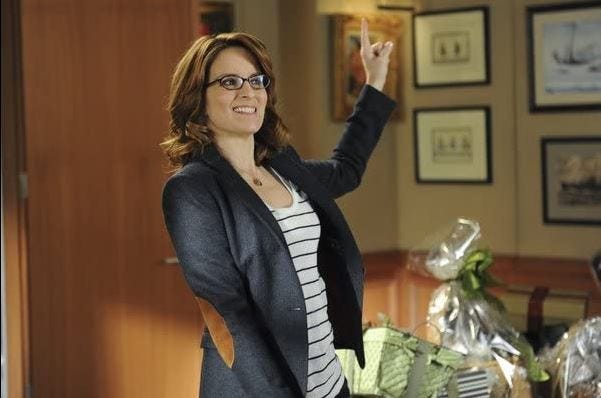
Depending on your age and ideology, you either love or loathe Tina Fey. I’ve honestly loved a lot of her work like 30 Rock, but as I got older, found that much of it was incredibly repressive and definitely SWERF (sex work exclusionary radical feminist, for those not in the know).
In my memory, there were a lot of movies in this vein that Fey wrote or produced a decade or so after the turn of the millennium. I’d actually titled this piece about Tina Fey vehicles. But upon hitting up her IMDb page to confirm this, then revisiting some of the entries, it was really Baby Mama and later seasons of 30 Rock I’m talking about here.
Well, mostly 30 Rock. Especially the middle seasons. Though Baby Mama is explored a little.
Beleaguered showrunner Liz Lemon on 30 Rock wound up being incredibly harmful to women who don’t want kids. Hear me out.
As someone who has been extremely sure for over 15 years that I want to forego children irrespective of what happens with my love life and career, I get it: I’m not going to have the same experience or feelings about living out my mid-late thirties as a woman who desperately wants to have children.
And that desire is valid! As are narratives about the frustration and depression that come with infertility, and the challenges of both conception and adoption later in life. Just want to be clear there! There’s nothing wrong with telling these stories, and we don’t always identify with characters in whole or part.
I simply take issue when a narrative becomes the dominant one that SHOUTS over all other possibilities and choices and subsequently minimizes people who choose differently, all while upholding social norms that are often patriarchal.
We’re starting to see more media today that has female protagonists who are unafraid to get messy, walk different paths, don’t necessarily subscribe to the “career or babies” binary, and basically have the same complexities that men have always been afforded as real people. It’s happening at a glacial pace, but it’s at least in motion unlike the anodyne “always the bridesmaid, never the bride until the heartthrob du jour cures this single woman’s depression with his dick” fare that packed the box office in the late 2000s-early New Tens.
However, the assumption that all women really want deep down is to just pop out kids and that she cries herself to sleep over it if she’s single and over 35 is STILL persistent.
And Liz Lemon was one of the eminent portrayals of this trope.
Media plays a major role in perpetuating tropes. The messaging in those tropes subsequently get deeply internalized by millions. Moreover, media that’s meant to be seen by millions of people, opposed to niche and indie creations that may not ever reach a wider audience, will have an impact on how we see and talk about things, for better or worse.
Look at romcoms of the 90s and the horrifying behavior they romanticized: that DID have an impact on how people pursue one another, prompting conversations decades later about what’s romantic and what’s creepy. Murphy Brown becoming a single mom on TV had a staggering impact on other media, and politics of the day!
Thus, as the title implies, I believe we don’t talk enough about how Tina Fey-centric works of the late aughts and New Tens made life harder for childfree women.
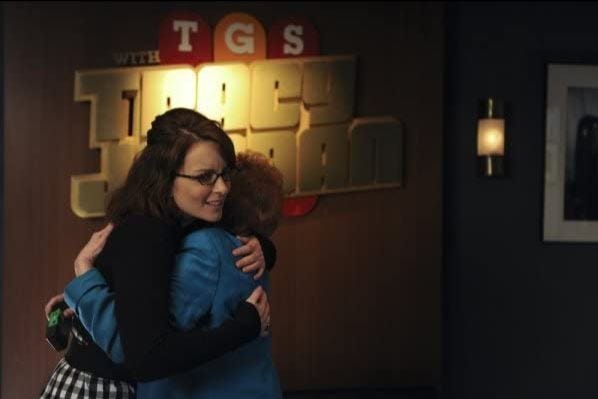
After all, we’ve already had a difficult time historically trying to get tubal ligation or other options like salpingectomy, or even hysterectomies if your uterus is making your life miserable. While I had difficulty with these inquiries as far back as 2007, I got more adamant in 2011 due to absolute surety I didn’t want kids and knowing I was going to age out of my father’s incredible health insurance. I was met with condescension about how my nonexistent husband might want children or I’d magically change my mind, and this persisted well into my thirties.
Medical professionals try to get us to settle for the pill that has numerous side effects and is useless if you forget to take it, shots that make you gain weight, or IUDs which are fucking painful to insert, not permanent, can cause heavy bleeding if they’re not hormonal, and all with the risk of an ectopic pregnancy as a cherry on top. As someone with zero plans or desire to give birth since 21, I should not have to still endure this hell at 36. Even if I’m not married, as a ring is apparently the natalist healthcare provider seal of approval.
Hell, I should be able to get a tubal ESPECIALLY because I’m not married! I’d like a guy to raise some toads with, but it has zero bearing on my not wanting kids. My biological clock went off around 35, it said “I’d rather have a spa day in Steve Bannon’s infamous bathtub than have kids. But I want to hold and pet ALL the toads and giant lizards!”
So why are we suffering these indignities en masse? How did this landscape get progressively worse? Especially since childfree women, by and large, are NOT the ones full of regret about our choices in old age?
There’s a plethora of undercurrents at work here, including the gradual erosion of reproductive rights in the US.
When I was a grad student watching 30 Rock, several types of birth control became harder to obtain in certain US states which lulled “blue cities” like mine into a false sense of security. Ire spread across the feminist blogosphere as women shared accounts of being unable to get prescriptions filled or obtain the morning after pill because it went against the pharmacist’s beliefs.
Religious groups duked it out in court over the Affordable Care Act mandate to cover contraceptives, and are still doing so with deleterious consequences. Bills demanding pharmacists do their jobs or be exempt by “religious liberties” also sprung up in state legislatures.
Roe v. Wade now hangs in the balance, even though several US states already have medically unnecessary restrictions on abortion while a handful of states would be largely unaffected, based on this interactive map by the Center for Reproductive Rights. It is by and large a classist assault: people who can afford a “spa week” in New York or Toronto won’t be affected.
In the time since 30 Rock went off the air and Tina Fey departed from these frazzled baby-crazy workaholic roles and went in other directions like Whiskey Tango Foxtrot and Sisters, anti-feminist rhetoric among youth rose dramatically with the “trad wife” aesthetic that has taken root on Pinterest, Twitter, and TikTok. Conservative influencers like Classically Abby push stereotypical femininity and drive home the idea that women belong at home and their ultimate purpose is to get married and have kids.
It’s also not a coincidence that we see a million hand-wringing thinkpieces laying the blame at women’s feet for being too educated to settle for a man who can father kids with her, and how dare we not want to spew out babies for NASDAQ as a pandemic kills our neighbors.
Mainstream media also plays a role. Including media with mostly liberals at the helm.
For instance, Broey Deschanel brilliantly explored how the teen girl protagonists in John Hughes movies inadvertently upheld Reaganism. Hughes insisted it wasn’t a political move but a marketing one to appeal to a wide audience who simply wanted to see the awkward teenage girl pair off with the rich, handsome guy — in what was now obviously trying to fight the tide of oncoming change and women’s declaration of independence, clinging to the postwar mentality of pushing women out of the public sphere and making marriage and children her life goals.
Decades later, 30 Rock absolutely portrayed the straw woman that the conservative digital sphere frequently dishes out to this day: Liz Lemon is a trainwreck of a “girlboss” with a demanding dream job and an enviable Manhattan apartment, but she can’t keep a man and is despondent over not having children at her age. She takes “baby crazy” to literal degrees, one bad day away from abducting a child.
Just like how John Hughes’ Sam Baker and Andie Walsh were gawky nonconformist girls who bag the wealthy prom kings in the end, Liz Lemon totally echoes this. She’s the quirky professional funnyman who trumpets girlboss feminism, but deep down she wants to have children and be with a man like her wealthy and conservative boss, Jack Donaghy. (Neither admit to it, but you absolutely see the ship-teases.)
Given how persistent this theme was throughout the show’s run, I mistakenly thought that Tina Fey also wrote and/or directed Baby Mama as it came out around the same time 30 Rock was in its third season. It was tonally similar with Fey playing a similar character, Kate Holbrook, a successful entrepreneur who’s single at 37 and desperately wants a child but has little chance of conceiving. However, it was Michael McClellan pulling double duty as writer and director and Tina Fey just seemed appropriate for the role given that it mirrored the dynamic in 30 Rock.
While the Reaganism in John Hughes flicks was subtle, there’s much social conservatism at play in 30 Rock despite flagrant branding as a liberal show.
Coming at this from a leftist perspective, I was uncomfortable with that scene in the third season episode “The Natural Order” where Liz is at a strip club and gives one of the dancers money to “please take some computer classes”. As someone who’s been in the computer games industry for a decade and has actually talked to dancers about how much they make and overall enjoyment of their jobs, I have to say that this line of thinking is just as erroneous as all the people who gushed about my stupid fucking accounting degrees.
The show got fairly sex-negative at points, and not just a demonstration of Liz Lemon being sexually repressed at times.
Although she wasn’t the first woman with power to be portrayed on TV. Sex and the City explored the brave new world where women now had as much money, power, and independence as men, although not enough attention is paid to its source material. Liz doesn’t wear glittering designer duds to cruise trendy bars. She lives in jeans and modest tops, and spends most of her time putting out her co-workers’ fires. She’s a character we simultaneously loathe and laugh at, but also totally understand and even pity at points. As a workaholic who has an odd relationship with her boss, a narcissistic best friend, numerous failed relationships, and a deep desire to adopt a child, she’s a hot mess. But a hot mess we can easily find sympathetic, who definitely had more complexity than women protagonists of the past were usually afforded.
An overarching theme is Liz’s desire to have a child to the point that it borders on psychosis laced with personal entitlement. She accidentally (or “accidentally”?) wanders off with another couple’s baby. When she dates a very short person played by Peter Dinklage, he calls her out for seeing him as a stand-in for a child. In “Goodbye, My Friend”, she devises a plan to adopt a donut shop cashier’s baby and when it appears the pregnant youngster is about to have a change of heart and raise the child herself, gets downright conniving about halting those plans so she gets the child.
It gets taken up to eleven in Baby Mama, in this creepy scene where Kate smells a baby like it’s a pie fresh from the oven.
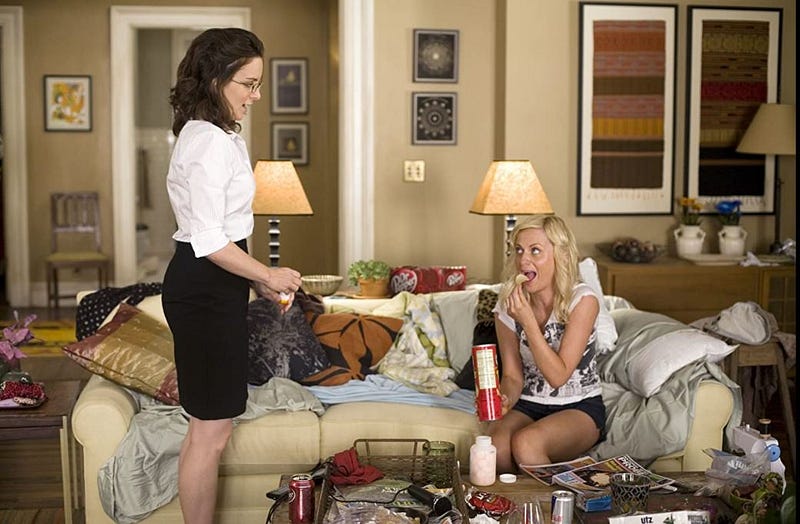
So, the Babies Ever After trope is prevalent in so much media. Why am I picking on Tina Fey vehicles from a certain era, you ask?
Because while I respect the incredible show biz career she’s had, and what it must’ve taken to become the first woman head writer of Saturday Night Live when women writers were already scarce in the vaunted Studio 8H in the 1990s, the late aughts and early New Tens were in this strange holding pattern as far as strong and independent women characters were concerned.
The Great Recession had just begun, and people didn’t want to see the vulgar displays of wealth that were so aspirational in the 90s and the turn of the millennium when it seemed slightly more attainable. The Bush years ended and Obama gave us the audacity to hope, something a whole generation would later feel hoodwinked by.
While we weren’t seeing this sudden urge to embrace so-called “traditional values” as hard as we did in the Reagan years, the Bush administration was definitely supported by the groups pushing for it. There was blowback when 2009 rang in, as Millennials were now kneecapped and still feeling it over a decade later as jobs, savings, and homes vanished along with our MySpace profiles.
Upon expressing that I didn’t want children well into Obama’s first term, I was told it was “just the economy”. That when we rode out the recession, I found a good job and a good husband, suddenly I’d want kids. It felt like shouting into the void when I explained that I didn’t want to reproduce even if I had Warren Buffett’s net worth and a loving, loyal partner. It STILL feels that way.
As I futilely tried one medical office after another before my dad’s insurance ran out, I kept being told the surgeon wouldn’t do it “in case you change your mind”. I heard every excuse: my age, being single, “you’re just focusing on your career now!” I have my dream business and no. I only grew more adamant about not having kids!
I flat out told the doctor on my final attempt before my 27th birthday that the thought of having kids of my own made me want to put a gun to my temple. I was getting fucking desperate. I had even asked one of my gay friends to pretend to be my fiancé and was about to borrow my stepmother’s wedding ring to fake it, THAT was the extent to which I was furiously getting stonewalled. And mind you, this was in NYC in 2011.
Three years later, a nurse actually expressed shock and disappointment when she inquired “So no kids yet?” and I responded, “No kids ever. My toad is enough responsibility for me.”
The medical establishment has deep-seated issues in not listening to women. The narratives we get about women my age are not the sole factor, but absolutely play a part.
We rarely, if ever, see women who are childfree by choice in film and on TV.
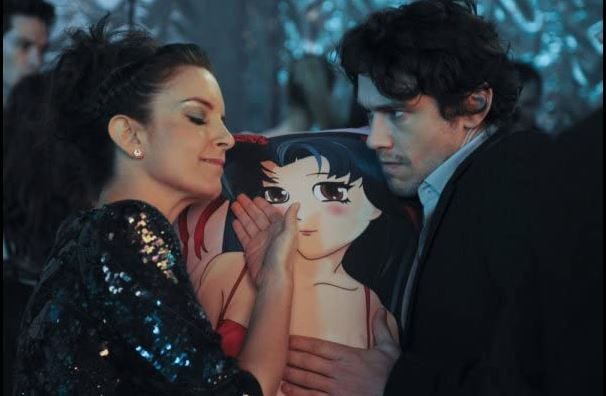
Portrayals of women over 30 who are knowingly and willfully sans kids are often sad and pitiful. She might be a sexpot femme fatale, or a Gonk. She’s definitely not that approachable, pedestrian everymom or angelic lightbeam who’s dying to put a bunch of babies on this earth.
Stephen King works are notorious for portraying childfree women as evil and lacking empathy. That because she hasn’t acted on this maternal instinct, there must be something wrong with her unless she’s a sweet innocent babe who wants kids but the fertility goddess isn’t on her side. The “Evil Stepmother 2.0” trope also comes up, where a man with children from a previous marriage is now betrothed to an evil but sexy witch who of course doesn’t have kids of her own — she cannot compare to the saintliness of the dead mother.
When a woman is childfree by choice, she’s usually a minor character with no time to develop fully, or this whole context just doesn’t come up at all. We get countless movies and TV shows where a partner and kids is the end goal, if not a laudable subplot or side quest. But nothing about the joys and travails of childfree life when it comes to dating, friendships, family relationships, professional environments, and so much more.
If we had more earnest portrayals of the childfree by choice, perhaps we’d have less pushback and be more likely to be affirmed and believed in the workplace and the doctor’s office.
So you bet your ass I’m going to blame the “sad career woman” trope that 30 Rock gave us.
It’s not institutional misogyny alone, and the other factors I mentioned like creeping anti-feminism on social media over the past decade colliding with rising anti-choice sentiment among our bought-and-paid-for lawmakers.
They play a part, but characters that people see in movies and on TV are often drawn from real life. After viewing, people look for these tropes and traits in real life and often find them — or project them onto others because that’s what they saw and internalized. It happens whether we like it or not, and whether we admit to it or not.
There weren’t many strong woman characters at the time who were presented with seeking fulfillment and happiness with other things in life, or seen as full and complex humans beyond the desire to marry and/or have kids. The Mindy Project comes to mind: the writers didn’t know what else to do with this strong and independent doctor who’s also a hot mess, so boom, just give her a baby.
People see this. It influences them.
Millions of people saw Liz Lemon and Kate Holbrook and started to codify other single professional women the same way. First that if you don’t have a family, you devote all your time to a career because what else could you possibly do with your life. Then that no matter what you do, you’ll never be happy and fulfilled unless you have kids.
And these portrayals of a workaholic woman who really just wanted babies as she sought fulfillment she’d never get in her stressful job or business truly made it so much fucking worse for those of us who have been screaming to be heard. That we want medical professionals to just LISTEN to us when we say we don’t want kids, and we will happily sign waivers that we won’t sue, since we’re sure as hell not the ones with regrets.
Even as we’re slowly seeing more willfully childfree women leads and major characters, they’ve still yet to be elevated from niche status. Or just temporary until the writer’s room decides to pull another Mindy Lahiri.
Don’t underestimate the influence media and culture have, even when the creators seem otherwise benign and you enjoy their work.