
Stalking, Limerence, and Ableism: Revisiting Sleepless In Seattle
Heralded as one of the most memorable romances of the 1990s, this movie really just exposes how 90s romcoms made us fall in love with the IDEA of romantic love, rather than actual people.
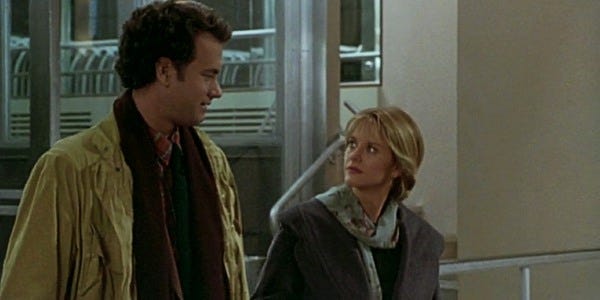
The Internet is crawling with professional and amateur media crit like roaches on day-old pizza in a prewar studio, and I’m just another schmuck shouting my musings into the void here. But as a girl who grew up in the 1990s, came of age around 9/11, and then due to personal trauma and cultural constraints just wasn’t allowed to be romantic until I was a lot older? I GOT THOUGHTS on the schmaltzy romcom that many consider a classic, Sleepless in Seattle.
I didn’t see this movie until recently, at the age of 35. With that in mind, it’s always going to feel different coming at a movie that you grew up with in that era versus one you didn’t see until some chapter of adulthood. Especially given what radically different eras the 1990s were compared to the 2020s. It’s evident not only in entertainment of the time, but how we viewed and discussed media then and now.
Because I have to be fair: in some ways, Sleepless in Seattle provides some interesting meta-commentary that was actually pretty ahead of its time. In others, it just utterly reinforced the sheer batshittery of 1990s romcoms that encouraged so many people to engage in behaviors that, pre-Twitter and Reddit, only showed up on police blotters and American Psychiatric Association conference notes. All in the name of declaring ever-lasting devotion with a longer life than Jack Lalanne’s Juice Tiger could possibly promise you.
First up: the film’s actual premise.
So when I was a kid, my mom had various Celine Dion CDs. Hell, I’m about to lose some punk and metal cred here, with no fucks given: I was and still am a fan. The woman can put on a freaking show and brought the whole Vegas residency back for major performing artists, something we might see return a third time as stages reopen in a post-vaccine world but people are still hesitant to travel.
This was long before Spotify and looking things up on YouTube, it was an experience to behold to put a CD into a boombox or stereo system. That’s actually how I first learned about Sleepless in Seattle: it was a footnote for the album The Colour of Love, she did a duo with Clive Griffin for this movie. Celine Dion went with 1990s romance soundtracks like Coke and Pop Rocks, and went just as over the top. Hearing it on my parents’ stereo totally made me picture being romanced at some fancy expensive restaurant where you could see the space needle from the windows.
So fast-forward almost three decades later. The title does make sense in context since the deuteragonist, Sam portrayed by Tom Hanks, is dubbed “Sleepless in Seattle” by a talk radio shrink. (For younger readers, this kind of radio show was incredibly popular in the early-mid 90s and was further codified with TV shows like Frasier. Funny, his brother Niles is in Sleepless in Seattle for a hot second, but in Baltimore!) Now imagine my shock that this movie is mostly a wild chase across multiple cities and culminating in New York…and the romancing part is totally subverted in the Rainbow Room. That epic Celine Dion and Clive Griffin duo? A cover that gets played after the credits roll.
Blowing one’s expectations isn’t necessarily a bad thing. After all, people think Freddy Got Fingered is the worst movie ever made but it wound up being redeemed by time and frustrated creatives whose families and friends don’t understand them. It’s even a little comical how there’s less Seattle in this movie than there was actual black metal in Lords of Chaos, a decision that Jonas Ackerlund probably regrets given who would actually go see it.
We’ve also got an interesting gender flip with the protagonist, since it’s really Annie, played by Meg Ryan, doing the pursuing despite the fact that she’s already taken.
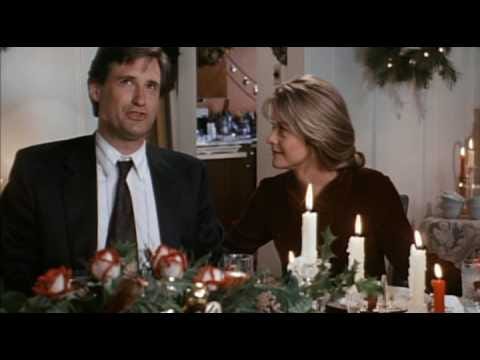
What’s even more interesting is how this is a totally protagonist-centered morality, that Annie is just a hopeless romantic chasing Sam. Normally, when a woman makes the same types of sweeping romantic gestures that a man would, they’re seen as Misery levels of psychotic. After all, it’s a persistent cisheteronormative idea that women are chased and men do the chasing. Only 3% of marriage-minded women propose to their partners, let alone take the initiative with the hot mess that is courtship in an ass-backwards country like America.
Sure, it’s more common now for women to ask men out for that first date, make the first move on a dating app, or “hang out” but it’s not necessarily platonic. But it was actually pretty rare to see a movie portraying a woman going to such lengths for a man at the time, be it for the right and wrong reasons, and it still merits discussion even now.
Especially since we don’t really see much of Sam as an actual person.
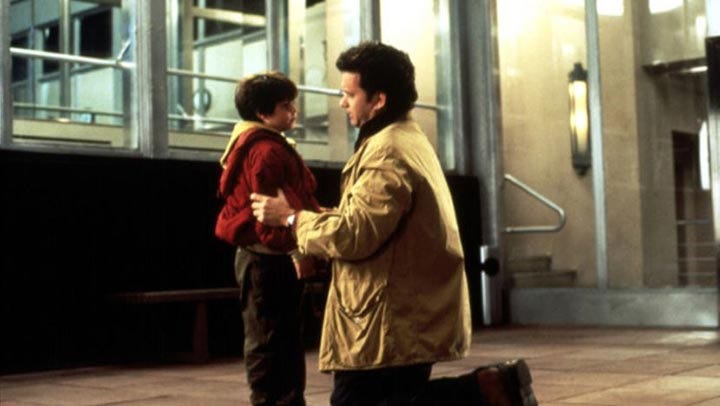
Sam is clearly a devoted father to his son, Jonah. He is also deeply consumed by mourning for his late wife and Jonah’s mother, Maggie. Sam is a successful architect whose intense grief is clearly affecting his professional life as his co-workers comment on it, and refer him to grief counselors. Jonah can see that his father is being torn apart by grief and it’s affecting their home life, which is what prompts him to move the both of them to a houseboat in Seattle. Even after relocating, Sam can’t sleep and Jonah longs for a mother.
The audience can see these glimpses of Sam as a person, but it still doesn’t say much about who he actually is! Moving from Chicago to Seattle clearly does some kind of good for Sam to start over, as he begins to date again even if Jonah doesn’t always approve.
Annie however, becomes compelled by the story of “Sleepless in Seattle” on the talk radio show after Jonah calls in out of anguish and concern. While she’s engaged to Walter, who’s portrayed as all-around nice guy but supposedly with the personality of a white sock full of oatmeal, she can’t stop tuning in to hear updates on the mysterious single dad in Seattle who can’t sleep.
Annie is moved by his staunch devotion to a woman who no longer exists, how long he’s been carrying a torch for her. She falls in love with a situation, a concept. This is common nowadays as people form more relationships online in some fashion — it doesn’t matter who the person actually is. That correspondence without actually meeting winds up filling you with unrealistic expectations.
If we modernized the premise of Sleepless in Seattle, this would be like if you chased someone you never met around the country because they had a tweet or TikTok video that went viral, and the news kept reporting on what the creator did next.
And doesn’t that sound batshit insane regardless of gender?
Which is interesting given that the entire idea is Annie and her friend Becky mocking the classic romance An Affair to Remember.
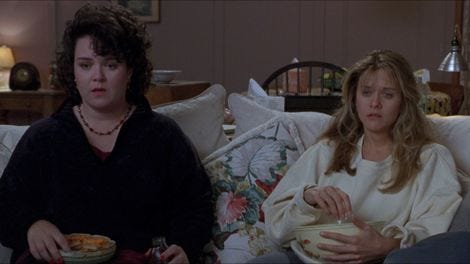
So we have another classic movie trope so often seen in romcoms, the fat woman who serves as the sassy best friend who helps the thin white protagonist figure her own shit out, despite utterly enabling her then sealing her doom. Nora Ephron was just slightly ahead of the curve by giving Becky, played by Rosie O’Donnell, a husband who we never see.
Becky tries to keep Annie straight by noticing how distracted she is, til she eventually spills about how captivated she’s become by the radio drama of Sleepless in Seattle. They both follow it closely, and indulge in their love of love by watching the sappy sanitized godmother of all romcoms, An Affair to Remember.
And…that’s when things get real. As Sam gets bombarded by love letters and proposals from women he never met, Annie’s letter is unsent until Becky steps in…and Jonah responds to hers.
Annie pulls out all the stops to find out what she can about a subject she hasn’t even gotten permission to cover for a story. Through public records, journalistic resources, and then pretending to be a private investigator before she actually hires one, she finds out everything that could be possibly be inferred about Sam in this fashion.
I don’t know about you, but if someone hired a private investigator to follow me around and find out where I live, take photos of me on dates or hanging with friends, misused public records and higher-clearance information that a reporter or attorney would have access to, and all to track me down and declare that they fell in love with me because of a podcast I was on then following me on Twitter? I’d be shitting my pants like Gun Girl before using whatever I could as a melee weapon, Bronx style, then getting a restraining order.
Regardless of gender, this is creepy and invasive. Yes, even when a pretty and skinny white lady does it, it would just be seen as an even greater offense if that was a woman most men would consider unfuckable. But in no way should this behavior be romanticized!
At least if she actually talked to the guy on IRC for a while, it would make sense she fell in love with his avatar and voice before they met for coffee. Yet Sam can’t stop gawking at this beautiful woman in the airport in a nonsensical fashion, she goes so far as to track him down with his son and date at a beach and almost gets hit by a truck doing so, and we’re supposed to root for them starting to date atop the Empire State Building?
I think they both need more than a radio shrink here.
There’s been numerous portrayals of women being unhappy with a partner in film and leaving him for someone who makes you happier, stories that are both redeeming and downright terrible. This one’s in the latter category as I can’t help but see ableism in how Annie so easily leaves Walter.
“She should or shouldn’t have left him!” is always a hot topic in TV, film, games, and other mediums. People tend not to get this heated about men’s romantic choices because they’re often seen as having more choice by default, we still fucking live in a men’s world. People love to tell women they don’t have choices, even though we do, and we have more than ever.
The 1990s was a strange reckoning point for this. There was a lot of push and pull between the old world way of doing things, which meant that women often had to marry someone they weren’t so hot about in order to have financial stability, health insurance, and a way to get safe and stable housing. Portrayals of this new generation of “career women” — a phrase we no longer need — actually choosing themselves was quite novel. Whether it was in patently rejecting marriage and children, or desiring these things and wondering if you were too late. But it was 1993, and landing a man was still THE most crucial thing for a woman to do, even if she otherwise had a successful career and friends.
Walter seems like this nice although boring kind of guy who Annie does genuinely like. It’s obvious that he’s in a wealthier class than her even though they don’t share an overly extravagant home, and he doesn’t wear designer suits or engage in obnoxious cash-flashing behaviors. She probably had greater earning power as a reporter in 1993 in an East Coast city than a journalist comparably would today in never-ending newspaper buyouts and consolidations, but Walter has some kind of high finance job we don’t see on-screen. He can afford a last-minute New Year’s trip to New York including dinner at the freaking RAINBOW ROOM, where he orders a bottle of Dom Perignon!
The audience is supposed to sympathize with him and castigate Annie not just because his gorgeous and vivacious fiancée leaves him for a man she chased off the fucking radio: but because he’s rich, so nice to her the whole movie, takes the whole thing quite well, and how could she leave a catch like Bill Pullman? He’s got Mr. Big’s wallet and charm, but the down-to-earthness and emotional availability of Aidan!
Well…there’s something that didn’t sit with me right when I first saw this. Granted, social structures and discussion around these issues have changed since but we still got a long way to go.
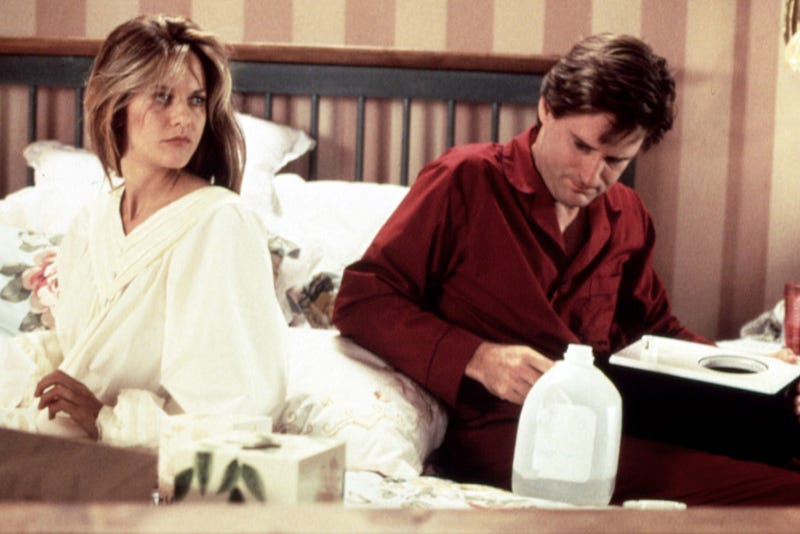
When Annie takes Walter to meet her parents, they make this big ado about all his food allergies at dinner. When Becky calls Annie late one night to excitedly inform her that Jonah is back on the air to continue his dad’s melancholic saga, she knocks into what looks like a CPAP machine for Walter, which he has to refill with water.
Something about the way these scenes were shot just make it look like she’s having this eventual breakdown over how Walter’s chronic conditions/disabilities are inconveniencing her.
Food allergies are no joke. You can kill someone if you serve food that they’re allergic to, and there’s a disturbing number of r/Relationships posts on Reddit where it’s obvious some kind of familial dispute led to murder attempts via weaponizing food allergies. CPAPs are primarily used for sleep disorders and 38,000 people die every year from some form of sleep apnea, and it even happens to people who otherwise seem youngish, fit, and healthy. It’s not just older and fat people who get it.
There wasn’t as much discussion about sleep disorders and CPAP machines in 1993 compared to today, where I can’t even go to the dentist without some questionnaire about my sleeping and breathing patterns, but I realize this scene may have been an inadvertent pun on being “sleepless”.
But coupled with how Annie starts to see Walter as this hopelessly devoted obstacle with the personality of a ham sandwich, there’s still some ableism at play here. It’s supposed to make Annie seem more sympathetic, “Of course she’s falling for this guy she never met but keeps hearing about on the radio, do you think she’ll want to bother with Walter when he’s old, can’t eat many foods, is hooked up to numerous devices, and *gasp* may need a wheelchair?!”
This kind of casual ableism wends its way into daily life and is something to think about. If a partner having some kind of chronic condition or food allergy would be a dealbreaker, you should tell them upfront. If you really care about them, you’ll find a way to make it work.
But whatever you do, don’t leave them for a podcast guest who lives across the country who you never met. That’s just whack.