
How We Should Think About The Leaders We Love Or Hate?
The sentiment of the people matters
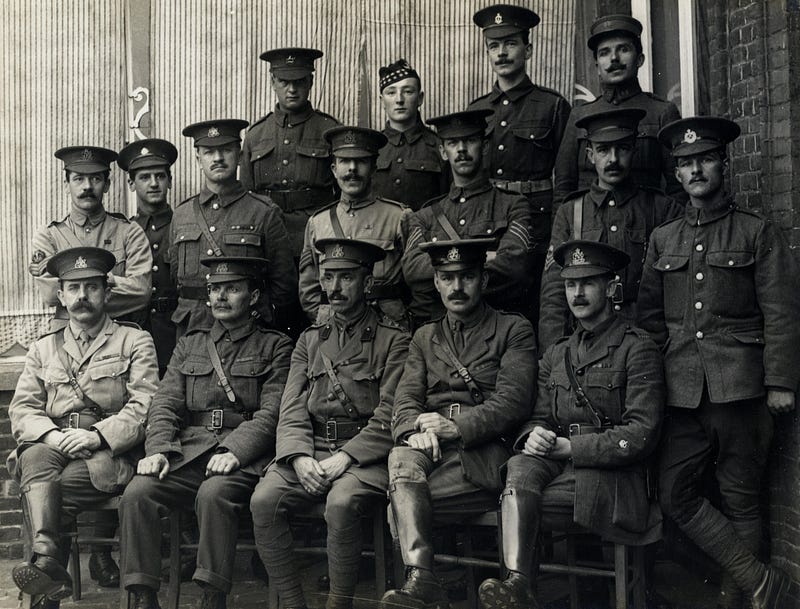
There is no one particular leader that everyone would love. It is close to impossible. That is because the leader who rises to the occasion is supported by the people who push them up there. It is a function of emotions and sentiment.
Napoleon Bonaparte is a brilliant leader on all fronts. He left behind a Civil Code which defines the concept of equality before the law and the right to property.
He also left behind a string of victories during the Napoleonic-War years. Many of the wars he fought personally alongside his soldiers. Of course, the Battle of Waterloo erased all that.
Is he charismatic? I would think so. Just ask his soldiers and generals.
Is he a demon? Oh yeah. Just ask the British, the Prussians, the Italians, and the Austrian-Hungarians of those times.
Perspective matters. We always have to question the history books that we read. Is it written by those who won or by the descendants of those who lost? Exploring those angles would give us a better picture.
How should we think about Adolf Hitler?

Pretty rightfully, nothing good comes out of it. I endorse that. I think so. But how would someone like him rise to the top? And do not forget, the majority of the Germans during the 1930s supported him (at least the books I read seem to suggest that). There is always a context and reason for that.
That context is the unfair Treaty of Versailles (from the Germans’ perspective then) and the strong urge for Germany to become the strongest nation in Europe once again.
This is the sentiment of, by, from the people who believe that they are worthy. That is the reason circumstances pushed Hitler up to the pedestal.
Naturally, an emotionally distorted choice exercised by a nation of angry people (then) produced a man-made disaster beyond words. We are the circumstances of our decisions. And our emotions can be dangerous.
Then again, another question has to be asked.
Is competence the key trait of a leader or likeability?
I believe this is a problem. A lot of leaders got there due to popularity contests. The voting mechanism in itself encourages that. One person one vote means there is a chance where people base their votes on likeability over competence.
And over-competent or intelligent people are not that popular. I do mean, a vast majority of them, not all of them.
From here, we can explore 4 possible outcomes when we combine likeability and competence.
The First Outcome — High Likeability and High Competence.
Congratulations. We have managed to find talent in our country beyond human capabilities. It is our blessings to have him/her run the country for our benefit.
The Second Outcome — Low Likeability and Low Competence.
Hmm. How did this person even get nominated for voting in the first place? Maybe the nominees had a bad day.
The Third Outcome — High Likeability and Low Competence.
Average performance is ensured. People like him because he/she is likely to be no-threat or low-threat to the status quo. Enemies will be delighted. I often wonder if Neville Chamberlain falls into this category.
The Fourth Outcome — Low Likeability and High Competence.
Extremely brilliant people who are sharp in their thinking and push difficult decisions through like a bulldozer. The vast majority of the people do not like them but these leaders are the right people to carry the country through unprecedented tough times.
Is this the reason Winston Churchill got bumped out of office once Great Britain became victorious in World War II?
My Reflection On Leaders We Love Or Hate.
When we look at our leaders today, we have to evaluate the circumstances that we are in.
Different circumstances will produce different types of leaders, and this applies to politics and business. Are we in a swing towards the Left or the Right? Are we torn in between for Socialist or Capitalist measures?
The key is not to look at the policies that our leaders enact. The key is to evaluate the socio-economic circumstance we are in. When we understand that, our choice of leaders can be explained.
Of course, this applies when an election process is in place whether for business or politics.
Contextual Observations Are Important,
Aldric
Related Stories from the Author.
About the Author:
As a content contributor, I write my observations from daily life and my business exposure.
Because our life experience is the bedrock of our unique perspectives.
As a Consultant by training, I believe in making the complex simple.
Because simplicity adds value.
And with clarity — We grow.
Follow me for my stories on Medium!
This is more “About Me”.
Do reach out and say hi on Linkedin!