
How to Survive Your First Month of Meditation
It doesn’t involve too much black magic
10 years ago, I meditated for the first time.
I hated it. Our teacher made us do it; every second out of 60 felt like hell.
Since then, my life has changed drastically.
I studied business informatics, started and quit two corporate careers, traveled the world, moved abroad and back to Germany, wrote an ebook about meditation, and earned my living online.
One of the few things that hasn’t changed?
My meditation practice.
But as you know, every beginning is difficult.
That’s why, after all these years, I want to share how you can survive your first month of mediation.
Understand the basics
Meditation is about mindfulness.
It makes you aware of your own thoughts. That’s powerful and intimidating. Both at the same time.
That’s why you need to understand the basics.
Especially in the beginning, meditation isn’t about emptying your mind. Why? Because you’ll go nuts trying to empty your mind if you haven’t trained it.
In the beginning, meditation is more about realizing how you breathe. Is it slow or fast? Steady or unsteady? Do you fill your tummy or chest with air?
Finding out how you breathe is more important than you think.
It’s a vital anchor when thoughts arise. And they will. Trust me. But if you keep focusing on your breathing, the thoughts will pass.
Even if they suck. Even if they make you feel insecure.
With steady and deep breathing, you realize these are only thoughts, not reality.
That’s powerful. Because it gives you the chance to take your life into your own hands.
Aim for 5-second cycles:
- 5 seconds of breathing in.
- 5 seconds of breathing out.
This will make you calm.
Meditation isn’t complicated; it’s deep breathing, letting thoughts arise, appreciating them, and allowing them to go again.
Set realistic goals
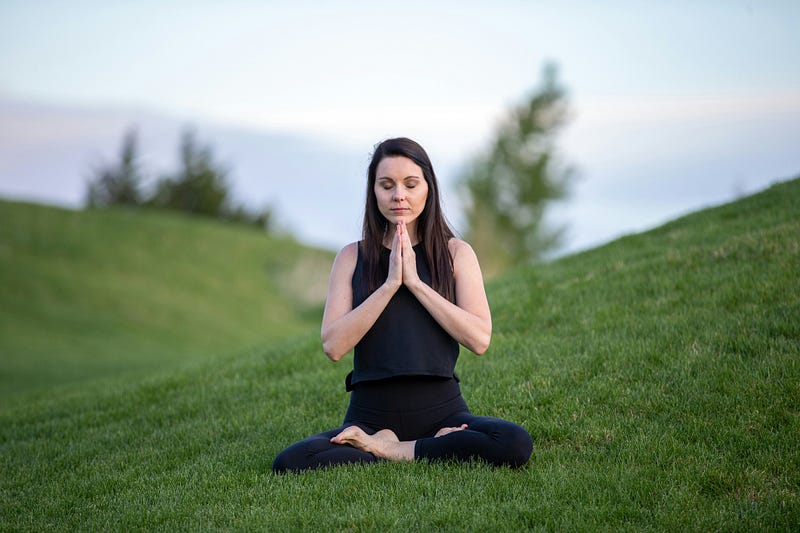
You might have this picture in mind where you sit for multiple hours on a perfectly cut lawn, surrounded by inspiring people, soaking up the sun, and reaching nirvana before you can even spell it.
But none of this is realistic in the beginning. Instead, you’ll probably cram it somewhere between waking up and getting ready to leave the house.
And that’s fine.
You don’t need to go to a meditation center in the beginning. You don’t need cushions for it (I still don’t do).
What you need is to have realistic goals.
It’ll feel awkward. Sometimes, even like hell. It will feel like you’re the only one stuck in time. But you know what?
It’s supposed to feel like that.
Because with the right perspective, that’s an upside.
When you realize how long a minute can be, you learn how much time you have to do meaningful things. That’s empowering.
Also, it’ll make you feel uncomfortable.
You’ll feel bored. You’ll feel frustrated. But you’ll also start to feel alive.
Again, it’s supposed to feel like that.
You aren’t the only one.
Now, let’s answer the most crucial question: “For how long?”
Take it easy.
Somewhere, I saw a good guide you can use, too:
- First 30 days > 1 minute
- Next 30 days > 3 minutes
- Next 30 days > 5 minutes
- Next 30 days > 10 minutes
- Next 30 days > 30 minutes
How do you make the time? Trust me, when you reach the fourth level, you’ll be so convinced that you’ll find the time to do it.
Set realistic goals to stay motivated.
Be consistent
Meditation is tricky.
Often, when you do it, you don’t feel much change. But once you stop, you’ll feel all over the place.
That’s what happened to me.
I wish I could say I’ve been meditating for 10 years straight, but I haven’t. I’ve been meditating for 5 years straight and had my first break of a couple months.
Then, I rebuilt my habit (which was easier than the first time) and meditated for another 3 years before I neglected it again. Now, I’ve rebuilt it.
When I meditate, I don’t feel like the calmest person ever.
However, when I don’t, I feel easily frustrated, insecure, and out of balance.
That’s why consistency is so important.
If you’re a calendar person, create a meditation event for the same time every day. Yes, even if it’s only a minute in the beginning.
If you aren’t a calendar person, use a visual cue to get a meditation reminder.
Whatever you do, be consistent. Because that’s where the magic happens.
Now, let’s answer another common question:
Should you use an app?
If you want to, yes. If you don’t like to, no.
A friend of my GF uses an app because it helps her focus. I get it.
I, however, am a purist, meaning I meditate without an app because I want to focus entirely on myself.
You do you.
There’s no right or wrong.
Guided meditations can be powerful in achieving specific goals.
But they aren’t necessary if you want to build a meditation habit.
As you can see, meditation is simple. It’s regular:
- deep breathing
- letting thoughts arise
- appreciate the thoughts and realize they are only thoughts
- letting them go again
If you stick to that, you can easily survive your first month of meditation.
Thanks for reading!

You like what you read? Let me know!
Like, comment, leave a message, and if you want to read more:
My January 2024 Medium Income — Report


