
How Oliver Burkeman’s ‘Four Thousand Weeks’ Shatters Productivity Myths
Everything we know about how to lead a successful life is wrong

You can end up wasting your whole life by assuming you have time. It’s only when that time runs out, that you realise how finite it is. Part of the challenge of being a human is realising you will never have enough.
This can be alarming, but a force of productivity in itself.
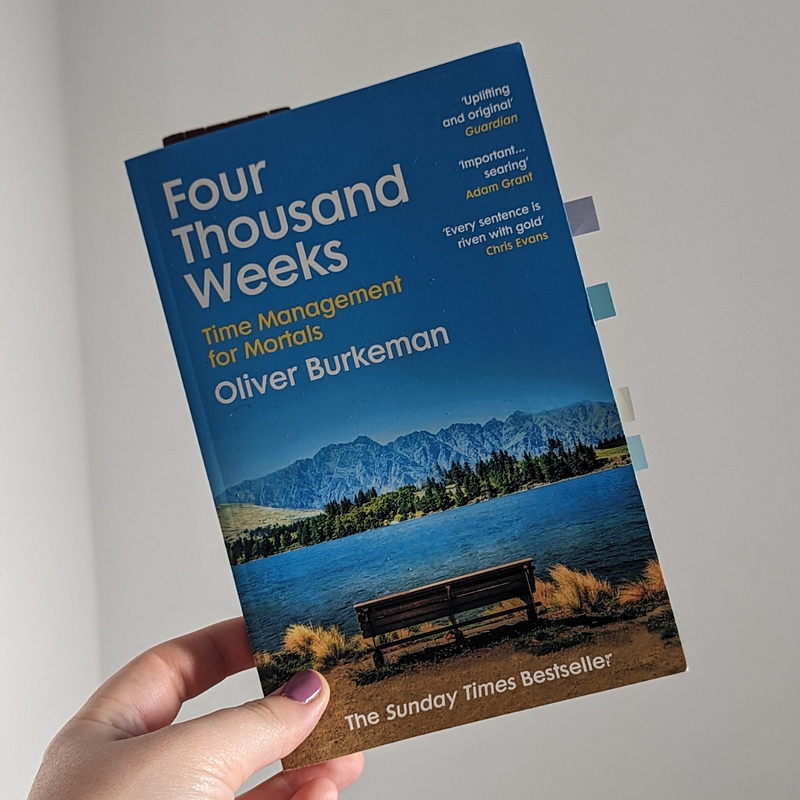
Reading Four Thousand Weeks changed the way I thought about my inevitable mortality. And it’s not often I will read a self-help book and claim that. But it really did. Oliver Burkeman opens his book with a brutal assessment of the fragility of human life with some simple maths.
On average, we all have four thousand weeks to live. That’s if we are lucky enough to live until 80. It may sound like a lot at first, but I’ve done the maths.
Being 26 years old, I have already lived for approximately 1,300 weeks. It didn’t seem like a lot at first. But then I worked out how many weeks I might have left. This gave me 2,700 weeks.
I stared at the number for ages, thinking about all the time I’ve wasted scrolling away on TikTok or not trying at all because I didn’t believe I could ever be good enough at something.
It may be brutal, but this realisation kicked me up the backside I needed. From now on, writing is going to be prioritised. I can’t leave this world with piles of unfinished drafts and feeling scared about people reading my words.
Not only does Burkeman serve readers some tough love, but breaks down all the misconceptions about productivity and how to live a satisfying life. I could have highlighted the entire book, as I found useful advice on every page.
However, here are some of the main takeaways about the reality of time and productivity — you will be surprised at the approach he takes and will want to implement it into your own life immediately.
Once you realise you have limited time you’ll instantly value it more
“But the more you confront the facts of finitude instead — and work with them, rather than against them — the more productive, meaningful and joyful life becomes.”
There’s a reason Burkeman opens with the staggering fact most of us will only get four thousand weeks to live if that. Yes, it’s intended as a shock factor, but also, to make each of us realise we can’t do everything. It is precisely because of how limited our time is, that we have to start prioritising what matters.
When we think about productivity, it’s usually associated with achieving as much as possible in a short amount of time and constantly using the time you do have to achieve something. We live in a world that glamourises side hustles and encourages us to turn our passions and hobbies into an extra income stream. To do so would be seen as a productive use of our time.
Doing nothing, or engaging in hobbies such as reading, is often viewed as a luxury that most ‘busy’ people don’t have time to do. But it’s only because people like this primarily fill all of their free time with work. Because of our capitalist culture, it’s engrained in us that this is automatically seen as better and more useful.
This concept is shattered to pieces in Four Thousand Weeks, as Burkeman shows us how spare time doesn’t have to be productive. It can just be time that passes, without us doing anything useful or valuable. Rest time is valuable and productive in itself.
Once we realise this, alongside the idea we will never be able to achieve everything, our lives will drastically improve. Valuable self-help lessons are not always about getting up at 5 am every day, and showing us how to do a complicated morning routine, but altering the way we think about big concepts such as time and productivity and this book does just that.
An example I keep thinking about that Burkeman uses is replying to emails. We think we are being more productive when we reply sooner, but doing this just results in more emails being sent back to us. Leaving emails for a few days means we will have less work to do each day.
Our efficiency can sometimes create more work for us, so we’re constantly battling against a never-ending tide of work. The more you get done, the more needs to be done. By trying to be as productive as possible, we not only create more work for ourselves but lose sight of what matters, which is having a meaningful and enjoyable life.
When you realise time is so limited, you start to think about what matters, and what you want to spend your time on. This is a way of working with finititude, rather than against it. Once you realise the importance of this mindset shift, you’ll no longer worry about productivity and how much you achieve each day.
Focus on what you have now and worry about the future when it comes
“Any finite life — even the best one you could possibly imagine — is therefore a matter of ceaselessly waving goodbye to possibility.”
Saying goodbye to possibility sounds quite morbid. But what Burkeman means is to focus on the present moment. Many of us are lucky enough to live with endless possibilities, options and opportunities. That is amazing in itself, but it can induce anxiety about career changes, relationship paths, friendships and where to live.
When you have so much choice, it gives you more to think (and agonise) about. By stripping it back, and focusing on what you do have in the present moment, it gives you less to worry about. Nearly our whole lives are geared towards preparing for our futures. Most of us spend the majority of our time working, paying into pensions and planning for the future. The sad truth is, that may never come and you can only fully control what’s happening in the present.
That’s not to say we should stop preparing for the future, but merely shift our focus to worrying about what we can control immediately, which is the next few minutes, hours and days. Once we live in the present and start to forget about future possibilities, we become more grounded and self-aware.
I have a lot of anxiety about my career path and what the next few years are going to look like. It causes me frequent sleepless nights as I agonise over what more I could be doing. I do this so much, that I forget about what I have in the present. It may not be the perfect job, but it gives me a sense of routine, purpose and enjoyment. And that’s what I should be focusing on daily.
Burkeman doesn’t suggest we get complacent or stop dreaming but give the present the attention it deserves. The future will come, but the current moment we are in is all we can control.
Less is more and productivity is a myth
“In order to most fully inhabit the only life you ever get, you have to refrain from using every spare hour for personal growth.”
We live in a world that is obsessed with lengthening to-do lists, filling our calendars to the brim and turning hobbies into income streams. We do all of this because we feel the pressure to make the most out of our free time. We try to start side hustles so we can put more into our savings pot and plan for the future. It seems sensible at first, but then most of us start to get obsessed.
When we have free time, we try to fill it with tasks, objectives and work, even when it is supposed to be crucial rest time. Burkeman suggests something radical in his critique of productivity culture. What if we used spare time to just be free? What if we just stopped trying to do everything?
We’re all guilty of trying to put too many eggs in our baskets and not resting when we need it. Most of us already spend most of our lives working, so why do we constantly think we need to be busy even when we have free time? Part of it is unlearning the unrealistic standards that productivity (and social media culture) places on us, and part of it is learning to accept that rest and doing nothing is good for us.
It’s hard to unlearn because productivity is engrained into our bones from an early age, but actually, making no plans and having free time to do very little is good for us. We don’t have to constantly be doing something. We can just exist, breathe, and notice the small changes that are happening around us.
This will make us more grounded, appreciative and rested. With the recognition that rest is power, Burkeman encourages readers to shift their mindset and stop fetishising productivity when rest is just as important.
Our lives are short and we need to stop worrying
“The average human lifespan is absurdly, terrifyingly short. But that isn’t a reason for unremitting despair, or for living in an anxiety-fuelled panic about making the most of your limited time.”
Contrary to the harsh truth Burkeman dishes out from the beginning, his central thesis encourages us not to worry about our finite time. When we do this, we fill our lives with more work, tasks and unrealistic expectations to compensate for our limited time.
However, once we stop obsessing over this, and realise the reality of a finite existence, we prioritise what matters. If we were to truly obsess over our short and limited existence, it would only be counterproductive and a distraction from achieving the goals that truly matter.
I recently turned 26. The day itself was nice, but in the weeks that followed I started to get panicky about my dwindling existence. It feels already that time is slipping away, and I put so much pressure on myself to achieve certain milestones and get anxious when I don’t. Every birthday feels like a failure if I haven’t achieved these self-inflicted standards.
But I know I need to do better and take Burkeman’s advice on board. I hope that with each birthday I will feel a little better about the inevitability of ageing.
After all, there is no point worrying about our impossible finitude, instead, we need to embrace reality and live our lives exactly as we wish by prioritising the things that matter to us individually. Not doing so would be a disservice to our painfully short lives.
Did you get all that?
As I said in the beginning, Four Thousand Weeks is a gem of a book. I felt like there was a nugget of wisdom I wanted to remember on every page, but there are four main lessons to take away from this so let’s just recap.
- Your time is limited so give it the respect it deserves
- The present is the only time you can control
- Less is more and rest shouldn’t be neglected
- Finitude isn’t a reason for despair
After you read this article, you may feel like reading the book and I would encourage everyone to do so.
Burkeman shatters the myths of productivity on which most of us value our life and use of time, and instead, encourages us to alter our mindset and realise that less really is more.
Four Thousand Weeks should be compulsory reading for businesses, politicians, multinational corporations who want to take over the world, and most importantly, the ordinary everyday mortal who frets over their limited existence.
Never miss a story by subscribing to my mailing list.


