
5 Life Lessons Learnt from Reading ‘The Salt Path’ by Raynor Winn
These pockets of widsom are the powerful reminders you need to live life to the full
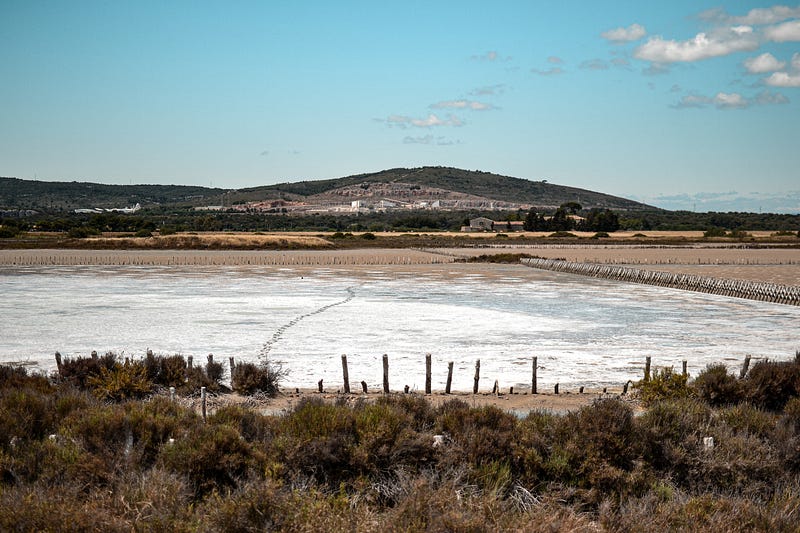
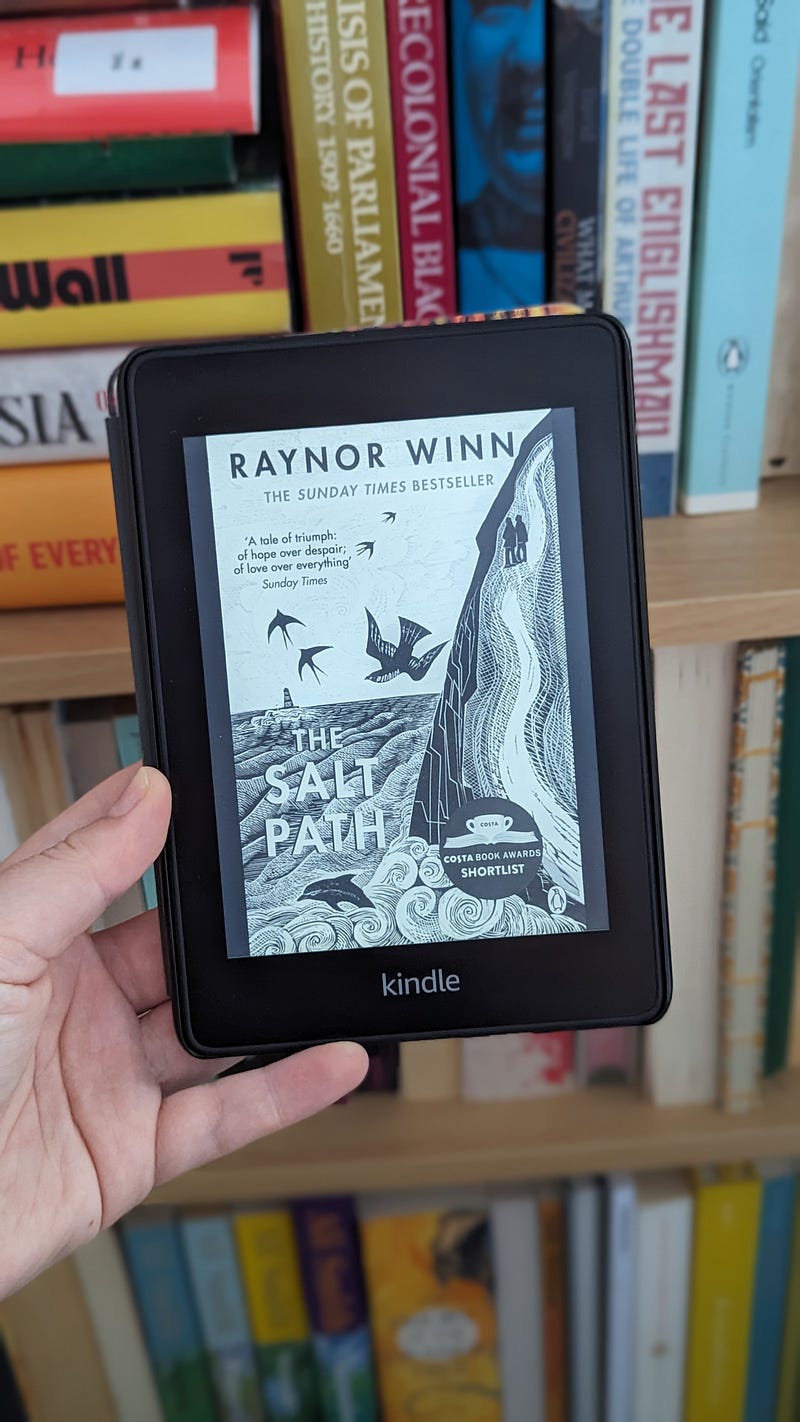
There’s not a week that goes by when I’m not asked for The Salt Path or anything by Raynor Winn at work. She’s one of those writers that have been immensely popular in the last few years that I’ve never got around to reading. On a recent camping trip, I decided to take the plunge and read The Salt Path.
On paper, it went well with what I was doing (hiking, camping and contemplating life) but I didn’t expect it to be so emotional, or to come away from it wanting to share all the pockets of wisdom I learnt.
The Salt Path is a beautiful blend of nature writing, memoir and self help written by Raynor Winn as she retells the story of how her and her very ill husband, Moth, were suddenly made homeless. Not having anywhere to go, or people to stay with, they decide to go on a very long walk from Wales to Lands End, wild camping along the way and seeing where they end up. It’s all they can do, as their home is taken away from them (which was also their business) — as Moth’s illness progresses and the winter months creep ahead.
The end result is a powerful story that makes you think about how we are never too far away from losing everything, but one also littered with powerful life lessons that make you pause.
Society is built for the wealthy and having a roof over our heads is never guaranteed
“…civilization exists only for those that can afford to inhabit it, and remote isolation can be felt anywhere, if you have no roof and an empty pocket.”
Any socially conscious individual is aware of the natural wealth inequality that a capitalist society creates. But Raynor’s story about her overnight homelessness from being a successful business owner really hit home. From having a rental cottage business in Wales on their farm to having to suddenly survive on £30–40 every few weeks was a stark reminder of how much we take for granted and how close everyone can come to losing everything overnight.
As they walk the 630 or so miles from Wales to Lands End, they survive on instant noodles, tins of tuna, and chocolate bars whilst occasionally treating themselves to sharing half a sandwich each at a cafe. Most of us wouldn’t think twice to spend £5 or £6 on an item for lunch, but for these two, it was a real luxury.
Our society in the West relies on us spending money and businesses profiting. It’s a sign of success. If you aren’t spending money, or businesses aren’t thriving, it’s considered unsuccessful. So much of society is cut off to those who don’t have the luxury of money to throw at it. As I read this book in my tent on a walking holiday through the South Downs, I was all reminded of this as we visited Hastings and were put off by the English Heritage £16 each entry fee to see the grounds of the 1066 Battle of Hastings.
Historical sites like that should be available to all without money being a barrier to entry. A lot of sites like this in the UK are maintained by English Heritage or the National Trust and usually require a fee to even enter them. This means that knowledge, education and the history of our lands come at a price. A price that many cannot afford.
Civilisation and how our society functions is geared towards those who have money to spend. It means that a lot of people fall through the cracks, and cannot live a good quality of life. Our roofs can be lost at any moment, and we should never take for granted what we do have.
We spend too much time in the future but not enough in the present
“Life is now, this minute, it’s all we have. It’s all we need.”
Most of what we do today is preparing for the future. Whether that’s going to work, earning money and putting that towards a pension that’s sealed off until we’re 65+ or paying off a mortgage to eventually own a house. It’s all physical preparations for what’s to come, rather than contributing towards the current moment. But many of us are also spending the present worrying about the future. We have anxieties over our careers, relationships and families. We spend so much time on this, that we forget to be fully present.
Before we know it, life can pass us by, and the present soon turns into the distant past. Raynor and Moth’s story is a reminder that life can be enjoyed even when dealt the harshest of cards. You can find pockets of joy in the despair and we should be making every effort daily to do so. Rather than focusing on the future and worrying about what will be or won’t be, we should be more mindful about what we can control: which is now.
The present moment we are living through is the only thing we can change. As Raynor says, it’s the only thing we need. Focus on taking each day as it comes, and worrying about how to make each day count, rather than mapping out a future which doesn’t always go to plan, or even happen.
We know that the age of social media and our dependence on phones makes us live in the future, not the present, but it’s on us to take actionable steps to prevent ourselves being sucked into the highlight reel, futuristic culture rather than focusing on the now. It’s all we have, and it’s all we know.
You can have the most friends or the biggest of families, but ultimately, you are alone
“What would happen when he didn’t come back, when he left me behind for good? I’d always be a half-eaten pasty, never whole again.”
We can fill our lives with social occasions, have the biggest friendship groups, and the tightest of families. Many people do this to the excess because they fear spending any time alone. Our lives can appear to be full of colour but are only a disguise for our deep unhappiness or inner loneliness. We can have a huge amount of people in our lives but still feel discontent with who we are.
Evidently, people add richness and enjoyment to our lives, whether we consider ourselves introverts or extroverts. But we can’t ever rely on people to be our sole source of happiness. You have to be comfortable and at peace with yourself before people start adding anything to your life. We come into this world alone, and we will depart it alone. There’s no point clinging onto friends, family or partners to the extent we can’t stomach our own company.
Yes, we can form deep and meaningful relationships that add value to our lives, but we also have to be happy with what we create ourselves and with who we are. We have to learn to enjoy our own company and not do everything with another person.
Planning for the inevitable: death
“Because I want you to keep me in a box somewhere, then when you die the kids can put you in, give us a shake and send us on our way. Together. It’s bothered me more than anything else, the thought of us being apart. They can let us go on the coast, in the wind, and we’ll find the horizon together.”
The topic of death is still very much a taboo in Western society. Most of us don’t want to think about it, or even attempt to acknowledge the inevitable until it happens. But honestly, most of the time by then it’s too late. That’s not forgetting the possibility of death creeping up on us out of nowhere.
When I lost my brother unexpectedly in 2020 it was the worst thing to happen. It caused me unimaginable pain, guilt and questioning. But it was also a huge learning curve. Due to particular circumstances, I was the person responsible for tying up all the loose ends and managing his affairs.
Even though it’s frowned upon to have a will before the age of 50 or even 60, it would have made things a lot easier if my brother had one as it takes the decision-making off the hands of people you love, so they know exactly what to do when the time comes.
None of us know when our time is going to be up. We expect and hope to live long and happy lives. And most of us will. But you never know what’s around the corner, so it pays to be prepared for death. Even if that’s just writing down your needs and thoughts, or communicating your wishes to a loved one. Putting these desires out into the universe will give people an idea of what to expect if they end up being responsible for dealing with your death.
In Raynor’s case, she knows Moth has a deteriorating illness and that time is short, but they still don’t know when it will happen. In this emotive sentence, he conveys all of his main wishes and this must have given some comfort to her, despite how painful it was to hear. Reading it almost brought me to tears, but made me realise how important it was to think about death and our wishes for when we depart from this world. It’s never too early.
Second chances aren’t inevitable but we should always take them
“At last I understood what homelessness had done for me. It had taken every material thing that I had and left me stripped bare, a blank page at the end of a partly written book. It had also given me a choice, either to leave that page blank or to keep writing the story with hope. I chose hope.”
Nobody expects to be homeless overnight or lose their job or house. We always think we’re on a linear path to greatness, and that nothing can stop us. But it can. We all can hit rock bottom and The Salt Path is a powerful reminder that it can happen to anyone, regardless of how ‘successful’ you are or what you’ve achieved in life. But its message of resilience and the power of second chances cannot be ignored.
It would have been easy for Raynor and Moth to wilt away and let themselves wander for the rest of their lives until they could walk no more. It would have been easy to accept defeat and for Moth to succumb to his illness, but he didn’t. At the end of the book, Raynor is presented with a chance encounter and an opportunity to rebuild both of their lives. It’s one of those rare, life-affirming moments you never think will happen to you.
With this choice, she could leave the homeless walking life behind, or turn it into an important message. She ends up doing both, which gives the readers a powerful reminder about second chances. That we should always take them. At whatever cost, or due to whatever circumstance we find them in. Some people will never have the privilege of being presented with them, so when we are, we should take them without hesitation.
Raynor and Moth took that choice, and with it they chose hope. They didn’t know what was going to happen when they made the decision and they didn’t know if it was going to improve Moth’s health outcome, but they had the bravery to take it anyway, despite the unknown.
The Salt Path contains a powerful message about hope, making the most of your circumstances and never taking life for granted. I would recommend it highly, as well as taking note of all the important life-affirming messages it contains.
Subscribe to never miss a story from me.