
How Much Turning Life into Fun Games Is Too Much?
There can only be too little.
From one project game to whole life
Some time ago, when I was turning only parts of my life into games, I discovered another quirky idea my brain had produced: that I had to limit the number of projects I gamified (= turned into games).
But then I realized that I didn’t have to do so and decided to consider which projects were relevant for me that particular month.
Some time later, I realized that I could and wanted to turn my whole life into games and try various designs for the management part of it.
But I started with just one game.
I took writing a book into a simple little game I later called 5 Minute Perseverance Game.
Then I tried other activities, not only different from writing a book in their substance but also how I labeled them — for example, as something I thought I didn’t want to do.
And finally, I could not stop wondering whether I could turn my whole life into fun games.
The Balance Game
The game I call the Balance Game today embraces all areas in my life, and it has seen multiple design modifications. It includes taking care of my family, friends, enough sleep, sufficient movement and relaxation, work and personal projects, taking care of household, and everything else I can think of. And all that while being aware, taking small steps, and approaching each of them gamefully (= with humor and excellence).
My Balance Game game continually evolves. It used to have monthly rounds; now, it has weekly rounds since I use a paper edition of a weekly calendar for this game’s feedback system.
The way I record my rewards vary. They can be points, stars, self-drawn donuts, round and otherwise formed badges, like numbers in circles or arrows in diamond or square shape showing whether the score increased or decreased since last time.
I don’t take my score seriously anymore. If I observe that I do, then I throw myself out of the game. As soon as I notice being too serious, I know that a change in any of the game components could help.
Whatever is fun and effortless right now to maintain is them selected. Both fun and effortlessness are important criteria here.
My rewards can be also as simple as a fist pump, a little dance, or just an appreciative nod and a mental pat on my sholder.
Here is an example of a “sub-game” in my Balance Game that changes almost every week or when I finished reading a book. I call it the Reading Game and update a numbered list of the books I want to read in parallel at the beginning of each week. Then I record the numbers of the books I read on any particular day of that week. At the end of the week, I can see which books had won my attention every day and which couldn’t keep it. I then can decide whether to give them more space next week or consider reading them at another time and remove from the list (you could say, “book competition”) for now.
You can’t play your life too much
I was curious to discover that even those who are keen about gamifying their lives or parts of them, say that there are moments when turning life into games doesn’t make sense. “You can’t play all the time,” is one of the phrases I hear.
I used to think that there are areas or times in our lives which are inappropriate to turning into games.
Now, I don’t thinks so. Because I experience the opposite.
If I am in the flow, I am already in the “game” of whatever I am doing. I am enthusiastic and give my best to the project or activity I am pursuing.
The times when I am out of the flow are the best times to put on my hat as the self-motivational game designer.
So if you feel wholeheartedly engaged and in the flow, then you are playing the game collection of your life, whatever game you choose to play at any given moment. But if you feel off balance, then as your life’s designer you can adjust the design of your life’s games in such a way that your player, yourself, can’t wait to start playing again.
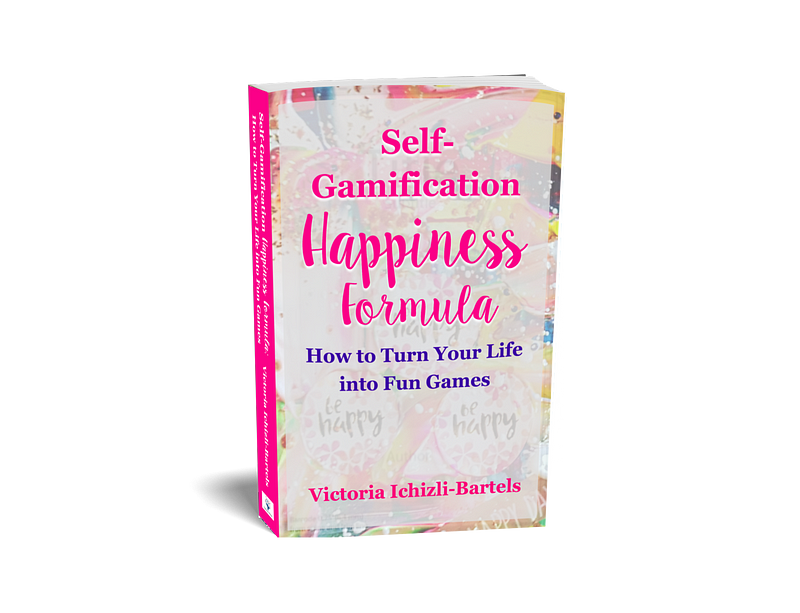
Thank you for reading! This article is an excerpt from the Self-Gamification Happiness Formula: How to Turn Your Life into Fun Games.
P.S. Get a free “awareness booster” that will help you disentangle any tough project together with a short story, which could provide for that first advice of taking time off your stagnating project, here: Optimist Writer.


