avatarRajeet S

Free AI web copilot to create summaries, insights and extended knowledge, download it at here

3960

Abstract

N,N-Dimethyltryptamine">DMT</a>, another well-known psychedelic substance, which just means psilocin is very similar in molecular structure (it’s DMT with an additional molecule).</p><figure id="af3a"><img src="https://cdn-images-1.readmedium.com/v2/resize:fit:800/1*QIHhDgpMjwkKOybl2bufbQ.jpeg"><figcaption>The active ingredient in Magic Mushrooms is just DMT with an extra molecule. Image authors own</figcaption></figure><p id="ca93">DMT is endogenous, meaning it’s produced naturally by the body, but science still <a href="https://beckleyfoundation.org/2017/07/05/do-our-brains-produce-dmt-and-if-so-why/">doesn’t really know why</a>.</p><p id="6dc5">It’s been seen that the brain under the influence of DMT looks very much like the brain in <a href="https://www.livescience.com/dmt-ayahuasca-dream-state-brain.html">REM sleep</a>, leading some to hypothesise DMT is what brings about those nightly hallucinations we call dreams.</p><p id="d251">Since psilocin is similar in structure it can also induce a dream-like state, but in a lighter way and all whilst staying awake. It brings about these effects in the brain in two main ways.</p><figure id="ad3a"><img src="https://cdn-images-1.readmedium.com/v2/resize:fit:800/1*birlEV5JgyM6n8SK0jlmBw.png"><figcaption></figcaption></figure><h1 id="481b">Serotonin and Mushrooms</h1><p id="9546">Firstly, Magic Mushrooms activate a specific serotonin receptor known as 5<a href="https://en.wikipedia.org/wiki/5-HT_receptor">HT2A</a>, which is responsible for perception, mood, imagination and a few other things.</p><p id="f214">The brain works by sending signals between its cells, which are thin, long and have 2 distinct ends. One end sends signals and the other receives them. The cells face each other end-to-end but they don’t touch.</p><p id="b4df">Instead there’s a tiny gap between them called the synaptic gap (synapse).</p><figure id="5ec0"><img src="https://cdn-images-1.readmedium.com/v2/resize:fit:800/1*wWFHEpXKbR1YwMlkMlij1Q.png"><figcaption>Image author’s own</figcaption></figure><p id="aec0">The cells send signals across the synaptic gap via chemical messengers, which are called neurotransmitters. Examples of these chemicals are dopamine, adrenaline and serotonin.</p><p id="4eb1">Neurotransmitters fire from the sending cell into receptors on the receiving cell, thereby activating those receptors. The receptors then relay the message to their cell.</p><p id="51b9">Each chemical has its own receptor which accommodates its shape, much like a lock and key. A chemical which doesn’t correspond to the shape of the receptor won’t fit into it and therefore won’t activate it.</p><p id="bc98">For example, a dopamine molecule won’t activate a serotonin receptor because it won’t fit. Much like your front door key won’t fit into your neighbour’s lock.</p><p id="9380">Psilocin molecules activate the serotonin 5HT2A receptor because they’re very similar in structure to the serotonin molecules.</p><figure id="e361"><img src="https://cdn-images-1.readmedium.com/v2/resize:fit:800/1*xMa0nV2AeChil1DlY1KkxQ.png"><figcaption>Image authors own</figcaption></figure><p id="fb13">Note just how similarly shaped both molecules are. This means the psilocin molecules fit into the serotonin receptors and activate them, but in a slightly different way to how serotonin does.</p><p id="c78f">The practical effect is hallucinogenic — a waking dreamlike state. It’s also worth noting this particular serotonin receptor is the one activating by most psychedelics, like DMT, mescaline, LSD and <a href="https://readmedium.com/how-mdma-works-in-the-brain-13792f2fceb5">MDMA</a>.</p><p id="4a0f">These 5HT2A <a href="https://readmedium.com/rethinking-brain-serotonin-what-does-it-really-do-its-not-mood-8ef6492e8ab4">receptors are located in cells mainly in the cortex</a>; an area of the brain associated with reasoning and rational thought, which evolved larger in humans than in any other animal.</p><p i

Options

d="ebe8">They’re also long, spanning more area of the area of the brain than short cells do and therefore having a wider reach over brain activity.</p><p id="3305">The 2A receptor is where the characteristic hallucinogenic ‘trip’ of a psychedelic experience comes from.</p><figure id="96af"><img src="https://cdn-images-1.readmedium.com/v2/resize:fit:800/1*birlEV5JgyM6n8SK0jlmBw.png"><figcaption></figcaption></figure><h1 id="6638">The DMN — the Brain’s Main Information Highway</h1><p id="95fb">The second thing psilocin does is temporarily block the<a href="https://en.wikipedia.org/wiki/Default_mode_network"> Default Mode Network</a> (DMN).</p><p id="039b">The DMN is a network of connected brain regions which allow us to think into the past and look into the future. When not being deliberately used, it acts as an information-consolidation centre; integrating memories, thoughts, experiences and information. It’s also essentially where your<a href="https://readmedium.com/what-ego-death-feels-like-184411be0c01"> sense of ‘self’</a> lies.</p><p id="2bfc">You can think of the DMN as your brain’s main information highway.</p><p id="52c8">Psilocin <a href="https://sapiensoup.com/brain-on-psychedelic-drugs">disables one or more of its ‘connector hubs’</a> which connect the regions of the DMN, temporarily blocking its function. This forces the brain to connect in other ways because its main integration centre is shut, and brain regions which don’t normally ‘talk’ start talking.</p><p id="ea92">Essentially the ‘magic’ of magic mushrooms lies in their ability to block off the brain’s main information highway. In order for information to connect, it has to take side roads it’s never taken and communicate with parts of itself it’s never spoken to.</p><p id="079a">This is what it looks like.</p><figure id="11e2"><img src="https://cdn-images-1.readmedium.com/v2/resize:fit:800/0*yFtaRiATnKMgEVGE.jpeg"><figcaption>Amount of brain connection in normal function (left) and on magic mushrooms (right). <a href="https://greencamp.com/magic-mushrooms/">Image credit</a>: Petri et al.</figcaption></figure><p id="a5ba">The different colours around the rim of each circle represent different areas of the brain, and the lines between them are the connections between the regions. The left side shows brain connection in normal function and the right shows brain connection under the influence of magic mushrooms.</p><p id="71b3">The result of psilocin is a huge increase in connections between different brain regions which don’t normally communicate. These connections form brain cells, and these cells stay in existence even after the psilocin has worn off.</p><figure id="2552"><img src="https://cdn-images-1.readmedium.com/v2/resize:fit:800/1*birlEV5JgyM6n8SK0jlmBw.png"><figcaption></figcaption></figure><p id="ef33">Magic mushrooms are fascinating things, and their magic really does lie in their ability to connect the brain, and in allowing a very high level of introspection.</p><p id="ef8f">There are various studies taking place into the usefulness and efficacy of psychedelic therapy, most notaby by <a href="https://maps.org/">MAPS</a>.</p><p id="c451">There is much more research to be done, but current studies show promise in psychedelics being hugely useful tools for introspection, self-discovery and treating conditions like depression, anxiety and PTSD.</p><p id="e96f"><i>If you enjoyed this article please consider <a href="https://rajeetsingh.medium.com/membership">Joining Medium</a> to get access to all of Rajeet’s articles plus 1000’s more from other authors.</i></p><p id="9f68"><i>Twitter: <a href="https://www.twitter.com/rajeet_s">@rajeet_s</a></i></p><p id="4f88"><i>Mushrooms containing psilocybin are controlled substances in many countries and the author does not condone use, purchase, production or otherwise of any illegal substances. This piece is meant for informational purposes only.</i></p></article></body>

How Magic Mushrooms Work in Your Brain

Mushrooms hyper-connect your brain
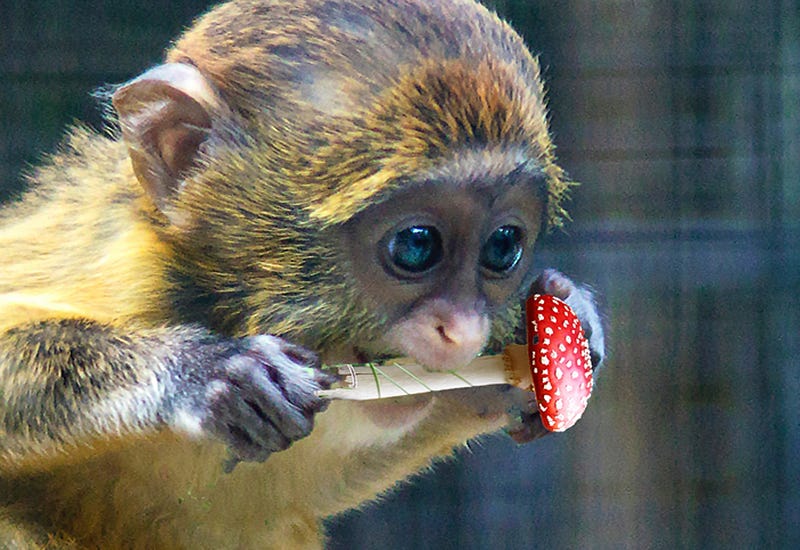
Photo by Jimmy Chan from Pexels. Edited with Photoshop.

Magic mushrooms, scientifically known as Psilocybe Cubensis, grow in nature and contain a naturally occurring compound called psilocybin.

They’re classed as psychedelic hallucinogens, which (obviously) means they stimulate hallucinations. The effects vary person to person but include euphoria, heightened empathy, increased sensitivity to visual and auditory stimulus, change in perception of colour and sound, increased introspectiveness and many others.

They’re controlled substances in almost every country in the world.

Back in the 70’s there was a crackdown on drugs because of the US counter-culture movement and the status of substances like LSD and MDMA were solidified as illegal, along with magic mushrooms.

The DEA defines Schedule 1 substances as drugs with ‘no currently accepted medical use and a high potential for abuse’.

Magic mushrooms are schedule 1 and therefore considered to have no medical potential. This is incredible because there are numerous studies which point to their huge potential in treating depression and anxiety.

Plus the fact the active compound doesn’t stay in body for more than a day and frequent use (over the course of days) yields ever-more diminishing effects, rendering them ineffective and thus holding little potential for abuse.

Magic mushrooms are fascinating little things, even more so given the fact they’ve been consumed by humans for thousands of years, they’re wholly natural and they could’ve even had a hand in giving us consciousness.

Let’s see how they work in the brain.

Psilocybin — The Active Ingredient

The mushrooms themselves aren’t the drug, it’s the psychoactive compound in them, psilocybin.

Psilocybin is a naturally occurring substance — mushrooms just grow out of the ground and can be eaten fresh. On ingestion, psilocybin is converted by the body to psilocin.
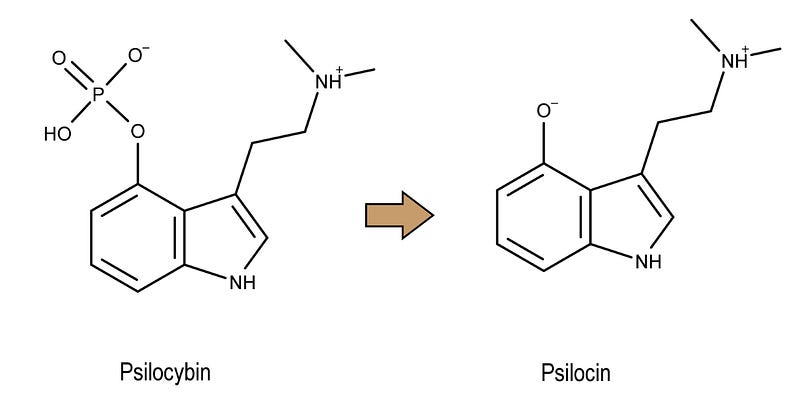
The body converts psilocybin to psilocin. Image authors own

The actual active ingredient is psilocin after ingestion. Psilocin is an analog of DMT, another well-known psychedelic substance, which just means psilocin is very similar in molecular structure (it’s DMT with an additional molecule).
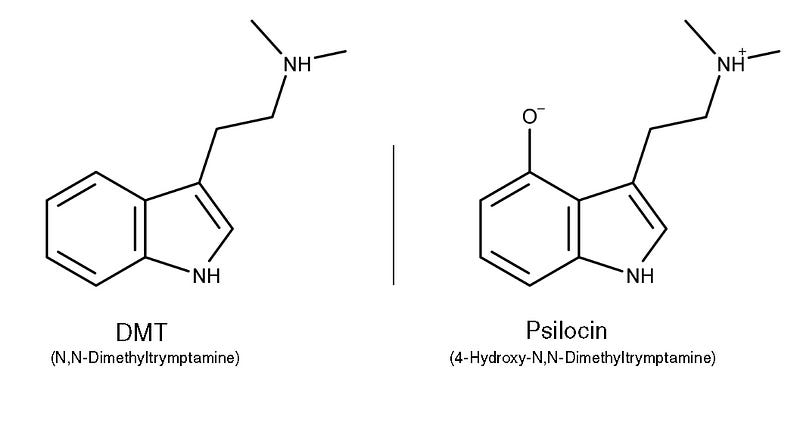
The active ingredient in Magic Mushrooms is just DMT with an extra molecule. Image authors own

DMT is endogenous, meaning it’s produced naturally by the body, but science still doesn’t really know why.

It’s been seen that the brain under the influence of DMT looks very much like the brain in REM sleep, leading some to hypothesise DMT is what brings about those nightly hallucinations we call dreams.

Since psilocin is similar in structure it can also induce a dream-like state, but in a lighter way and all whilst staying awake. It brings about these effects in the brain in two main ways.

Serotonin and Mushrooms

Firstly, Magic Mushrooms activate a specific serotonin receptor known as 5HT2A, which is responsible for perception, mood, imagination and a few other things.

The brain works by sending signals between its cells, which are thin, long and have 2 distinct ends. One end sends signals and the other receives them. The cells face each other end-to-end but they don’t touch.

Instead there’s a tiny gap between them called the synaptic gap (synapse).
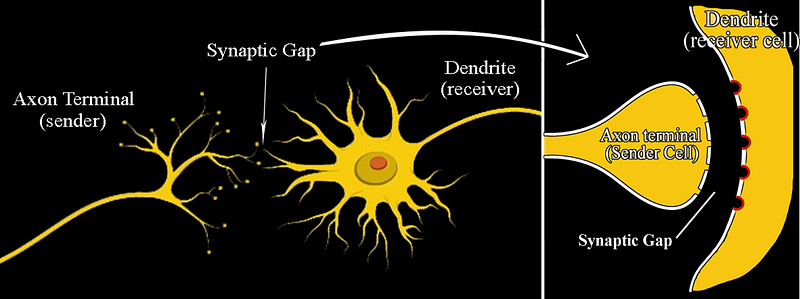
Image author’s own

The cells send signals across the synaptic gap via chemical messengers, which are called neurotransmitters. Examples of these chemicals are dopamine, adrenaline and serotonin.

Neurotransmitters fire from the sending cell into receptors on the receiving cell, thereby activating those receptors. The receptors then relay the message to their cell.

Each chemical has its own receptor which accommodates its shape, much like a lock and key. A chemical which doesn’t correspond to the shape of the receptor won’t fit into it and therefore won’t activate it.

For example, a dopamine molecule won’t activate a serotonin receptor because it won’t fit. Much like your front door key won’t fit into your neighbour’s lock.

Psilocin molecules activate the serotonin 5HT2A receptor because they’re very similar in structure to the serotonin molecules.
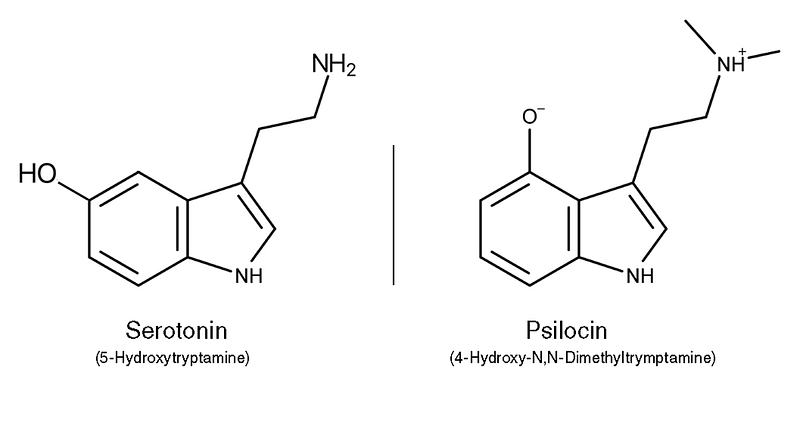
Image authors own

Note just how similarly shaped both molecules are. This means the psilocin molecules fit into the serotonin receptors and activate them, but in a slightly different way to how serotonin does.

The practical effect is hallucinogenic — a waking dreamlike state. It’s also worth noting this particular serotonin receptor is the one activating by most psychedelics, like DMT, mescaline, LSD and MDMA.

These 5HT2A receptors are located in cells mainly in the cortex; an area of the brain associated with reasoning and rational thought, which evolved larger in humans than in any other animal.

They’re also long, spanning more area of the area of the brain than short cells do and therefore having a wider reach over brain activity.

The 2A receptor is where the characteristic hallucinogenic ‘trip’ of a psychedelic experience comes from.

The DMN — the Brain’s Main Information Highway

The second thing psilocin does is temporarily block the Default Mode Network (DMN).

The DMN is a network of connected brain regions which allow us to think into the past and look into the future. When not being deliberately used, it acts as an information-consolidation centre; integrating memories, thoughts, experiences and information. It’s also essentially where your sense of ‘self’ lies.

You can think of the DMN as your brain’s main information highway.

Psilocin disables one or more of its ‘connector hubs’ which connect the regions of the DMN, temporarily blocking its function. This forces the brain to connect in other ways because its main integration centre is shut, and brain regions which don’t normally ‘talk’ start talking.

Essentially the ‘magic’ of magic mushrooms lies in their ability to block off the brain’s main information highway. In order for information to connect, it has to take side roads it’s never taken and communicate with parts of itself it’s never spoken to.

This is what it looks like.
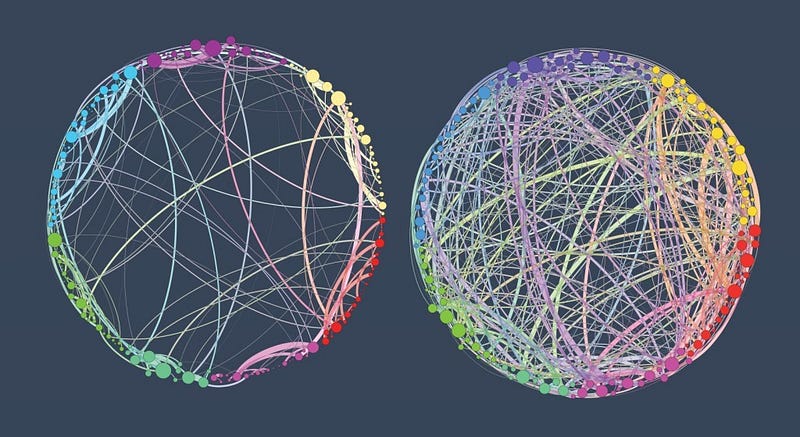
Amount of brain connection in normal function (left) and on magic mushrooms (right). Image credit: Petri et al.

The different colours around the rim of each circle represent different areas of the brain, and the lines between them are the connections between the regions. The left side shows brain connection in normal function and the right shows brain connection under the influence of magic mushrooms.

The result of psilocin is a huge increase in connections between different brain regions which don’t normally communicate. These connections form brain cells, and these cells stay in existence even after the psilocin has worn off.

Magic mushrooms are fascinating things, and their magic really does lie in their ability to connect the brain, and in allowing a very high level of introspection.

There are various studies taking place into the usefulness and efficacy of psychedelic therapy, most notaby by MAPS.

There is much more research to be done, but current studies show promise in psychedelics being hugely useful tools for introspection, self-discovery and treating conditions like depression, anxiety and PTSD.

**If you enjoyed this article please consider Joining Medium to get access to all of Rajeet’s articles plus 1000’s more from other authors.**

Twitter: @rajeet_s

Mushrooms containing psilocybin are controlled substances in many countries and the author does not condone use, purchase, production or otherwise of any illegal substances. This piece is meant for informational purposes only.

Science
Neuroscience
Psychedelics
Drugs
Health
Recommended from ReadMedium