avatarDesiree Driesenaar

Free AI web copilot to create summaries, insights and extended knowledge, download it at here

3982

Abstract

href="https://readmedium.com/how-whales-change-the-climate-an-ode-to-the-magical-magnificent-ocean-535c4dfc9852">restored oceans</a>, and restored grasslands will be the start of everything new. Our conscious choices are driven by our hearts and souls, and our (bio)technologies will do the rest.</p><p id="d2fc">So, why am I saying that planting trees as such is no solution?</p><h2 id="7769">1. Monoculture Plantations</h2><p id="4167">Some people want us to think that monoculture palm oil or pine tree plantations are the same as ecosystem restoration.</p><p id="09ec">And they are definitely not. Monoculture will never attract biodiversity. And that’s what we want to create by planting trees.</p><p id="0f5e">We need to include restored water cycles as well. Water for our earth is not just rain. Water is groundwater, rivers, and condensation. Water is even a trading principle between tree roots and mycorrhizal fungi in the soil.</p><p id="8d28">The trees offer sugars they made with <a href="https://readmedium.com/a-permaculture-perspective-on-dealing-with-climate-change-now-e4aa7e526ee9">photosynthesis</a>. The <a href="https://asknature.org/strategy/mycorrhizal-fungi-distribute-water-between-plants/">fungi distribute water</a>. And when the roots and fungi trade water and sugars, the ecosystem is working properly.</p><h2 id="c467">2. Woods Are Just One Ecosystem</h2><p id="52f8">But even when we create biodiverse woods, we cannot always call it ecosystem restoration.</p><p id="2fb5">Let me tell you about <a href="https://readmedium.com/sensual-travel-is-solo-travel-7e8c3ddb659e">my traveling alone</a> to South Africa, Capetown. I saw there what <a href="https://en.wikipedia.org/wiki/Dutch_Cape_Colony">we, the colonizers of South Africa</a>, did to their ecosystem by planting trees. I’m Dutch, you know. So, sadly, my ancestors have a lot to answer for. Not only <a href="https://en.wikipedia.org/wiki/List_of_English_words_of_Dutch_origin">Apartheid is a Dutch word</a>. We wrecked the ecosystem too.</p><p id="ec06"><a href="https://www.thedrinksbusiness.com/2018/02/on-this-day-1659the-first-wine-in-south-africa/">In 1659 the first South African wine</a> was made from French Muscadel grapes. The Dutch and English colonizers were real traders. And their tree planting had at that time nothing to do with restoring our planet. It had to do with the wine trade.</p><p id="3ac3">The oak trees were introduced to South Africa because they would make great local wooden barrels for the wine. <a href="https://www.thewinesociety.com/guides-winemaking-oak-barrels">Wine needs to be stored in oak</a>. And people like status. So what better lane than an oak lane?</p><p id="2e22">The sad part is that the oak trees never grew the way they should. In Africa, the weather is different than in France or Holland. So the trees grew fast. Mighty fast. And the wood was therefore unusable. It was too porous.</p><p id="0d32">Then they planted eucalyptus trees. Originally from Australia, this tree produces lots of biomass. And because people just think in production for profit, it was the tree to have. <a href="https://en.wikipedia.org/wiki/Robben_Island">Robben Island</a>, the place where Nelson Mandela spent his prison years, is full of them. Locals told me it is one of the reasons that the island needs to import water nowadays. <a href="https://blog.invasive-species.org/2020/01/21/eucalyptus-the-thirsty-trees-threatening-to-drink-south-africa-dry/">Eucalyptus is a water slurper</a></p><h2 id="63b9">What South Africa Needs</h2><p id="dcdd">Originally, the Capetown area is <a href="https://en.wikipedia.org/wiki/Fynbos">full of fynbos</a> (see top picture). A name for multiple species of low bushes with small leaves. Completely adapted to the local circumstances. And all this introduction of trees didn’t do the fynbos any good.</p><p id="fef6">So, what is ecosystem restoration in any specific location?</p><p id="b158"><b>Ecosystem Restoration

Options

Is…</b> Restoring local plant growth in all its diversity. Ecosystems can be rainforests and woods. But also wetlands, grasslands, mountainous areas, watersheds, flowing rivers, underground rivers, steppe, savanna, etc.</p><figure id="8066"><img src="https://cdn-images-1.readmedium.com/v2/resize:fit:800/1*HHsHC1QdHvyLWpnfq69Gcg.jpeg"><figcaption>Wetlands. Mangrove ecosystem. Picture: <a href="https://www.flickr.com/photos/cifor/36017407721">CIFOR on Flickr</a></figcaption></figure><h2 id="6c2b">3 Climate Regions</h2><p id="fdc6">How should we restore? It’s important to look at the climate regions. In permaculture, we first divide our planet into three main regions: tropical, temperate, and arid</p><ol><li>Tropical — No month under 64 degrees Fahrenheit (18 degrees Celcius) average temperature</li><li>Temperate — Coldest months below 32 degrees Fahrenheit (0 degrees Celsius), warmest months above 50 degrees Fahrenheit (10 degrees Celsius) average temperature</li><li>Arid — Average rainfall is 19.5 inches (50 centimeters) or less</li></ol><h2 id="1e57">No Planting, Creating Conditions</h2><p id="a21f">And then we have the discussion about what is a local species. Some people are very strict about it. We should only replant what was a local species. But was it a local species recently or only after the last ice age? In my country, the Netherlands, not even apple trees are local species.</p><p id="4461">In a sense, the native orthodox people are right. We should be careful not to create invasive species and kill all local, biodiverse growth in the process.</p><p id="e04b"><b>However, we are restoring ecosystems not to recreate the past. We are restoring ecosystems to unleash the future.</b></p><p id="628b">So I always say, let’s forget the local species discussion and start observing.</p><p id="2ed7">In our soils, there are always many seeds that just sleep until the conditions arise to awaken. So, let’s create conditions and see what seeds want to germinate. Let’s observe what wants to emerge.</p><p id="a376"><a href="https://www.ecoshape.org/en/pilots/building-with-nature-indonesia/">Building with Nature</a> does this very well in Indonesia. They restore coastal ecosystems with mangrove forestry and ecological fish farming. And they don’t plant trees.</p><p id="dea7">Instead, they trap the sediments that are washed in from the sea, and the seeds in the soil will germinate naturally. <a href="https://readmedium.com/just-planting-trees-or-creating-nature-based-solutions-b5b330d3ab2f">A true nature-based solution</a> with benefits for humans, local economies, and for nature.</p><p id="4cbd">I really hope that people will start to understand our natural laws better than we do now. And that we will create our <b>new solutions with nature in the center</b>. Who wants sustainability when we can have <a href="https://readmedium.com/regeneration-better-sustainability-why-and-what-is-it-b6f48415f4e">regeneration</a>?</p><div id="6a7f" class="link-block"> <a href="https://readmedium.com/regeneration-better-sustainability-why-and-what-is-it-b6f48415f4e"> <div> <div> <h2>ReGeneration. Better Sustainability? Why and What Is It?</h2> <div><h3>Giving back to nature will align the economy and ecology</h3></div> <div><p>medium.com</p></div> </div> <div> <div style="background-image: url(https://miro.readmedium.com/v2/resize:fit:320/1*qv6lv8F5TaXqwR5P2xzhuA.jpeg)"></div> </div> </div> </a> </div><p id="49f6"><i>Want to connect? You can find me somewhere on our beautiful planet, with my hands in the soil and my eyes gazing at quantum leaps towards a better future. Or find me via <a href="https://linktr.ee/desireedriesenaar">Linktree</a>. Thank you, Mike, for adding your wise energy to my words.</i></p><p id="cc95"><i>© Désirée Driesenaar</i></p></article></body>

REGENERATION

How Ecosystem Restoration Is a Real Solution and Tree Planting Isn’t

Is it the same thing? Well, NO
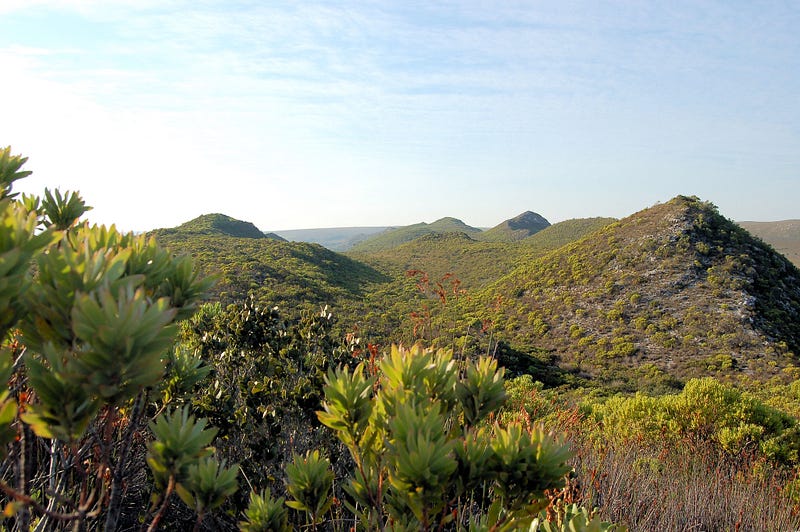
Fynbos South Africa. Picture: Joachim Huber on Flickr

I dare to say sustainability is no solution when it’s not ecological sustainability. CO2 is not our biggest problem. Not even climate change is our biggest problem. Our biggest problem is the fact that we do not understand our planet. And we are always working against her natural laws instead of using her flow.

People often say to me: I understand. No windmills. We should concentrate fully on tree planting. Tree planting will save our planet. Hmm… good initiative. But tree planting is not always ecosystem restoration.

And then they get frustrated with me. I don’t understand! Why are you always saying these things? Why do we finally understand something, and you say we are again wrong?

Forgive me, dear friends. I don’t do it to frustrate anybody. I just want you to understand our natural laws. Our planetary ways of being. So that we will find better solutions. Better ways how to align our human actions with how the planet is trying to solve stuff right now. Right as we speak. So we can help her instead of hinder her.

Evolution is all there is on our planet. We all have a right to evolution!

Sun is Halfway

Let me tell you first that there is hope. Our Earth has been evolving for 4.6 billion years now. And only in the last few seconds of existence, humans have played a role on this planet. Not a very wise role (yet), but who can blame us? We are toddlers. Always shouting,

“I am right!” and “I want this, not that!” and “It’s not fair!”

Our sun is now about halfway through his lifespan. So he will still shine for another 5 billion years. And as long as the sun shines, our planet will be habitable for species that adapt to the local circumstances in a certain period of time.

If we, humans, want to live on this planet for somewhat longer, our first priority is to understand natural laws and start to create in evolutionary ways instead of destructive ways. We have to be cooperative partners of the Earth instead of fighting against her as we do now.

“When those five billion years are up, the Sun will become a red giant. That means the Sun will get bigger and cooler at the same time. When that happens, it will be different than the Sun we know today. As a red giant, our Sun will become about 2,000 times brighter than it is now!” — NASA

Evolutionary Ecosystem Restoration

Ecosystem restoration is a big part of the wise plan for the future. And for whoever thinks ecosystem restoration is about going back to the past, think again. It is a method for unleashing us into a better future.

A wise future in which we will have an abundance of resources. And our consciously applied (bio)technologies will quantum leap us towards better solutions than we can even envision right now.

We need rewilding. We need to understand that restored rivers, restored woods, restored oceans, and restored grasslands will be the start of everything new. Our conscious choices are driven by our hearts and souls, and our (bio)technologies will do the rest.

So, why am I saying that planting trees as such is no solution?

1. Monoculture Plantations

Some people want us to think that monoculture palm oil or pine tree plantations are the same as ecosystem restoration.

And they are definitely not. Monoculture will never attract biodiversity. And that’s what we want to create by planting trees.

We need to include restored water cycles as well. Water for our earth is not just rain. Water is groundwater, rivers, and condensation. Water is even a trading principle between tree roots and mycorrhizal fungi in the soil.

The trees offer sugars they made with photosynthesis. The fungi distribute water. And when the roots and fungi trade water and sugars, the ecosystem is working properly.

2. Woods Are Just One Ecosystem

But even when we create biodiverse woods, we cannot always call it ecosystem restoration.

Let me tell you about my traveling alone to South Africa, Capetown. I saw there what we, the colonizers of South Africa, did to their ecosystem by planting trees. I’m Dutch, you know. So, sadly, my ancestors have a lot to answer for. Not only Apartheid is a Dutch word. We wrecked the ecosystem too.

In 1659 the first South African wine was made from French Muscadel grapes. The Dutch and English colonizers were real traders. And their tree planting had at that time nothing to do with restoring our planet. It had to do with the wine trade.

The oak trees were introduced to South Africa because they would make great local wooden barrels for the wine. Wine needs to be stored in oak. And people like status. So what better lane than an oak lane?

The sad part is that the oak trees never grew the way they should. In Africa, the weather is different than in France or Holland. So the trees grew fast. Mighty fast. And the wood was therefore unusable. It was too porous.

Then they planted eucalyptus trees. Originally from Australia, this tree produces lots of biomass. And because people just think in production for profit, it was the tree to have. Robben Island, the place where Nelson Mandela spent his prison years, is full of them. Locals told me it is one of the reasons that the island needs to import water nowadays. Eucalyptus is a water slurper

What South Africa Needs

Originally, the Capetown area is full of fynbos (see top picture). A name for multiple species of low bushes with small leaves. Completely adapted to the local circumstances. And all this introduction of trees didn’t do the fynbos any good.

So, what is ecosystem restoration in any specific location?

Ecosystem Restoration Is… Restoring local plant growth in all its diversity. Ecosystems can be rainforests and woods. But also wetlands, grasslands, mountainous areas, watersheds, flowing rivers, underground rivers, steppe, savanna, etc.
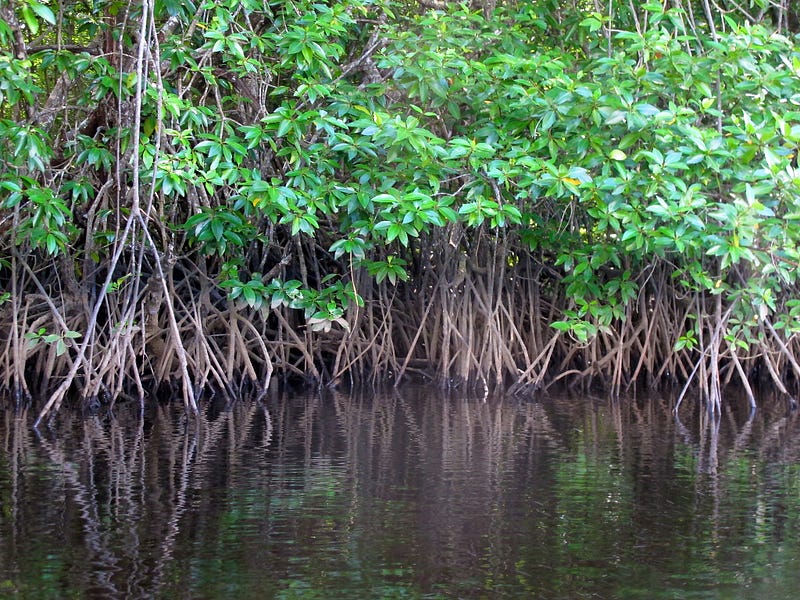
Wetlands. Mangrove ecosystem. Picture: CIFOR on Flickr

3 Climate Regions

How should we restore? It’s important to look at the climate regions. In permaculture, we first divide our planet into three main regions: tropical, temperate, and arid

  1. Tropical — No month under 64 degrees Fahrenheit (18 degrees Celcius) average temperature
  2. Temperate — Coldest months below 32 degrees Fahrenheit (0 degrees Celsius), warmest months above 50 degrees Fahrenheit (10 degrees Celsius) average temperature
  3. Arid — Average rainfall is 19.5 inches (50 centimeters) or less

No Planting, Creating Conditions

And then we have the discussion about what is a local species. Some people are very strict about it. We should only replant what was a local species. But was it a local species recently or only after the last ice age? In my country, the Netherlands, not even apple trees are local species.

In a sense, the native orthodox people are right. We should be careful not to create invasive species and kill all local, biodiverse growth in the process.

However, we are restoring ecosystems not to recreate the past. We are restoring ecosystems to unleash the future.

So I always say, let’s forget the local species discussion and start observing.

In our soils, there are always many seeds that just sleep until the conditions arise to awaken. So, let’s create conditions and see what seeds want to germinate. Let’s observe what wants to emerge.

Building with Nature does this very well in Indonesia. They restore coastal ecosystems with mangrove forestry and ecological fish farming. And they don’t plant trees.

Instead, they trap the sediments that are washed in from the sea, and the seeds in the soil will germinate naturally. A true nature-based solution with benefits for humans, local economies, and for nature.

I really hope that people will start to understand our natural laws better than we do now. And that we will create our new solutions with nature in the center. Who wants sustainability when we can have regeneration?

Want to connect? You can find me somewhere on our beautiful planet, with my hands in the soil and my eyes gazing at quantum leaps towards a better future. Or find me via Linktree. Thank you, Mike, for adding your wise energy to my words.

© Désirée Driesenaar

Climate Change
Ecology
Environment
Trees
Vision
Recommended from ReadMedium