
Hip-Hop and Black Women — Unrequited Love
Exploring the pink elephant in the booth
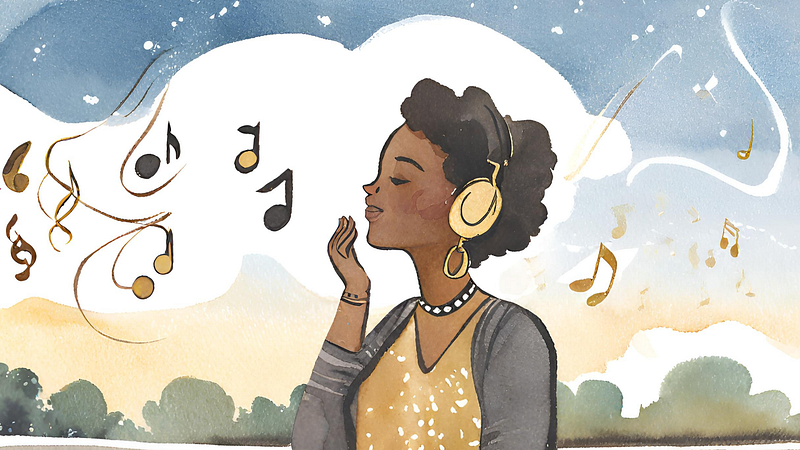
Hip-hop is more than music — it’s a mood, a lifestyle, and a revolution. Created in 1973 by the 18-year-old Jamaican-American DJ Kool Herc, Hip-hop dispensed Black cultural nuances, often with an unfiltered approach. This genre attempts to reclaim Black cultural independence that colonialism stripped away.
Since its creation in the Bronx, artists brilliantly cultivated a unique product in a market white label executives ignored. As a result, they created raw, rhythmic freestyles presented over instrumentals.
“Hip hop and rap music effectively convey significant and powerful messages, from expressing grievances in the black community to illustrating the vision that even the poorest black Americans from the most dangerous neighborhoods can achieve wealth and fame — a potent image for young black people in those very situations” (Nwoko, 2018).
Despite its potential as a unifying force to counter white supremacist ideology, Black women’s complicated relationship with hip-hop takes fire from the beast’s belly. It is past time to recognize that Black men’s self-expression is often uninhibited at Black women’s expense.
Hip-hop finds itself at a crossroads: while rap artists and the hip-hop generation are dominant voices in this era of social justice, the overall culture lags far behind in conversations about sex, gender and agency. Hip-hop has resisted true intersectionality for years (Cochrane, 2020).
Black girls and women supported the genre, elevating it as a staple of Black American culture. By attending concerts, buying records, and streaming videos, Black women proved their love and devotion. It is high time for Hip-hop artists to face the pink elephant in the booth — misogynoir. Does Hip-hop love Black women back, or is this relationship a Shakespearean case of unrequited love?
The impact of the Jezebel stereotype in Hip-Hop
From the early days of hip-hop, Black men exploited Black women, reinforcing the negative Jezebel stereotype. For financial gain and clout, they furthered misogynoir in songs and videos.
Black women in rap are presented as objects of sexual desire–they’re arm candy. It’s the updated version of the jezebel. Before, as a racist caricature, the jezebel stereotype was used by slave masters to justify sex with female slaves (Mason, 2019)
Artists often portray video vixens as promiscuous, separate from any personal attachments or commitments. While men enjoy these videos, they are dehumanizing to Black women. They perpetuate the idea that if a man has money and talent, women should express joy and be willing to fulfill their sexual fantasies. In part, it conditions Black men to have false expectations about healthy relationships with Black women.
So many try to make the distinction that some women are just hoes and some women are Queens. However, if the same men creating these stereotypes decide which women fall into each category, their labels become a control method. Black women are dynamic. I grew up knowing Black girls raised by strippers and those raised by doctors. Neither one of these girls’ moms deserves to wear a scarlet letter.
These representations tally well with the already existing prejudiced opinions that have been created in terms of race discrimination and patriarchal values (Larsen, 2006).
Black women’s figures help sell platinum records. While Black men portray women in limited, oversexualized ways, they simultaneously depend on them to justify their worth and success.
Thematically, the music plays up the idea of acquiring money from women for status. These artists fail to realize that their swagger, openness, and grit will attract audiences. They should not rely on sex appeal or the degradation of Black women. Still, they disproportionately represent Black women as conquests instead of full people. Too often, their message is bravado, as opposed to legitimate pro-Black messaging. As a result, Black women are portrayed as sexually captivating but lacking in substance.
Jay Z, misogynoir, and Blue Ivy
There are plenty of examples of the use of misogynoir in hip-hop. However, let’s take a closer look at Jay Z since many declare he is the G.O.A.T. (greatest of all time). Just as the Black Lives Matter movement questioned Trump’s slogan Make America Great Again, it’s time to evaluate why a Black man can make a career exploiting women and get that title.
Jay-Z’s song. Money, Cash, Hoes presented traditional stereotypes about Black women. This song’s themes are consistent with white supremacist ideology, which facilitated Black women’s enslavement and sale.
In 2001, he received a nomination for a Grammy for Best Rap Performance for the song, Big Pimpin. In that particular music video, Jay Z appears on a yacht surrounded by scantily dressed women. The theme is prominent — women are sexual objects, and wealthy Black men could and should exploit them. In 2000, Jay-Z’s song, Big Pimpin, won the MTV Video Music Award for Best Rap Video. Despite his misogynoiristic messages, his career continued to skyrocket.
Millions of his fans put him on a pedestal as one of the best rappers ever. Yet, most that due hardly mention the derogatory language used to accost Black women in his music. While it is essential to embrace artistic liberty, the themes presented in his music and many other rap artists are disheartening. Music cannot control human behavior, but it has an influence and with that influence comes responsibility.
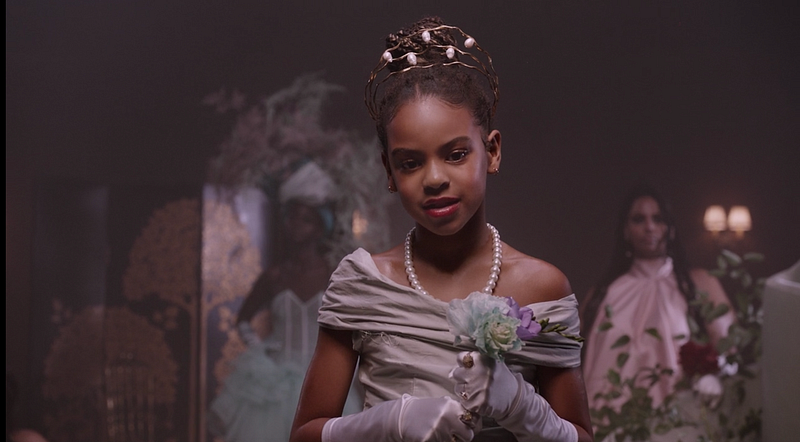
In 2008, Jay Z married Beyonce, and he now defines his life by his role as a songwriter, producer, business mogul, father, and community leader. Now, his 7-year old daughter, Blue Ivy, struggles with misogynoir. After all, she is a young Black girl. Ironically, the same denigration he perpetuated in his music is something his daughter will have to endure throughout her life. Because Blue Ivy has African facial features like her father, many people consider her unattractive — including Black boys and men, conditioned to view Black women as inferior.
I have a feeling the jay z face genes are about to hit Blue Ivy, and I feel so sorry for her,” Collins, a black man, wrote in a now-deleted tweet.
So I said something petty and have been called ugly, old, and a racist (Kai, 2020).
Luca apologized but not before acknowledging the underlying misogynoir that motivated his commentary. His words cut deeper than sexism ever could. Just like that, a young Black girl got bullied online for not adhering to European beauty standards. Because Collins found her unattractive, he pitied her. Wealth and fame did not protect her.
While Jay Z would never condone someone disrespecting his daughter, he participated in maintaining the Jezebel stereotype. It favors a perspective within the industry that dismisses Black women as only possessing aesthetic value.
I’m sorry about the Blue Ivy tweet — bad joke, and black girls in particular deserve better,” Collins tweeted Wednesday. And after a Twitter user told him that “some tweets should be left in drafts,” Collins responded: “you’re right. Poor form on my end. Thanks all for calling it out (Griffith, 2020).
The apology is not good enough because it can never undo the harm it caused to Blue Ivy and other young Black girls. While this man, in particular, caught most of the grief for this indiscretion, he was not alone judging Blue Ivy on her appearance. He was just the one who got caught. His comments reflect a severe problem in the hip-hop culture in evaluating the beauty and dignity of Black women.
There’s no value in colorism, anti-blackness or attempting to pretend that class is a justification for targeting a 7 year old with insults (Griffith, 2020).
While Jay Z and many of his supporters would not condone the Black journalist’s tweets, they would also not feel any remorse for his rise to wealth through promoting the dehumanizing Jezebel stereotype.
Hip-Hop and Colorism
Besides sexual messaging, hip-hop artists also perpetuate colorism by describing women as high yellow, red, black, and foreign. Many rappers emphasize that light-skinned girls are exclusive, and other Black girls are inadequate.
The rapper, Future, often describes his type of woman as “foreign,” which is code for a non-Black and often non-white woman usually from outside the United States. It is all bout separating themselves from the women they would typically see growing up — the ones they would end up with if they failed to gain financial success. Under this ideology, only poor Black men should date dark-skinned Black women. What these men think of as dating preferences perpetuates white supremacists ideology.
Lil Wayne said, “I like a long-haired, thick red bone” in his song Every Girl. He proudly stated his dating preferences, elevating light-skinned women in the Black community while simultaneously insinuating that anything less than that would be beneath him.
For white people that do not know what “red-bone” means, it refers to light-skinned Black women who can pass the brown paper bag test.
Colorism in the Black community is present in rap music and contributes to a harmful stigma about Black women. In the same way that beauty magazines, makeup companies, and Hollywood casts-off dark-skinned beautiful women, hip-hop did the same. Interestingly, the same community that judges politicians for doing nothing for the Black community is unbeknownst to them, perpetuating the same white supremacist ideology that keeps us at the bottom rung of society.
Who hears a Black woman’s cries of fear and pain if their personhood is stripped away? (Crumpton, 2020)
Respectability Politics
Respectability politics developed in response to systematic racism experienced in the Jim Crow era. Black elites wanted to uplift Black people within America. They insisted that Black people hold themselves up to a high moral standard rooted in Christian values. Black leaders promote respectability politics because they want to soften white people’s perspective of us.
The word “ghetto,” for instance, which a generation ago was used to describe poor, segregated neighborhoods, is now used to characterize the “unacceptable” behavior of black people who live anywhere from a housing project to an affluent suburb (Harris, 2016)
Calling Black people “ghetto” comes from a long history of controlling behaviors through social norms. It is a micro-aggression within the Black community. This term dehumanizes Black men by painting them as inherently criminal while painting Black women naturally as over-sexual and classless. They hope that if Black people fix themselves, maybe white people will stop treating us so poorly. However, their method ignores the blatant and systematic racism prevalent in our society — it puts the responsibility on Black people alone to fix the way white people treat them.
Once a Black woman breaks a social norm, the community disregards her humanity. If she is a hoe, then no one has to respect her. Similarly, if she is a bitch, then no one should listen to her.
In essence, respectability politics creates a dynamic where Black men police Black women’s worth. Their scarlet letter deprives women of their right to define themselves. While respect is essential to all women, Black women suffer disproportionately from socioeconomic stagnation. An attack on a Black woman’s respectability is an attack on her worth and agency.
Female Rappers and Countering Misogynoir
Rap celebrates the strip club and covets video models (now I.G. models), but condemns and shames actual strippers, sex workers, or even just women who empower themselves through their sexuality.(Cochrane, 2020)
The best remedy to misogynoir in hip-hop is to provide alternative narratives about Black women. Rappers like Cardi B, Megan thee Stallion, and Saweetie use sexual innuendo in their music. While many people find this music distasteful, they should consider that they would be eye candy in the absence of their voices. People are not truly offended by their sexy bodies — they are angry that these sexy bodies have a voice and interfere with their fantasy of a sexual and submissive Jezebel.
Female rappers are essential because they provide their unique perspective on sex, relationships, Blackness, and financial growth. Their music is a retort to over 40 years of disses by male rap artists. Women supported many albums that chronicled Black men’s sexual exploits. Yet, the WAP controversy highlights the inequity within the genre. These women did not portray men in a derogatory manner in their hit single. They highlighted themselves in a sexual way along with other women, and yes, they called themselves “hoes” in the song.
However, the context of their self-description is necessary. Black men have long tried to take back the word “n*gga,” a racial slur. They attempted to use it in a way that empowered Black people as opposed to denigrating them. However, when women try to take back a word used to oppress them, it is seen as tasteless and disgusting.
I am not condoning the use of either of these terms, but it is essential to highlight the rank inequities within the genre that only finds Black men’s stories compelling and valid.
Rap’s disdain for women has manifested in the art, through calyrical and visual content; and in practice, through the erasure of and normalized violence against women (Cochrane, 2020)
Our music needs to provide positive representations to counter the negative ones. Artists should reflect on the Black community and the values we share. While part of hip-hop is hyperbole, the impact of the genre is dominant in Black culture. When stepping up to the mic, artists should think about the Black women they know and love and try to redefine the genre in that spirit.
Black women want Black men to express themselves but frankly, why do we always have to be the antagonist in their lived experiences? America is one of the wealthiest countries in the world because of colonialism. Black women are not the reason why Black men have less wealth than white men. Instead of using their voices to develop a powerful movement to ensure equal rights and justice for Black people, many have fallen victim to Western individuality.
Modern rappers need to transcend these original themes of over-sexualization and wealth acquisition and move towards an intersectional, unifying message. While it is true that not all Hip-hop songs have negative misogynoiristic messages, the prevalence is the problem.
In Closing
While many Black women love the genre, hip-hop artists have to realize that their women are deserving of praise, not just constant scolding and objectification. As a Black community, we can talk about sex in music. However, I am suggesting that since hip-hop artists are considered leaders in the Black community, they should provide more positive examples of healthy relationships instead of always one-night stands, sidepieces, and hookups.
While most Black men think they love Black women, their taste in music is a dismissive act of betrayal. If most Black music bashed men, they would feel how many of us do — discouraged.
Within the Black community, the acquisition of money and women is a sign of status. Until artists confront this individualistic approach, music will continue to emanate the status quo while considering rap artists like Jay-Z as mavericks.
As America faces a racial reckoning and an impending Presidential election, hip-hop is high time to gain some introspection, dig deep, and promote positive images of Black women, men, and families. They could also promote the implementation of social justice-driven legislation to improve the lives of Black people. Rappers, who often stand on their bully pulpit, need to lay off Black women and take a deep dive into the white supremacist ideology that negatively impacts all Black people. Whether or not this is unrequited love depends on the ability of Black artists to reciprocate. We have long bought into the concept of raw, urban tales from the hood, and now it’s time to bring it home.
References:
APA (Ed.). (2017, July). Ethnic and Racial Minorities & Socioeconomic Status. Retrieved September 19, 2020, from https://www.apa.org/pi/ses/resources/publications/minorities
Cochrane, N. (2020, August 12). Rappers Say Protect Black Women — In Theory, But Not In Practice. Retrieved September 18, 2020, from https://www.refinery29.com/en-us/megan-thee-stallion-cardi-b-hip-hop-protect-black-women
Crumpton, T. (2020, July 31). Women in Hip-Hop Cannot Thrive While Misogynoir Exists. Retrieved September 20, 2020, from https://www.harpersbazaar.com/culture/art-books-music/a33471010/megan-thee-stallion-shooting-misogynoir/
Harris, F. (2016, August 10). The Rise of Respectability Politics. Retrieved September 21, 2020, from https://www.dissentmagazine.org/article/the-rise-of-respectability-politics
Johnson, M., II. (2011). A Historical Analysis: The Evolution of Commercial Rap Music. Florida State University Libraries. doi:https://diginole.lib.fsu.edu/islandora/object/fsu:181781/datastream/PDF/view
Griffith, J. (2020, January 05). Journalists apologize for mocking appearance of Blue Ivy, Beyoncé’s 7-year-old daughter. Retrieved September 21, 2020, from https://www.nbcnews.com/pop-culture/pop-culture-news/journalists-who-mocked-appearance-blue-ivy-beyonc-s-7-year-n1109801
Kai, M. (2020, March 01). JAY-Z (Ft. Amil & Jaz-O) – Nigga What, Nigga Who (Originator ‘99). Retrieved September 21, 2020, from https://genius.com/Jay-z-nigga-what-nigga-who-originator-99-lyrics
Larsen, J. (2006, May 05). Sexism and misogyny in American hip-hop culture. Retrieved September 18, 2020, from https://www.duo.uio.no/handle/10852/25447
Mashable Brand (Ed.). (2017, December 14). This is your brain on hip-hop: How rap music affects human emotion (Paid content by Bose). Retrieved September 21, 2020, from https://mashable.com/2017/12/14/science-of-hip-hop/
Mason, B., II. (2019, December 10). The Jezebel Stereotype and Hip-Hop. Retrieved September 21, 2020, from https://www.prindlepost.org/2019/12/the-jezebel-stereotype-and-hip-hop/
Nicole, C. (2015, August 17). Straight Outta Compton: How Hip Hop, Misogynoir, and HIV Affect Black Men. Retrieved September 18, 2020, from http://drcandicenicole.com/2015/08/straight-outta-compton-how-hip-hop-misogynoir-and-hiv-affect-black-men/
Nwoko, U. (2018, February 27). Alleviating the Effects of Misogyny in Rap and Hip Hop Music: Arts: The Harvard Crimson. Retrieved September 20, 2020, from https://www.thecrimson.com/column/where-rap-meets-race/article/2018/2/27/whererapmeetsrace-installment2/


