
Here’s What I’ve Experienced From One Year Of Daily Meditation
A habit not to neglect in this highly influential era
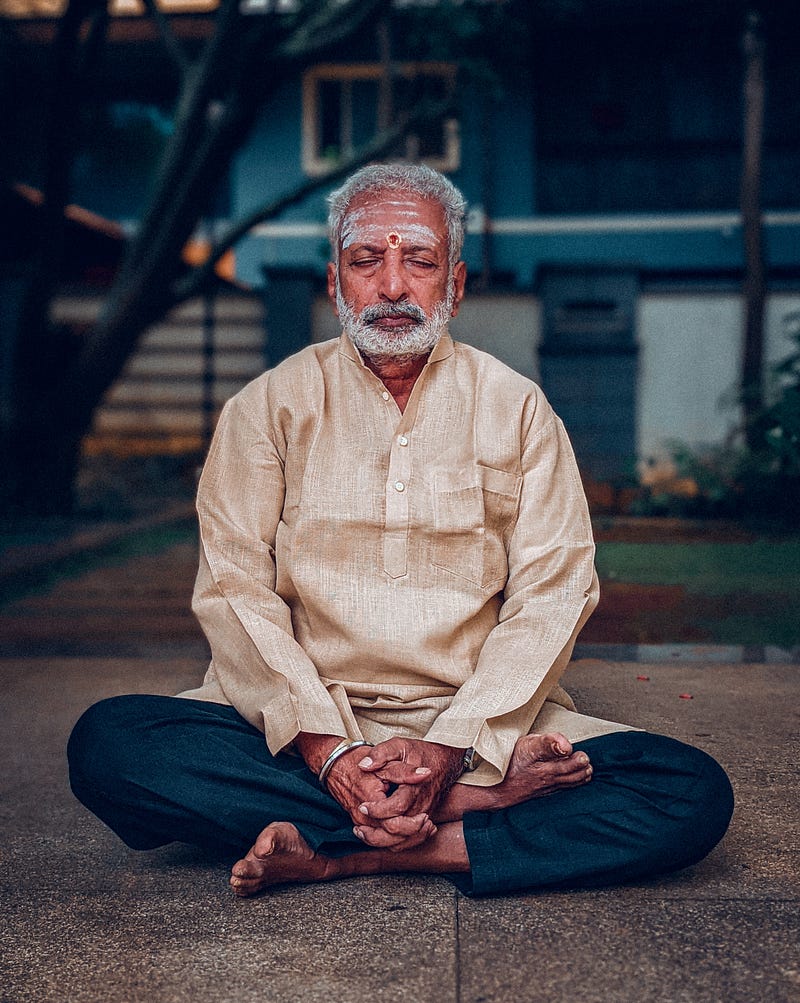
Naval Ravikant mentioned:
“Even while many people talk about meditation these days, I hardly know anyone who consistently practices it.”
There Are A Few Problems With Mediation
First of all, you can place meditation in the same bucket together with your sleep and naps. When you want to prioritize this magnificent bundle of habits in your lifestyle, you’ll be looked at strangely by most people.
One group of people doesn’t seem to understand the benefits, the other group is ashamed to admit they would like to try the practice, if not implement it in their lifestyle.
A while back I was one of those people who didn’t want to admit that I liked to try meditating. Reading the book “Brain Chains” by Theo Compernolle made me understand that brain breaks and meditational practices are a must-habit when you want to keep developing mentally towards the future. Additionally, some writings of Dr Mehmet Yildiz elevated my interest in meditation.
Today, I’m a bit over a year in on daily mediation.
I’ll let you in on how my approach today looks, and the usefulnesses I’ve noticed along the way.
The most important thing is to keep meditation simple because that’s what it’s all about.
In short, you want to understand that the beauty of meditation lies in the nothingness, the mental “escape” from arousal, the being with yourself in the present moment.
For me, I found it often hard to get myself into the preferred calm state required to get into deep meditation.
Therefore I’ve fabricated a short protocol to help me sink in, at first you might think this induces the exact opposite of what you want to experience from meditation, but when you follow further down this read, things will become more obvious.
Here I’m talking about a sitting-down way of mediation.
Backthinking and Simulating
I talked about backthinking a lot before,
It’s a method I use during small brain breaks, before sleep, when I wake up, and at the beginning of a meditation session to lock in what I’ve experienced, learned, and enjoyed from the last moments.
I was triggered by the back thinking technique a few years ago, by reading the book “Limitless” by Jim Kwik. I’ve used this technique ever since.
I believe Jim used it as a method to reinforce your learning. To stay true to the technique I’ve linked this habit to the beginning of my meditations.
What’s more, I’ve bundled this method with something I often did at my job during more complex projects at sea, which is mental simulation.
Mental simulating — Here you try to envision and project yourself in the very near future (A few hours to a day ahead), and you play the movie of what you’re going to do and more importantly: “what potential problems might arise.”
What’s helpful to win self-confidence is seeing yourself and your team finishing a terrific job at the end of the mental film.
Your subconscious mind can’t separate the difference between something imaginary and what’s real! Therefore it lets you experience dreams so vividly, often so difficult to comprehend whether they are true or not.
It’s something simple that doesn’t take much time, but it helps to anticipate unexpected circumstances and improves your problem-solving abilities.
Don’t be overwhelmed by all this above, as it only captures about 1 to 5 minutes max at the beginning of my meditation.
After this, you want to sink in yourself, sensing just you and your breathing.
I’ll say it again, the main aim should be for most of your meditative practice to be
Most often I do either the backthinking or the simulating depending on my day what’s more convenient. You could skip this phase if you don’t have any problems with getting yourself into a deep meditative state straight away.
For me, this helps to filter the arousal of what keeps my mind busy, and while I backthink or simulate, after a while I catch myself sinking into a deep state of calmth.
I you find it difficult to withdraw in yourself straight away, you might want to use the “backthink and mental simulation” as an offset- state for your mediation.
We are not designed to experience stress chronically due to environmental arousal, financial setbacks, relationship problems, or electrical devices,…
Sitting down or a passive way of meditation can come in handy when you’re more sensitive to your environment. Just remember, we are all highly adaptable, so when this doesn’t feel right at the start, it’ll soon go more smoothly after enough practice with commitment.
By meditating you decrease the flow of incoming impulses to the thalamus. As you might know, the thalamus is also involved in sleep control and the regulation of motor functions. You’ll find it at the top of your brain stem.
What you’re doing during mediation is emphasizing your reticular formation. Throughout the brainstem, you’ll find 100s of small neural networks with various functions.
Active Meditation
Many don’t seem to understand that movement is also a type of mediation.
If you were reading stuff from me before, you know that I like to exercise early mornings.
Over the last couple of years, I discovered another huge benefit next to the advantage of just getting my training done early, inducing a good mood, and effective family time management that training early profoundly activates your brain.
Training (lifting weights in particular — for me without music) always sets me in a thoughtful state. It’s a hugely underestimated and untapped positive side-effect of physical activity.
What’s more,
I’ve found that walking around (treadmill walking for instance, but preferably outdoor walks) triggers the meditative state even better.
Walking has taught me to think better, especially for writers this provides added value.
When we exercise our body releases endorphins which elevate our state of happiness. It’s a mix of BDNF, serotonin, endorphins, and dopamine,…
This magnificent psychophysiological craft derives from all learning. learning new complex movements, nutrients are delivered within our bodies, neurotoxins being flushed away, brainwave frequency tends to elevate and reach theta-gamma states, and the activation of our CNS triggers us in a state of focused alertness.
We are not designed to sit still all day.
This Is What I’ve Found To Be Changed Since Six Months Ago
During this past year of daily mediation,
These were my most changing behaviors since my previous post 6 months ago:
1. I Stepped Back From Three x 10 to 20 minutes of Meditation
Sometimes, I felt that it hindered me from completing other daily tasks so I lowered the bar for myself to 1 or 2 meditative practices of 15 min per day.
Nowadays, I aim for a short session after my early morning workout with a mental simulation to line out my day. Followed by another session often at midday.
2. Meditative Healing Approach
This one is something I tried due to a serious medical issue I recently encountered.
3. Adaptive Step
I feel that it’s easier to reach meditative depth when I want than when I started about one year back.
Box Breathing — A Method That Can Also Help You Fall Asleep
Let go Just like when you sleep.
Something you might have heard of, and that’s box breathing.
- Inhale through your nose slowly and deeply for 3 seconds……
- Hold your breath for 3 seconds…..
- Exhale through your nose for 3 seconds…..
- Hold your breath for 3 seconds……
1 — — — — — — — — 2
||||||||||||||||||||||||||||||||
||||||||||||||||||||||||||||||||
4- — — — — — — — — 3
4. The kids-triggering
I’ve mentioned in an earlier post that six months of meditative practice, since Dr. Mehmet is a long-term meditator and experiences great mental benefits (more scientifically backed information starts to arise from this too), I would present it to our young children as well.
I did this by letting them see me performing meditation once in a while.
This method didn’t miss its effect. Since when I’m not around, occasionally I noticed that all our kids give signs to people about mediation, whether it’s them mentioning it, or them emulating the same practice in a way…
They are somewhat aware that it exists. Which is wonderful, I’m excited to see how this could develop for them in the future.
5. Belly Breathing Problem
I recently discovered that I have a belly breathing problem.
Due to my long-term weightlifting practices, I’ve developed a belly breathing problem I assume. While lifting, especially from performing squats, I’ve always focussed on the Valsalva technique.
Perhaps you’re familiar with this technique named after the late Antonio Valsalva?
What you do is take a deep breath before diving with the loaded barbell on your back, hold your breath during the whole movement, and use your belly as a suspension.
See it as an imaginary suspension between your pelvis and diaphragm. (This can be done with or without a weight belt, but since I’m just an amateur lifter, and often don’t squat over 150kg I don’t use a belt.)
Now, Because of the long-term focussed engagement of my abdominals, I think it has become harder to relax my belly allowing me to induce Kundalini as for meditation.
“This will be my main quest for the upcoming year, to improve belly breathing and improve my meditational skill.”
Still, many people don’t seem the understand that there exist different forms of meditation. Most perceive meditation as only sitting down in a sleepy state.
Yet, mediation can be seen more as whatever method that can help to relieve your mind from all unwanted distractions.
From my passive meditation, I’ve learned:
- Backthinking and mental simulation are useful starters for meditative states
- Cold bath plunges are very mediational and mood-improving
- Emphasize the passive approach when you’ve been very active
From my active meditation, I’ve learned:
- Emphasize the active approach early in the day or when you were reasonably sedentary over the day(s)
- Walking and barefoot outside grounding is highly meditative and offer healing benefits.
Meditative Learning
The thing with meditation is that it induces a relaxed state and therefore promotes learning.
We all experience how difficult it is to get unleashed from exposure to technology especially screen time…
Therefore implementing daily mediation is hugely beneficial for your mental state. It’s a way to feel refreshed and sharp but also mostly I feel a tickle happier, it’s a bit easier to notice positive elements instead of being triggered by the negativity surrounding us.
Some say it elevates their states of self-consciousness and awareness, yet this seems to have much to do with staying and feeling the elements of the present moment.
- Daily meditation can sharpen your mind by filtering worries and tension.
- Enables you to feel enlightened by focusing on your inner self.
It has much to do with your breathing of course by which you intend to focus more on the parasympathetic nervous center or restbringer. A slower heartbeat and therefore a calm state trigger this.
Some Other Posts
Absorb, Read, Write, Sleep, Exercise, Thrive!
Thanks for reading this post!
Don’t let yourself be fooled by the masses, implement a meditation block in your daily routine.
P.S.:
I’m a firm believer in building a prosilient mind. I like to inspire and energize my readers by writing.
Want to get my posts in your inbox and read my content directly? Receive it here! If you like to experience Medium yourself, consider supporting me and thousands of other writers. Then you can get unlimited access here for 5$ per month.


