
Decentralized Finance
Has the Bull Run Even Started Yet?
What if I told you Ethereum upgrades could soon put it ahead of Bitcoin?
By HogeFather, aka Jesse J Rogers
Not financial advice. For educational, informational, and entertainment purposes only. Do your own research.
In the Beginning, There Was Bitcoin…
“If I had asked people what they wanted they would have said faster horses.” — Henry Ford
Until now, Bitcoin’s moves have largely driven the price of every cryptocurrency to the point where it is essentially synonymous with the word “crypto”. All altcoins rise and fall according to their king’s lead. Bitcoin’s share of value in the crypto market has been on the decline but it still maintains a massive 44% dominance as of this writing.
Bitcoin has proven to be by far the best asset of the decade. Its rise has been so abrupt and disorienting that many people see it as a Ponzi scheme, a tulip bubble, or a short-lived fad without any real staying power.
If you asked most people today what they wanted out of a crypto, they’d say faster mining.
I’ve spilled a lot of ink arguing why I think this view is wrong.
In fact, I’ve even gone so far as to say that future generations will refer to this year as 12 AB — twelve years after the genesis block of Bitcoin. That’s how significant and socially impactful Bitcoin’s creation will prove to be. This is the beginning of a new epoch in human history. Calendars will eventually reflect that.
Future generations will refer to this year as 12 AB — twelve years after the genesis block of Bitcoin.
It probably doesn’t seem that way to a lot of readers right now, though. Bitcoin is currently down about 50% from its April 2021 all time high (ATH) after being kneecapped by Elon Musk’s announcement that Tesla will no longer accept it because of environmental concerns. Adding to the fear, uncertainty, and doubt (FUD) is China, which cracked down hard on Bitcoin mining. Most recently, the UK has banned the largest crypto exchange, Binance, from regulated activity. Barclay’s bank responded by blocking customer payments to Binance.
There are a number of reasons why I don’t think any of this matters very much. Particularly China’s crackdown, which I mainly greet as good news. The longstanding “Bitcoin is for criminals” narrative has been debunked as straight up false, but expect to keep hearing it anyway because that’s how propaganda works. Speaking of propaganda, environmental concerns strike me as particularly misleading and politically rooted, like this subtle hit piece on Andrew Yang that was disguised as a sincere argument. Bitcoin mining is already driving renewable energy adoption, smoothing energy consumption, and there are plans to accelerate this as well as to harness the heat generated as a byproduct from mining. As miners flee coal-powered China, many will take their rigs to cleaner pastures.
The light by which we see Bitcoin admittedly depends largely on what our investment portfolio looks like, I suppose. The future of Bitcoin remains hotly debated.
Crypto: the Next Generation
Still, that doesn’t necessarily imply that I think Bitcoin will always and forever remain the best possible investment. Think about it, would anyone claim that the Wright Flyer is still the best way to get around? Despite how undeniably significant Orville’s 120 ft. flight proved to be, it was far from the final or best version of the airplane.
Iterations and evolutions always realize the potential of a technological advance far beyond the ambitions or vision of the original creators. Could Johannes Gutenberg have imagined nations with near 100% literacy and thousands of independent newspapers when he was printing his first Bibles? Could Henry Ford have imagined self-driving Teslas? Could the Wright Brothers have imagined either F-35’s or Boeing 737's? Could Satoshi Nakamoto possibly have foreseen Cryptokitties and the NFT explosion that it presaged?
Our world will be absolutely shaken to its foundations during the coming generation, but it probably won’t be by Bitcoin directly. Bitcoin is like the Gutenberg press, the Model-T, or the Wright Glider in the sense that it is only a rough draft. If you think Bitcoin is a big deal, just wait till you meet its children (altcoins).
A word of caution: most altcoins are duds, just like most dot coms were back in the late 90s. But a handful of altcoins will be the Facebook, Amazon, Netflix, and Google of this tech era.
Ethereum Upgrades
If you asked most people today what they wanted out of a crypto, they’d say faster mining. Lower transaction fees. Higher security. But these transactional capabilities are only stage 1 of the tech tree that’s unlocking.
The current top candidate to achieve global disruption appears to be Ethereum because it turns its blockchain into the base-layer infrastructure that supports the security of apps, smart contracts, which are built on top of it.
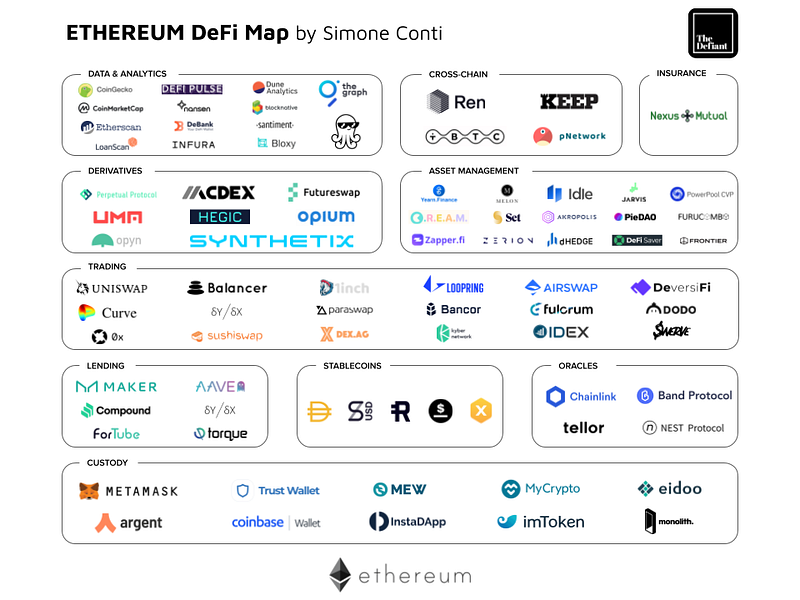
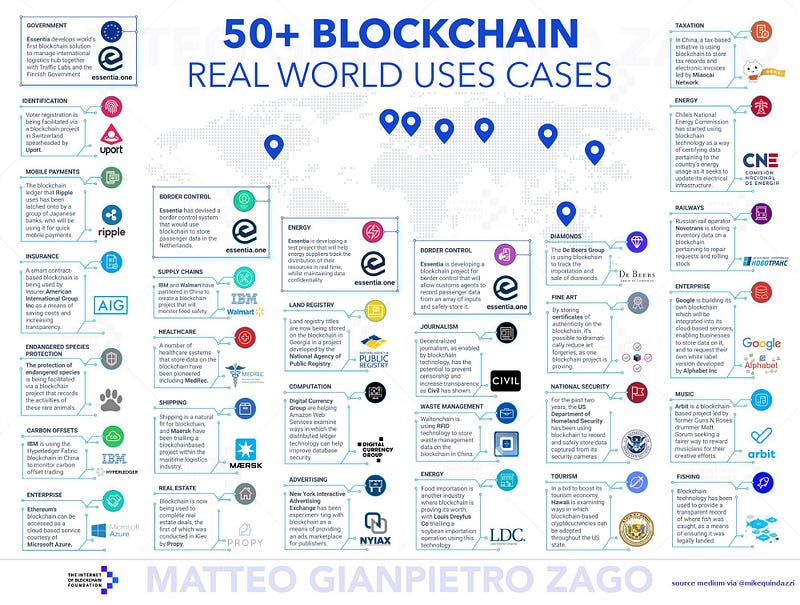
Many but not all of the real world use cases for crypto are built as those smart contracts, called ERC-20 tokens. Joining Ethereum’s mainnet allows thousands of these projects to interact and grow, without each one needing to convince lots of miners to build a new decentralized network from scratch.
If any of this still seems confusing, just think of Ethereum as being fuel.
That fuel could sometimes get quite expensive. I’ve paid as much as $100 in miner’s fees just to initiate a single swap. But some recent upgrades combined with less network congestion have lowered the cost significantly.
The next upgrade, London or EIP-1559, will add a feature that burns ETH with every transaction, which will decrease supply and raise price over time. The final of the three testnets deploys the upgrade today, and if successful the upgrade will soon be loaded to the mainnet.
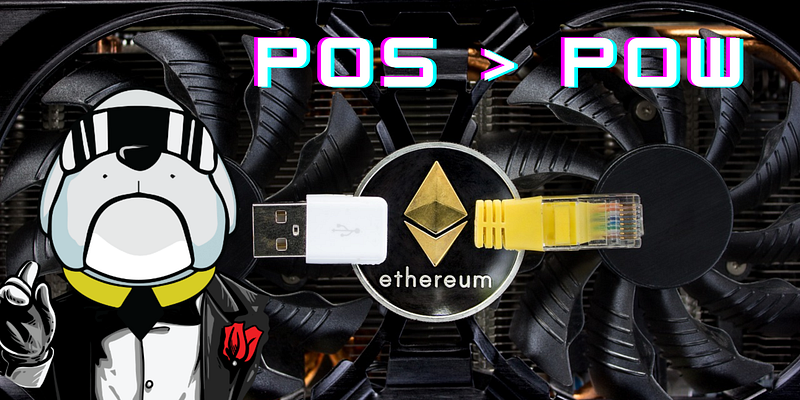
As significant as this is, the switch to Proof of Stake (PoS) in ETH 2.0 will have an even greater impact on functionality. Instead of securing the network with energy-hogging computational mining resources in Proof of Work (PoW), nodes holding staked tokens will verify transactions. This means that whether someone has a single ETH or thousands of ETH, they can participate and passively earn proportional staking rewards.
Silvio Micali is the founder of Algorand and the cryptographer who helped develop many of these cutting edge techniques, including Zero Knowledge Proofs. In the video below, he and Ethereum founder Vitalik Buterin discuss how Proof of Stake solves the blockchain trilemma, achieving the Holy Grail of simultaneously being secure, scalable, and decentralized.
How much of an impact will this upgrade to PoS and the overall implementation of ETH2.0 have on price? Brace yourself. It could very well be $3.5 trillion ETH market cap, on the low end. But it could be as high as $15 trillion at some point over the next 18 months.
Those numbers sound pretty shocking, I realize. I didn’t come up with them. An Ethereum investor and researcher who goes by @squishchaos on Twitter makes those claims, and backs them up with some pretty compelling justifications. The sequence of upgrades happening over the coming 4 month period will be equivalent to three Bitcoin halvings in terms of the effect on supply. The supply shock will cause a feedback loop in demand and market sentiment. The public at large still doesn’t even know about Ethereum yet, since it was not part of the 2017 narrative which introduced the public to Bitcoin and crypto. Its potential is not priced in. Its price action tracks Bitcoin’s because it is not generally understood to be its own entity and to have utility that vastly exceeds Bitcoin’s.
The market can’t sustain $15 trillion ETH for very long. Even so, meteoric rises to absurd levels for a brief period are hardly impossible in crypto. If you consider squish’s case, you may come to agree that Ethereum might very well experience this soon.
You can read his 77 page paper here. Most people might prefer the 1 page summary. Either way, don’t let the name fool you, I promise this really is a serious and thought provoking analysis.
You may also want to watch Altcoin Daily, where I first learned about squish.
Despite the extreme volatility that I expect from Ethereum in the next few years, once it settles and works out the remaining technical challenges, I expect massive disruption of the banking and legal sectors, as well as the emergence of completely new markets.
If you want to read more about the Ethereum-based project that I’m most enthusiastic about, you can check out hogefinance.com and read the stories below.


