avatarMary Rose

Free AI web copilot to create summaries, insights and extended knowledge, download it at here

2498

Abstract

ve done here is painted over their original compositions to change where the dog is looking. Over time, as the upper layers of the painting have eroded, the lower layers of the composition become visible, leaving a <i>pentimento</i>.</p><p id="a65f">These can be very useful for Art Historians as we try to uncover the artist’s process. If you consider the overall composition of the painting, changing the direction that the dog is looking creates an implied line that directs our eye to the central figures: the Archdukes Albert and Isabella. The artists realized that this change in composition was necessary to remind us about the central figures, which is especially helpful in a composition as busy as this one.</p><figure id="40b3"><img src="https://cdn-images-1.readmedium.com/v2/resize:fit:800/1*b8IG7N3ou1jI9DH0pUUqsQ.jpeg"><figcaption></figcaption></figure><figure id="fc98"><img src="https://cdn-images-1.readmedium.com/v2/resize:fit:800/1*ZPm5B2JaAUcQdtOR2cR6_w.jpeg"><figcaption><b>‘The Old Guitarist’ (1903–04) by Pablo Picasso and an X-ray revealing the older work beneath</b> [<a href="https://en.wikipedia.org/wiki/File:Old_guitarist_chicago.jpg">view license</a>] *</figcaption></figure><p id="afd7"><i>Pentimenti </i>appear in the works of some of the most famous artists, such as Pablo Picasso’s <i>The Old Guitarist</i>, painted 1903–04. If you look closely above the guitarist’s head, you can see the shadowy outlines of a woman’s face. This is visible on close inspection, but X-rays allow us to see even more clearly that Picasso recycled the canvas and painted over the original work. Probably unintentionally, the artist suggests what could be a bitter-sweet memory making the musician melancholic as he plays.</p><p id="4e70"><i>Pentimenti</i> can also be used by art historians in the authentication process, such as for the infamous <i>Salvator Mundi</i>, attributed to <a href="https://readmedium.com/that-mona-lisa-strangeness-a28d364d1ed3">Leonardo da Vinci</a>, sometimes with the proviso, ‘workshop of’. The painting was in extremely rough condition when it was acquired by a consortium of dealers in 2005, and had to be restored by celebrated art restorer Diane Modestini.</p><figure id="06f4"><img src="https://cdn-images-1.readmedium.com/v2/resize:fit:800/1*snOJ42QCFvYyZsp8npjhLw.jpeg"><figcaption></figcaption></figure><figure id="26f9"><img src="https://cdn-images-1.readmedium.com/v2/resize:fit:800/1*DZ9ccta3YV_BEA6vZdmAMg.jpeg"><figcaption></figcaption><

Options

/figure><figure id="dd58"><img src="https://cdn-images-1.readmedium.com/v2/resize:fit:800/1*IBs5QOYt2w-lWJnAH2wEgA.jpeg"><figcaption><b>‘Salvator Mundi’ (c. 1499–1510) attributed to Leonardo da Vinci: during cleaning in 2006 with detail of the adjusted hand, and the results of the modern restoration, framed</b> [view license<a href="https://commons.wikimedia.org/wiki/File:Salvator_Mundi,_2006-07_photograph,_after_cleaning.jpg"> 1 </a>and<a href="https://commons.wikimedia.org/wiki/File:Leonardo_da_Vinci,_Salvator_Mundi,_c.1500,_oil_on_walnut_(framed).jpg"> 2 </a>]</figcaption></figure><p id="e1c0">In the process of cleaning prior to restoration, the team uncovered a <i>pentimenti</i> revealing that the artist had changed the position of Christ’s thumb, among some other tiny details of the blessing hand. The owners argued that this <i>pentimenti </i>was <a href="https://salvatormundirevisited.com/Pentimenti">evidence that the <i>Salvator Mundi </i>was an original composition</a>, since artists usually experiment and change their painting during composition but rarely do so when copying an artwork that already exists.</p><p id="d5f7">The next time you’re at a museum, keep your eye out for <i>pentimenti </i>and see if you decipher why the artist wanted to change the composition of their painting. You may also enjoy reading a little bit about the kinds of <a href="https://readmedium.com/9-types-of-damage-youll-find-on-old-panel-paintings-3bebf649704c">damage you’re likely to find on panel paintings</a>. If you’re ever wondering about why art restorers don’t fix these <i>pentimento</i>, you may enjoy my story about the <a href="https://readmedium.com/art-and-philosophy-the-ship-of-theseus-and-art-restoration-f27e237f2cc0">Ship of Theseus and Art Restoration</a>.</p><p id="fba5"><i>* All images are used with license, are author provided, or presented here for educational purposes under fair usage policy.</i></p><p id="9d8b"><b>Hi, I’m Mary! I’m an art researcher who loves teaching about art. If you enjoyed this piece and want to hear more about writing, art history, education, and museums, <a href="https://medium.com/@marginaliant">consider giving me a follow.</a> Thank you for your support!</b></p><p id="3b05">Enjoying Medium? <a href="https://medium.com/@marginaliant/membership">Consider joining Medium using my referral link</a>. Your contribution helps support me and thousands of other writers, and helps you find more stories you’ll love.</p></article></body>

Ghosts of Paintings Past: Pentimenti in Art History

Fragments of the past found just beneath the surface reveal telling details about art and artists…

Nowadays we can use all sorts of techniques to look down through layers of paint to discover what lies underneath a painting. As I showed when discussing the National Gallery of Art’s recent Vermeer exhibition, techniques like x-rays can reveal how artists changed compositions in their paintings. But, did you know that sometimes you don’t need to use an x-ray to see beneath the layers of paint? Sometimes, forms made in the lower layers of a painting show through, leaving visible what Art Historians call a pentimento (plural, pentimenti).

Let’s take a look at an example from one of the local collections in my area:
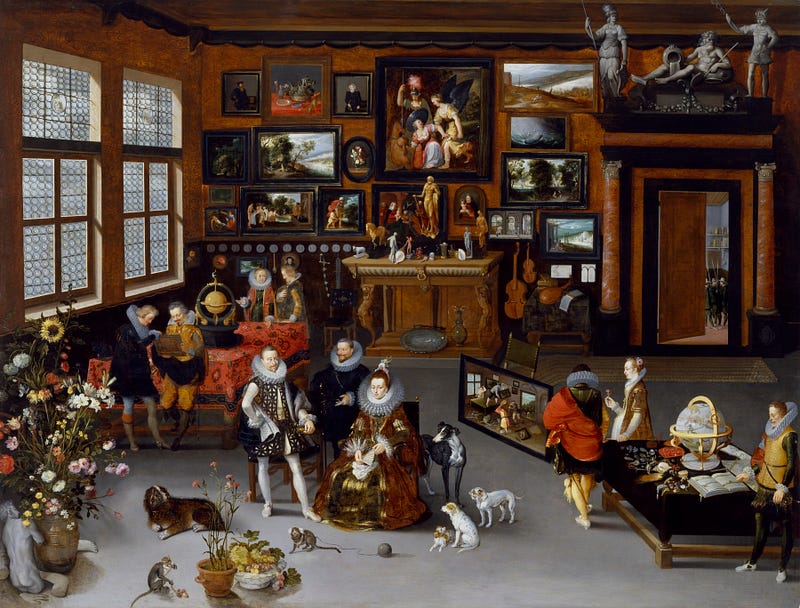
‘The Archdukes Albert and Isabella Visiting the Collection of Pierre Roose ‘ (1621–23) by Hieronymus Francken II and Jan Brueghel the Elder [Collection of the Walters Art Museum]

This is a Baroque oil painting showing the Archdukes Albert (standing at the center left) and Isabella (seated at center) visiting the collection of oddities, paintings, animals, and scientific instruments owned by Pierre Roose (standing slightly behind the two Archdukes). But for our purposes, we want to look more closely at this detail from the lower left of the painting, at this dog:
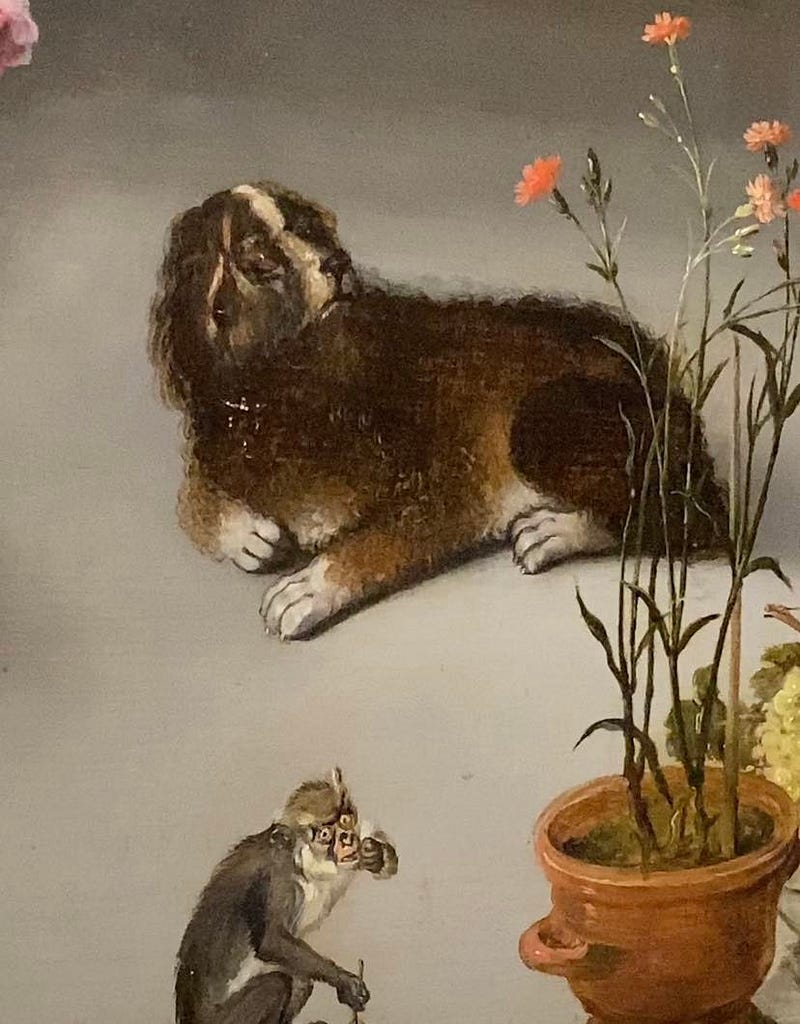
‘The Archdukes Albert and Isabella Visiting the Collection of Pierre Roose’ (1621–23) by Hieronymus Francken II and Jan Brueghel the Elder. Collection of the Walters Art Museum, detail photo by the author.

As you can see in the detail image, the dog’s face is slightly distorted. If you look closely, you can see that it appears to have two faces: one looking forward and to our left, and the other looking up to the right.

What the artists have done here is painted over their original compositions to change where the dog is looking. Over time, as the upper layers of the painting have eroded, the lower layers of the composition become visible, leaving a pentimento.

These can be very useful for Art Historians as we try to uncover the artist’s process. If you consider the overall composition of the painting, changing the direction that the dog is looking creates an implied line that directs our eye to the central figures: the Archdukes Albert and Isabella. The artists realized that this change in composition was necessary to remind us about the central figures, which is especially helpful in a composition as busy as this one.
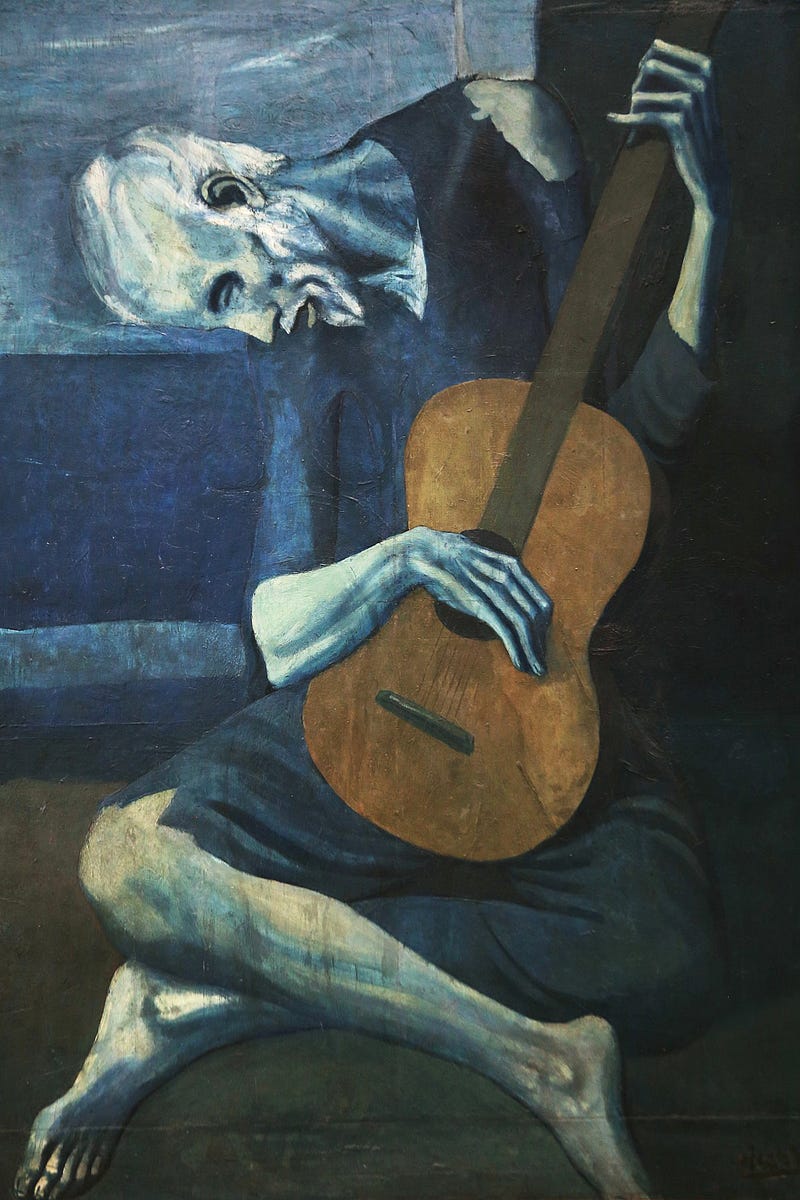
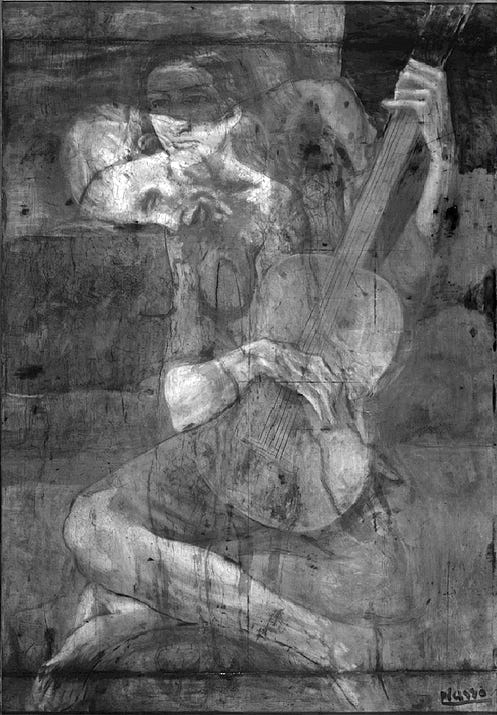
‘The Old Guitarist’ (1903–04) by Pablo Picasso and an X-ray revealing the older work beneath [view license] *

Pentimenti appear in the works of some of the most famous artists, such as Pablo Picasso’s The Old Guitarist, painted 1903–04. If you look closely above the guitarist’s head, you can see the shadowy outlines of a woman’s face. This is visible on close inspection, but X-rays allow us to see even more clearly that Picasso recycled the canvas and painted over the original work. Probably unintentionally, the artist suggests what could be a bitter-sweet memory making the musician melancholic as he plays.

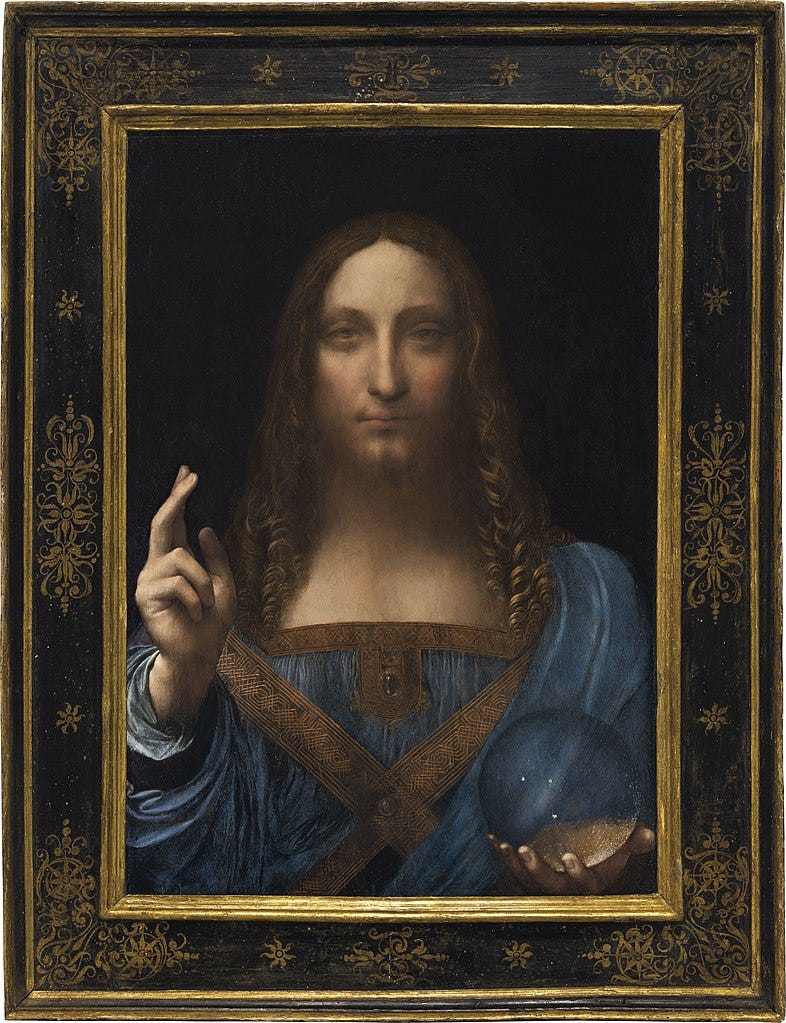
Pentimenti can also be used by art historians in the authentication process, such as for the infamous Salvator Mundi, attributed to Leonardo da Vinci, sometimes with the proviso, ‘workshop of’. The painting was in extremely rough condition when it was acquired by a consortium of dealers in 2005, and had to be restored by celebrated art restorer Diane Modestini.
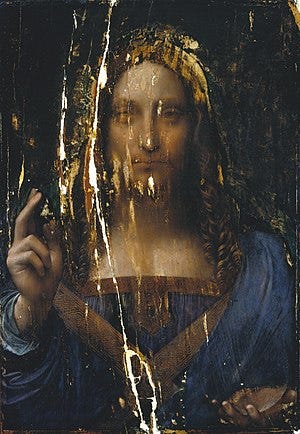
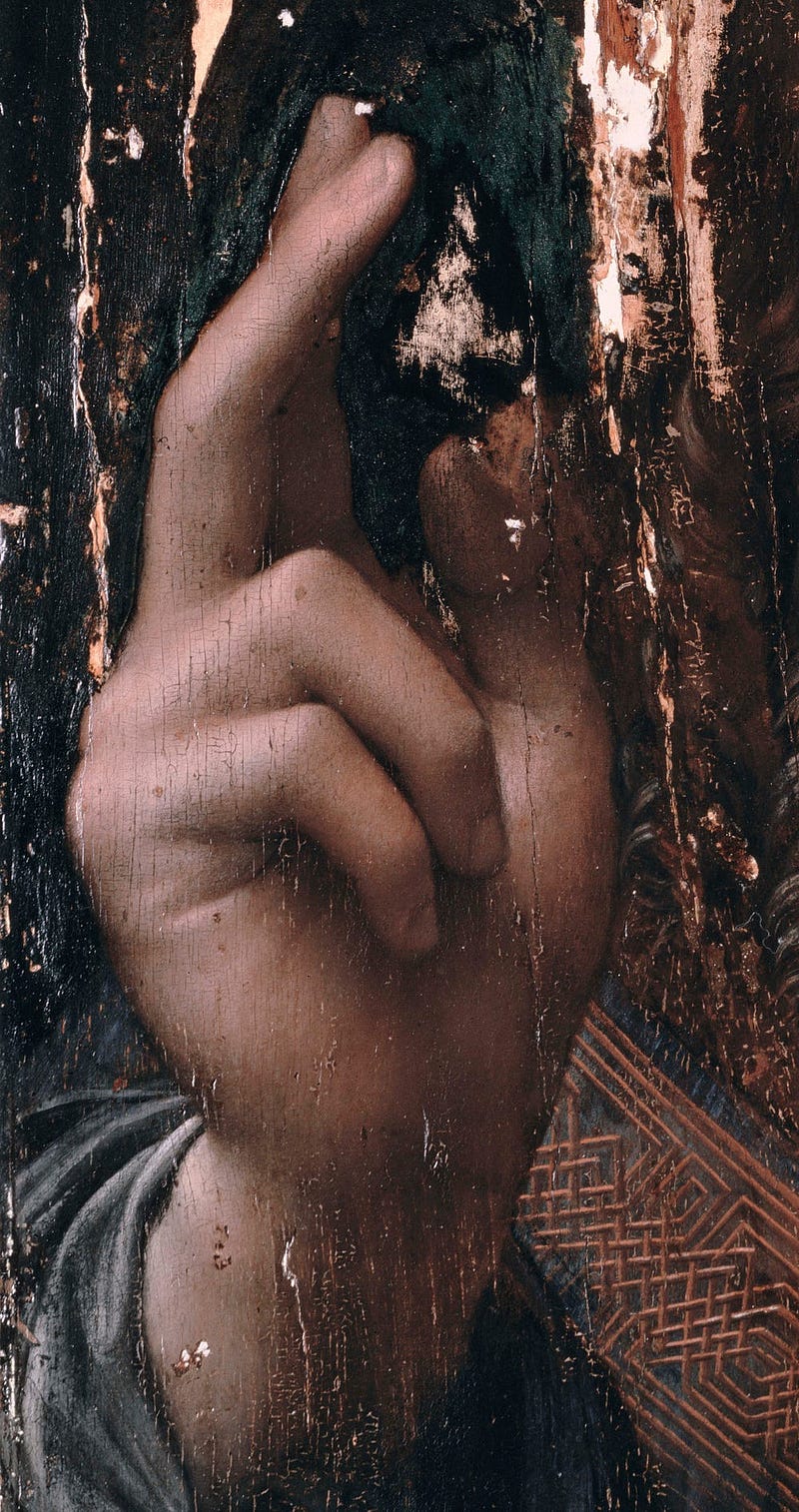
‘Salvator Mundi’ (c. 1499–1510) attributed to Leonardo da Vinci: during cleaning in 2006 with detail of the adjusted hand, and the results of the modern restoration, framed [view license 1 and 2 ]

In the process of cleaning prior to restoration, the team uncovered a pentimenti revealing that the artist had changed the position of Christ’s thumb, among some other tiny details of the blessing hand. The owners argued that this pentimenti was evidence that the Salvator Mundi was an original composition, since artists usually experiment and change their painting during composition but rarely do so when copying an artwork that already exists.

The next time you’re at a museum, keep your eye out for pentimenti and see if you decipher why the artist wanted to change the composition of their painting. You may also enjoy reading a little bit about the kinds of damage you’re likely to find on panel paintings. If you’re ever wondering about why art restorers don’t fix these pentimento, you may enjoy my story about the Ship of Theseus and Art Restoration.

* All images are used with license, are author provided, or presented here for educational purposes under fair usage policy.

Hi, I’m Mary! I’m an art researcher who loves teaching about art. If you enjoyed this piece and want to hear more about writing, art history, education, and museums, consider giving me a follow. Thank you for your support!

Enjoying Medium? Consider joining Medium using my referral link. Your contribution helps support me and thousands of other writers, and helps you find more stories you’ll love.

Art History
Art
History
Museums
Education
Recommended from ReadMedium