avatarMary Rose

Free AI web copilot to create summaries, insights and extended knowledge, download it at here

3415

Abstract

vationists can tell things about <a href="https://brysonestates.com/blog/2014/4/7/craquelure-a-mark-of-authenticity-and-character">the painting’s origin and age based on the pattern of the craquelure</a>. There is usually not much that can be done about craquelure (some amount may even be desirable to demonstrate the age of the painting) unless individual pieces of paint come away in big flakes.</p><figure id="9425"><img src="https://cdn-images-1.readmedium.com/v2/resize:fit:800/1*exoWLQ2iHtHeRKLDK_ApCA.jpeg"><figcaption>A close up of Pieta by Niccolo di Pietro Gerini, c. 1377. Image courtesy of the author.</figcaption></figure><h2 id="023e">4. Insect damage</h2><p id="5a73">Termites and other types of insects can take up residence in a painting or sculpture just as easily as they would take up residence in a house or a piece of furniture. Some of this damage is quite extreme, but sometimes you’ll just see a couple of round holes in the wood panel like in the above painting. Museums have quite strict procedures for keeping insects out of their collection vaults, so it is unlikely that this damage is new.</p><figure id="7984"><img src="https://cdn-images-1.readmedium.com/v2/resize:fit:800/1*JwEhV8wTwGsW046BmmmJ-w.jpeg"><figcaption>A close up of Pieta by Niccolo di Pietro Gerini, c. 1377. Image courtesy of the author.</figcaption></figure><h2 id="252e">5. Punctures and scuffs</h2><p id="a577">Sometimes paintings get more direct damage. Things fall onto them, they fall off the wall, someone trips into it (or, as one of my colleagues once saw in a gallery, a child on a hoverboard crashes into it.) Hundreds of years is a long time, many accidents can occur. Some of this damage can also be intentional — in periods of iconoclasm (such as during the Byzantine iconoclastic periods, or the Protestant reformation), religious zealots destroy images that are an affront to their god. Frequently during religious iconoclasm specific parts of the image will be scratched out, like the faces.</p><p id="6ae3">When the damage happens in the past, usually someone will try to conserve the painting. While this may have been virtually invisible at the time, inevitably the patch and the painting will age slightly differently (such as changing color at different rates) and these fixes can become visible over time. Nowadays conservation best practice suggests that all of the repairs made to a painting should be reversible, just in case they need to be removed or altered by later conservators.</p><figure id="d14b"><img src="https://cdn-images-1.readmedium.com/v2/resize:fit:800/1*JiAtki8c1GVb_F4Z4q32ag.jpeg"><figcaption>Christ on the Cross by El Greco, c. 1600–10. Image courtesy of the author.</figcaption></figure><h2 id="7587">6. Yellowing varnish</h2><p id="d408">Did you know that many murky, yellowing old paintings are actually pretty vibrant underneath? The issue is caused by the varnish. Varnish is the finishing, glossy layer applied over top of a painting. Traditionally varnishes were made of organic materials that would become discolored over time. You can find some very soothing videos of varnish removal online. Once a conservator removes the old varnish and performs whatever procedures they need to on the painting underneath, they will apply a new layer of varnish in modern materials that are less likely to yellow.</p><p id="30da">Of course, not every painting will have the

Options

varnish removed. Sometimes the varnish is just too tricky and we risk damaging the painting underneath. That’s why the most famous painting on Earth, the Mona Lisa, will likely remain yellow. I mean, would you want to be the one who made a mistake and ruined the Mona Lisa?</p><figure id="1117"><img src="https://cdn-images-1.readmedium.com/v2/resize:fit:800/1*V_qVg3pWlq3M9KpnpDamQA.jpeg"><figcaption>Panel from an altarpiece showing Saint Eligius’s Mother Being Told Of Her Son’s Future Fame, attributed to Martino da Verona, c. 1397–1400. Image courtesy of the author.</figcaption></figure><h2 id="677f">7. Separating panels</h2><p id="abb4">Across the middle of the painting above is a horizontal wrinkle. This painting is made on a wood panel made up of multiple different pieces of wood. At the time that the artist was creating the painting, the wood panels were closely joined and prepared to create a single smooth surface. However, over time the pieces of wood have begun to warp individually from one another, revealing the break between them underneath the paint.</p><figure id="5679"><img src="https://cdn-images-1.readmedium.com/v2/resize:fit:800/1*1siZ41XItukCxMGwf30bNw.jpeg"><figcaption>Portrait of Duke Cosimo I de’ Medici as Orpheus by Agnolo Bronzino, c. 1537–39. Image courtesy of the author.</figcaption></figure><h2 id="38a3">8. Warped panels</h2><p id="db2e">This painting above has also suffered a warp, but slightly differently than the previous painting. Instead of splitting into multiple panels, the painting has gone convex (note the way that the top middle of the painting extends further out than either of the two top corners.) This happens when the back of the wood panel (which is uncovered and exposed to the air) is expanding and contracting due to moisture, while the front of the painting (which is sealed by the layers of oil paint and varnish) stays still. In the past conservators would try to flatten the paintings out again, but this can cause the panel to break. Sometimes the paintings just need to breathe.</p><figure id="b65b"><img src="https://cdn-images-1.readmedium.com/v2/resize:fit:800/1*B97jIJm6BFlye94ZH8JlJA.jpeg"><figcaption>Head of a Boy by Luca Signorelli, c. 1492–93</figcaption></figure><h2 id="eea7">9. Cut down panels</h2><p id="593c">While it might strike us as unusual now, it was not always unusual for panels to be cut down (or multi-panel artworks, called polyptychs, to be disassembled.) This could be for any number of reasons: sometimes a painting would be largely damaged and only a small part could be saved, sometimes the owner just disliked the rest of the work, sometimes paintings were cut down to fit a particular frame. One of the most famous examples of this is Rembrandt’s The Nightwatch, which was cut down on one side. While this is not at all common today, you occasionally see fragments of trimmed paintings surviving today.</p><p id="0e56">Next time you’re in a museum, keep an eye out for signs of damage on the paintings around you. They can tell you a lot about what that painting has gone through since it was created.</p><p id="2ade"><b>Hi, I’m Mary! I’m an art researcher and avid reader. If you enjoyed this piece and want to hear more about writing, books, art history, education, and museums, <a href="https://medium.com/@marginaliant">consider giving me a follow.</a> Thank you for your support!</b></p></article></body>

9 Types of Damage You’ll Find On Old Panel Paintings

Keep an eye out for these on your next museum trip!

Sometimes my favorite part of a museum trip isn’t just looking at the art. I’ve mentioned before that I adore a good, close look at the wall labels that accompany works of art in a museum, but here’s something most wall labels don’t talk about: the condition of the painting.
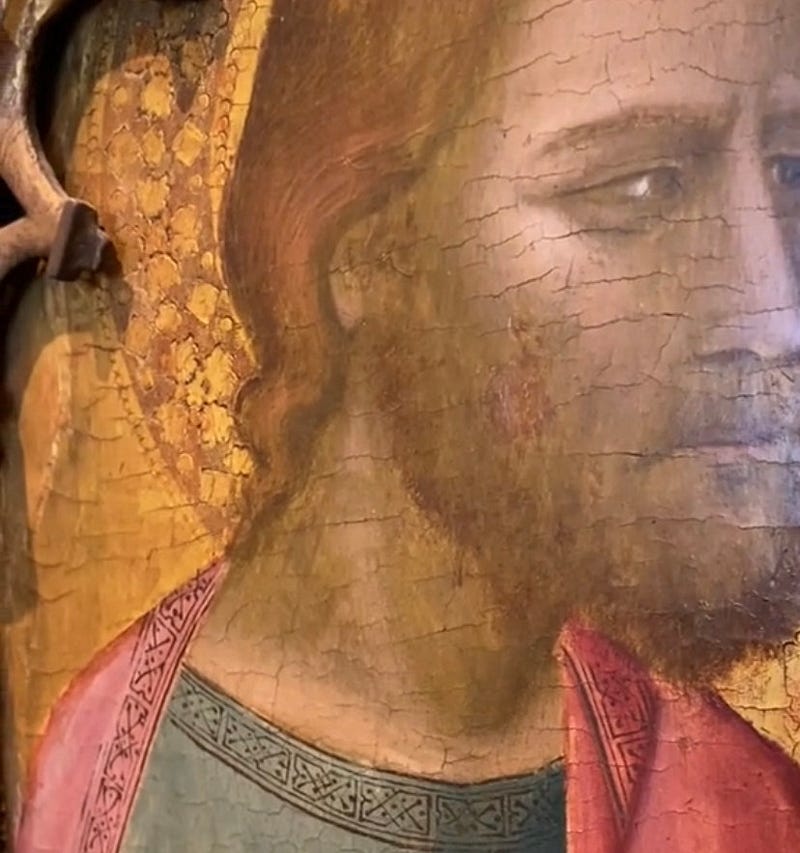
Scuffs, craquelure, and visible ground, oh my! Image courtesy of the author.

One of my first positions in the art world was as an intern in a museum where I did some cataloguing and condition reports about new acquisitions. It’s one of the pleasures of working with physical objects (rather than slides or images) because you get a sense of how that object has been treated over time.

During my last trip to the Philadelphia Museum of Art I made it a mission to document some of the most common kinds of damage we see on old paintings:
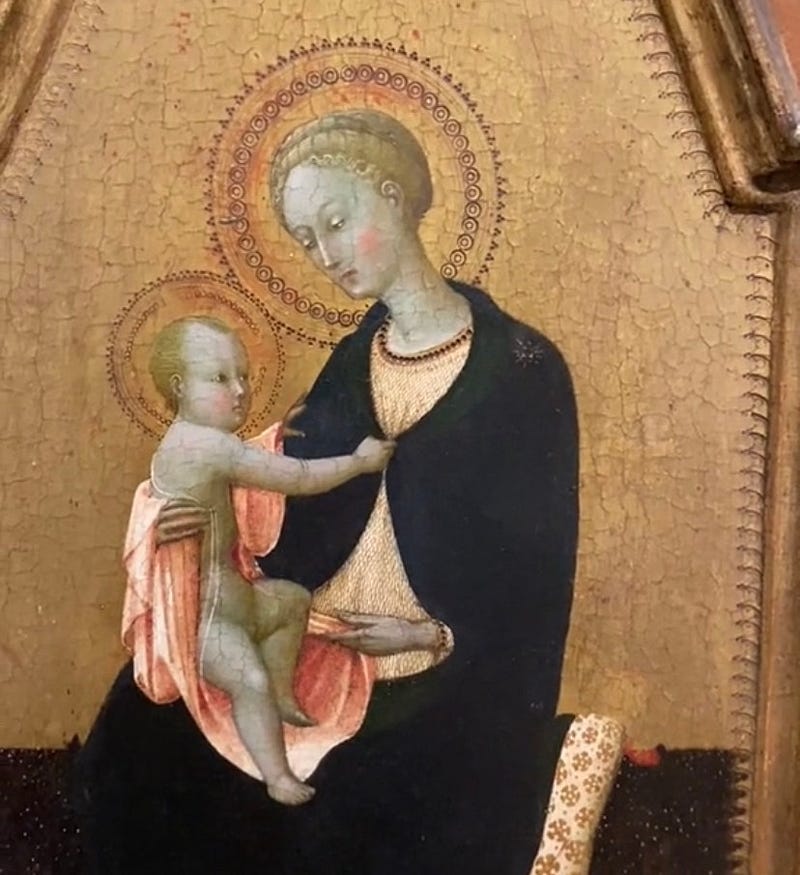
Image courtesy of the author.

1. Green skin

Were artists in the Middle Ages into painting aliens? No (except for Hieronymus Bosch, maybe), but you’ll sometimes see panel paintings where the figures have a decidedly green hue. This is because artists would paint an under layer of green, called Terre Verte, beneath their skin tones. This green layer balanced out the pinky tones of the top layers, which were frequently applied with very thin layers of paint. However, sometimes the top pink layers become more translucent over time, revealing that green underlayer underneath.
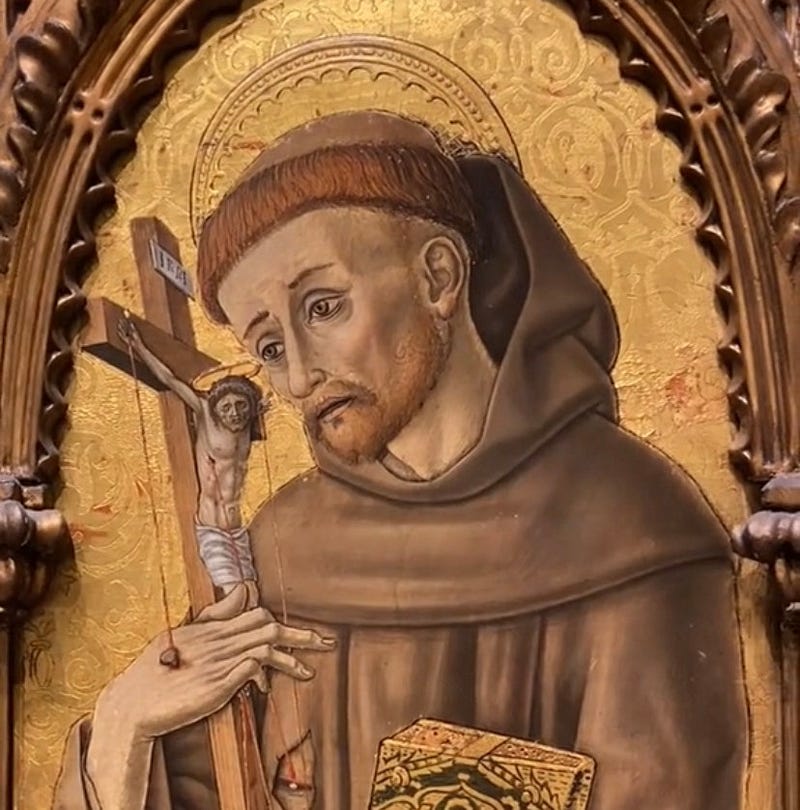
A close up from an altarpiece by Vittore Crivelli at the Philadelphia Museum of Art, 1481. Image courtesy of the author.

2. Visible red ground

Many religious panel paintings in the Medieval period featured gold leaf backgrounds, but sometimes you’ll see patches of red in the gold leaf (as you can see above this saint’s shoulder.) Painters of this period would lay down red underneath the gold to warm up and enhance the gold color, but gold is intensely fragile. Those patches are areas where the gold leaf has flaked away to reveal the red under painting.
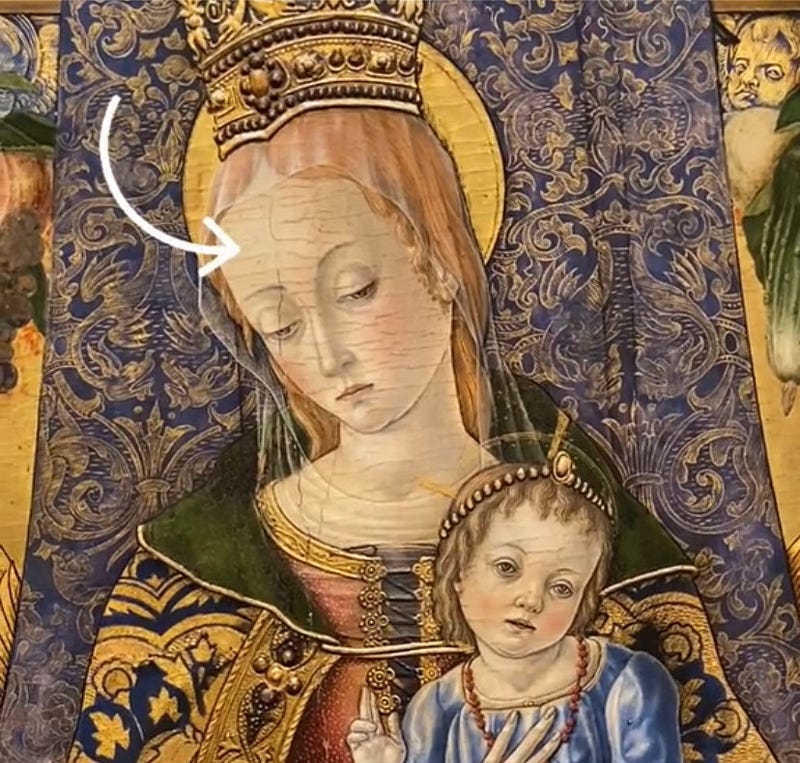
A close up from an altarpiece by Vittore Crivelli at the Philadelphia Museum of Art, 1481. Image courtesy of the author.

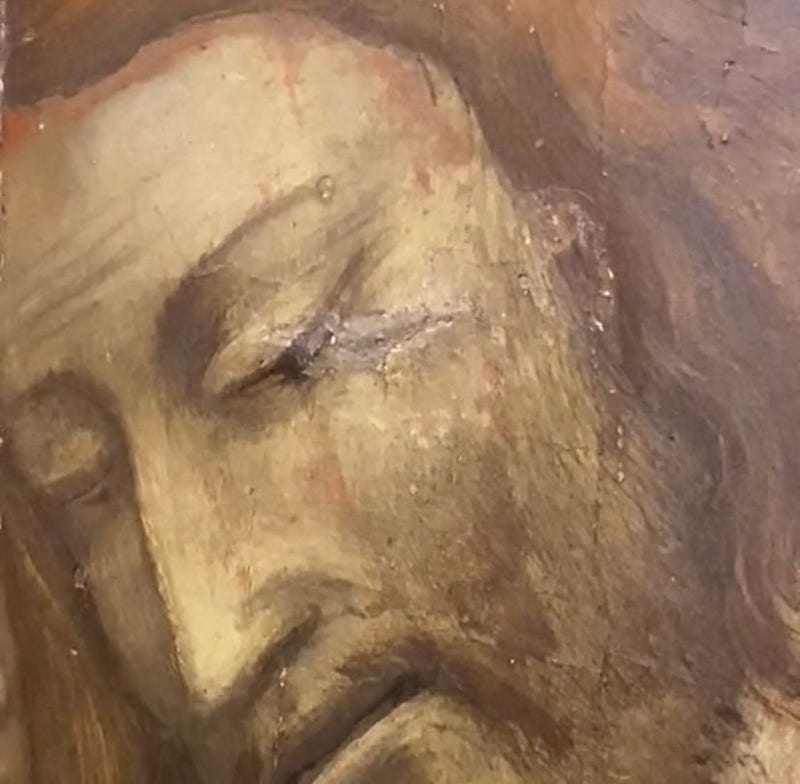
3. Craquelure

Do you see the horizontal lines across the Virgin Mary’s face? They aren’t wrinkles, they’re cracks in the surface of the painting. Many types of oil and tempera (egg based) paints, commonly used during the Medieval and Early Modern periods, crack as they age and dry. There is even some research that suggests that conservationists can tell things about the painting’s origin and age based on the pattern of the craquelure. There is usually not much that can be done about craquelure (some amount may even be desirable to demonstrate the age of the painting) unless individual pieces of paint come away in big flakes.
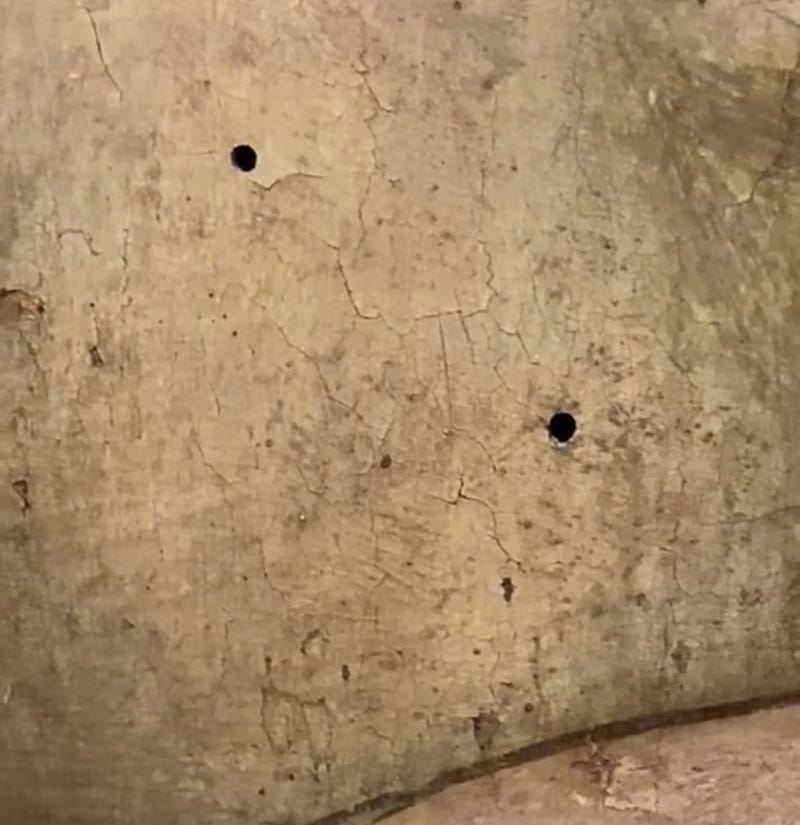
A close up of Pieta by Niccolo di Pietro Gerini, c. 1377. Image courtesy of the author.

4. Insect damage

Termites and other types of insects can take up residence in a painting or sculpture just as easily as they would take up residence in a house or a piece of furniture. Some of this damage is quite extreme, but sometimes you’ll just see a couple of round holes in the wood panel like in the above painting. Museums have quite strict procedures for keeping insects out of their collection vaults, so it is unlikely that this damage is new.
A close up of Pieta by Niccolo di Pietro Gerini, c. 1377. Image courtesy of the author.

5. Punctures and scuffs

Sometimes paintings get more direct damage. Things fall onto them, they fall off the wall, someone trips into it (or, as one of my colleagues once saw in a gallery, a child on a hoverboard crashes into it.) Hundreds of years is a long time, many accidents can occur. Some of this damage can also be intentional — in periods of iconoclasm (such as during the Byzantine iconoclastic periods, or the Protestant reformation), religious zealots destroy images that are an affront to their god. Frequently during religious iconoclasm specific parts of the image will be scratched out, like the faces.

When the damage happens in the past, usually someone will try to conserve the painting. While this may have been virtually invisible at the time, inevitably the patch and the painting will age slightly differently (such as changing color at different rates) and these fixes can become visible over time. Nowadays conservation best practice suggests that all of the repairs made to a painting should be reversible, just in case they need to be removed or altered by later conservators.
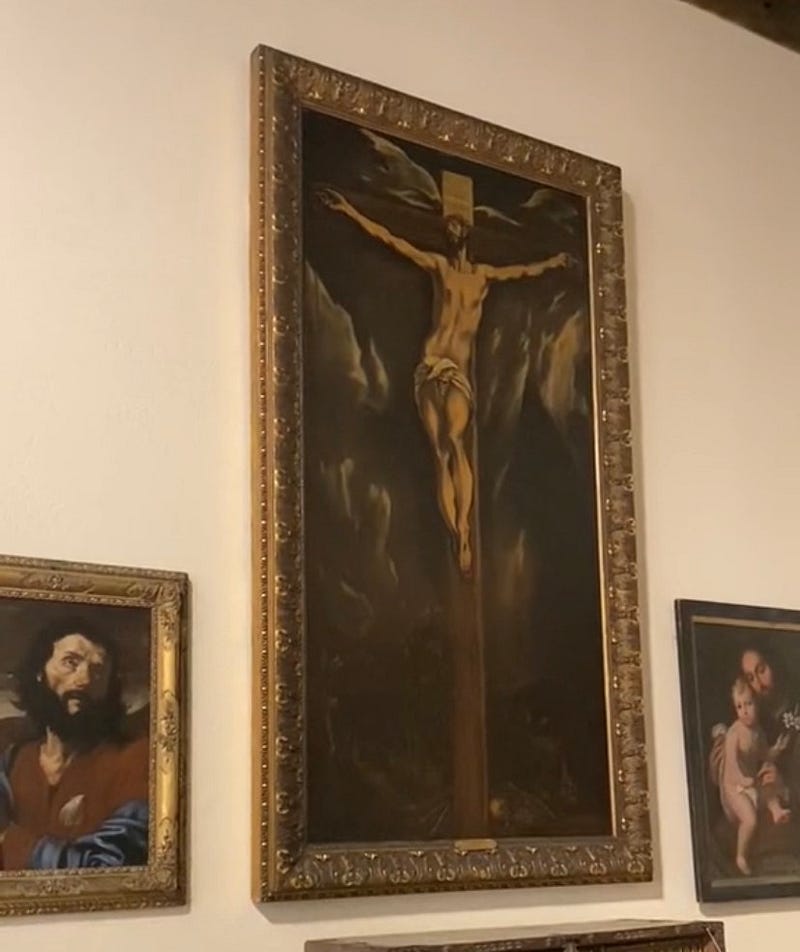
Christ on the Cross by El Greco, c. 1600–10. Image courtesy of the author.

6. Yellowing varnish

Did you know that many murky, yellowing old paintings are actually pretty vibrant underneath? The issue is caused by the varnish. Varnish is the finishing, glossy layer applied over top of a painting. Traditionally varnishes were made of organic materials that would become discolored over time. You can find some very soothing videos of varnish removal online. Once a conservator removes the old varnish and performs whatever procedures they need to on the painting underneath, they will apply a new layer of varnish in modern materials that are less likely to yellow.

Of course, not every painting will have the varnish removed. Sometimes the varnish is just too tricky and we risk damaging the painting underneath. That’s why the most famous painting on Earth, the Mona Lisa, will likely remain yellow. I mean, would you want to be the one who made a mistake and ruined the Mona Lisa?
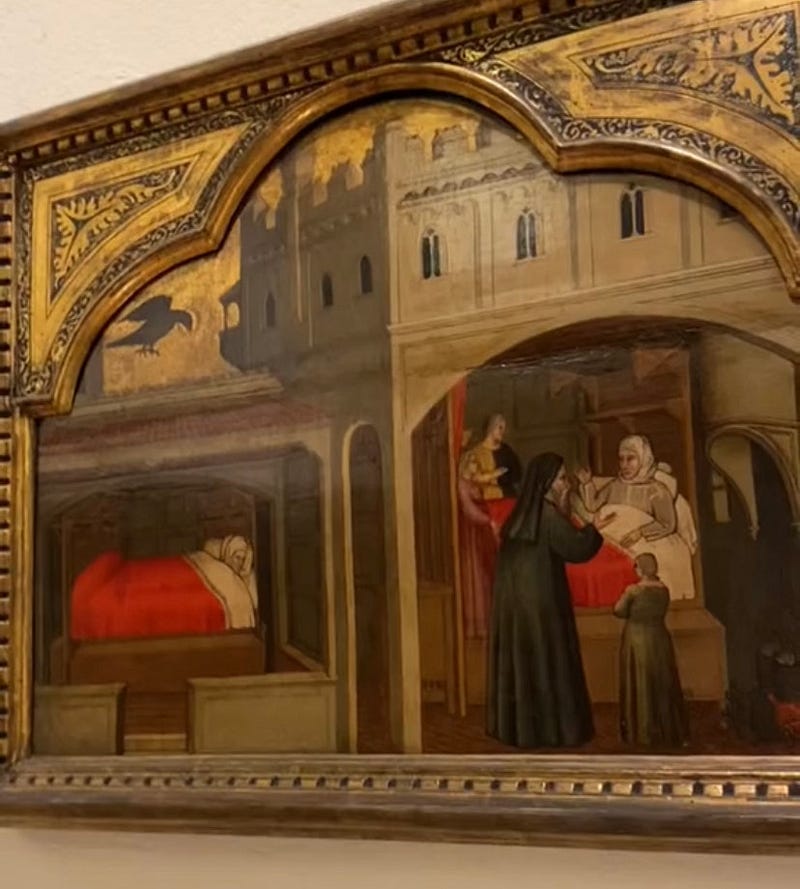
Panel from an altarpiece showing Saint Eligius’s Mother Being Told Of Her Son’s Future Fame, attributed to Martino da Verona, c. 1397–1400. Image courtesy of the author.

7. Separating panels

Across the middle of the painting above is a horizontal wrinkle. This painting is made on a wood panel made up of multiple different pieces of wood. At the time that the artist was creating the painting, the wood panels were closely joined and prepared to create a single smooth surface. However, over time the pieces of wood have begun to warp individually from one another, revealing the break between them underneath the paint.
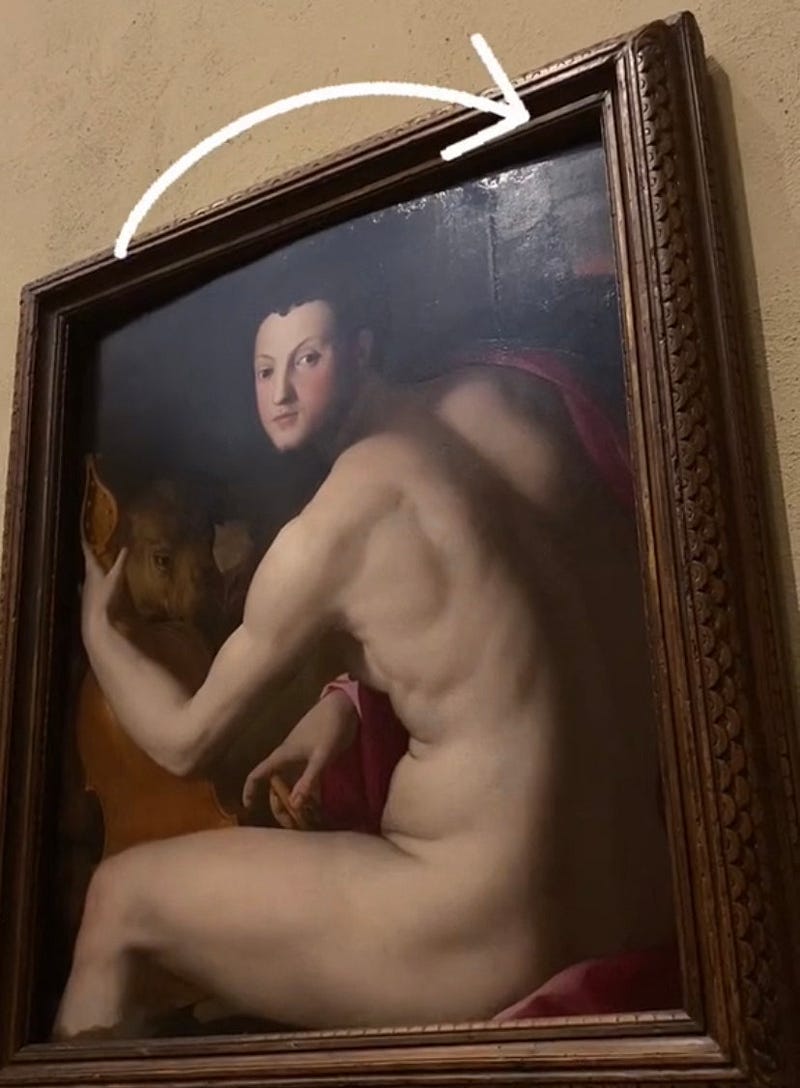
Portrait of Duke Cosimo I de’ Medici as Orpheus by Agnolo Bronzino, c. 1537–39. Image courtesy of the author.

8. Warped panels

This painting above has also suffered a warp, but slightly differently than the previous painting. Instead of splitting into multiple panels, the painting has gone convex (note the way that the top middle of the painting extends further out than either of the two top corners.) This happens when the back of the wood panel (which is uncovered and exposed to the air) is expanding and contracting due to moisture, while the front of the painting (which is sealed by the layers of oil paint and varnish) stays still. In the past conservators would try to flatten the paintings out again, but this can cause the panel to break. Sometimes the paintings just need to breathe.
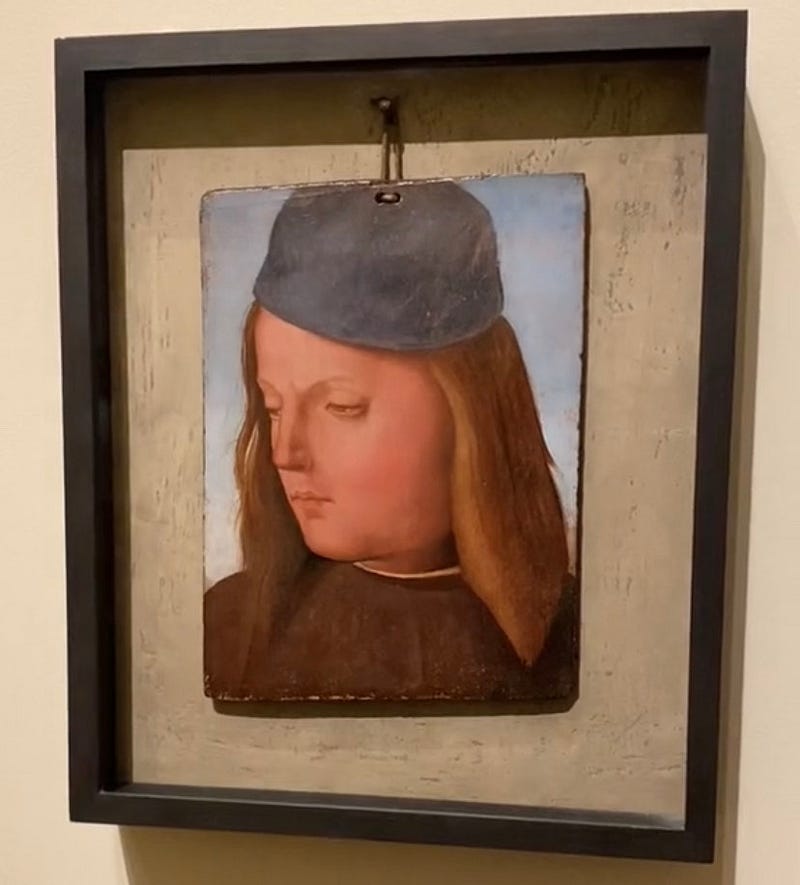
Head of a Boy by Luca Signorelli, c. 1492–93

9. Cut down panels

While it might strike us as unusual now, it was not always unusual for panels to be cut down (or multi-panel artworks, called polyptychs, to be disassembled.) This could be for any number of reasons: sometimes a painting would be largely damaged and only a small part could be saved, sometimes the owner just disliked the rest of the work, sometimes paintings were cut down to fit a particular frame. One of the most famous examples of this is Rembrandt’s The Nightwatch, which was cut down on one side. While this is not at all common today, you occasionally see fragments of trimmed paintings surviving today.

Next time you’re in a museum, keep an eye out for signs of damage on the paintings around you. They can tell you a lot about what that painting has gone through since it was created.

Hi, I’m Mary! I’m an art researcher and avid reader. If you enjoyed this piece and want to hear more about writing, books, art history, education, and museums, consider giving me a follow. Thank you for your support!

Art History
Art
Museums
Art Conservation
History
Recommended from ReadMedium