
From “Passport to the Universe” to TCM 天人合一: Pathways to Health and Harmony
A journey of unity through the fabric of time and space
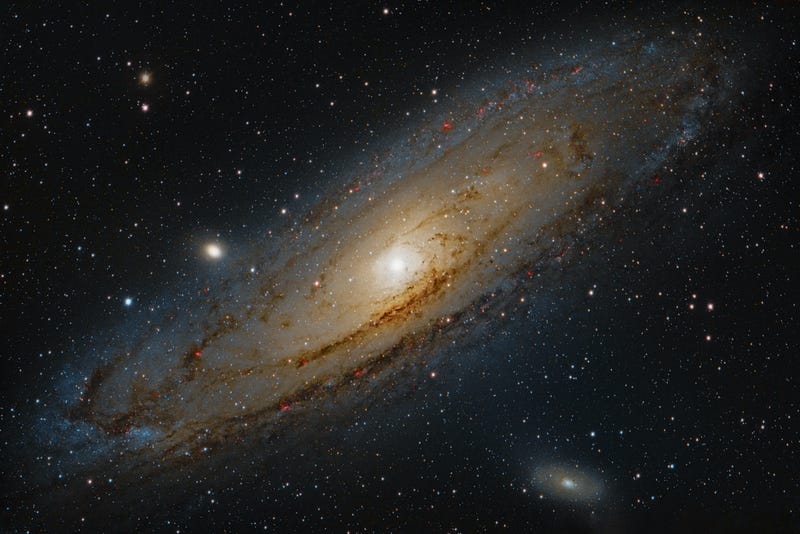
“We are in the universe and the universe is in us.”
“We are part of something larger than ourselves…We are becoming the citizens of the Cosmos.”
Tom Hanks delivered the narration above in the show “Passport to the Universe.” I watched the show during a recent family vacation in Chicago. It’s displayed in the giant dome theatre at the Museum of Science and Industry, taking us on an incredible journey with stunning visualizations to the edge of the observable universe.
While I can’t help but feel humans are tiny, tiny particles of the universe, the documentary also reminds us of our intimate relationship with the Cosmos.
Interestingly, a remarkably similar concept exists within Traditional Chinese Medicine (TCM). It’s called 天人合一 .
Let’s explore.
天人合一 can be translated as Unity and harmony between humans and the universe.
According to TCM philosophy, humans are not isolated entities but microcosms intertwined with the larger universe, governed by the same magic forces and principles behind the Cosmos. This is a crucial guiding principle of TCM, highlighting the profound connection between humans and the natural world.
It encompasses the idea that the natural rhythms and forces of nature influence human health. The second chapter of TCM classic Neijing contains detailed discussions about the effects of seasonal changes on the human body and how to adapt one’s lifestyle according to the characteristics of each season to prevent illness and maintain well-being.
This philosophy is evident in the TCM Five Element framework, also known as the Five Phase theory. It holistically reveals the interconnection of many phenomena of the human body with nature and the environment. It is a powerful tool in TCM diagnostics, treatment, and preventative care.
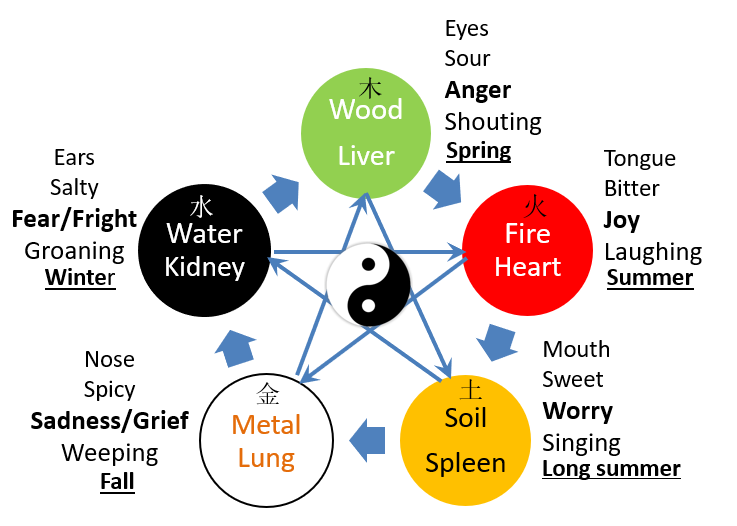
In particular, this framework provides a fascinating perspective on the dynamic interactions among organ systems, emotions and seasons.
Seasonal Emotion
In the Five Element framework, each season is linked to a specific emotion. Emotion and organ health can mutually influence each other.
For example, Fall corresponds to the Lung system and the emotion of sadness. While it’s the harvest season, Fall is also a time of changes and transition. From the falling leaves, shorter daylight to a gradual cooling weather, it signals Winter is around the corner.
No wonder there is a thing called Autumn anxiety, where seasonal change could trigger restless and gloomy feelings. While Autumn anxiety is a modern phrase, the phenomenon has been recognized since ancient times. The strategy to regulate emotion? The advice from Neijing is “容平”, meaning to stay calm and avoid rushing, especially during the fall season.
Sleep Pattern and Seasons
Do you know that our sleep patterns could show seasonal fluctuations? In other words, it’s quite natural if you sleep less in summer and longer in winter.
In fact, the sleep routine documented in Neijing states “夜卧早起” (sleep less and get up early) in Summer (Fire season) and “早卧晚起” (go to bed early and get up a bit late) in Winter (Water season). This allows our body to adjust to the seasonal rhythm and energy of the environment.
This TCM recommendation aligns with modern scientific insights, where the sleep pattern can be explained by the seasonal fluctuation of sunlight exposure on the body’s circadian “clock” that regulates many physiological processes, including the sleep-wake cycle.
Healthy and Seasonal Eating
Sleep and mood are not the only things influenced by seasons. When it comes to food, eating seasonally and locally is also a way of living in harmony with the rhythm of Earth. And seasonal food is fresh and nutritious.
For instance, in hot summer, the dominant element is Fire according to the Five Element theory. The corresponding organ system is the Heart, and the associated Taste is Bitter. Foods with a Cool nature, such as watermelon, are the perfect choice to enjoy during summer. It’s incredible that Mother Nature provides us with the right foods at the right time. In addition, consuming foods with a slightly bitter taste is also beneficial to help balance and counteract the excess heat during summer. Bitter melon is one such example with a bitter taste and Cool nature.
TCM guideline on seasonal eating is quite sophisticated and comprehensive, built upon thousands of years of observation and experience. While modern nutrition provides the detailed and quantitative composition of food, TCM categorizes food (and herbs) based on its Nature and Taste and interaction with the organ system, body constitution, and seasonal environments to support the body’s natural function for balance. Food as medicine is a unique branch and integral part of TCM to promote health.
Nature, TCM and Taoism
TCM is profoundly influenced by Taoism and Yin Yang philosophy, which has been at its core for thousands of years and continues to influence TCM practice.
Not surprisingly, TCM 天人合一 shares the same fundamental essence with the central phrase in Taoism: 道法自然 (Tao follows Nature). Both emphasize the order of naturalness and the magic force of the Cosmos. Comprehending this interconnectedness can lead to a deeper understanding of ourselves and our place in the universe.
These principles teach us to respect the power of nature and the rhythms of the universe. By embracing harmony with the natural flow, we can cultivate a deeper connection with the natural world, nurture our well-being, and achieve a more fulfilling life.
After all, nature rules.
“Look deep into nature, and then you will understand everything better.” — Albert Einstein
This post is for informational purposes only. It should not be considered health advice. Please consult health professionals for medical concerns.
Thank you for reading. I write about culture, work-life learning, and the ancient wisdom of Traditional Chinese Medicine for better living. Click here if you would like to be notified when I publish.