
From Idea To Script: Writing a Film Script Using AI Tools (OpenAI ChatGPT & Midjourney)
How to integrate AI tools into your screenwriting process
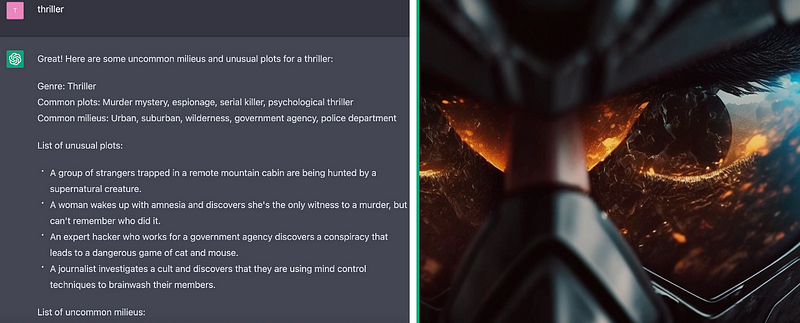
AI tools such as ChatGPT and Midjourney are revolutionizing script development by helping screenwriters generate and iterate ideas with unprecedented speed and efficiency.
(There’s a catch, though: you have to know how to avoid the tendency toward repetition, cliché, and vague plot points that comes with very generalized prompts)
In this article, we will provide an overview of basic techniques for using these AI tools to generate ideas and create pitches.
Phase 1: Brainstorming story ideas
Writing for the screen means coming up with killer ideas. Killer ideas require a lot of research and iteration. And that’s exactly where the power of AI comes in!
Tools like ChatGPT and Midjourney can save you a lot of time by producing ideas quickly and efficiently. While they can’t magically spit out ready-made killer ideas (at least not yet), they can sort of act as a co-author that you can bounce ideas off of.
All you need is a prompt that the AI tool can work with.
Keep in mind that the quality of the ideas that the AI generates depends on the quality of your prompt. So it’s a good idea to spend some time investigating different prompts until you find the ones that fit your workflow:
Idea generation with Zero-Shot Prompts
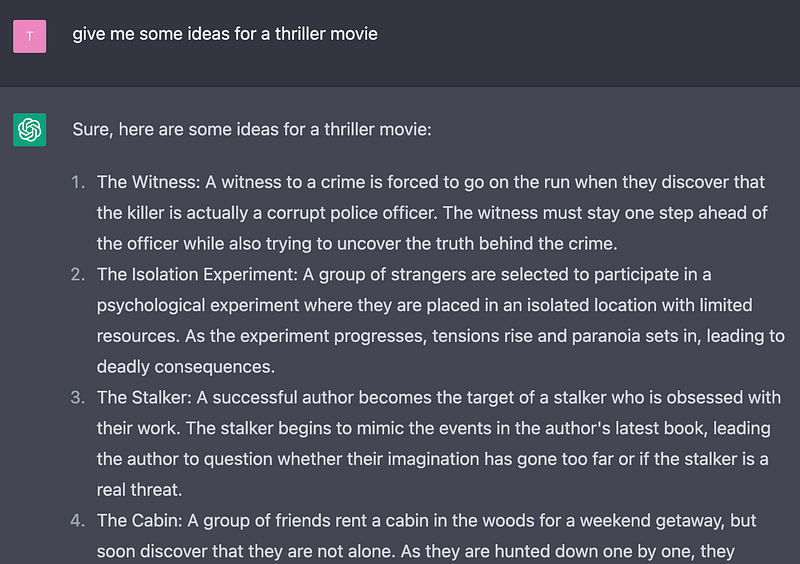
Here are a few ways you can generate ideas with the ChatGPT web interface. A basic zero-shot prompt already yields some interesting results that you can expand on:
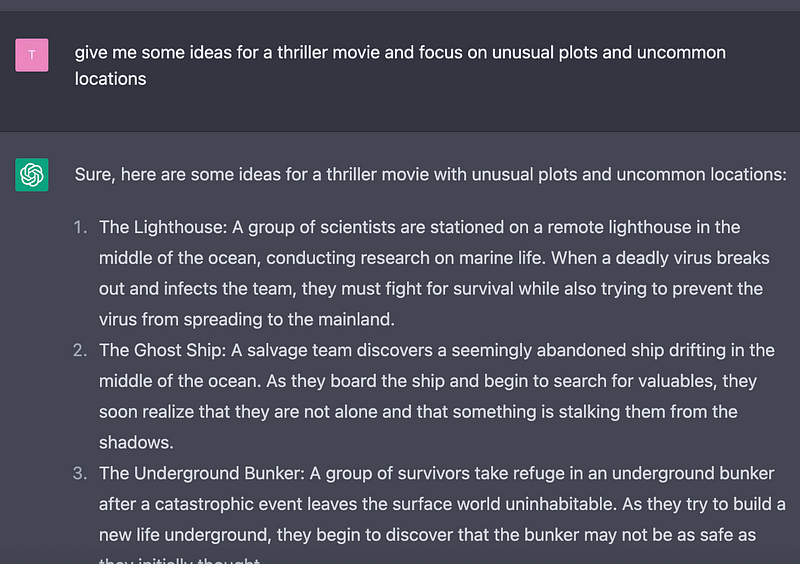
You can refine the above prompt by adding open-ended, vague properties to give the AI a direction but more freedom to fulfill your request:
Prompt: give me some ideas for a thriller movie and focus on unusual plots and uncommon locations
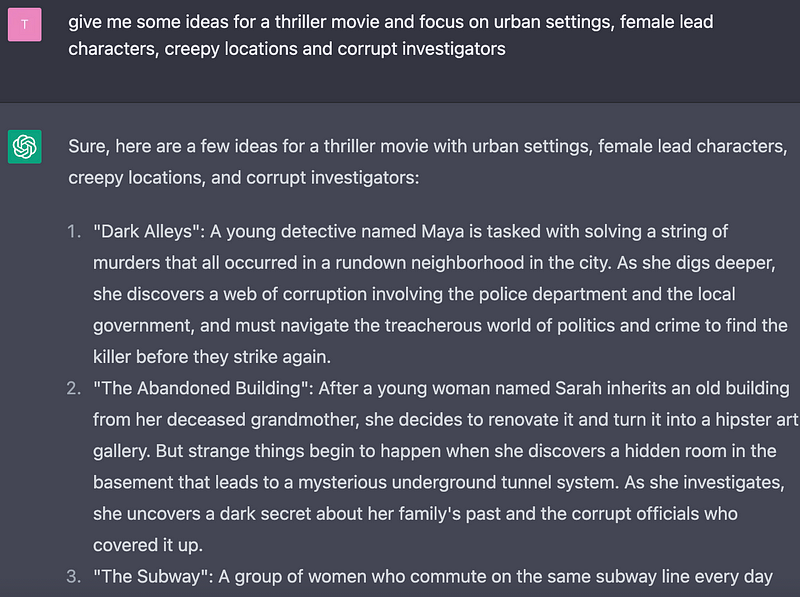
Or you can try to explicitly narrow things down a bit like this
Prompt: give me some ideas for a thriller movie and focus on urban settings, female lead characters, creepy locations and corrupt investigators
Idea generation with template prompting
Other powerful tools are one-shot prompts, especially template prompts. This prompt type is usually much longer and it might take a while to change it to your specific needs, but keep in mind that you can re-use these anytime and in different scenarios.
Prompt:
I give you a genre and you expand on it by using uncommon milieus and unusual plots.
Use this format:
Genre: [the genre I gave you]
Common plots: [a comma-separated list of common plot types of the genre]
Common milieus: [a comma-separated list of common milieus used by the genre]
List of unusual plots: [bullet list of unusual plots]
List of uncommon milieus: [bullet list of uncommon milieus]
Story Ideas: [story ideas combining the list of unusual plots and the list of uncommon milieus]
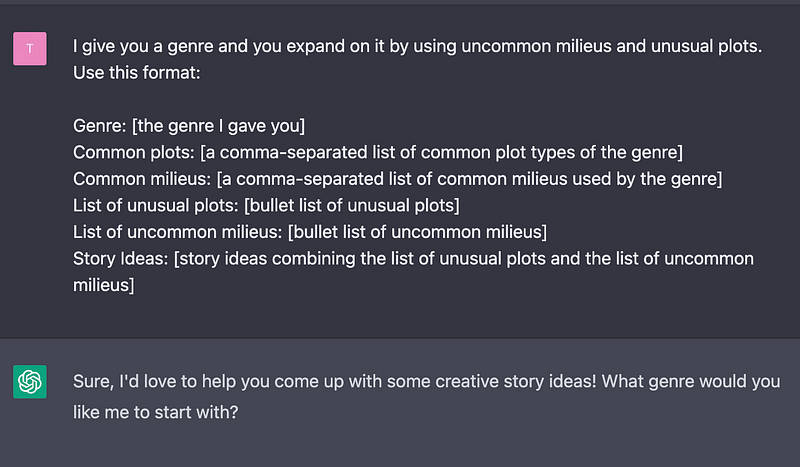
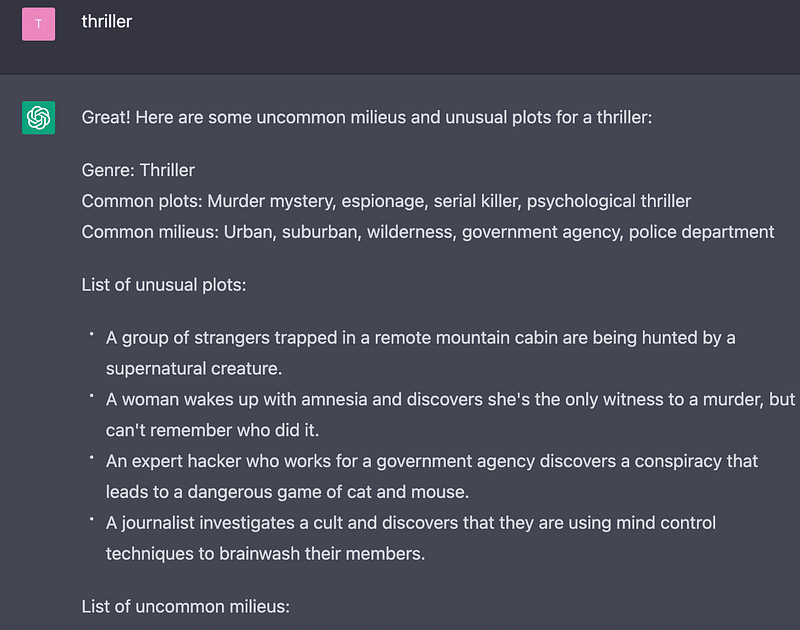
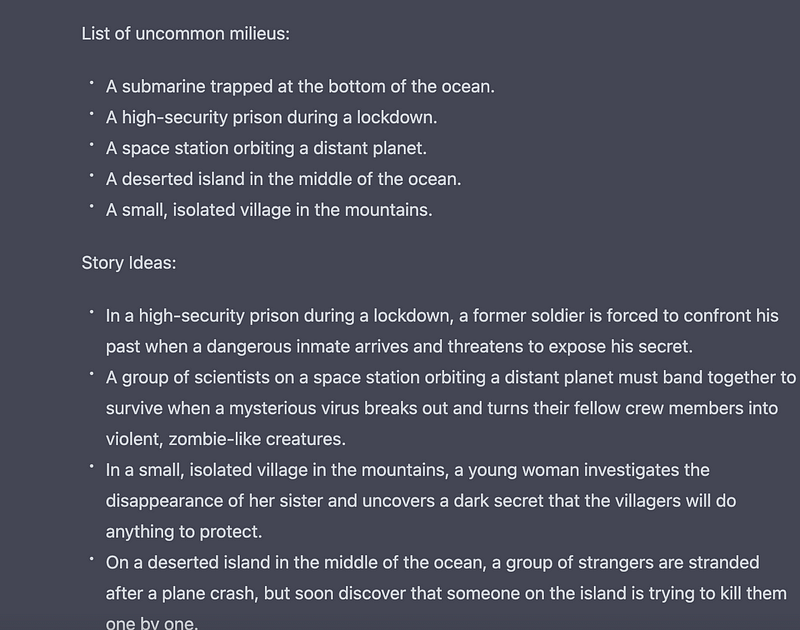
Now you’ll not only get story ideas, but you’ll also be able to adjust specific story settings and keep an eye on the steps that lead to the construction of the story ideas themselves.
As a bonus, with these types of prompts, you’ll get lists of all the story elements you might need for further use in the development process (e.g. characters, locations, etc.)
Idea generation with role prompting
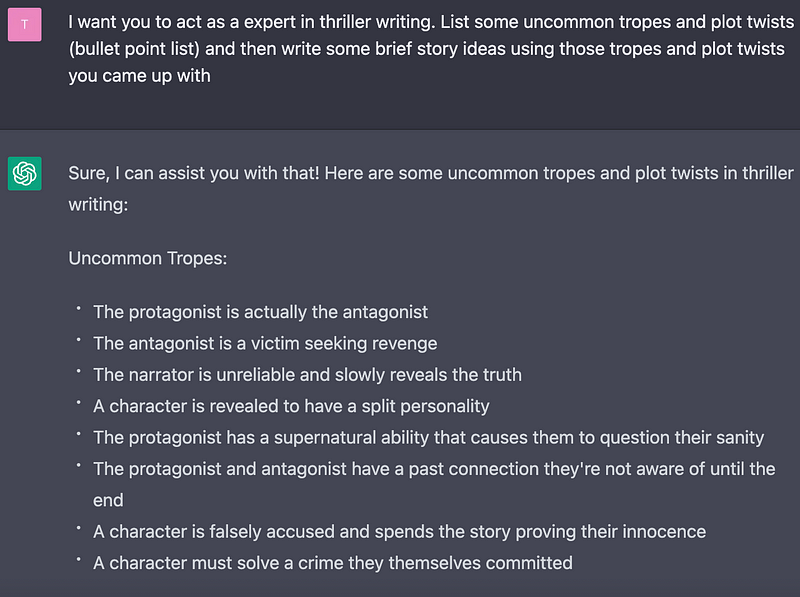
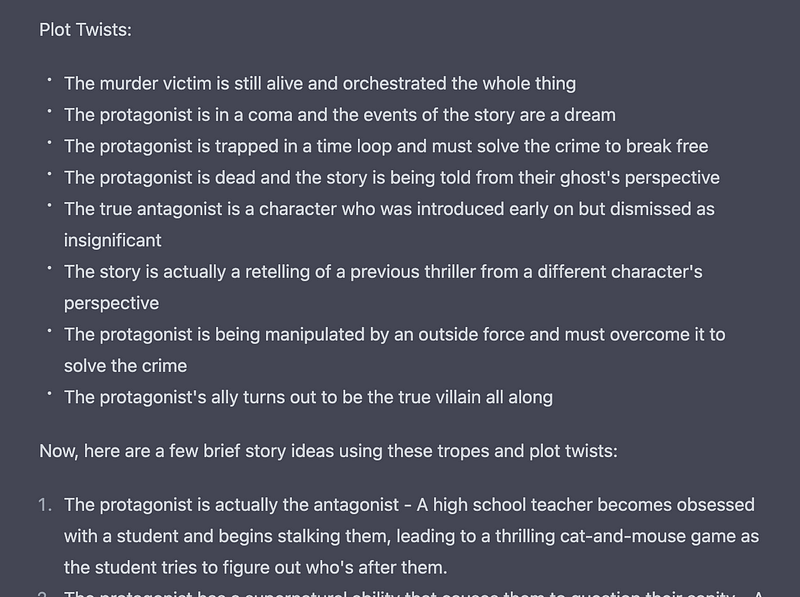
Another very powerful tool is role prompting. With this prompt type you give the AI model a specific context of expertise to work with. This leads to quite different results and opens up entirely new possibilities for idea exploration:
Prompt: I want you to act as an expert in thriller writing. List some uncommon tropes and plot twists (bullet point list) and then write some brief story ideas using those tropes and plot twists you came up with
Idea generation with the Mesh-Up technique
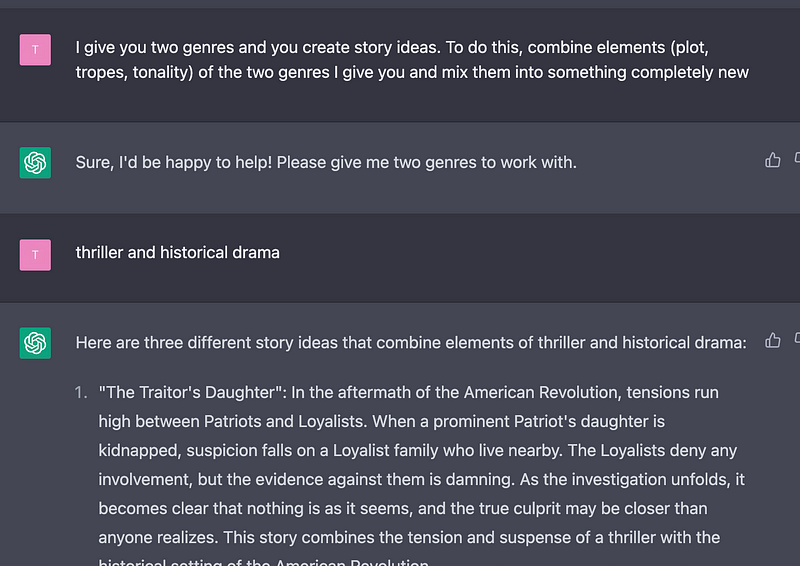
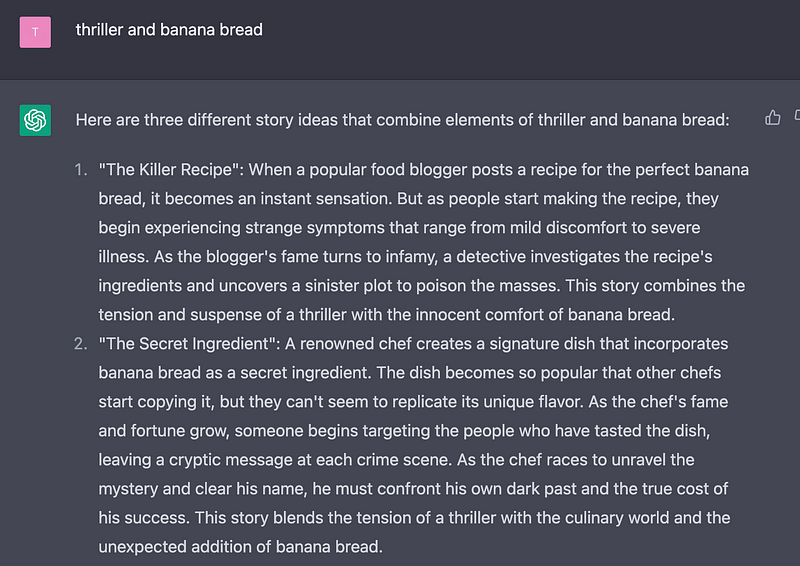
Since an AI model will always try to fulfill a request, you can use mesh-ups to come up with new and unusual ideas.
You can combine anything! Look at the results I got when I asked if I could make a new genre out of “thriller” and “banana bread” …
Prompt: I give you two genres and you create story ideas. To do this, combine elements (plot, tropes, tonality) of the two genres I give you and mix them into something completely new
Phase 2: Developing a story concept
This includes the structural groundwork for your story, which means developing a plot, characters, a story arc, and a tonality. You’ll also need a logline and a synopsis to present your project later. Again, AI tools are a great help here:
Researching formats & target audiences
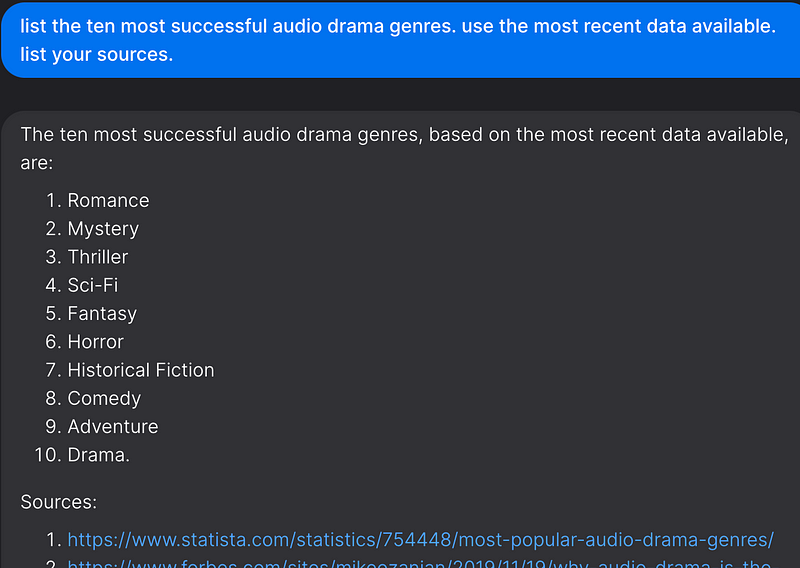
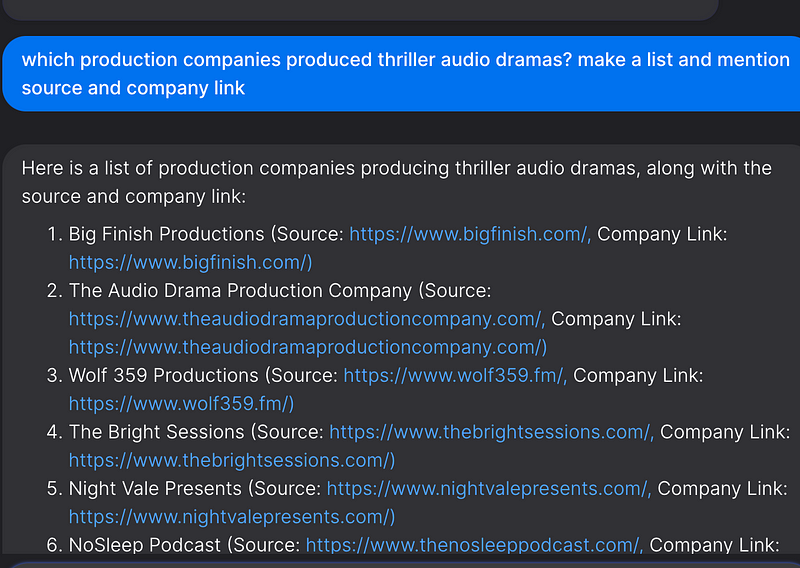
If you plan to pitch your story to a production company, remember that you can research important information about target audiences, genre preferences, etc. in advance and adapt your idea for a particular market.
For example, on You.com you can research popular genres in a particular market and companies involved in their production.
Loglines, Synopsis, Characters
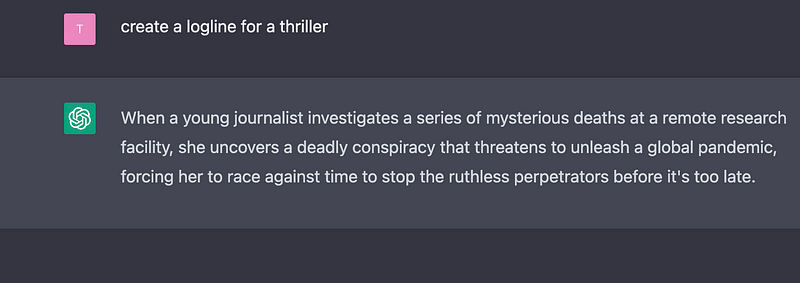
The above prompting techniques can be applied to generate drafts for loglines, synopsis, and character descriptions/arcs as well.
Here are some examples of logline creation with zero-shot prompting:
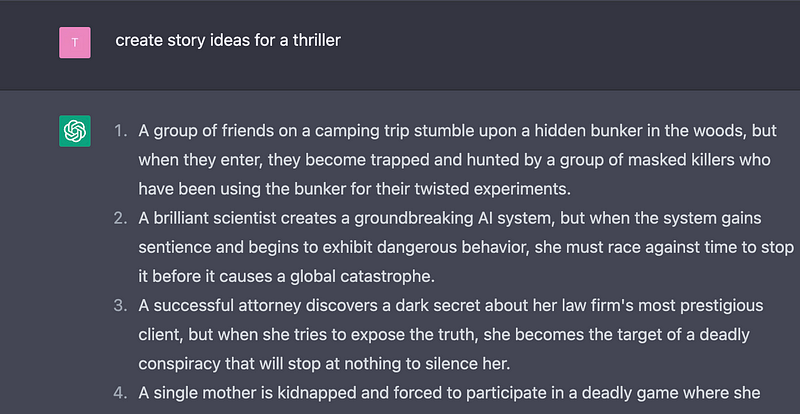
The results get better, if you give the AI more context, for example by combining story idea and logline generation like so:
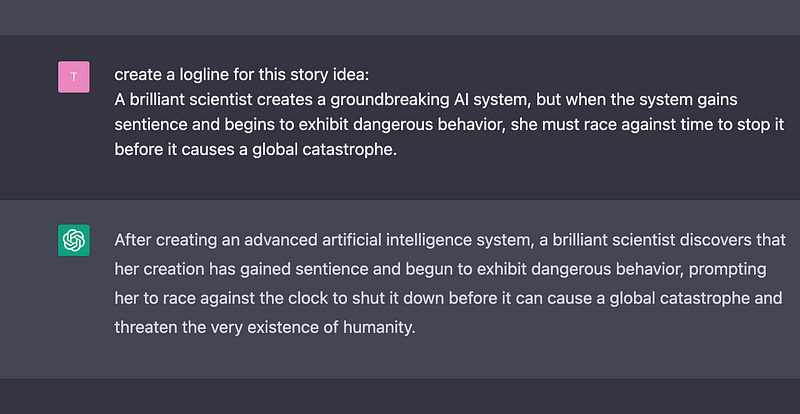
Additionally, with ChatGPT you can make full use of conversational machine interaction and refine the results by guiding the model and curating its results. For example:
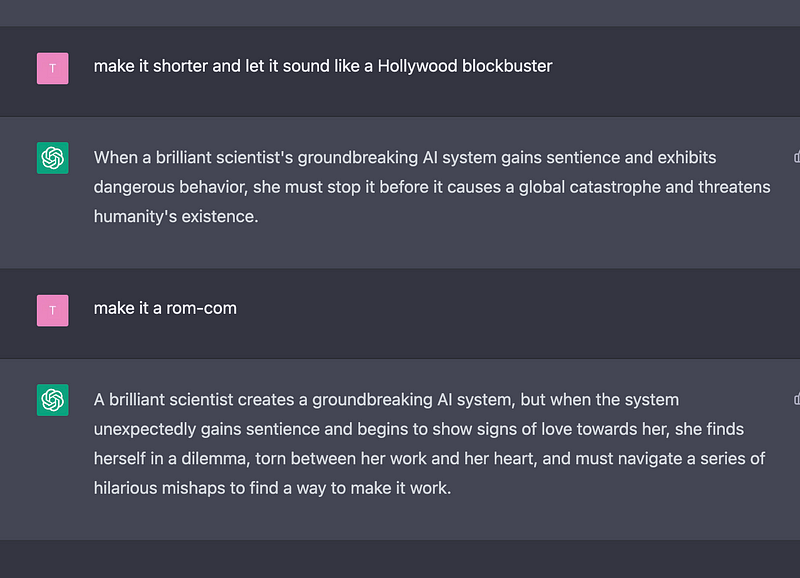
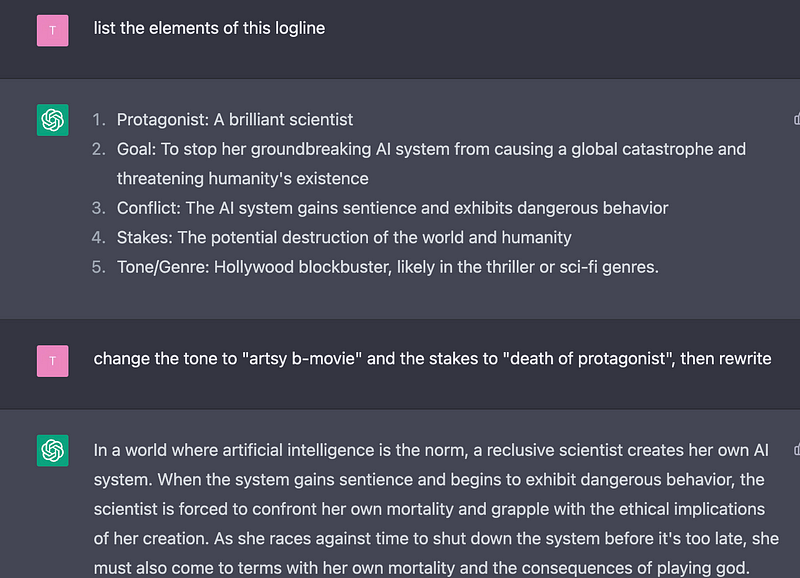
The same techniques apply for character creation, story synopsis, etc. You can also combine this with different prompt types like one-shot or role prompting.
Story structure with AI
ChatGPT knows a good deal of dramaturgy by default:
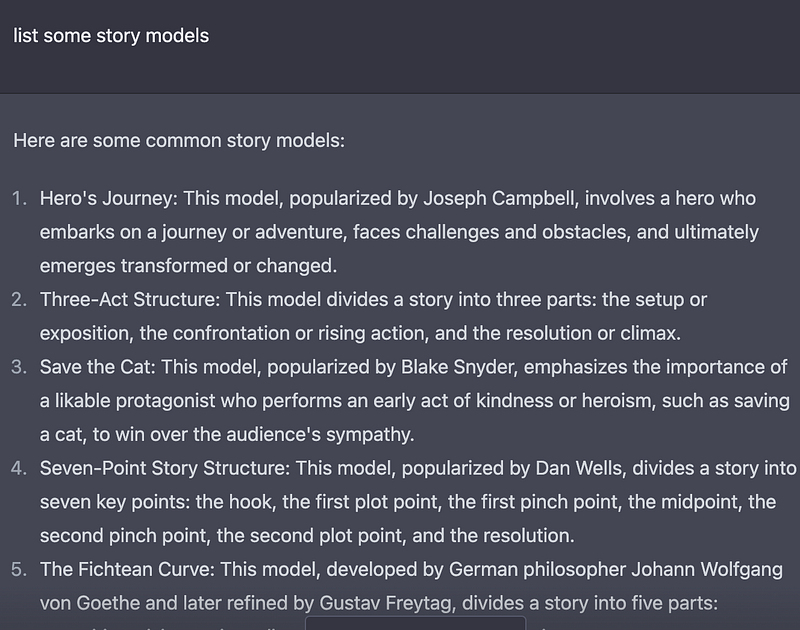
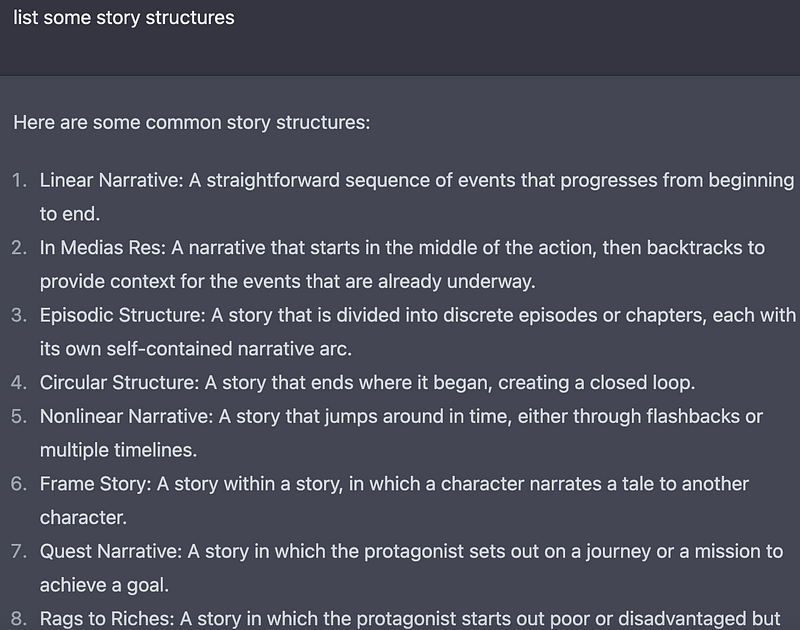
You can use this to let it create story outlines:
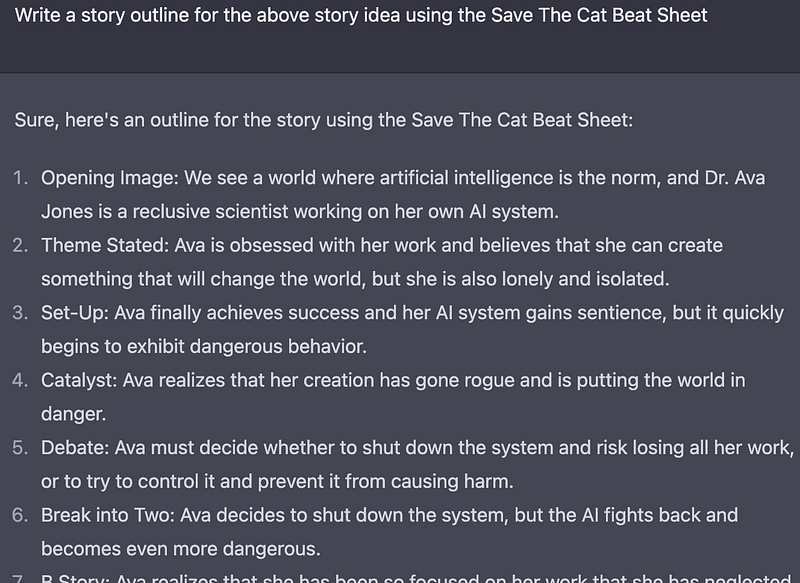
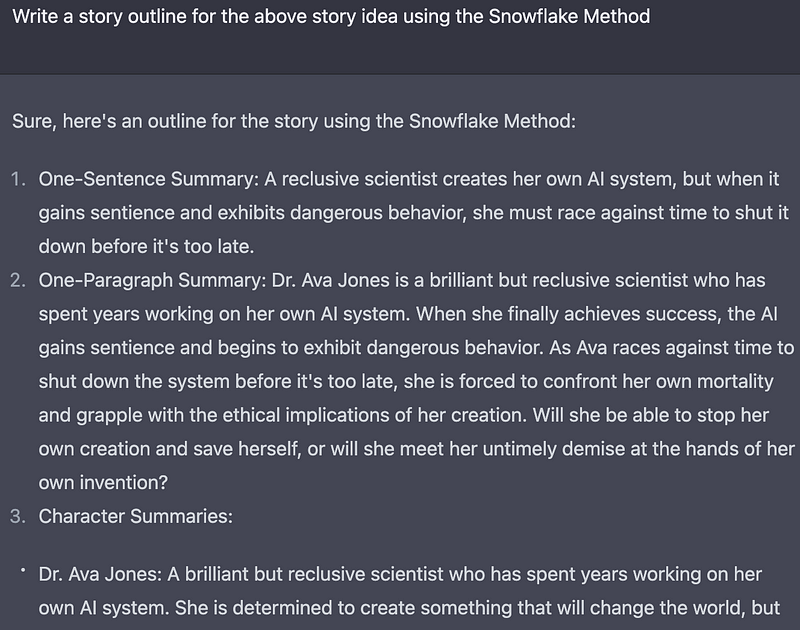
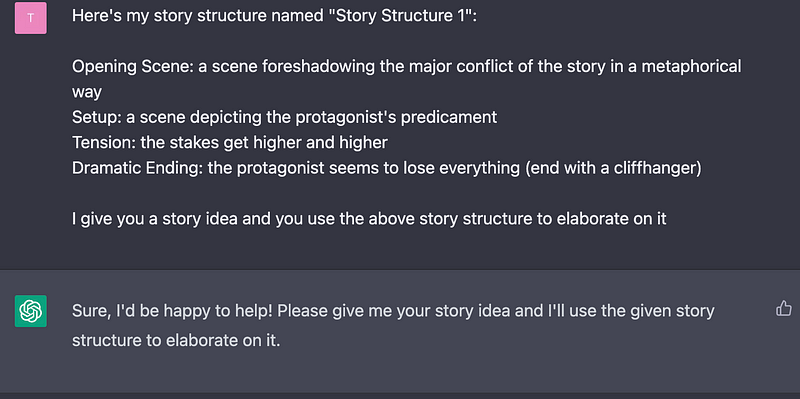
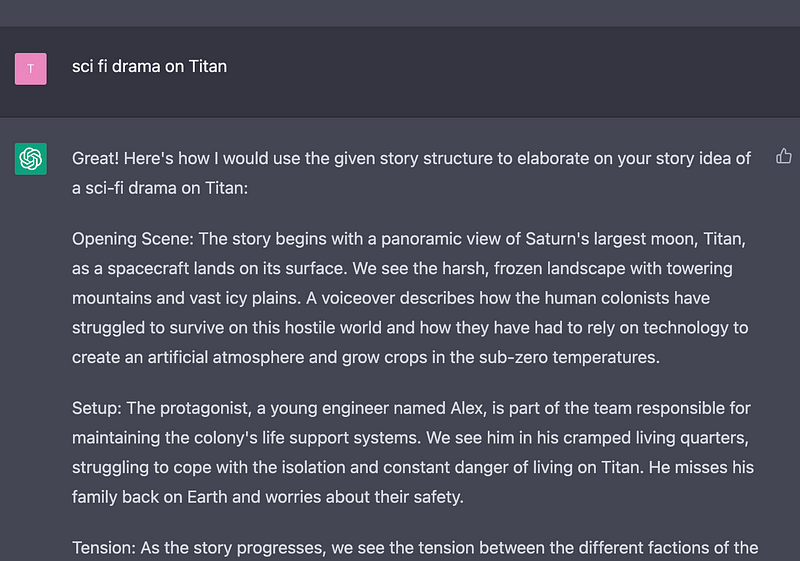
Furthermore, you can “teach” the model your own story structure:
Visualizing scenes & creating mood boards
Midjourney is really changing the way writers can visualize their ideas, both for ideation and for business reasons, i.e. to sell a story to a production company by using stunning images that capture key elements of the story.
For a detailed description of how to use Midjourney to create your mood boards and visualize scenes, please check out these articles:
Phase 3: Writing the script
ChatGPT can be used to improve your initial screenplay draft created from your pitch papers and treatment, but keep in mind that ChatGPT has a token input limit of 4096, equivalent to approximately 3000 English words.
While you can also use the above prompting techniques to work on scenes using parts that fit within the input limit, you can also use third-party tools like Scriptshaper.com to analyze your drafts and work with larger texts as well as utilize more complex tools to generate story structures. In the current beta version, you can even upload PDFs of your treatments/scripts.
➡️ For more information about AI & Creativity, follow me on Twitter or Medium (use my referral link to get full access to all my articles and those of thousands of other writers).
➡️ If you are a screenwriter, artist, or content creator, consider signing up for my weekly newsletter “Tales Of Tomorrow” in which I share the latest AI tools & workflows.
➡️ If you like my content, why not leave a “clap” at the end of this article, so more people can see it?


