avatarSean Youra

Free AI web copilot to create summaries, insights and extended knowledge, download it at here

5313

Abstract

made it to where I once hoped I would be with a lucrative impactful career working at a great company with some even greater people. But along the way, something began to nag at me that slowly shifted my focus from medical advancements to climate action.</p><p id="1093">It was the realization that despite our scientific and technological progress, we were still heading down a dark and destructive path.</p><p id="0792">It’s been estimated that air pollution from fossil fuel combustion led to <a href="https://www.sciencedirect.com/science/article/abs/pii/S0013935121000487">8.7 million premature deaths</a> in 2018. As reported by <a href="https://www.theguardian.com/environment/2021/feb/09/fossil-fuels-pollution-deaths-research">The Guardian</a>, that’s “one in five of all people who died that year.” For comparison, about <a href="https://www.world-stroke.org/assets/downloads/WSO_Global_Stroke_Fact_Sheet.pdf">5.5 million people die from strokes</a> every year.</p><p id="81a0">In addition, according to the World Health Organization, climate change is already causing over <a href="https://www.who.int/heli/risks/climate/climatechange/en/">150,000 deaths annually</a> in the form of extreme weather events, the proliferation of vector-borne diseases, etc. This number is expected to increase to <a href="https://www.who.int/news-room/fact-sheets/detail/climate-change-and-health">250,000 deaths annually</a> between 2030 and 2050, which is likely a <a href="https://www.cnn.com/2019/01/16/health/climate-change-health-emergency-study/index.html">conservative estimate</a>. By 2100, climate change could cause <a href="https://time.com/5876229/climate-change-death-rate/">more deaths than from all infectious diseases</a>.</p><p id="8dff">The important takeaway from this is that the combination of air pollution and climate change-related health effects and mortality is a health crisis that will only become more severe over time, and will threaten to undo the significant medical progress we have made over the past several decades.</p><p id="4da8">In other words, all the medical devices and pharmaceuticals in the world won’t be able to save us from an increasingly uninhabitable planet.</p><p id="d2c3">Not only is climate change a health crisis, but it is also exacerbating other crises such as <a href="https://www.pnas.org/content/116/20/9808">rising economic inequality</a> and leading to new crises such as <a href="https://readmedium.com/walls-wont-work-in-a-warming-world-f4f383deffcb">climate refugees</a> from developing countries that are suffering disproportionately from the impacts of climate change.</p><p id="5b78" type="7">All the medical devices and pharmaceuticals in the world won’t be able to save us from an increasingly uninhabitable planet.</p><p id="43fe">We’ve all heard by now the many ways we can take personal climate action to reduce our carbon footprints from <a href="https://readmedium.com/plant-based-alternatives-7ada52cbdc44">eating more plant-based</a> to installing solar panels on our roofs. And to the extent that those of us in the developed world with the <a href="https://www.weforum.org/agenda/2019/01/chart-of-the-day-these-countries-have-the-largest-carbon-footprints/">highest per capita emissions</a> are financially capable of taking such actions, we should do so as part of the necessary sustainable and regenerative transition we need to make as a society.</p><p id="01ab">But we also need to do a lot more than that to begin rapidly reducing our annual global emissions.</p><p id="a6d8">When I began thinking about what’s the most significant action I could take to have a larger systemic impact, I first thought surely more engineers are needed to develop the technologies of the future that will help reduce emissions within every economic sector. However, as I learned more about climate change and the current solutions, I realized <a href="https://thehill.com/opinion/energy-environment/554605-no-we-dont-need-miracle-technologies-to-slash-emissions-we-already">we largely have the technology we need</a> to address this crisis and meet the <a href="https://unfccc.int/process-and-meetings/the-paris-agreement/the-paris-agreement">Paris Agreement goals</a>.</p><p id="9dd4">Thus, the problem wasn’t insufficient technological innovation; it was commercializing and scaling up current climate mitigation technologies that could compete with existing technologies that are largely causing the climate crisis (e.g., gas-powered cars and appliances).</p><p id="b606">And the best way to do that is through disincentives for the polluting technologies and incentives for the non-polluting ones, i.e., climate policy.</p><p id="aa16">I also realized that climate policy isn’t just a way for us to reduce emissions. It can help ameliorate <a href="https://ehp.niehs.nih.gov/doi/pdf/10.1289/ehp.01109s4501">existing socioeconomic inequities</a> that have festered for too long. It can help us <a href="https://readmedium.com/david-attenboroughs-witness-statement-59a2c86f5ec">restore the earth’s ecosystems and bring back biodiversity</a> that is critical to our own survival. It can provide us with the tools and infrastructure necessary to <a href="https://www.epa.gov/arc-x/strategies-climate-change-adaptation">adapt to future climate impacts</a

Options

and become a more resilient society.</p><p id="bf63">To put it simply, the implementation of climate policies could ensure not only that we <i>survive</i> as a species long into the future, but that we <i>thrive</i> in that future.</p><p id="6663">Upon that realization, I began my career transition.</p><p id="9b54" type="7">The implementation of climate policies could ensure not only that we survive as a species long into the future, but that we thrive in that future.</p><p id="ade9">At the beginning of 2020, I enrolled in an online MS degree program with Johns Hopkins University to study Environmental Science and Policy — focusing on climate science and policy — while still working at my engineering job.</p><p id="505a">A year and a half later, I’ve left my job and am now graduating from the program equipped with the knowledge and skills to begin working on researching, developing, and implementing climate plans, policies, and programs.</p><p id="88a4">I hope to eventually work with local governments and other organizations to create and implement climate action plans and policies that can start to redevelop and reimagine our society from the ground up.</p><p id="6b56">And that’s the other thing that’s missing from conversations on how to address the climate crisis — imagination.</p><p id="cb41"><b>What happened to our imagination and when did we become so content with the status quo?</b></p><blockquote id="76ff"><p>“What is holding us back today is not lack of solutions. It is the lack of imagination of what is possible.” — Paul Hawken¹</p></blockquote><p id="51d9">We can lay out a vision for a better world told through <a href="https://readmedium.com/the-secret-weapons-in-tackling-the-climate-crisis-vision-and-storytelling-cf79a9ad152a">imaginative storytelling</a> that can give people something to dream about — and to strive for. This vision can then be made a reality through setting goals, implementing climate policies to achieve those goals, and monitoring the policy actions along the way to ensure they’re getting us closer to achieving that vision.</p><p id="4b1d">I am excited for what lays ahead — and we all should be. Because despite the depressing statistics and projections I provided earlier, we have so much more to gain than we have to lose by addressing the climate crisis.</p><p id="a57d">If you find it difficult to be hopeful during these dark days, look for hope in one another.</p><p id="79e8">If you find my story inspiring, it is only because there were countless others in my journey that inspired me.</p><blockquote id="a3d6"><p>“I alone cannot change the world, but I can cast a stone across the water to create many ripples.” — Mother Teresa</p></blockquote><p id="8912">References:</p><ol><li>Paul Hawken. (2021). <i>Regeneration: Ending the Climate Crisis in One Generation</i>. Penguin Random House LLC.</li></ol><p id="48f9">If you enjoyed this story, then you might also like:</p><div id="777d" class="link-block"> <a href="https://readmedium.com/the-secret-weapons-in-tackling-the-climate-crisis-vision-and-storytelling-cf79a9ad152a"> <div> <div> <h2>The Secret Weapons in Tackling the Climate Crisis: Vision and Storytelling</h2> <div><h3>A vision for the future told through a compelling story is far more powerful than facts and figures</h3></div> <div><p>medium.com</p></div> </div> <div> <div style="background-image: url(https://miro.readmedium.com/v2/resize:fit:320/0*rzVmZyZuNsAnYEfo)"></div> </div> </div> </a> </div><div id="cac0" class="link-block"> <a href="https://readmedium.com/wheres-the-emergency-response-to-our-global-public-health-crisis-of-pollution-2d29d61b3740"> <div> <div> <h2>Where’s the Emergency Response to Our Global Public Health Crisis of Pollution?</h2> <div><h3>Pollution isn’t just a local problem; it’s a planetary threat</h3></div> <div><p>medium.com</p></div> </div> <div> <div style="background-image: url(https://miro.readmedium.com/v2/resize:fit:320/0*20ChJZs7CCEZeUGq)"></div> </div> </div> </a> </div><div id="50db" class="link-block"> <a href="https://readmedium.com/radical-caring-can-save-the-world-7552d7da66fe"> <div> <div> <h2>Radical Caring Can Save the World</h2> <div><h3>But a major shift in our mindset is required</h3></div> <div><p>medium.com</p></div> </div> <div> <div style="background-image: url(https://miro.readmedium.com/v2/resize:fit:320/0*SjAK_YOZ1QmjBEkZ)"></div> </div> </div> </a> </div><p id="d5c6">To address the crises we face, we all need to work together and contribute our knowledge, ideas, and skills. If you share my vision of building a <b>better future together</b>, then please consider subscribing <a href="https://sean-youra.medium.com/subscribe"><b>here</b></a> to stay connected and be notified when I publish a new story.</p></article></body>

Why I Left My Engineering Job To Take On the Climate Crisis

And the realizations that would change my perspective forever
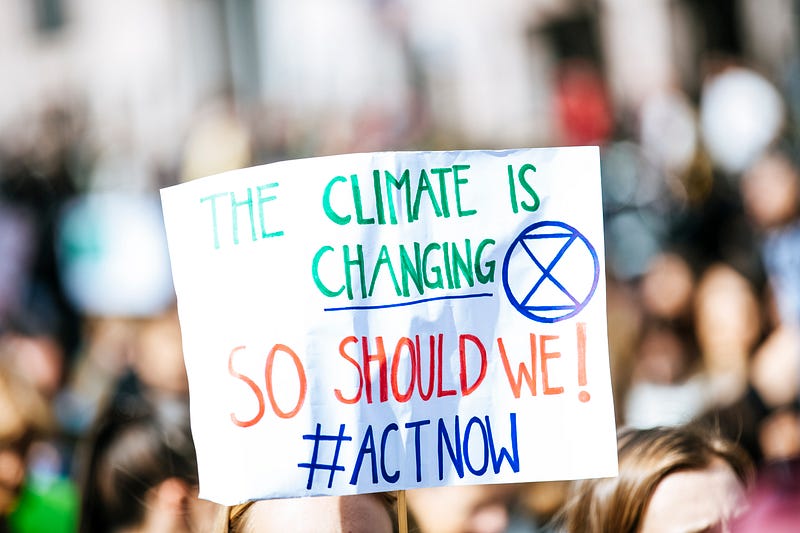
Photo by Markus Spiske on Unsplash

When I was born in 1991, the concentration of carbon dioxide (CO2) in the atmosphere was 356 ppm. This year I turned 30 and the concentration of CO2 in the atmosphere now stands at about 416 ppm.

For the majority of my 30 years on earth, those numbers were meaningless to me.

Now, they’re the most important numbers I pay attention to.

While economists focus on GDP growth and investors focus on ROI, I focus on greenhouse gas (GHG) concentrations.

GHG concentrations are now higher than during the Pliocene period over three million years ago — a time well before homo sapiens even walked the earth. Average global temperatures were 2–3°C warmer and sea levels were 25 meters (82 ft) higher than today.

This is likely the long-term future we are heading towards based on current emission trends and government policies. Specifically, we could see a 3°C warmer world by the end of the century while multi-meter sea level rise would likely take anywhere from 50–150 years.

That may seem like a long time on human timescales but in geologic time, it is infinitesimally short.

Although most of us living today may not see the worst impacts from these changes, those who follow in our footsteps and continue our legacies certainly will. And they will judge us for how we act in the coming years.

Indeed, we already have failed them in some respects by procrastinating on such an important issue for so long, but if they are forgiving like many of us living today are, then they will likely forgive us for our past transgressions if we make a commitment to act now.

Although most of us living today may not see the worst impacts from these changes, those who follow in our footsteps and continue our legacies certainly will. And they will judge us for how we act in the coming years.

I understand it’s difficult to take what seems like a long-term threat of climate change and treat it as a high priority by taking immediate, comprehensive, bold action right now. After all, the world is still grappling with a deadly pandemic that’s taken millions of lives and shut down economies almost completely.

In a Pew Research poll about the 2020 U.S. presidential election, climate change ranked 11th in the top issues voters were concerned about. Clearly, people have bigger issues on their minds than climate change.

But a growing number of people — particularly young people — don’t see it that way. For younger voters, climate change has ranked in the top five issues they care about. They understand very well that they will be the ones to experience the increasingly severe and more frequent impacts of climate change.

For myself, I see it as an existential threat on par with the threat of nuclear war. The Bulletin of the Atomic Scientists’ Science and Security Board and Noam Chomsky would agree.

But if that’s the case, what could I really do about it?

Turns out the answer is a lot.

When I first began studying biomedical engineering in college, my hope was to apply my problem-solving skills towards treating debilitating diseases and, thus, improve the quality of life for those patients that suffer from them.

That’s exactly what I was able to help do once I graduated and got an engineering job with a medical device company in the San Francisco Bay Area, which was focused on treating patients that had suffered strokes or brain aneurysms, along with a number of blood clot-related disorders.

I began moving up the corporate ladder — first as an intern — and eventually as an engineering manager. I had made it to where I once hoped I would be with a lucrative impactful career working at a great company with some even greater people. But along the way, something began to nag at me that slowly shifted my focus from medical advancements to climate action.

It was the realization that despite our scientific and technological progress, we were still heading down a dark and destructive path.

It’s been estimated that air pollution from fossil fuel combustion led to 8.7 million premature deaths in 2018. As reported by The Guardian, that’s “one in five of all people who died that year.” For comparison, about 5.5 million people die from strokes every year.

In addition, according to the World Health Organization, climate change is already causing over 150,000 deaths annually in the form of extreme weather events, the proliferation of vector-borne diseases, etc. This number is expected to increase to 250,000 deaths annually between 2030 and 2050, which is likely a conservative estimate. By 2100, climate change could cause more deaths than from all infectious diseases.

The important takeaway from this is that the combination of air pollution and climate change-related health effects and mortality is a health crisis that will only become more severe over time, and will threaten to undo the significant medical progress we have made over the past several decades.

In other words, all the medical devices and pharmaceuticals in the world won’t be able to save us from an increasingly uninhabitable planet.

Not only is climate change a health crisis, but it is also exacerbating other crises such as rising economic inequality and leading to new crises such as climate refugees from developing countries that are suffering disproportionately from the impacts of climate change.

All the medical devices and pharmaceuticals in the world won’t be able to save us from an increasingly uninhabitable planet.

We’ve all heard by now the many ways we can take personal climate action to reduce our carbon footprints from eating more plant-based to installing solar panels on our roofs. And to the extent that those of us in the developed world with the highest per capita emissions are financially capable of taking such actions, we should do so as part of the necessary sustainable and regenerative transition we need to make as a society.

But we also need to do a lot more than that to begin rapidly reducing our annual global emissions.

When I began thinking about what’s the most significant action I could take to have a larger systemic impact, I first thought surely more engineers are needed to develop the technologies of the future that will help reduce emissions within every economic sector. However, as I learned more about climate change and the current solutions, I realized we largely have the technology we need to address this crisis and meet the Paris Agreement goals.

Thus, the problem wasn’t insufficient technological innovation; it was commercializing and scaling up current climate mitigation technologies that could compete with existing technologies that are largely causing the climate crisis (e.g., gas-powered cars and appliances).

And the best way to do that is through disincentives for the polluting technologies and incentives for the non-polluting ones, i.e., climate policy.

I also realized that climate policy isn’t just a way for us to reduce emissions. It can help ameliorate existing socioeconomic inequities that have festered for too long. It can help us restore the earth’s ecosystems and bring back biodiversity that is critical to our own survival. It can provide us with the tools and infrastructure necessary to adapt to future climate impacts and become a more resilient society.

To put it simply, the implementation of climate policies could ensure not only that we survive as a species long into the future, but that we thrive in that future.

Upon that realization, I began my career transition.

The implementation of climate policies could ensure not only that we survive as a species long into the future, but that we thrive in that future.

At the beginning of 2020, I enrolled in an online MS degree program with Johns Hopkins University to study Environmental Science and Policy — focusing on climate science and policy — while still working at my engineering job.

A year and a half later, I’ve left my job and am now graduating from the program equipped with the knowledge and skills to begin working on researching, developing, and implementing climate plans, policies, and programs.

I hope to eventually work with local governments and other organizations to create and implement climate action plans and policies that can start to redevelop and reimagine our society from the ground up.

And that’s the other thing that’s missing from conversations on how to address the climate crisis — imagination.

What happened to our imagination and when did we become so content with the status quo?

“What is holding us back today is not lack of solutions. It is the lack of imagination of what is possible.” — Paul Hawken¹

We can lay out a vision for a better world told through imaginative storytelling that can give people something to dream about — and to strive for. This vision can then be made a reality through setting goals, implementing climate policies to achieve those goals, and monitoring the policy actions along the way to ensure they’re getting us closer to achieving that vision.

I am excited for what lays ahead — and we all should be. Because despite the depressing statistics and projections I provided earlier, we have so much more to gain than we have to lose by addressing the climate crisis.

If you find it difficult to be hopeful during these dark days, look for hope in one another.

If you find my story inspiring, it is only because there were countless others in my journey that inspired me.

“I alone cannot change the world, but I can cast a stone across the water to create many ripples.” — Mother Teresa

References:

  1. Paul Hawken. (2021). Regeneration: Ending the Climate Crisis in One Generation. Penguin Random House LLC.

If you enjoyed this story, then you might also like:

To address the crises we face, we all need to work together and contribute our knowledge, ideas, and skills. If you share my vision of building a better future together, then please consider subscribing here to stay connected and be notified when I publish a new story.

Policy
Climate Change
Careers
Climate Action
Life
Recommended from ReadMedium