
Life Lesson
Five Reasons Life in India Is Worth the Challenge
Life in a less-developed country can teach you something that you can’t find anywhere else
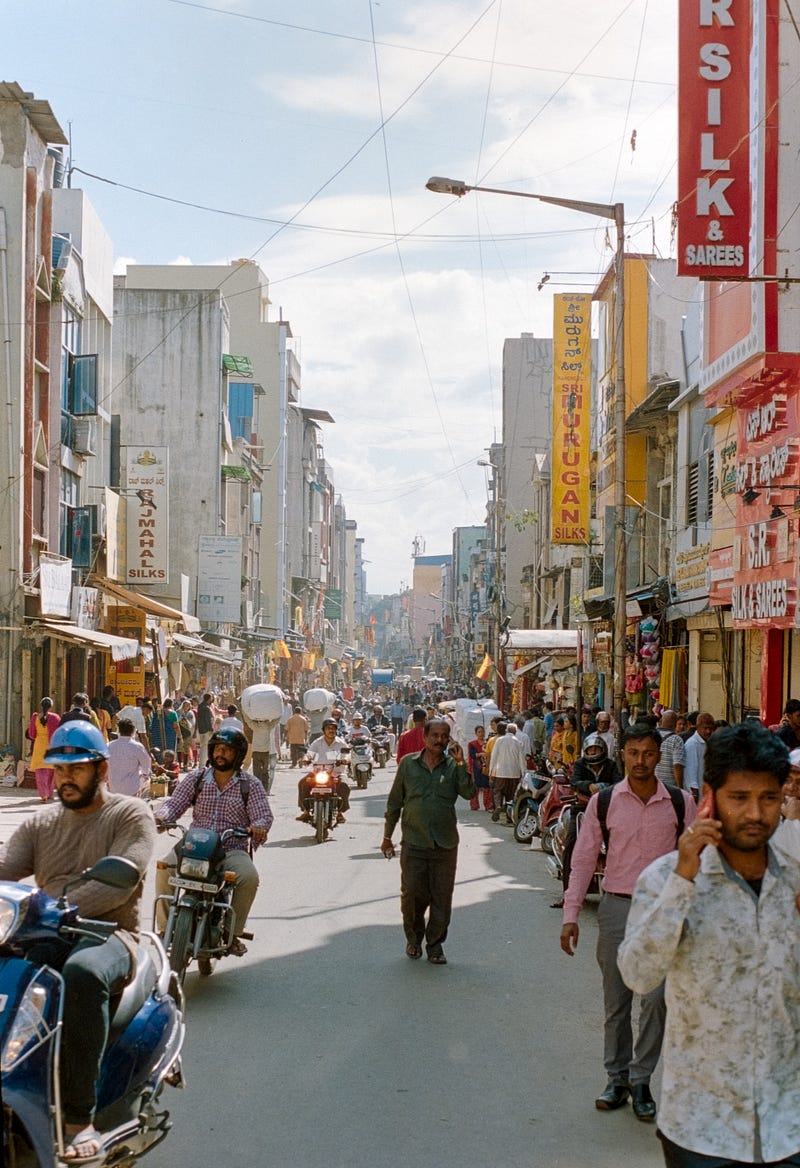
Last week, I wrote an article about how challenging it is to live and grow up in a lesser developed country like India.
Although there were many challenges, however, when I look back and think about my past, I can’t complain that life was a complete shit back then.
I started reminiscing about all the good things in my life, that I took for granted but miss now. True, there’s this factor of material comfort and lack of crime where I live now, which I appreciate greatly. But there are a few things that I am so grateful for about my life in India.
1. Empathy in people
You would be surprised to know what extent of kindness and empathy exist in people, even in those who live in poverty. This extends to strangers as well.
My father was bitten badly by a street dog. A few young fellows were chatting by the side of the road. They came running to help him. Wiped his wound with soap and water, and took him to a nearby hospital (they had a motorbike), and brought him home to my mother.
My mother thanked them and blessed them.
A year later, my father went for a chore and he had a heart attack, fell on the road, and died immediately.
Again, some random strangers came to help. There’s no 911 that you would call and mind your business. So they tried to search extensively for our family by asking the local people.
They also called on his last dialed number from his phone, which was my aunt, arranged for transport, and took him to a nearby hospital, where he was brought dead.
My father had some money and bank cards in his wallet, some important documents in his bag, a watch, a ring, his phone, and some other valuable items. Nothing was stolen. They waited for my mother to come and returned everything that belonged to him.
Most of these people were quite poor and could have stolen something, but they chose not to. They just helped without hoping to get anything in return.
Without the help of these people, my father would have ended up as an unidentified body in a morgue.
2. People are less lonely
The sense of community is an integral part of our lifestyle. You don’t have to become a member of a club or so. Your neighbors, relatives, friends, and even colleagues are a part of your community.
As a result, people feel less lonely.
The neighbors or friends don’t usually make an appointment to meet you. They just drop in. Sometimes they bring some homemade food for you. If you are alone or ill, they come to check on you or ask you if you need something, perhaps pay your bills on your behalf or buy you groceries.
And then you return the favor. The cycle of life goes on.
After my father passed away, my mother has been mostly living with my aunt (her sister) and her family. My mother’s brother also lost his wife a couple of years ago. He joined my aunt too. He moved to an apartment close by but mostly stays at my aunt’s house.
When my mother is at her own home, then some other relatives come to check on her or even stay with her. They have regular jobs. So they go to their work from my mother’s home and come back to her at night, just so that she doesn’t feel lonely.
My father-in-law also lives alone because my mother-in-law passed away a couple of years ago as well. He doesn’t have an extended family to live with him, but his neighbors and ex-colleagues still come to check on him and spend some time with him.
I can’t expect this in the developed world where I live now because people are self-centered and don’t have time for charity.
Loneliness is a leading cause of depression. A strong network of social support reduces loneliness and makes life so much easier.
3. An inclusive society
Inclusion plays a big role in India. Diversity is the key word when we talk about India. But it’s remarkable we see so much inclusion despite the class, caste, and religious divisions.
Elderly people are not forced away to old-age homes. They are important in society and mostly live with their families.
Children’s birthday parties are another example of inclusion. If you can’t invite everyone from your school (for obvious reasons of course), you celebrate with them with some cakes or chocolates in school and celebrate at home with other friends/neighbors/extended family.
No one is excluded. In fact, we even invite the other siblings of a child’s friend so that they don’t feel left out.
Our celebrations are also very communal. Unlike Christmas or Thanksgiving, where people celebrate only with their families, we celebrate as a society. I wrote in this article about how we celebrate and how I long to go home during Diwali.
And even colleagues feel more like family. We have had several vacations together. And during difficult times, like death or accidents, they play an active part in helping and healing.
So many of my Indian colleagues are still in touch with me, some even after 20 years or so. I get nostalgic when some of them call or text and we chat like it was yesterday. I can’t get this feeling anywhere else in the world.
4. You can hire help
India has a population of over one billion. The downside is labor is cheap. The upside is you can hire domestic help.
Household chores take a significant amount of your time. And honestly speaking, time is money. In the western world, hiring someone to do your chores is expensive. But you can afford it very well in a country like India.
After a long day at work, you come home to warm food or a clean house. Your children are picked up from school, well-fed, and taken care of.
You can hire help for the elderly or ailing people at home so that they can continue to live in their own homes and familiar surroundings with the people they love.
So the time you would be spending vacuuming your house or doing grocery or cooking or cleaning the toilet bowl, or running an errand, you could easily outsource that to other people and instead, use that time for something meaningful to you like writing.
5. People are more resilient
For a country with more than a billion population, excessive crime and corruption, scarcity of safe drinking water, and lacking basic amenities and infrastructure, there must be something magical though for the country to be still ticking and thriving.
The secret lies in this theory of “Survival of the fittest” by Charles Darwin.
If you want to experience life fully, you got to live in a country like India. The challenges and difficulties prepare you for the battle called life.
From a very young age, we are told about the struggles of life and how to succeed.
We don’t have social security or pension unless we have a Government job. We have to work hard to build our wealth so that we can support ourselves in our old age.
So, we don’t have the luxury to drop out of school or college, or a gap year to figure out what we want to do with our lives.
We know we have to compete with thousands (if not millions) of other people to get anywhere in life.
This is the reason you will see all the Indian kids in the German gymnasium (the highest form of school) or British grammar school. You will see all the Ivy League universities in the USA like Harvard or MIT, filled with Indian students.
Are they all brilliant? Well, some definitely are. But the rest have just been prepared at home, with hours of practice and determination.
Nothing is easy for us. My father was an immigrant from East Pakistan, which is now Bangladesh (I wrote here about his challenges as an immigrant kid), and had to walk several miles every day just to attend primary school.
There was no electricity. Even when I was younger, power cuts were rampant. We studied in kerosene lamps, sweltering at 38 degrees Centigrade (100 degrees Fahrenheit) and 99% humidity.
Finding a job or going to the office, fighting with thousands of people all the time to get that interview call or get into that damn bus or train — all require competition — to be ahead of someone else.
That prepares us for life.
Striving for a better life is our driving factor. That makes us resilient and get going even during a crisis.
Conclusion
If you have never left the comfort of your life in a developed country like the USA or western Europe, living in a not so developed country can enrich your life in so many ways.
Life in such a place will make you more grateful for what you have and create a sense of appreciation because the rest of the world lives with so less.
Try it at least once in your lifetime and see how differently you look at the world.
Thank you for reading my story.
I invite you to join Medium by clicking my referral link. Join Medium to Become A Member
If you like this story of mine, you may also like these:


