
Investment Principles
Five Astounding Investment Ideas from Warren Buffett to Beginners
Turn Your Savings into a Unicorn Army with These Investment Principles Developed in Many Decades of Experience
Introduction
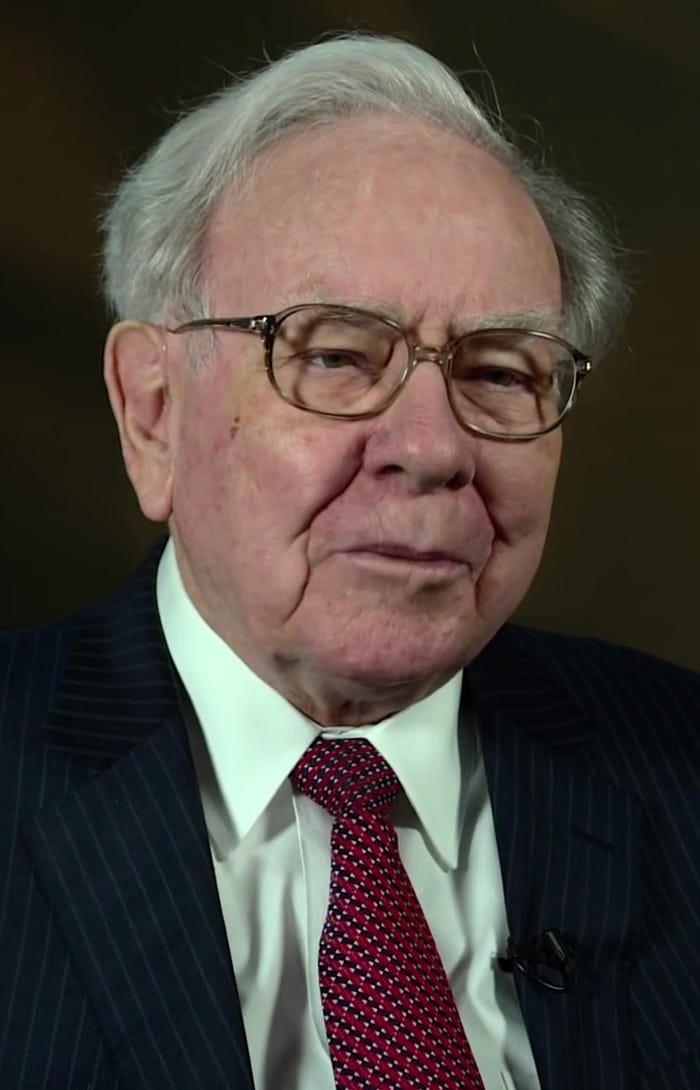
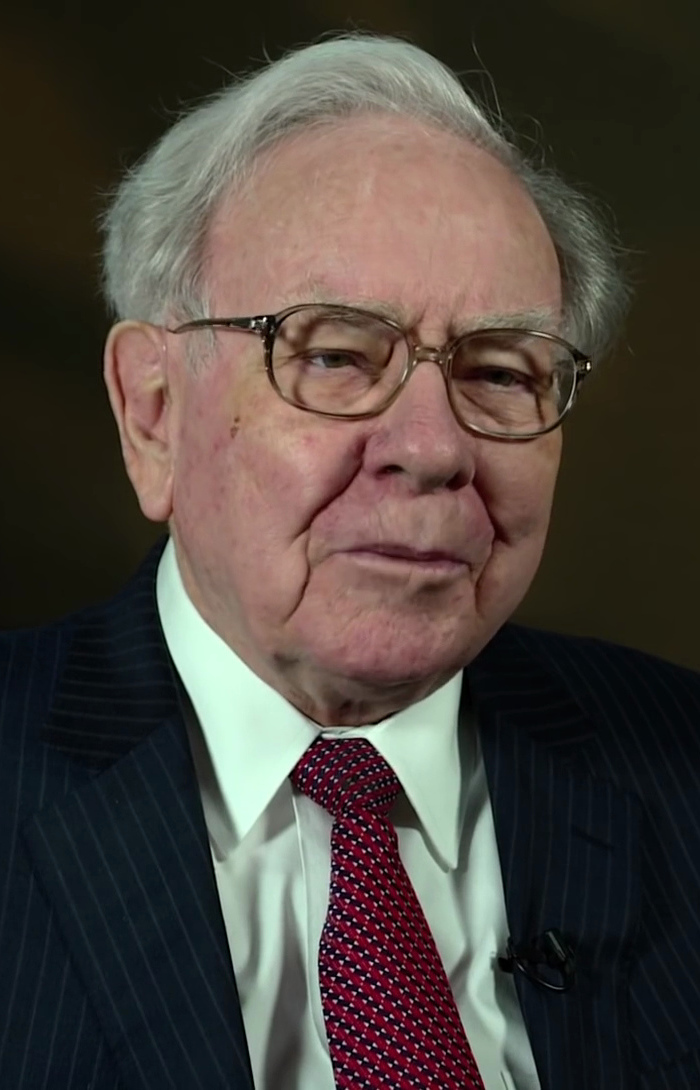
The stock market is one of the most complex economic, financial, and business constructs. Even people with many years of experience struggle to understand and find it difficult to swim in this vast ocean. Warren Buffett is one of the most successful stock market investors with many decades of proven experience. He is 91 years old now and has a net worth of over $105.2 billion.
Upon request from my subscribed readers, I checked Warren Buffett’s perspectives on emerging technologies such as artificial intelligence, IoT, Cloud computing, Big Data, and particularly related to quantum computing. However, I could not find anything substantial from him in these technology domains.
Some readers ask whether quantum computers can make the stock market easier to manage. My answer is theoretically yes. However, there is minimal quantum capability in the business world so far, as I pointed out in this article. Nevertheless, Gartner expects 40% of large companies to undertake initiatives related to quantum computing by 2025.
When I reviewed Warren Buffett’s ideas on technology companies for my readers, my investigation led me to find interesting principles that Mr. Buffett shared generously in public forums as valuable advice to new stock market investors.
In my opinion, established principles are more valuable than the ideas to hack the stock market.
I read many articles and several books about Warren Buffett, his investment style, and his principles. The popular books in my reading list reflecting his work were 1) The Warren Buffett Way by Robert G. Hagstrom, 2) Snowball: Warren Buffett and the Business of Life by Alice Schroeder, and 3) Warren Buffett Accounting Book by Preston Pysh and Stig Brodersen.
I aim to briefly touch on Mr. Buffett’s points of view on technology organizations and share his five principles by interpreting them with my understanding.
When asked about tech stocks, Warren Buffett made one key point. Tech stocks are dependent on interest rates. He thinks that valuations for tech stocks are not crazy if interest rates remain low. However, he believes that if interest rates rise, they could result in a sharp decline in the price of tech stocks trading at high price-earnings ratios.
Mr. Buffett is not extensive in technology. He doesn’t pay much attention to computers as he does not like them much. My understanding is that he doesn’t see much value in his personal and business life. He even challenged his friend Bill Gates humorously about whether computers help him chew gums better. And Mr. Gates struggled to provide compelling answers.
However, Mr. Buffet focuses on a few tech companies. Even though he has a broad portfolio of established organizations such as Bank of America, Coca-Cola, and Kraft Heinz, he is very selective about technology stocks. For example, in an interview linked in the reference section, he mentioned only Amazon and Apple.
Mr. Buffet believes that Apple and Amazon companies have proven records, and he specifically praised Jeff Bezos for his achievements. He currently invests around $887 million in Apple, estimated to include 40% of the total equity portfolio of his company Berkshire. According to PwC, his apple shares are now worth $139 billion. In addition, according to a 2019 CNBC news, Berkshire invested in Amazon stock for $947 million.
Here are the five stock investment principles Warren Buffet highlighted in his interviews on social media. I will explain them briefly to give you an idea. You can watch the details from the attached videos in the reference section below.

1 — Invest in management with integrity
Integrity is my favorite item as a life and business principle, so I make it the first among the other principles. Integrity is the cornerstone of business ventures. Warren Buffet emphasizes the importance of integrity, especially from the management perspective of business organizations.
In an article published in Inc, Mr. Buffet highlighted seven questions to ask potential employees during the interview. He specifically focuses on employees because they are the ones who make organizations serve with integrity.
Warren Buffet advises companies to maintain their reputation for honesty and integrity while remaining generous.
2 — Invest with a margin of safety
Investing with a margin of safety means that when buying stocks, their price should be lower than the calculated fair price. The critical point is paying less for something with a higher value. If a company does not do well for a while, the investment might still work out in the long term.
Let’s say we invest in 10 stocks. With this diversification, we use this principle by purchasing their stock, let’s say, under 20% lower than the usual trading rate. In that case, even if one or two companies fail to produce profits, our investment portfolio still will be in a better position in the long run.
Consequently, in his terms, “It’s far better to buy a wonderful company at a fair price than a fair company at a wonderful price.”
3 — Understand your circle of competence
The circle of competence refers to what we genuinely know versus what we think we know. This concept is a mental model developed by Warren Buffet and Charlie Munger.
They emphasize the significance of aligning our subjective assessment with our actual competence. In Buffet’s words, “Know your circle of competence, and stick within it.”
The size of that circle is not very important; knowing its boundaries, however, is vital.” Subsequently, his essential point is, “Never invest in a business you cannot understand.”
4 — Buy wonderful business; avoid cigar butts
Warren Buffet uses the “cigar butt” analogy taken from his mentor Benjamin Graham, the author of The Intelligent Investor, to compare good and bad stock.
A cigar butt in the gutter might not produce the best smoke. However, it is free, so we can consider the puff as all the final profit a user might get. Therefore, his focus is on excellent stocks that can do well in the long term. He recommends avoiding the cheap ones that might look shiny to investors but might drop to zero value.
Accordingly, as he wisely put for strategic approach: “Price is what you pay. Value is what you get.”
5 — Do not look at the stock price constantly
There are myriad factors that can affect stock prices daily. Even a minor event in some parts of the world can affect the price. Unfortunately, it is impossible to find the reasons behind these fluctuations.
Therefore, checking the daily price of stocks is a waste of time and unhealthy for investors. His key point is stocks can swing in price in the short term; therefore, we should focus on the value of an investment in the long term.
Stopping this addictive behavior can save time and keep our sanity.
Conclusions
My favorite quote from Warren Buffet is “Rule #1: Never lose money. Rule #2: Never forget rule #1”.
His metaphor of the stock market as “manic depressive” is profound knowledge. His humorous yet meaningful quote also attracted my attention: “The most important thing to do if you find yourself in a hole is to stop digging”.
Comparing past and future, another great metaphor Mr. Buffet made is “In the business world, the rear-view mirror is always clearer than the windshield.”
Lastly, in terms of time for investment, another metaphor attracted my attention: “Time is the friend of the wonderful company, the enemy of the mediocre.”
Interestingly, Mr. Buffet talks to people from all walks of life, including teenagers.
For example, in his recent talks to a group of high school students, he emphasized the importance of our body and mind pointing out we only have one body and mind that we must look after until we die. His focus on physical and mental health is worth mentioning.
Being wealthy is essential for many people. However, considering Mr. Buffet’s wealth and age, I believe his health is more important than his stock portfolio at this age.
While still working to keep their wealth, many mature age rich people also pay significant importance to their physical and mental health.
In addition to his wisdom, excellent integrity, and loving personality, what I like most about Warren Buffett is his remarkable philanthropic focus planning to give 99% of his fortune to charitable causes via his Giving Pledge and Gates Foundation in collaboration with Bill Gates.
Thank you for reading my research and perspectives.
My investment preference is real estate, as I explained in the attached story.
Here’s How I Approach Real Estate Investment.
References
There are many videos on social media, including interviews with Warren Buffet. These three videos can provide insights into the points I covered in this article.
Related Articles
22 Curated Work & Life “Principles” from Ray Dalio, Billionaire Investor
Business, Economy, & Technology Reviews for the United States
As a new reader, you might check my holistic health and well-being stories reflecting on my reviews, observations, and decades of sensible experiments. I write about health as it matters. I believe health is all about homeostasis.
I enjoy informing my readers about hormonal intelligence by writing about neurotransmitters such as dopamine, serotonin, oxytocin, GABA, acetylcholine, norepinephrine, adrenaline, glutamate, and histamine.
One of my goals as a writer is to raise awareness about the causes and risk factors of prevalent diseases that can lead to suffering and death for a large portion of the population.
To raise awareness about health issues, I have written several articles that present my holistic health findings from research, personal observations, and unique experiences. Below are links to these articles for easy access.
Metabolic Syndrome, Type II Diabetes, Fatty Liver Disease, Heart Disease, Strokes, Obesity, Liver Cancer, Autoimmune Disorders, Homocysteine, Lungs Health, Pancreas Health, Kidneys Health, NCDs, Infectious Diseases, Brain Health, Dementia, Depression, Brain Atrophy, Neonatal Disorders, Skin Health, Dental Health, Bone Health, Leaky Gut, Leaky Brain, Brain Fog, Chronic Inflammation, Insulin Resistance, Elevated Cortisol, Leptin Resistance, Anabolic Resistance, Cholesterol, High Triglycerides, Metabolic Disorders, Gastrointestinal Disorders, and Major Diseases.
I also wrote about valuable nutrients. Here are the links for easy access:
Lutein/Zeaxanthin, Boron, Urolithin, taurine, citrulline malate, biotin, lithium orotate, alpha-lipoic acid, n-acetyl-cysteine, acetyl-l-carnitine, CoQ10, PQQ, NADH, TMG, creatine, choline, digestive enzymes, magnesium, zinc, hydrolyzed collagen, nootropics, pure nicotine, activated charcoal, Vitamin B12, Vitamin B1, Vitamin D, Vitamin K2, Omega-3 Fatty Acids, N-Acetyl L-Tyrosine, and other nutrients to improve metabolism and mental health.
Disclaimer: Please note that my posts do not include professional or health advice. I document my reviews, observations, experience, and perspectives only to provide information and create awareness.
I publish my lifestyle, health, and well-being stories on EUPHORIA. My focus is on metabolic, cellular, mitochondrial, and mental health. Here is my collection of Insightful Life Lessons from Personal Stories.
If you enjoy writing and storytelling, you can join Medium, NewsBreak, and Vocal as a creator to find your voice, reach out to a broad audience, and monetize your content.
You may also check my blog posts about my articles and articles of other writers contributing to my publications on Medium. I share them on my website digitalmehmet.com. Here is my professional bio. You can contact me via weblink.
As a writer, blogger, content developer, and reader, you might join Medium, Vocal Media, NewsBreak, Medium Writing Superstars, Writing Paychecks, WordPress, and Thinkers360 with my referral links. This post includes affiliate links.
You might join my six publications on Medium as a writer by sending a request via this link. 24K+ writers contribute to my publications. You might find more information about my professional background.
You may join Medium with my referral link.