
Fascinating Facts About Frogs You Never Knew Existed.
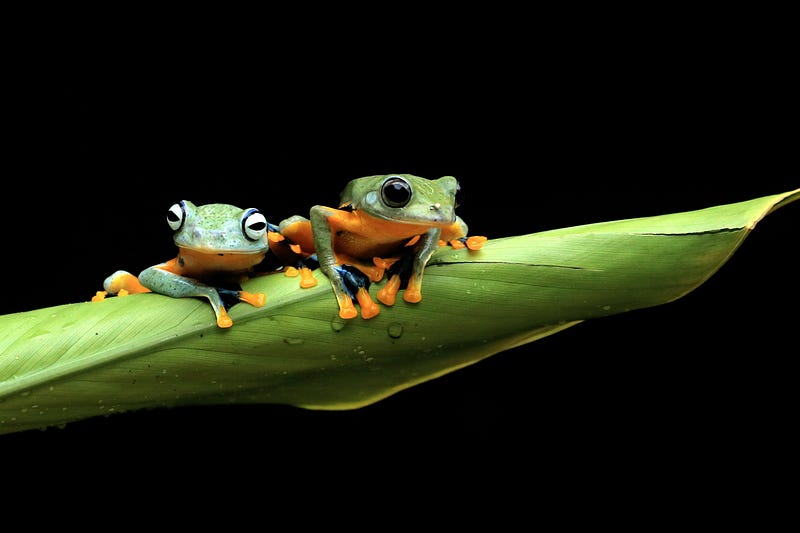
Frogs don’t drink water like humans, they absorb it through their skin.
Frogs have a unique way of getting the water they need. Rather than drinking water like humans do, frogs absorb water through their skin. Their skin is highly permeable and can absorb water and oxygen directly from the environment. This means that frogs need to keep their skin moist at all times to stay hydrated, which is why they are commonly found near water sources.
Some frog species can change color depending on their environment.
Many species of frogs have the ability to change color to blend in with their surroundings. This is called chromatophores, and it allows them to better camouflage themselves and avoid predators. For example, a green tree frog may turn brown or gray when it is on a tree trunk or branch, but turn green again when it moves to a leaf or plant.
Frogs can jump up to 20 times their own body length in a single leap.
Frogs are known for their impressive jumping abilities. Some species of frogs can jump up to 20 times their own body length in a single leap. This is due to their powerful hind legs, which are adapted for jumping and propelling them through the air. This ability is important for escaping predators and catching prey.
The Goliath frog is the world’s largest frog and can weigh up to 7 pounds.
The Goliath frog is the largest frog in the world, and can grow to be over a foot long and weigh up to 7 pounds. These massive frogs are found in Cameroon and Equatorial Guinea in Africa and are highly endangered due to habitat loss and overhunting.
Some frogs can survive freezing temperatures by producing antifreeze-like substances in their bodies.
Some species of frogs, such as the wood frog, can survive freezing temperatures by producing antifreeze-like substances in their bodies. These substances prevent the formation of ice crystals, which can damage cells and tissues. During the winter, these frogs freeze solid and can go months without breathing or moving until the temperature rises and they thaw out.
The male Darwin’s frog carries its offspring in its vocal sacs until they hatch.
Darwin’s frogs are unique in that the male carries the eggs and then the tadpoles in his vocal sac until they are ready to hatch. Once they hatch, he will then spit them out into a nearby water source. This is an important adaptation for these frogs, as it allows them to protect their offspring from predators and ensure their survival.
The bright colors of poison dart frogs serve as a warning to predators that they are toxic.
Poison dart frogs are known for their bright, vivid colors, which serve as a warning to predators that they are toxic. These frogs are some of the most toxic animals in the world, with some species having enough poison to kill several humans. The bright colors are a way of advertising their toxicity and avoiding predation.
The desert rain frog can inflate itself to make a loud, high-pitched squeaking sound to scare off predators.
The desert rain frog is a small, round frog found in South Africa that has a unique defense mechanism. When threatened, it can inflate itself to make a loud, high-pitched squeaking sound that is thought to scare off predators. This behavior, combined with its spiky appearance, helps protect it from predators.
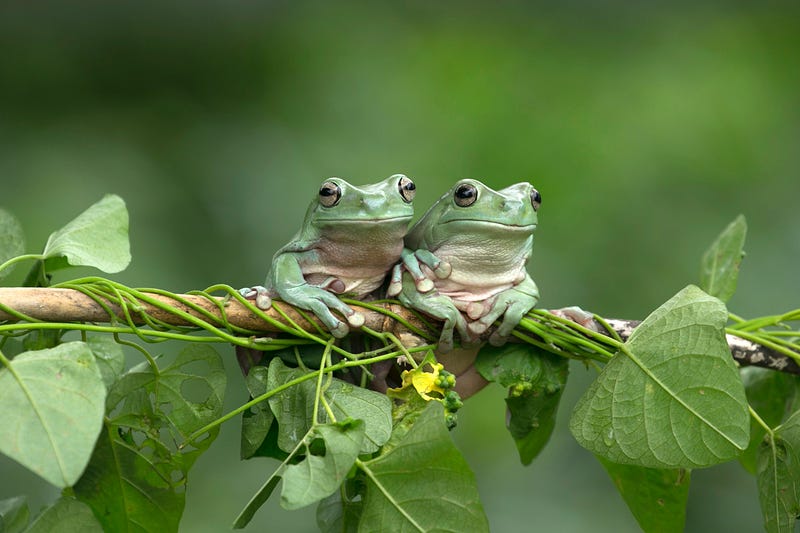
The glass frog has translucent skin, allowing you to see its internal organs.
Glass frogs are known for their translucent skin, which allows you to see their internal organs, including their heart, liver, and digestive system. This unique adaptation allows them to better blend in with their environment and avoid detection by predators.
Some species of frogs can glide through the air.
Several species of frogs, including the Wallace’s flying frog and the parachute frog, have the ability to glide through the air using webbing between their toes. This allows them to escape predators and travel through the forest canopy.
The Northern leopard frog can jump up to 3 feet in a single leap.
The Northern leopard frog is known for its impressive jumping abilities, with some individuals able to jump up to 3 feet in a single leap. This ability is due to their long, powerful hind legs, which allow them to jump and land safely.
The gastric-brooding frog gave birth through its mouth.
The gastric-brooding frog was a unique species of frog that went extinct in the 1980s. What made this frog so special was its method of reproduction: the female would swallow her eggs, which would then hatch inside her stomach. When the tadpoles were fully developed, she would give birth to them through her mouth.
The Surinam toad carries its young on its back.
The Surinam toad is a species of frog that has a unique method of carrying its young. The female will lay her eggs on the male’s back, and he will then fertilize them. The eggs will then sink into the skin on his back, where they will develop into tadpoles. When the tadpoles are fully developed, they will emerge from the male’s back as fully-formed toads.
The male red-eyed tree frog protects his territory by calling out to other males.
Male red-eyed tree frogs are known for their territorial behavior. They will defend their territory by calling out to other males and warning them to stay away. This behavior is important for ensuring mating success and protecting their offspring.
The Bornean flat-headed frog has a flattened head that allows it to hide in tight spaces.
The Bornean flat-headed frog is a unique species of frog that has a flattened head and body. This adaptation allows it to hide in tight spaces and avoid detection by predators. They are commonly found hiding in tree bark and rock crevices.
Frogs have a third eyelid that helps them keep their eyes moist.
Frogs have a unique adaptation called a nictitating membrane, which is a transparent third eyelid that helps keep their eyes moist. This membrane also protects their eyes from dirt and debris and allows them to see in murky water.
The poison of the golden poison dart frog can kill up to 20,000 mice.
The golden poison dart frog is one of the most toxic animals in the world, with enough poison to kill up to 20,000 mice. The poison is used by indigenous people in South America to coat the tips of their blow darts for hunting.
The Bornean tree frog uses its webbed feet to climb up smooth surfaces.
The Bornean tree frog is a species of frog that has adapted to life in the trees. It has large, webbed feet that allow it to climb up smooth surfaces like tree trunks and branches. This adaptation helps them avoid predators and find food in the forest canopy.

If you enjoyed this article, and would like to keep reading things on medium, you might consider becoming a medium member, if you do, you can support me at no extra cost to you by doing so through this link:


