
All About Hot Air Balloons
Hot air balloons are one of the oldest forms of flight and are a unique mode of air transportation.

History:
Hot air balloons have a rich and fascinating history that dates back to the late 18th century. The first successful hot air balloon flight was made by two French brothers, Joseph-Michel and Jacques-Etienne Montgolfier, in 1783. Their design consisted of a paper and fabric envelope filled with hot air from a fire, which provided enough lift to carry a small basket and passengers into the air.
In the years that followed, ballooning quickly became a popular form of entertainment and transportation. In 1784, the first manned hot air balloon flight was made across Paris, and soon after, hot air balloons were being used for scientific research, military reconnaissance, and exploration.
As the technology for building hot air balloons improved, so did their capabilities. By the early 19th century, large hot air balloons were being used to carry passengers and cargo on long-distance journeys, and by the mid-19th century, hot air balloons were being used in the first aerial photography and even meteorological studies.
Today, hot air balloons continue to be popular as a form of recreation and tourism. Modern hot air balloons are made of lightweight materials and are powered by propane burners, which provide a safe and reliable source of heat. Whether enjoyed as a leisure activity or used for scientific purposes, hot air balloons remain an iconic part of human flight and aviation history.
How they work:
Hot air balloons work by using the principles of buoyancy and density. The basic idea is that hot air rises in the atmosphere due to its lower density compared to the surrounding cold air.
A hot air balloon consists of three main parts: the envelope, the burner, and the basket. The envelope is the large, fabric bag that holds the hot air and provides lift to the balloon. The burner is used to heat the air inside the envelope, and the basket is where the passengers and fuel are stored.
When the hot air inside the balloon is heated by the burner, it rises, causing the balloon to become lighter than the surrounding air. This difference in density creates an upward force that lifts the balloon off the ground. The altitude of the balloon can be controlled by adjusting the heat being produced by the burner.
As the balloon rises, the air inside cools, causing the density of the air to increase and the balloon to descend. To maintain altitude or change direction, the pilot adjusts the heat being produced by the burner.
Hot air balloons are able to fly because they are less dense than the air around them, allowing them to rise and float on the wind. The flight path of a hot air balloon is determined by the wind currents at different altitudes, and the pilot can steer the balloon by adjusting the altitude to find a favorable wind.

Types of hot air balloons:
There are several different types of hot air balloons, each with their own unique characteristics and uses:
Traditional hot air balloons: These are the classic, round-shaped balloons that have been used for recreational flight for many years. They are usually made of a ripstop nylon fabric and come in a variety of colors and designs.
Special shape hot air balloons: These balloons are designed in a variety of shapes, including animals, fruits, and other objects. They are typically used for special events and advertising purposes.
Ultralight hot air balloons: These are smaller, lighter balloons that are designed for single-passenger flight. They are ideal for short, leisurely flights and offer a unique experience for passengers.
Competition hot air balloons: These balloons are designed for competitive use and are built to be highly maneuverable and capable of reaching high speeds. They are typically used in ballooning competitions and races.
Passenger hot air balloons: These balloons are designed for use as air taxis or for taking passengers on scenic flights. They are typically larger than traditional hot air balloons and offer a comfortable, safe, and spacious environment for passengers.
Scientific hot air balloons: These balloons are used for scientific research, such as atmospheric and weather studies, and are equipped with specialized instruments and equipment.
Each type of hot air balloon has its own unique characteristics, capabilities, and uses, and can offer a different type of experience for pilots and passengers alike.
Flight conditions:
Hot air balloons are best flown in calm conditions, with light winds and clear skies. Balloons can fly in various weather conditions, but the pilot must take into account the wind speed and direction to ensure a safe flight.
Hot air balloons are affected by various flight conditions such as wind, temperature, and air pressure. Wind direction and speed can affect the trajectory of the hot air balloon, making it more challenging to control its direction.
Temperature can have a significant impact on the lift of the hot air balloon. Warmer air rises, and hot air balloons rely on this principle to achieve lift and float in the air. In the morning or late evening when the air temperature is cooler, the balloon’s lift may be reduced.
Air pressure also affects the performance of hot air balloons. High air pressure results in lower air density, which reduces the lift of the balloon. In contrast, low air pressure results in higher air density, providing more lift to the balloon.
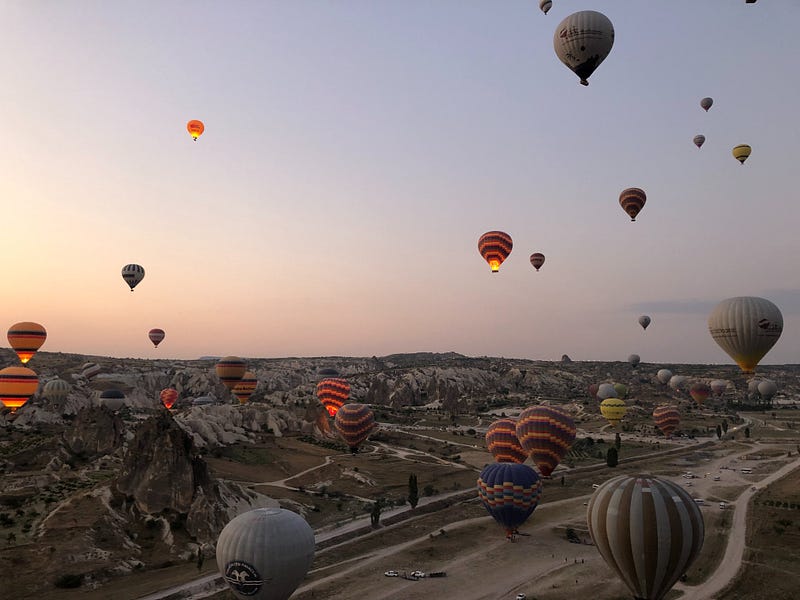
Which is why, hot air balloons are typically flown early in the morning or late in the evening when wind and temperature conditions are more favorable.
Safety:
Hot air balloons are considered safe, but with any mode of transportation, there are inherent risks involved, and it is important to understand the factors that contribute to hot air balloon safety.
One of the most important factors in hot air balloon safety is the weather conditions on the day of your flight. Balloons are heavily dependent on weather conditions for lift, and can be affected by wind speed and direction, temperature, and cloud cover. Pilots will carefully monitor weather conditions prior to takeoff and will only launch in conditions that are safe for flight. In addition, during the flight, the pilot will keep a close eye on weather conditions, and will make any necessary adjustments to ensure that the flight remains safe.
Another important factor in hot air balloon safety is the maintenance and upkeep of the balloon itself. Balloons require regular inspections and maintenance to ensure that they are in good working order, and that any issues are addressed promptly. Pilots will perform a thorough pre-flight inspection of the balloon, checking the condition of the fabric, the rigging, and the burner system, among other things. In addition, the pilot should have a good understanding of the equipment, and be able to respond quickly and effectively in the event of an emergency.
Finally, it is also important to understand the safety procedures that are in place during hot air balloon flights. Pilots will brief passengers on what to do in the event of an emergency, and will have a plan in place for responding to any issues that may arise during the flight. In addition, it is important to note that hot air balloons are equipped with safety equipment, such as life jackets, flares, and a first aid kit, that can help to ensure that passengers are safe in the event of an emergency.
In conclusion, hot air balloons can offer a unique and exciting way to see the world, but it is important to take the necessary steps to ensure that the flight is as safe as possible. By understanding the factors that contribute to hot air balloon safety, and by following the recommended safety procedures, you can help to ensure that your hot air balloon flight is a memorable and enjoyable experience.



