avatarVibrant Jellyfilsh

Free AI web copilot to create summaries, insights and extended knowledge, download it at here

2621

Abstract

</p><h2 id="a518">Elaborative rehearsal:</h2><p id="c5f4">Interacting with something allows us to create connections between new information and prior knowledge, which is known as elaborative rehearsal. This process can help to reinforce our understanding of the information and make it more memorable.</p><p id="c5db">Social connections can also play a role in elaborative rehearsal, as we can discuss and explain the information with others, which can help to solidify our understanding and make it more memorable. Additionally, having a sense of belonging and feeling supported in a social setting can also positively impact our motivation to learn and retain information.</p><h2 id="d676">Encoding:</h2><p id="93d2">Interacting with something allows us to encode the information in a way that is more meaningful to us. Encoding is the process of taking in information, and when we interact with it, we are more likely to encode it in a way that we can remember later.</p><p id="fd2d">Social connections can provide a sense of support and belonging, which can improve motivation to learn and retain information. Additionally, discussing and explaining information with others can also help to clarify understanding, and to identify and address misconceptions. Furthermore, having a variety of perspectives and explanations can also increase one’s understanding of the information.</p><h2 id="3e0a">Emotion:</h2><p id="576c">Interacting with something allows us to create an emotional connection with the information. Emotion can help us to remember things for a long time, since it creates a strong association with the memory.</p><p id="380c">motion can create a strong association with a memory, making it more memorable and more likely to be retrieved later. Additionally, when we experience a strong emotion, it activates the release of hormones in the brain such as adrenaline, which can increase the encoding and consolidation of memories. This is why memories that are associated with strong emotions, such as happiness, sadness, or fear, are often the most vivid and long-lasting.</p><h2 id="1e05">Summary</h2><p id="a556">Being able to interact with something can help us to remember it because it allows for active engagement, multi-sensory learning, spaced repetition, elaborative rehearsal, encoding, and an emotional connection with the information.</p><figure id="e6cd"><img src="https://cdn-images-1.readmedium.com/v2/resize:fit:800/1*ZMA9aX3YgB9CHGsMYAd2PA.png"><figcaption></figcaption></figure><div id="7011" class="link-block"> <a href="https://readmedium.com/adolescence-and-continuing-em # Options pathy-development-e5620d4113e0"> <div> <div> <h2>Adolescence and Continuing Empathy Development</h2> <div><h3>During adolescence, empathy development continues as individuals navigate the complex social world of adolescence.</h3></div> <div><p>medium.com</p></div> </div> <div> <div style="background-image: url(https://miro.readmedium.com/v2/resize:fit:320/1*AN4Ybq6J75ClnGnC8-CSOA.jpeg)"></div> </div> </div> </a> </div><div id="3a25" class="link-block"> <a href="https://readmedium.com/the-art-of-subtext-writing-with-layers-of-meaning-2e48e1c74ec2"> <div> <div> <h2>The Art of Subtext: Writing With Layers of Meaning</h2> <div><h3>Techniques and strategies that infuse writing with subtext, allowing for deeper layers.</h3></div> <div><p>medium.com</p></div> </div> <div> <div style="background-image: url(https://miro.readmedium.com/v2/resize:fit:320/1*Vht78bHXVzvMFQGaBX68Ng.jpeg)"></div> </div> </div> </a> </div><div id="69eb" class="link-block"> <a href="https://readmedium.com/the-importance-of-mini-goals-addcad380095"> <div> <div> <h2>The Importance Of Mini Goals</h2> <div><h3>Where do you want to be in 5 years? What can you do this afternoon that would take you closer to that?</h3></div> <div><p>medium.com</p></div> </div> <div> <div style="background-image: url(https://miro.readmedium.com/v2/resize:fit:320/1*-LY8NXV6e2sZ-CrR9S0EIg.jpeg)"></div> </div> </div> </a> </div><div id="c108" class="link-block"> <a href="https://readmedium.com/we-can-not-deprive-children-of-play-or-we-risk-destroying-society-2346eef58397"> <div> <div> <h2>We Can Not Deprive Children of Play or We Risk Destroying Society</h2> <div><h3>There is a growing body of evidence that supports the importance of play in child development.</h3></div> <div><p>medium.com</p></div> </div> <div> <div style="background-image: url(https://miro.readmedium.com/v2/resize:fit:320/1*TbOxvucws6AB1bk3us0Z8g.jpeg)"></div> </div> </div> </a> </div></article></body>

Why Interaction Is Such a Great Learning Tool

Being able to interact with something can help us to remember it for many reasons:
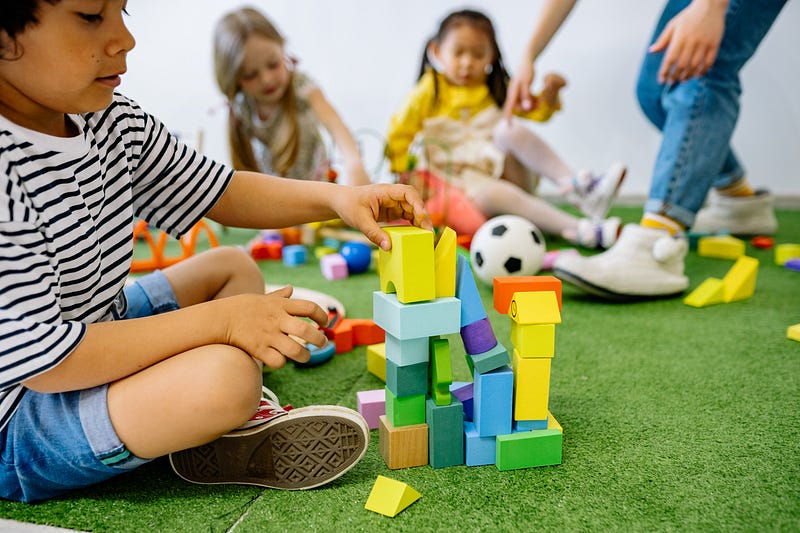
Photo by Yan Krukau: https://www.pexels.com/photo/boy-in-white-and-black-striped-shirt-playing-wooden-blocks-8612921/

Active engagement:

When we interact with something, we are actively engaging with the information, which can make it more memorable. Our brains are more likely to process and retain information when we are actively involved in the learning process, as opposed to passively receiving information.

When we are actively engaged in learning, we are more likely to be motivated and interested in the material, which can also enhance our ability to remember it. Also, when we are able to relate the information to our own experiences or to something we already know, it can make it more meaningful and memorable.

Multi-sensory learning:

Interacting with something often involves multiple senses, such as sight, sound, touch, and movement. This multi-sensory learning can help to create multiple pathways to access the information, which makes it more accessible and easier to recall later.

Multi-sensory learning can take many forms, such as using visual aids, hands-on activities, and audio recordings. Using multiple senses can help to create stronger neural connections in the brain, which can make the information more deeply ingrained in our memory. This is why multi-sensory learning can be particularly effective for people with learning difficulties, such as ADHD or dyslexia.

Spaced repetition:

Interacting with something allows us to practice and repeat the information multiple times, which can help to improve retention and recall. Spaced repetition, which is the practice of reviewing information at specific intervals, is an effective way to improve memory retention and recall.

Spaced repetition can take many forms, such as flashcards, quizzes, and practice tests. For example, a student can make flashcards with key terms and definitions, and review them at regular intervals, or a teacher can give quizzes or practice tests on the material covered in class to help the students to reinforce their knowledge.

Elaborative rehearsal:

Interacting with something allows us to create connections between new information and prior knowledge, which is known as elaborative rehearsal. This process can help to reinforce our understanding of the information and make it more memorable.

Social connections can also play a role in elaborative rehearsal, as we can discuss and explain the information with others, which can help to solidify our understanding and make it more memorable. Additionally, having a sense of belonging and feeling supported in a social setting can also positively impact our motivation to learn and retain information.

Encoding:

Interacting with something allows us to encode the information in a way that is more meaningful to us. Encoding is the process of taking in information, and when we interact with it, we are more likely to encode it in a way that we can remember later.

Social connections can provide a sense of support and belonging, which can improve motivation to learn and retain information. Additionally, discussing and explaining information with others can also help to clarify understanding, and to identify and address misconceptions. Furthermore, having a variety of perspectives and explanations can also increase one’s understanding of the information.

Emotion:

Interacting with something allows us to create an emotional connection with the information. Emotion can help us to remember things for a long time, since it creates a strong association with the memory.

motion can create a strong association with a memory, making it more memorable and more likely to be retrieved later. Additionally, when we experience a strong emotion, it activates the release of hormones in the brain such as adrenaline, which can increase the encoding and consolidation of memories. This is why memories that are associated with strong emotions, such as happiness, sadness, or fear, are often the most vivid and long-lasting.

Summary

Being able to interact with something can help us to remember it because it allows for active engagement, multi-sensory learning, spaced repetition, elaborative rehearsal, encoding, and an emotional connection with the information.

Education
Interaction
Learning
Interactive
Schools
Recommended from ReadMedium