
Expert Tips: 5 Investment Auction Lots To Watch This Week (#5)
Five “sleepers” that could be an excellent investment!
Welcome to the world of antiques and collectibles — where history meets investment potential! Every Monday, we invite you to embark on a journey with us into the realm of auctions as we unveil a carefully curated selection of “sleepers”.
With 15 years of experience in the trade — buying, selling, and performing evaluations for auction houses — we will introduce you to those hidden gems that may very well turn out to be extremely sound investments.
Auction houses have long been the treasure troves where passionate enthusiasts, connoisseurs, and shrewd investors converge to seek out the rare, the exquisite, and the valuable. With a discerning eye and a penchant for uncovering the extraordinary, we have handpicked five auction lots that are poised to capture the hearts and imaginations of both seasoned collectors and novices alike. Let’s dig in!
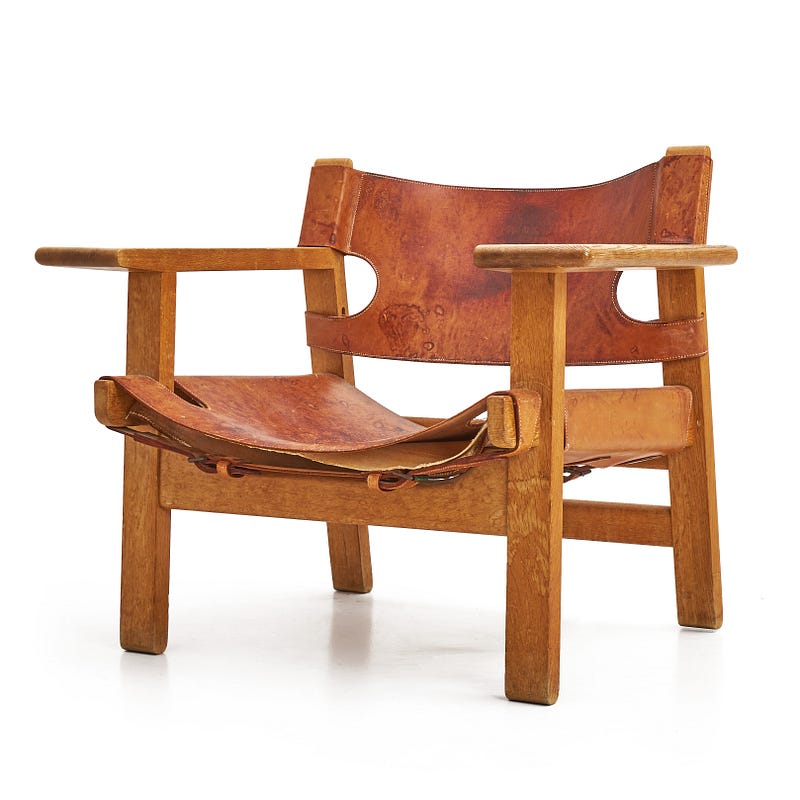
1. BØRGE MOGENSEN, “The Spanish Chair”. Model “226”. Designed in 1958.
We will start with a true classic. The Spanish Chair, an iconic creation by Danish designer Børge Mogensen, embodies a timeless blend of Scandinavian simplicity and Spanish traditional design elements. Crafted in the 1950s, this distinguished piece was inspired by the robust, rustic chairs found in Spain, merging Nordic design sensibilities with Mediterranean influences.
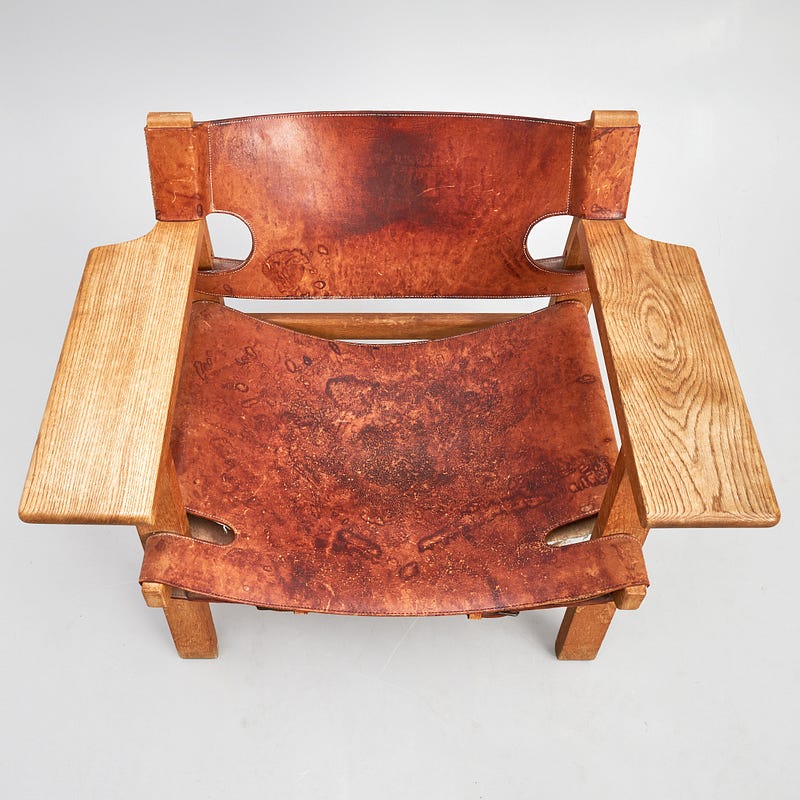
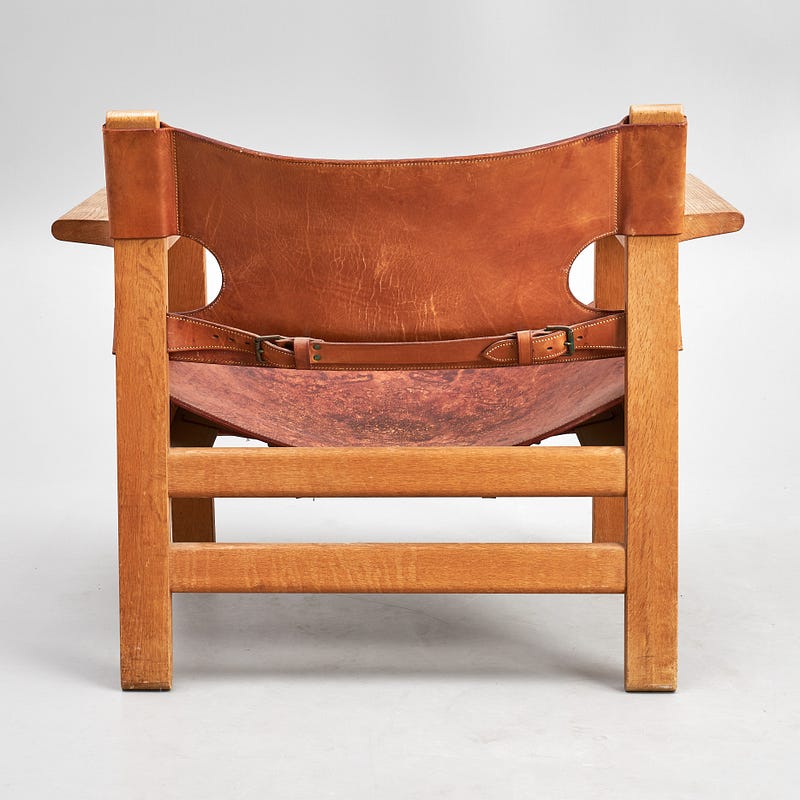
Mogensen’s chair boasts a solid oak frame and saddle leather upholstery, demonstrating a harmonious marriage of craftsmanship and functionality. Its notable features include the rich, supple leather that ages gracefully over time, enhancing the chair’s character and comfort.
Distinctive in its angular yet inviting form, the Spanish Chair exudes a sense of strength and elegance, reflecting Mogensen’s ethos of functionalism and aesthetic refinement. It serves as an embodiment of his vision to create furniture that harmonizes with everyday life while preserving its aesthetic appeal.
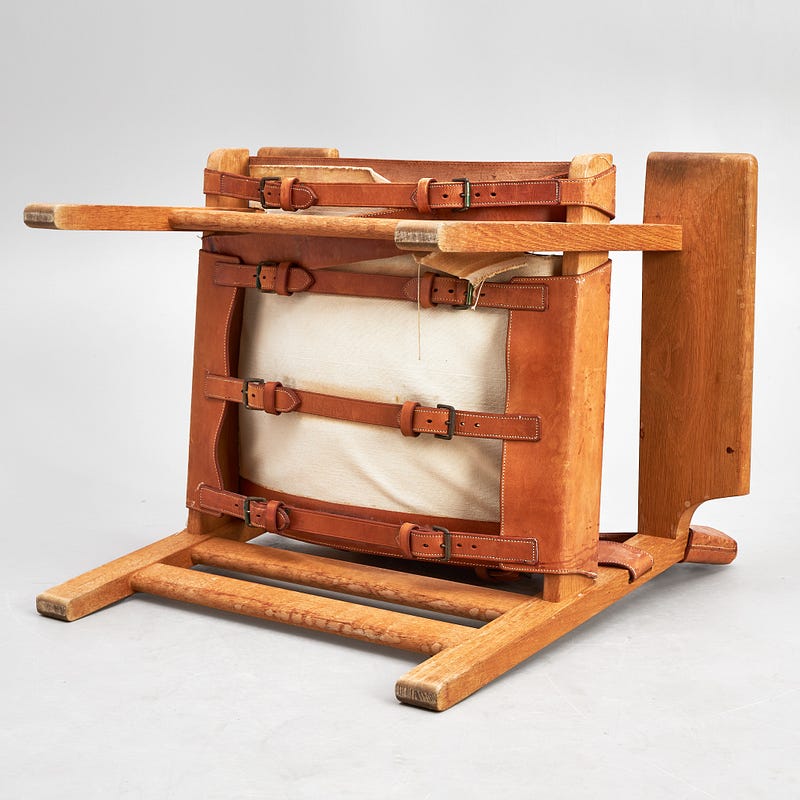
Celebrated for its enduring design, the Spanish Chair remains an ever coveted collector’s piece, suiting modern interiors and representing the convergence of cultural influences in mid-century design.
Valued at 2.800 USD, there is more than room to play.
See the chair and make a bid here at Crafoord Auktioner Stockholm.
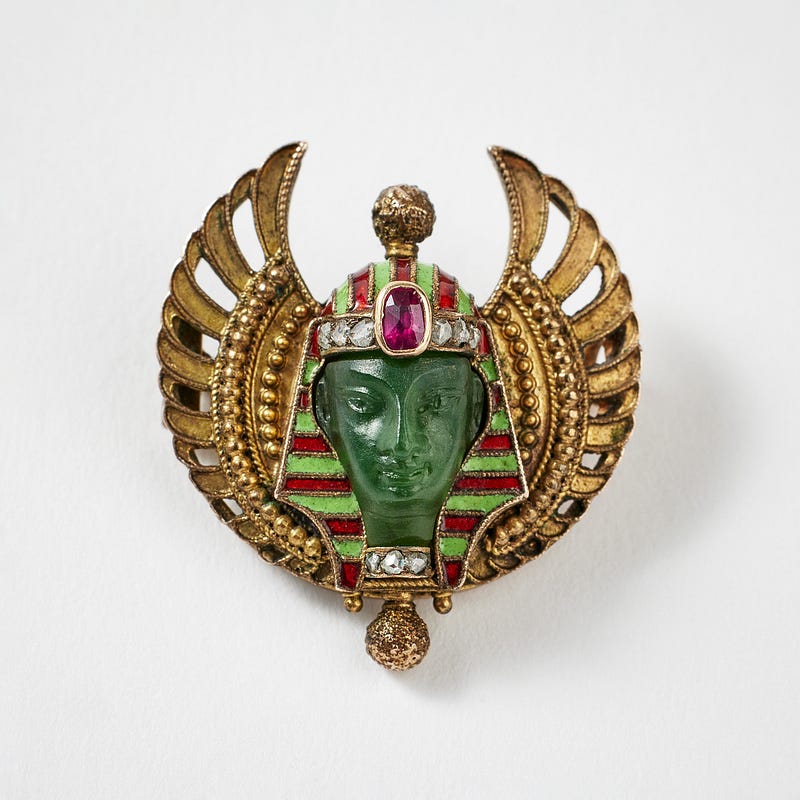
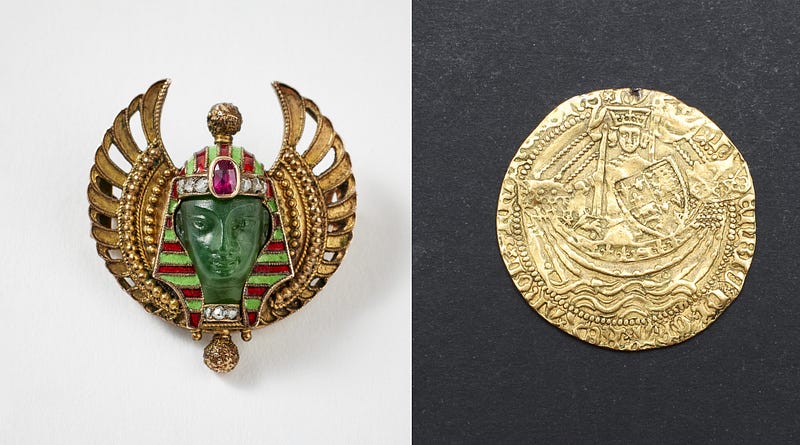
2. CARL BACHER, 14k gold Egyptian Revival brooch, circa 1880.
In the 19th century, the unearthing and excavations of ancient artifacts sparked the rise of “archaeological revival jewelry”, also known as “Egyptian revival jewelry”. This artistic movement, thriving from the 1820s, drew inspiration from ancient Egyptian symbols like scarab beetles, sphinxes, pharaohs, and hieroglyphics.

The fascination with these discoveries birthed a vibrant period, influencing clothes, fashion, and jewelry design with its incorporation of iconic motifs from Egypt’s rich history and culture.
Hailing from Austria, Carl Bacher, son of the esteemed Viennese jeweler Joseph Bacher, emerged during the 1870s. Collaboratively, they crafted remarkable, award-winning jewelry pieces in the captivating Egyptian Revival style, showcased in global expositions.
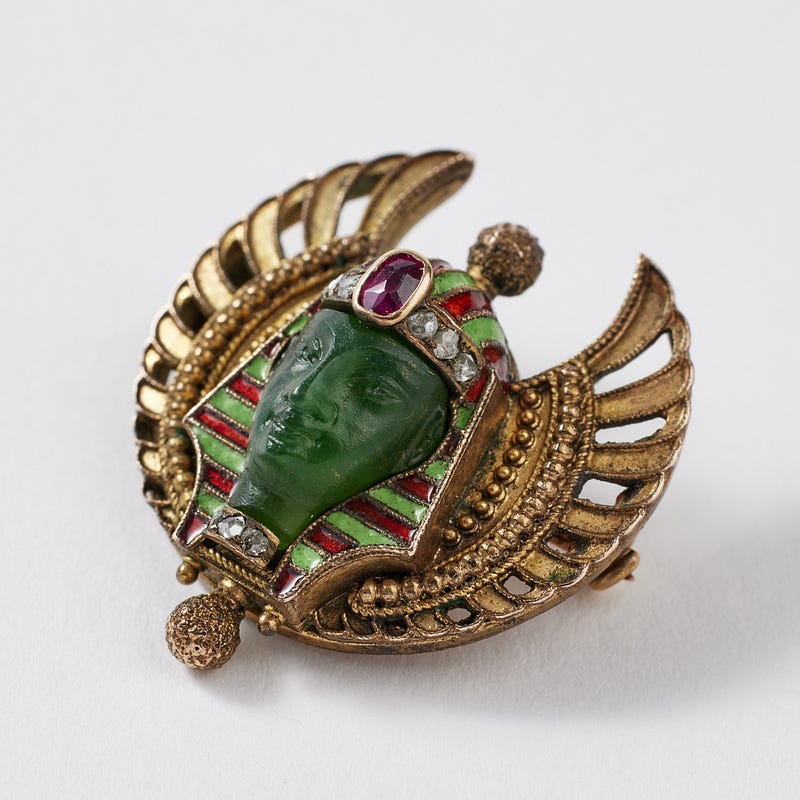
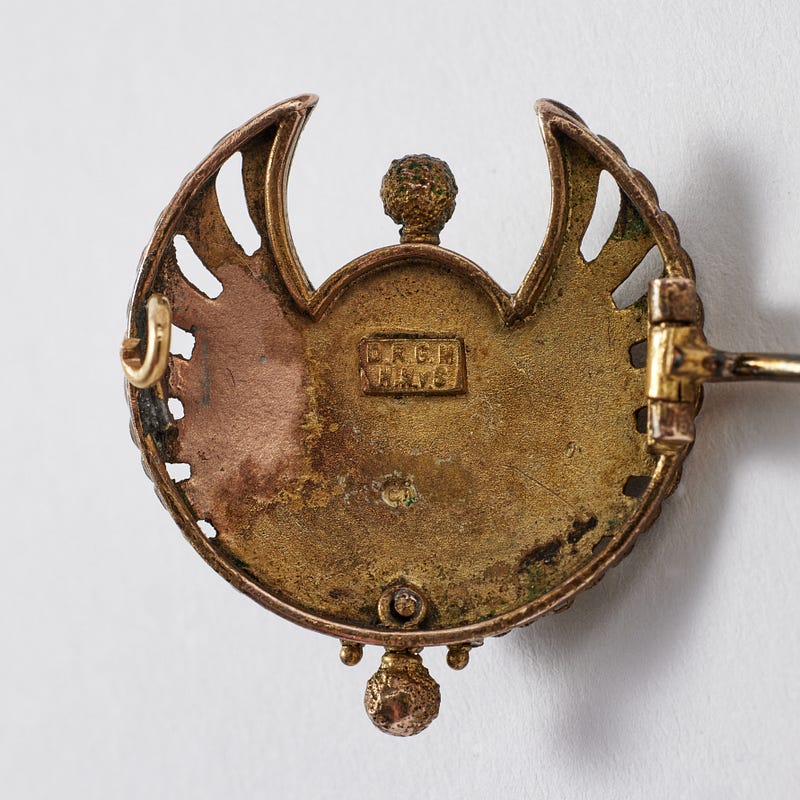
Their craftsmanship boasted meticulous attention to detail, exhibiting exquisite utilization of gold and enamel, drawing from Etruscan and Castellani techniques. Their artistic prowess seamlessly merged historical elements with fashion, infusing beauty into their designs. The Bachers’ creations stood a step beyond their contemporaries due to their innovative artistry, marrying intricate craftsmanship with a profound appreciation for history, fashion, and aesthetic allure.
This brooch from around 1880 is 14K gold and made in jade high relief, depicting a pharaoh. Headscarf with enamel decoration in green and red, one oval cut ruby, and rose-cut diamonds. valued at 1.900–2.800 USD, which is frankly a steal. If you are lucky to find one for sale, these usually retail at around 6.000 USD.
See the brooch and make a bid here at Stockholms Auktionsverk.
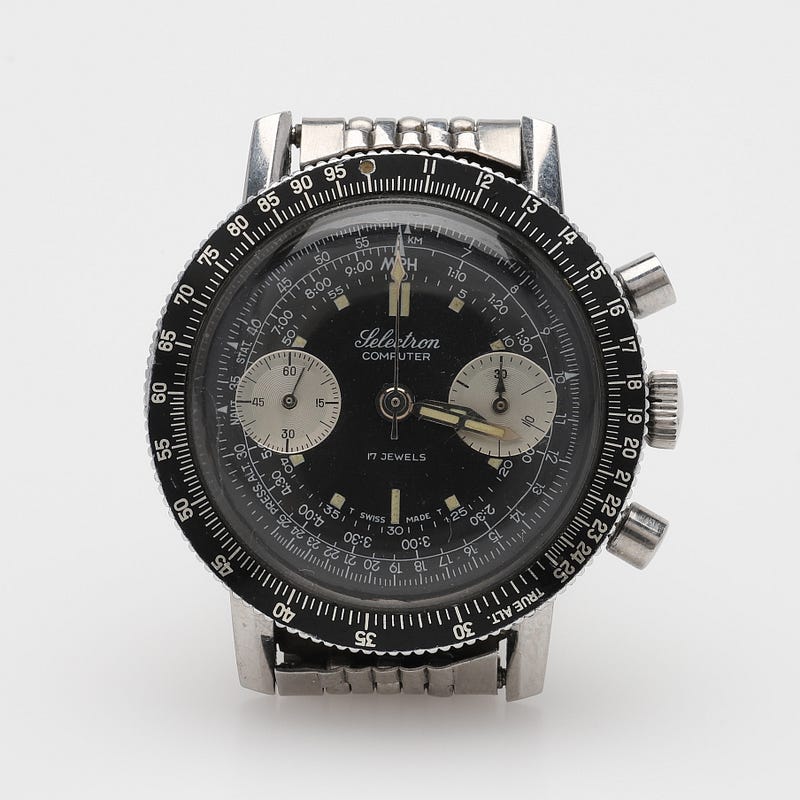
3. Wristwatch “SELECTRON COMPUTER”, by OLLECH & WAJS, 1960s.
The 60s and 70s were a time of change within the watch industry. New technological advances combined with bold and often radical designs, paved the way for some of the most outrageous and cool watches ever made.
The SELECTRON COMPUTER watch was marketed as “an instrument panel on your wrist”, and can be seen as an early forerunner to today's smartwatches. Made by the pioneering company Ollech & Wajs, this avant-garde wristwatch is a testament to innovative design and technological advancement, seamlessly merging horology with computing functionalities.
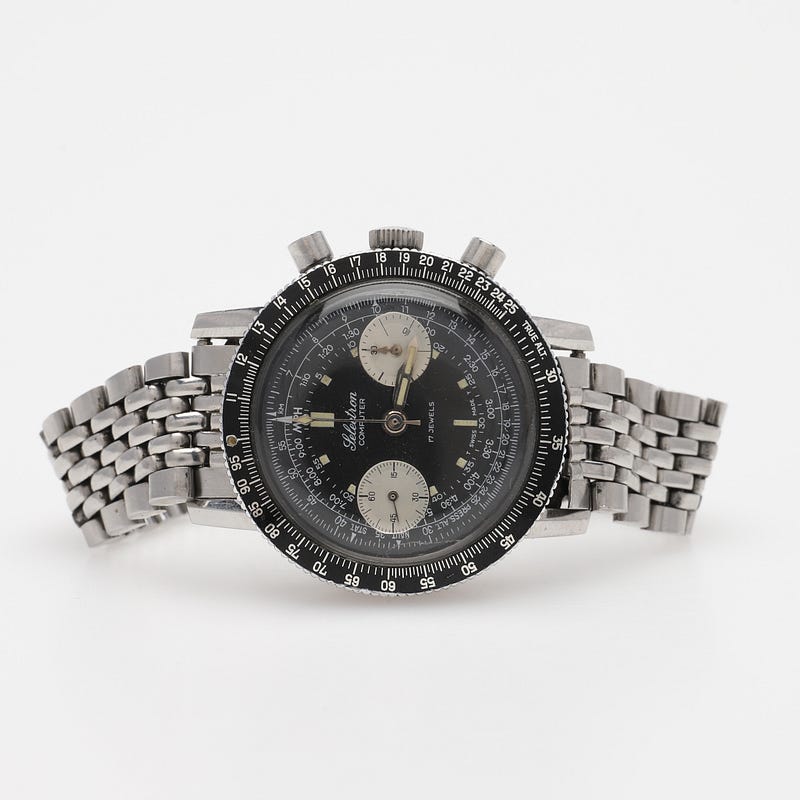
In earlier times, the term ‘computer’ referred to an individual performing calculations, not to a programmable digital processing machine. Preceding the arrival of pocket calculators, a wristwatch equipped with a slide rule scale served multiple functions, aiding in computing ratios, percentages, air and ground speeds, rates of ascent or descent, distance conversions, as well as multiplication and division.
The watch’s interface boasted a blend of simplicity and functionality, allowing users to perform basic arithmetic operations and conversions effortlessly. Despite its relatively modest computational abilities (compared to contemporary devices), the SELECTRON COMPUTER represented a bold leap into the realm of wearable technology, marking an era when futuristic innovations merged with traditional watchmaking.
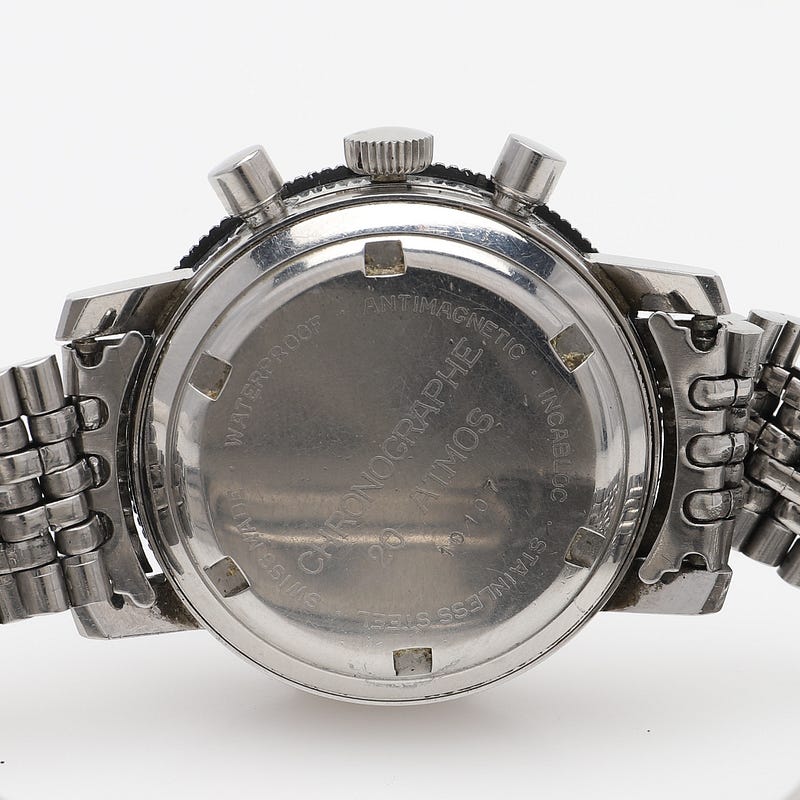
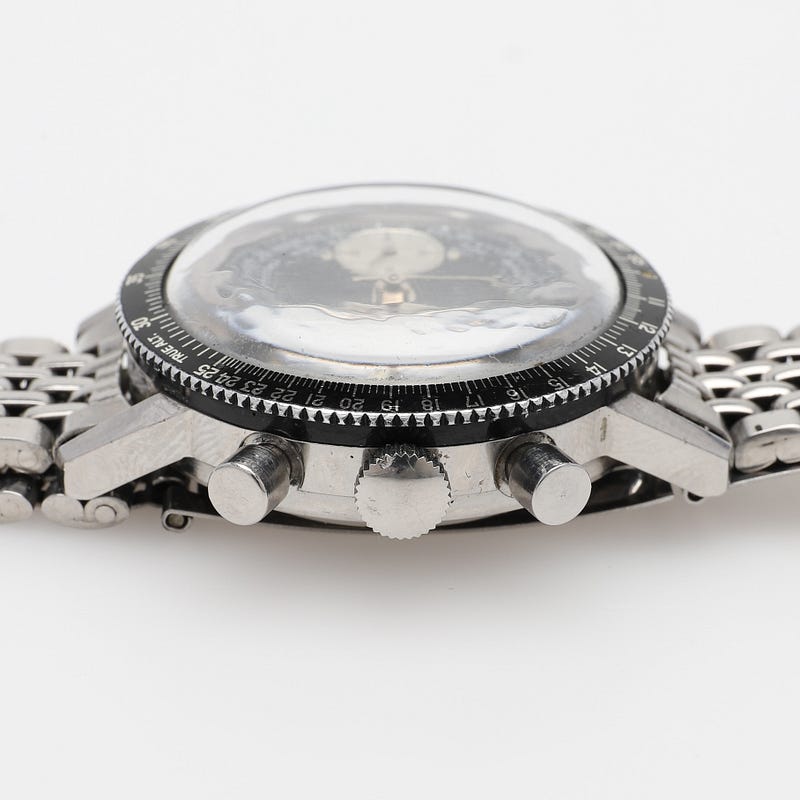
This was more than a timekeeping accessory; it embodied a glimpse into a future where wristwatches would transcend their primary purpose, foreshadowing the integration of technology and convenience in wearable devices that continues to shape the landscape of modern smartwatches.
Valued at just 1.400 USD, (this watch is usually retailed at 5.000–6.000 USD), the SELECTRON COMPUTER remains a prized collector’s item, revered for its visionary design and as a milestone in the evolution of wearable tech.
See the watch and make a bid here at Crafoord Auktioner Lund.
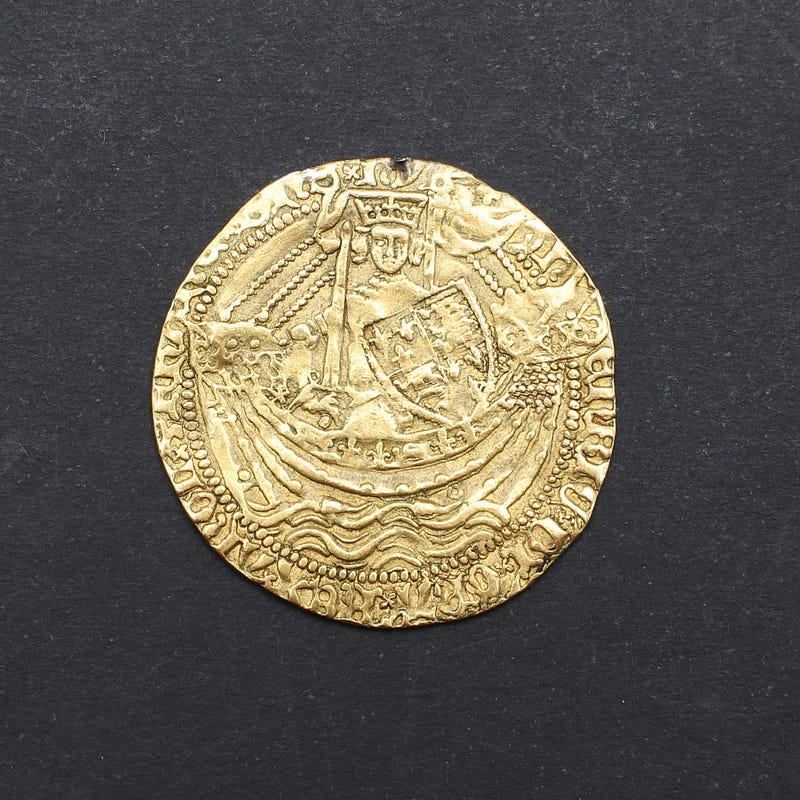
4. English HENRY V “Noble” Gold Coin, 1413–22.
The “Numista Rarity Index”, is an index that shows the approximate rarity of coin, banknote, and exonumia types. This index, (sometimes abbreviated as NRI), theoretically ranges from 0 to 100, with 0 representing extremely common items and 100 representing the rarest items. This coin is rated 100, which gives even a novice a good idea about how scarce this coin is. Now, rare does not always equate to value, but in most cases, it does have some merit.
The English Henry V “Noble” Gold Coin, minted from 1413 to 1422, stands as a testament to the grandeur and historical significance of medieval English coinage. This iconic coin bears the likeness of King Henry V in his regal splendor on one side, and a “cross fleury” surrounded by a crown on the reverse (tail side of the coin). Struck in gold, it exemplifies the wealth and power of the English monarchy during Henry V’s reign. The lettering reads: “IHC AUTEM TRANSIENS PER MEDIUM ILLORUM IBAT”(“But Jesus passing through their midst went His way”).
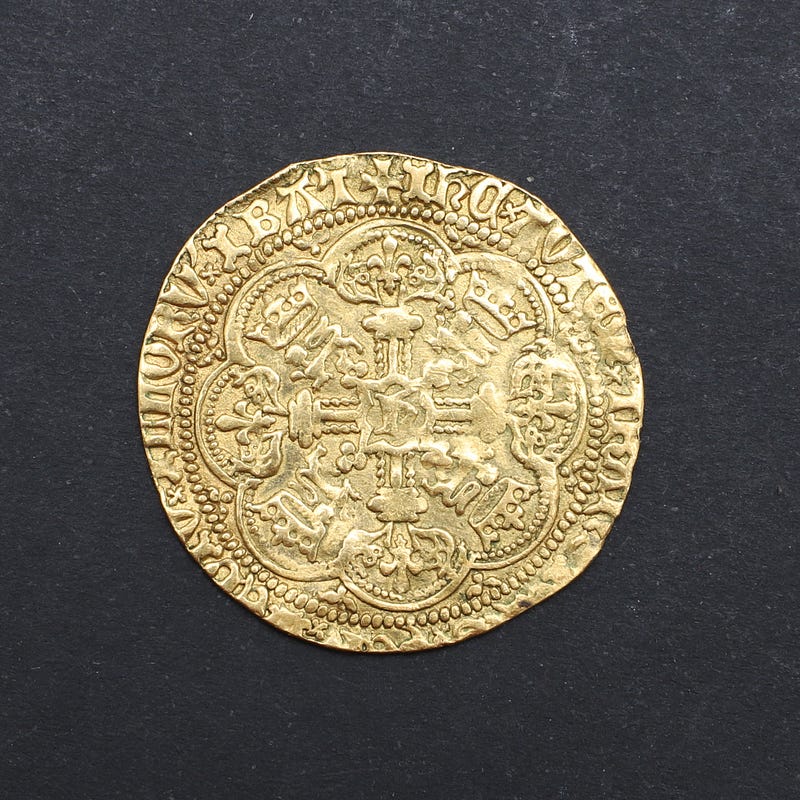
The “noble” coins were notable for their impressive weight and fineness of gold (weighing 6.9 grams), symbolizing stability and prosperity in trade across Europe. Their intricate design, with meticulous attention to detail, showcases the craftsmanship of the era, epitomizing the artistic and metallurgical advancements of the time.
Beyond its financial value, the Henry V Noble Gold Coin holds immense historical and cultural significance, representing an era of chivalry, conquest, and the Hundred Years’ War. These coins circulated widely in medieval England and Europe, and serve as tangible relics connecting modern enthusiasts to the rich heritage and royal legacy of the renowned King Henry V.
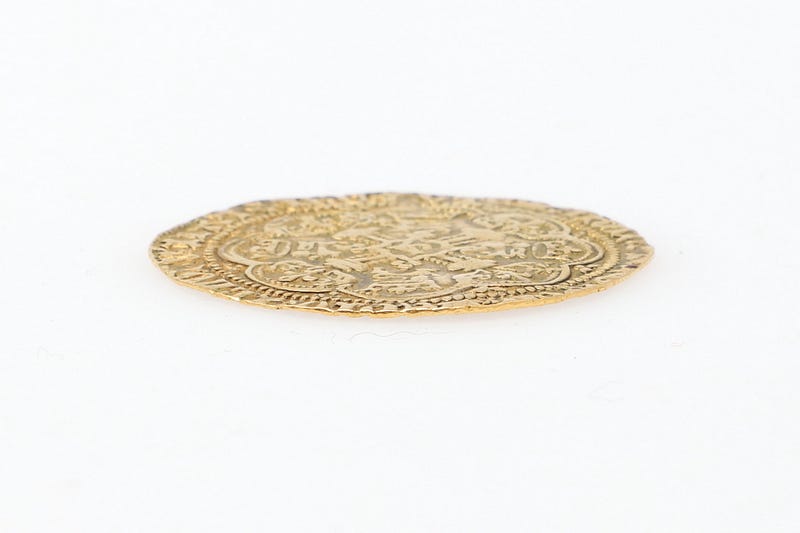
Valued at 1.250–1.800 USD, this represents great value for money (literally). While coin collectors more than any collectors value and minuscule condition differences (the grading systems are a study in themselves), this is a coin that usually sells at double that.
See the coin and make a bid here at Lawrences Auctioneers.
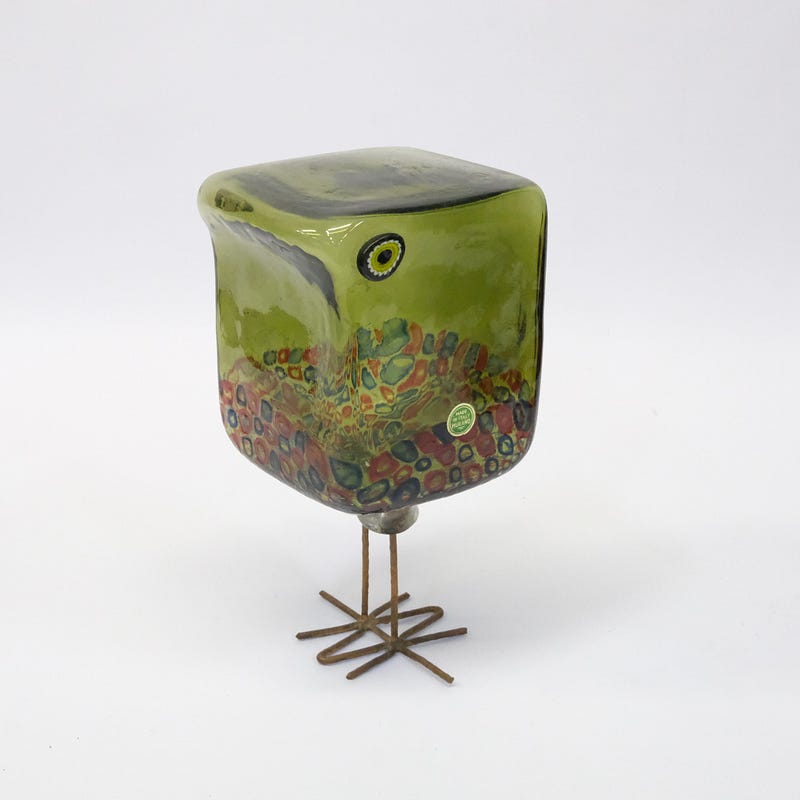
5. ALESSANDRO PIANON. BIRD SCULPTURE. “PULCINO”. VISTOSI 1960.
Alessandro Pianon stands as a master in the world of Murano glass, renowned for his exceptional creativity and contributions to the art form during the mid-20th century. As a gifted glass designer and sculptor, Pianon’s work epitomizes the ingenuity and artistic prowess associated with Murano’s centuries-old glassmaking tradition.
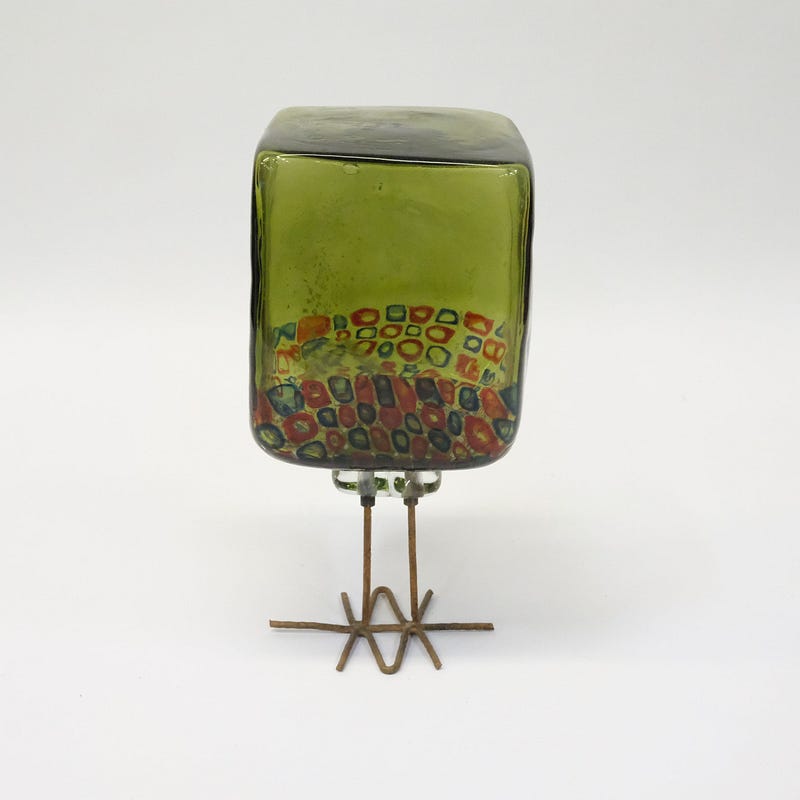
Pianon’s innovative designs, crafted with mastery and finesse, revolutionized Murano glasswork. He notably collaborated with the renowned Venetian glassmaker, Vistosi. His creations often pushed the boundaries of conventional glassmaking techniques, introducing avant-garde shapes, textures, and vibrant colors that set a new standard in the industry.
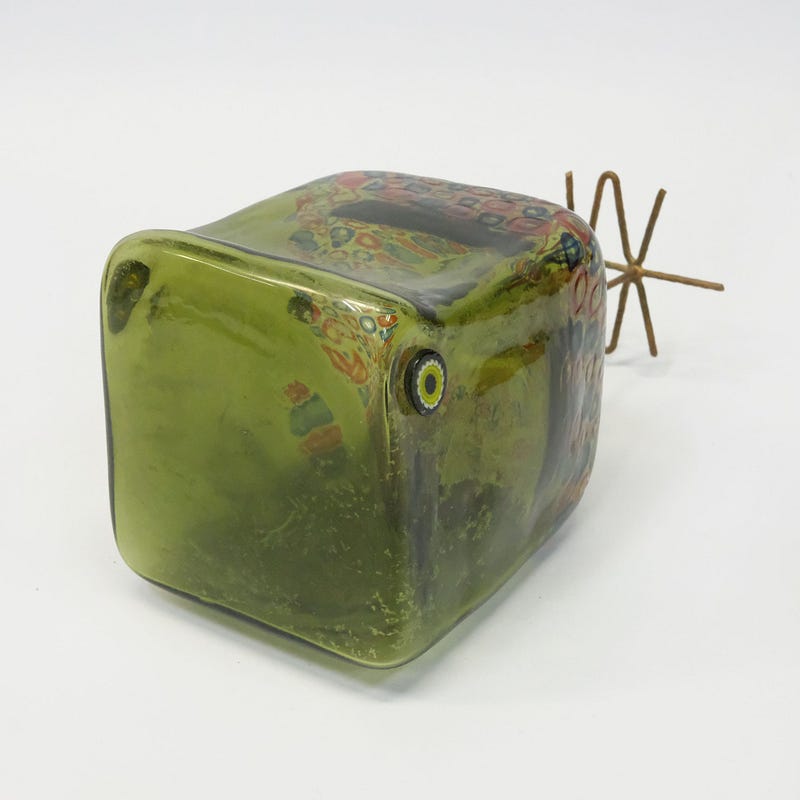
One of Pianon’s most celebrated contributions was the creation of organic and sculptural forms in glass. His designs, characterized by fluid and abstract shapes resembling marine life, flora, or cosmic entities, demonstrated a harmonious fusion of artistic expression and technical expertise.
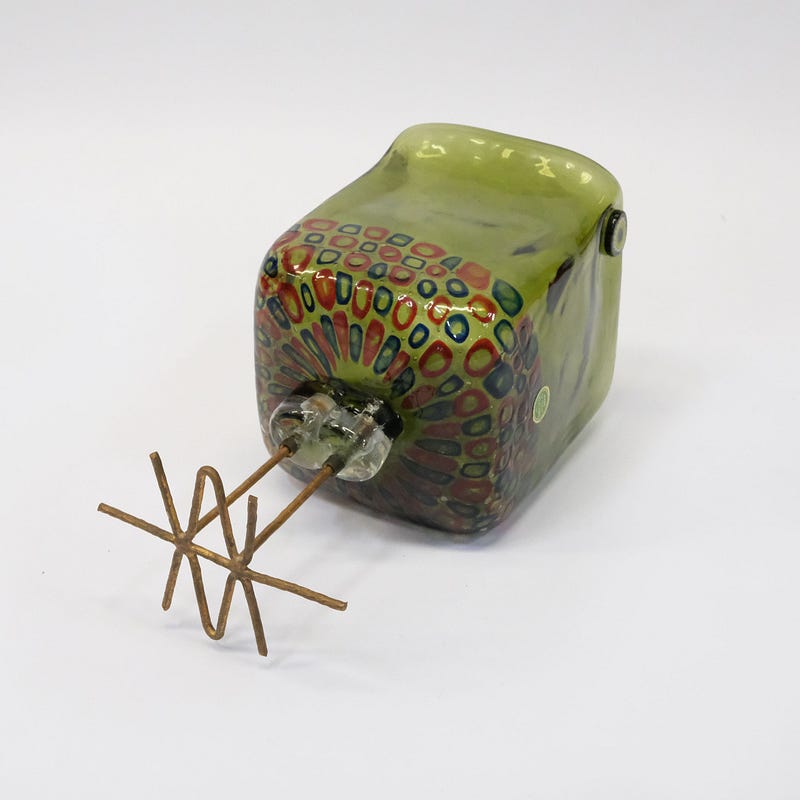
Mostly renowned for his series of glass birds (“Pucini”)and chicks (“Pulcino”), this particular sculpture in a cube-shape, showcases a playful and highly complicated creation. Valued at 2.300 USD, I would not be surprised if it doubled that estimate — they usually do. A similar “Pulcino” sold in 2021 for 4.000 USD.
See the sculpture and make a bid here at Björnssons Auktionskammare.
That’s it for this week’s auction Top Tips. Stay tuned for more tips and auction lots next week. Every Monday we will keep you posted with the best ways to spend your money!