
Illuminating Designs: The Lights of Danish Visionary Louis Poulsen
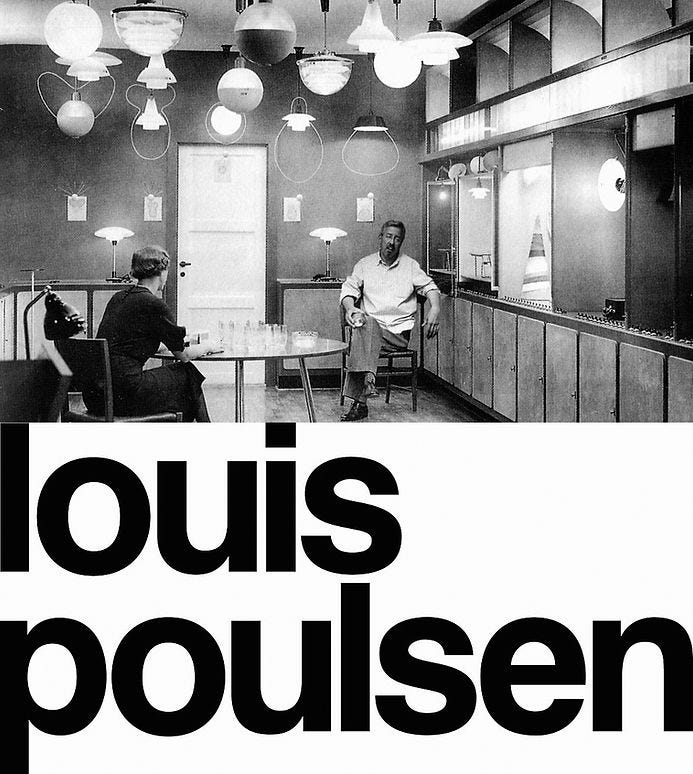
Pioneering Luminance in the Heart of Denmark
The realm of design is an ever-evolving landscape, shaped by creative minds who push boundaries and challenge conventions. Among these stands the Danish designer Louis Poulsen, whose contributions to lighting design have transformed how we perceive and interact with light within our built environments.
The Cultural Landscape of 19th Century Denmark
To truly appreciate Louis Poulsen’s impact, we must first navigate the cultural tapestry of 19th century Denmark. A nation known for its rich traditions in craftsmanship, Denmark was experiencing a period of profound societal and artistic change during Poulsen’s formative years. As the Industrial Revolution gained momentum, urban centers like Copenhagen emerged as hubs of innovation and creativity, providing fertile ground for Poulsen’s future endeavors.
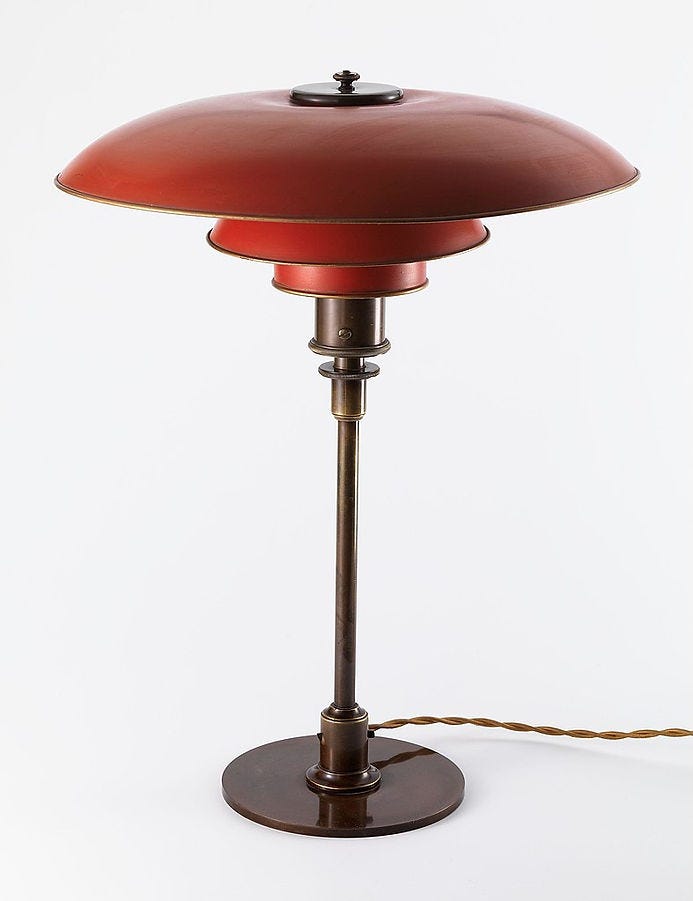
Born in 1874 in the heart of Copenhagen, Louis Poulsen grew up in an era characterized by a symbiotic relationship between art and industry. The influential Arts and Crafts movement, which sought to reconcile the separation of art and manufacturing, deeply influenced Poulsen’s early perceptions of design. This movement, along with the burgeoning Art Nouveau and Art Deco styles, would lay the groundwork for Poulsen’s design.
Emergence of an Illuminating Visionary
Poulsen’s journey into the world of design was not linear but rather a convergence of various artistic and technological currents. As a young apprentice, he honed his skills in his father’s wine and spirits business, developing an acute understanding of craftsmanship and attention to detail. It was during this period that he began to experiment with creating his own light fixtures, driven by an innate curiosity about the interplay between light and shadow.
Poulsen’s distinctive design philosophy was a unique fusion between artistic expression and utilitarian functionality.
Collaborative Alchemy: The Poul Henningsen Connection
The trajectory of Louis Poulsen’s career took a significant leap forward when he formed a collaboration that would become synonymous with excellence in lighting design. Enter Poul Henningsen, a Danish architect, author, and luminary in his own right. The union of Poulsen’s design acumen and Henningsen’s visionary insights yielded a series of lights that continue to captivate and inspire today.
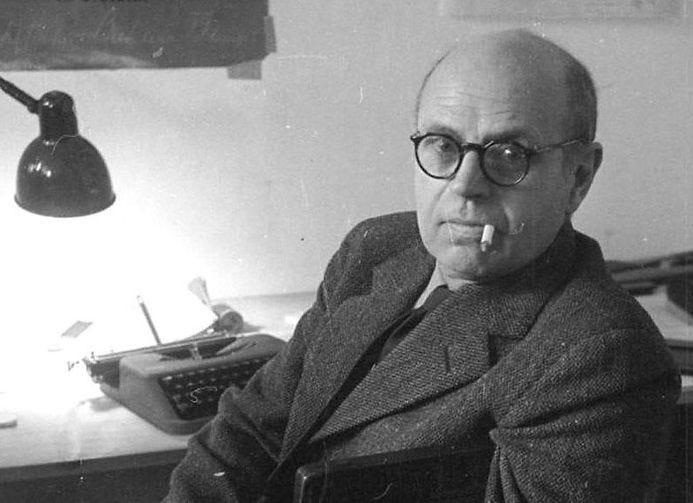
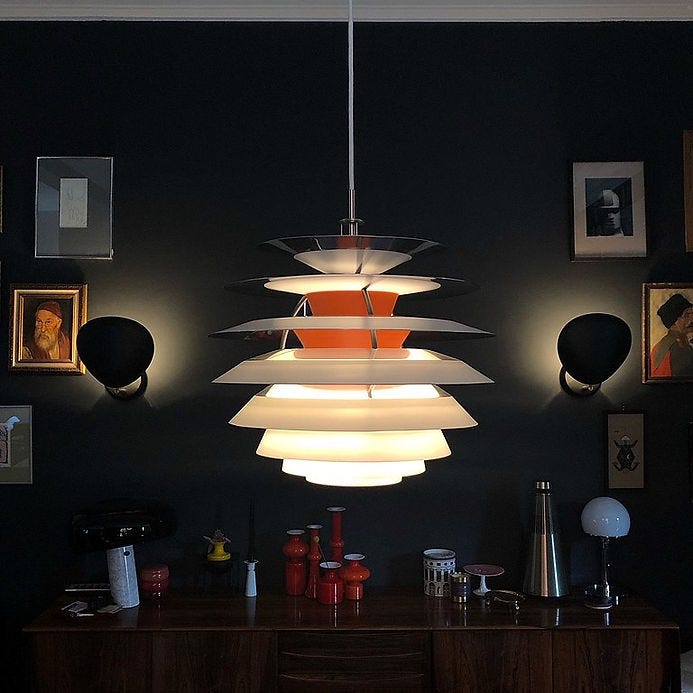
The pivotal moment in Poulsen’s career came in 1924 with the unveiling of his ground-breaking creation: the “PH” lamp, named after his collaborative partner’s initials Poul Henningsen. This iconic design marked a turning point in lighting history, challenging established norms and introducing a new paradigm of illumination. The PH lamp’s revolutionary multi-shade system deftly diffused light, banishing harsh glare and casting a gentle, ambient glow. Poulsen’s creation was not merely a utilitarian object; it was a work of art that transformed the ambiance of spaces and heightened the sensory experience of those within them.
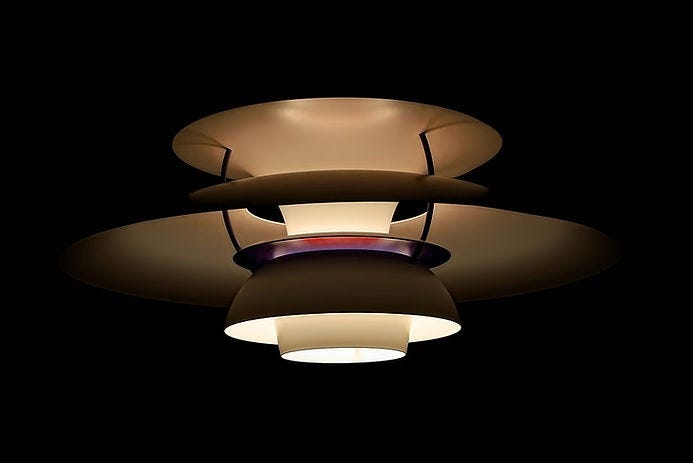
The iconic PH lamp series expanded upon Poulsen’s groundbreaking multi-shade system. Henningsen’s contributions injected a refined blend of scientific precision and artistic intuition. His meticulous calculations of shade angles and reflective properties resulted in lighting fixtures that not only provided unparalleled illumination but also sculpted spaces with a symphony of light and shadow.
This partnership between Poulsen and Henningsen epitomized the harmonious fusion of two creative minds, elevating lighting design to an art form that transcended its utilitarian purpose.
The PH lamp’s revolutionary multi-shade system deftly diffused light, banishing harsh glare and casting a gentle, ambient glow.
Craftsmanship and Form
Central to Poulsen’s design philosophy was a deep reverence for craftsmanship and an unwavering commitment to form that followed function. His meticulous attention to detail and insistence on using high-quality materials set his creations apart in a market saturated with mass-produced goods. Each element of the PH lamp was carefully considered, from the arrangement of shades to the choice of metals and finishes. This synthesis of artistic ingenuity and technical precision elevated the PH lamp to an icon of design, capturing the imagination of both critics and consumers.
The Evolution of Aesthetics: From Modernism to Contemporary
Louis Poulsen’s design journey was not static; it evolved in tandem with shifting artistic and cultural paradigms. The mid-20th century witnessed the ascent of modernism, a movement that celebrated simplicity, functionality, and a departure from ornamentation. Poulsen’s designs seamlessly assimilated these principles, creating lighting that was not mere accessories but integral components of architectural spaces.
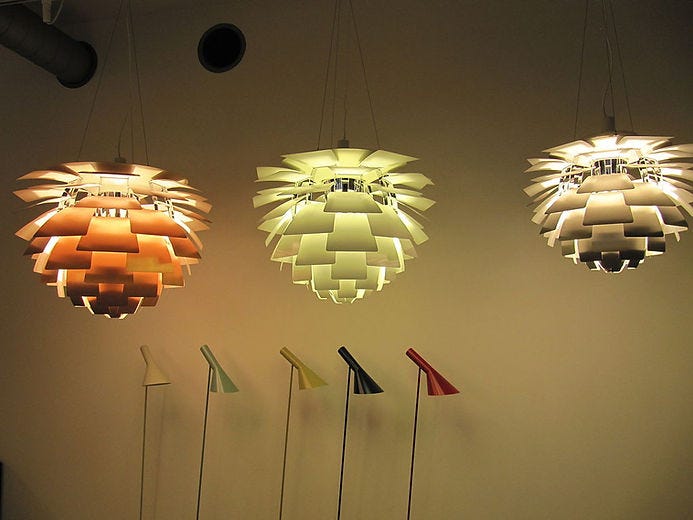
The Artichoke lamp, an iconic masterpiece born in 1958, stands as a testament to Poulsen’s mastery of modernist aesthetics. Designed by Poul Henningsen, the Artichoke lamp embodies a mesmerizing interplay of form and light, resembling the delicate petals of its namesake. Its sculptural presence challenges traditional notions of lighting fixtures, blurring the line between functional object and sculptural artwork.
Balancing Tradition and Innovation
Throughout his prolific career, Poulsen demonstrated an uncanny ability to balance tradition with innovation. The advent of new technologies, such as LEDs, presented both challenges and opportunities. True to his ethos, Poulsen embraced these advancements, recognizing their potential to redefine the boundaries of lighting design.
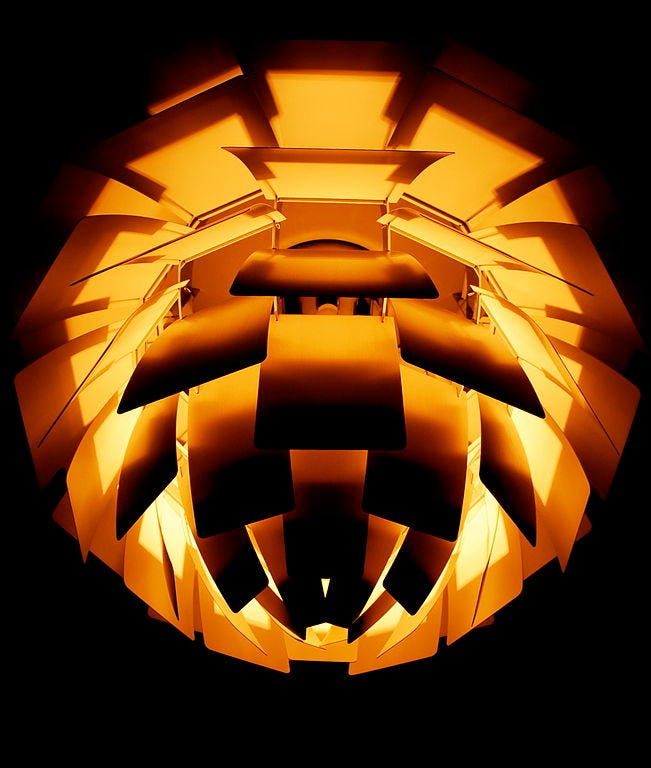
The “Patera” pendant lamp, a collaborative creation with designer Øivind Slaatto, epitomizes this fusion of tradition and innovation. Inspired by the intricate geometry of a dodecahedron, the Patera lamp marries artisanal craftsmanship with modern LED technology. Its mesmerizing interplay of light and shadow is a nod to Poulsen’s legacy while pushing the envelope of contemporary design.
Sustainability: A Guiding Ethos
Louis Poulsen’s legacy extends beyond aesthetics and functionality; it is deeply intertwined with his commitment to sustainability. Long before environmental consciousness became a widespread concern, Poulsen championed responsible and ethical design practices. His emphasis on durability, high-quality materials, and timeless design inherently aligned with the principles of sustainability.
In an era marked by excessive consumption and disposable goods, Poulsen’s lighting fixtures stood as beacons of longevity and quality. The enduring appeal of his designs defies trends and contributes to a more sustainable consumer culture, where the focus is on acquiring lasting pieces that enrich living spaces for generations. Poulsen’s legacy reminds us that design can be both beautiful and eco-conscious, setting a precedent for responsible design practices in a rapidly changing world.
Educational Influence and Design Pedagogy
Louis Poulsen’s impact transcends the realm of physical products; it has also left a big mark on design education. His design philosophy serves as a rich source of inspiration for design students and enthusiasts alike, offering insights into the intricate interplay between form, function, and human experience.
Design schools and institutions frequently turn to Poulsen’s creations as case studies, dissecting the meticulous thought processes that underlie each luminaire. His emphasis on user-centric design, his innovative approach to illumination, and his harmonious blending of artistry and functionality offer invaluable lessons for aspiring designers. Poulsen’s work underscores the transformative power of design in shaping environments and enhancing the quality of life.
#LouisPoulsen #DesignLegacy #LightingDesign #PHLamp #Sustainability #ContemporaryDesign #Aesthetics #Functionality


