
Living in Japan
Five Things about Japan I Didn’t Fully Appreciate until I Lived There
What I discovered changed the way I think about Japan.
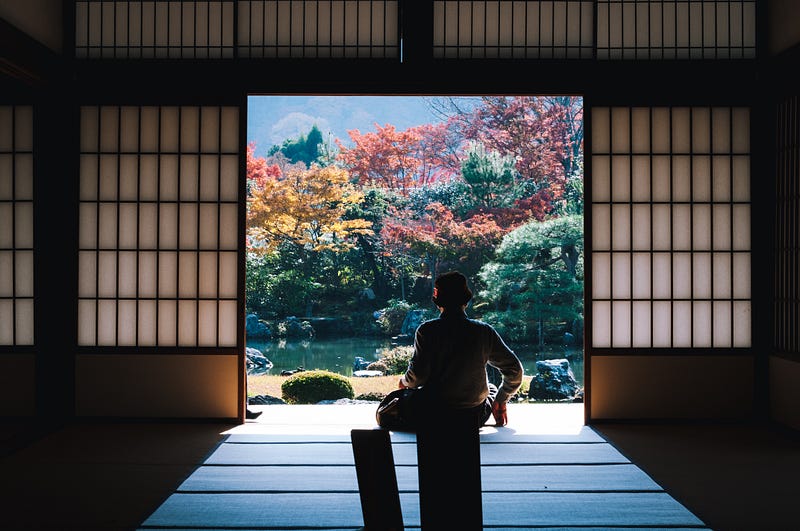
The danger of romanticizing life in Japan as a traveler is very real; what you see on the surface as a traveler may not truly reflect what living in Japan is like.
It takes living and working in Japan to really appreciate some of the deep cultural nuances that can go unnoticed by casual observers.
In this story, I explore five of these observations. What unites them is the fact that I didn’t fully appreciate them until I started to live and work in Japan.
Sorry Seems to Be the Hardest Words (No That’s Not a Typo)

Saying sumimasen — a very useful word that combines elements of thank you and I’m sorry — often lets you get away with many minor mistakes. Sumimasen also has an element of gratitude, while another word gomennasai doesn’t.
If that’s not enough, you can elevate it with moushiwake arimasen. Translated, it means something like “I have no excuses to say.”
If you screw up majorly, you might need to use another expression — owabi wo moushiagemasu.
Getting used to saying many different levels of sorry can be complicated.
Harmony and cordiality are at the center of Japanese culture. Visitors to Japan often note how nice Japanese people appear to be. A more nuanced interpretation should see politeness as simply a part of the culture. That’s why politeness is embedded within the language of social honorifics.
Why is apologizing so complicated in Japan? Perhaps this is due to the rice-farming culture that Japanese culture takes its tradition from. Rice farming is famously labor-intensive (historically speaking — nowadays it is mechanized to some extent), requiring a lot of coordination.
Or, maybe it’s because of the traditional caste system during the Edo period that separated people into samurai, artisans, farmers, and merchants and language evolved to reflect social position.
In any case, I discovered that apology is a complex art in Japan. I still haven’t fully mastered it.
Humbling Yourself Is a Way to Get Things Done
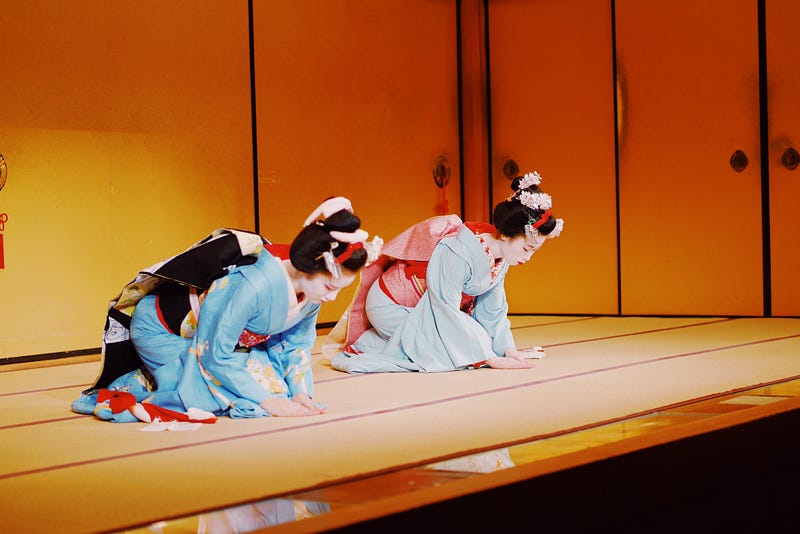
For a very long time, long-life employment was revered as the ideal corporate standard. Employees are generally given well-defined roles but ambiguous guidelines and areas of responsibilities, leading to unclear tasks and job scopes.
This also means that a lot of work needs to be done cross-functionally and often without any formal authority. So what happens if you need something done, but it doesn’t seem to be in anyone’s role and responsibility?
I discovered that humbling yourself and asking “nantoka narimasenka” can be helpful to prod someone into helping you, especially if you’ve built the right rapport with people who do go out of their way to help you. Translated, it means something like “Isn’t there some way for it to happen?”
Of course, not everyone is that nice to go the extra mile to help you. Those who are will. This is how you distinguish between truly nice people and people who are just being polite to you.
Japan is Really, Truly Obsessed with Things
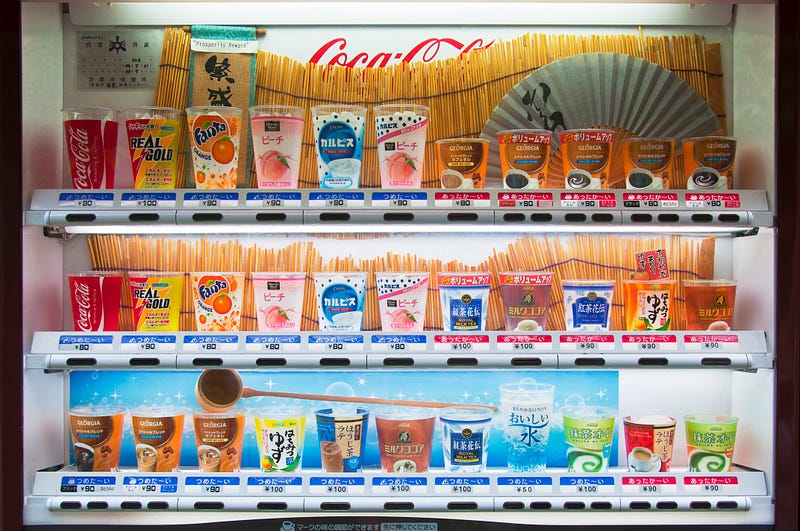
Yes, I know many countries in the world are obsessed with things. We live in a consumer culture, after all.
Still, the obsession that Japan has with things — physical, tangible items — is on an entirely different level. Remember, this is the land of vending machines, hundred yen stores, and an infinite variety of convenience store snacks.
The argument that Japanese companies tend to be quite weak at brand-building has probably has some truth to it.
A person I met who worked in a Chinese VC fund had this to say: Japanese companies are not known for their brands — they are known for their products.
Western companies, on the other hand, are much better at branding — after all, the Americans practically invented the principles of brand management.
I certainly was very surprised to learn that some Japanese companies don’t even have marketing departments! Only 10% of Japanese companies have Chief Marketing Officers. Underpinning this is the belief that if you build good products, they will sell.
It’s ironic that Japan is obsessed with things despite the profound awareness of impermanence, ephemerality, and the transience of materiality often highlighted in traditional Japanese aesthetics and culture. It’s not too much to say that Japan is smitten with things and the process of making things. There’s even a Japanese word for it — monozukuri, which translates roughly to “the making of things.”
Japan Is Also Obsessed with Perfection

This focus on monozukuri also leads the Japanese people, and Japanese companies, in particular, to take on a craftsman’s mentality: Good is never good enough; perfectionism is a virtue. You accept that you will never ever master your craft. This is in stark contrast to the “fake it till you make it” ethos that undergirds Silicon Valley.
This desire to pursue perfection seems a little quaint in a world that has been consumed by software and technology, where the rule of the game is to “move fast, break things” and get minimum viable products into the market as quickly as possible. Still, working in Japan reminds you that this old-school vision of craftsmanship is still alive in this world.
Yes, it’s not very practical at all in the digital age, but Japan is home to master craftsmen who spend their entire lives perfecting the craft of making samurai swords and $35,000 bonsai scissors!
Japan is Weird at First, Then It Gets Less Weird
The one cultural stereotype that never seems to go away is that of Japanese weirdness. Yes, Japan does things differently. Japan has maid cafes (mostly in Tokyo). A crazy robot restaurant (again in Tokyo, but it apparently closed down during the pandemic). The list goes on. Yes, the weird stuff gets the most mentions.
But life in Japan can also be extraordinarily mundane.
Before the pandemic, it was like this:
- You get up in the morning.
- You put on your work clothes.
- You fight the human sandwich on the metro/subway/train.
- You go to work and have endless meetings.
- End of day.
- Rinse and repeat.
Now, after the pandemic, it’s like this:
- You get up in the morning.
- You remain in your pajamas.
- You start working and have slightly less meetings (but not always).
- End of day.
- Rinse and repeat.
Doesn’t seem that different from the rest of the world, I think.
Let’s check another one. What are Japanese people concerned about? According to a survey of 14,000 people in their twenties to seventies by an insurance company, 83% of said that they are “worried” or “somewhat worried” about money.
It seems to me, in Japan, they worry about the same things as the rest of the world.
This article was inspired by Diane Neill Tincher’s story Five Things I Love about Japan, and One Thing I Hate. A long-time resident of Japan, she writes on various Japanese cultural topics.
The author writes on a variety of topics. His key topics are Japan, society, culture, modern work, and cryptocurrency, with the occasional fictional story, creative piece, or reflective essay. Discover his most-read stories here.
If these topics interest you, consider subscribing to receive new stories from the author via e-mail.


