
Earthquakes, Invasions, and 2000 Years Have Only Brightened the Beauty of Kotor’s Walls
And they are equally majestic by day and at night.
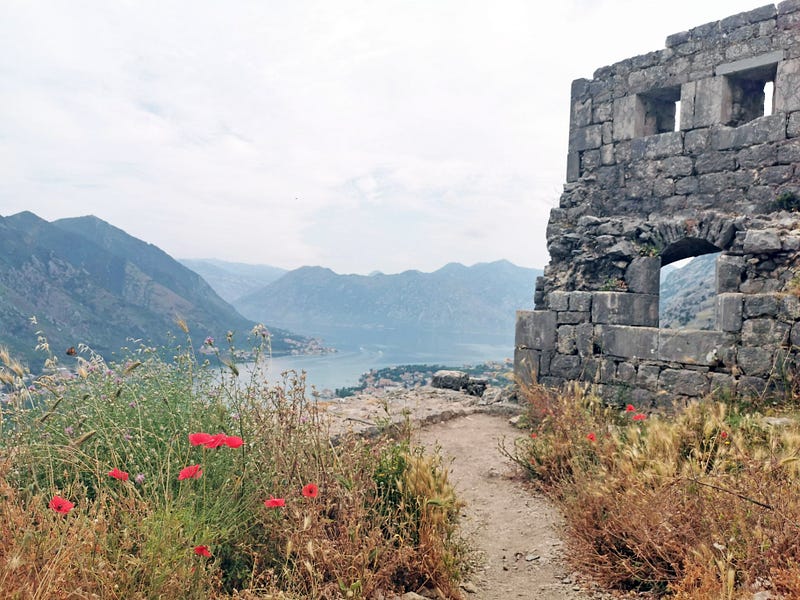
I travelled to Montenegro with zero prior knowledge about the place.
It was a simple case of convenient geography; Kotor was on the way between Greece and Croatia.
I Googled a few pictures, and it looked pretty enough, so bam — on the itinerary it went.
This wasn’t the first time an off-the-cuff destination decision ended up being one of my favourite experiences.
Kotor and its spectacular, hike-able, mountain-climbing walls were a visual, cultural, and historical delight.
A Medieval Fortress Town
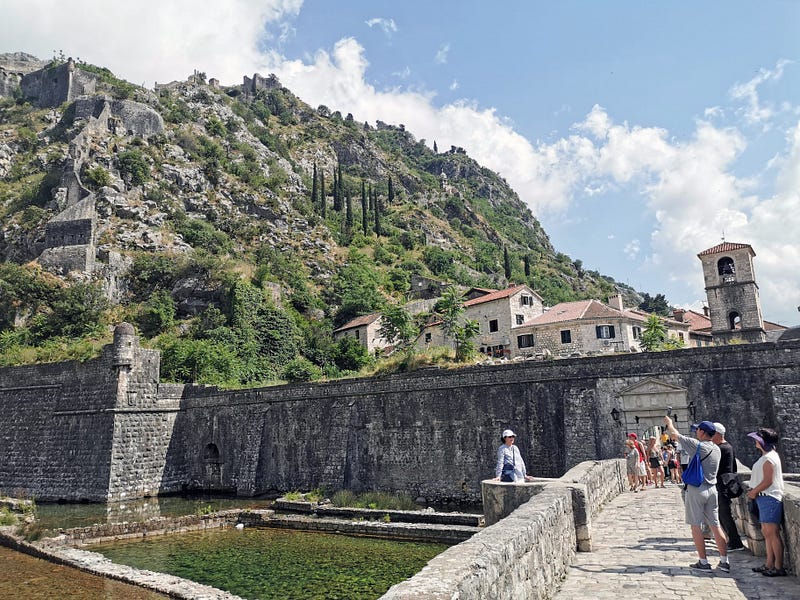
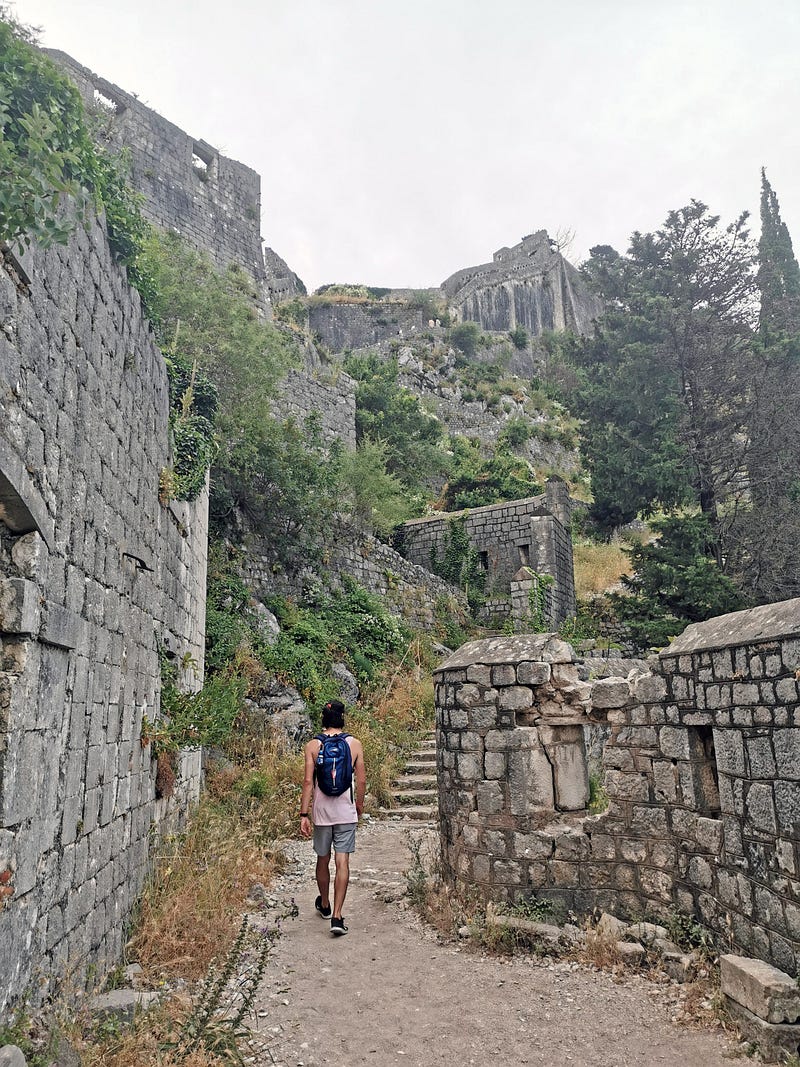
Kotor’s triangular old town is still somewhat protected by its encompassing walls, towers, bastions, ramparts, and gates.
It’s surprising how well many of the structures have lasted, considering how often the town has changed hands throughout history.
The top of the mountain — St. John — was fortified under Illyrian rule between III and II century BC.
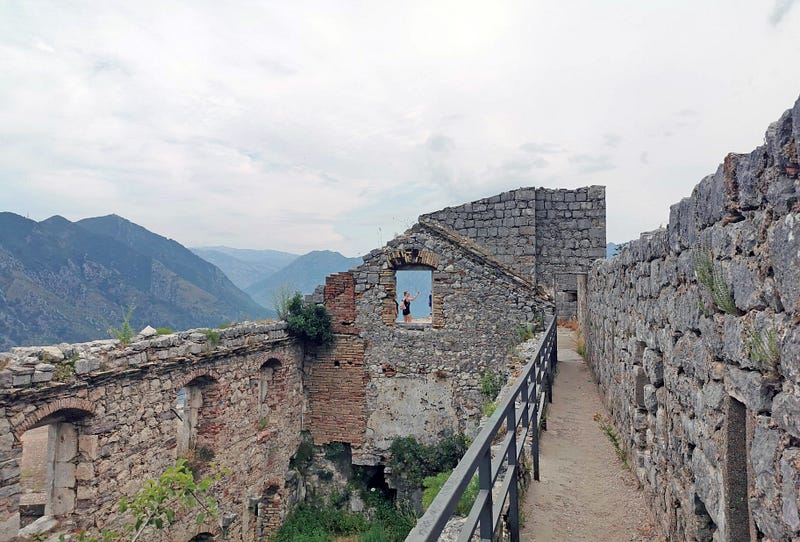
Walls began creeping up St Johns Hill from the town to the fortress during the 9th century, built by the Byzantines.
A full protective loop was formed by the 14th century, though add-ons continued right up until the 19th century.
The Romans, Venetians, Austrians, French, Hungarians, and Bosnians have all had a turn at ruling Kotor, which has also been known by several different names.
EARTHQUAKE DAMAGE
Multiple major earthquakes have damaged the fortifications throughout history, resulting in varying degrees of repair.
Earthquakes that are said to have caused damage happened in the years:
- 1537
- 1563
- 1667
- 1729
- 1979
After the most recent earthquake, which destroyed many cultural monuments and works of art, The World Heritage Committee of UNESCO added the entire region of Kotor to its World Heritage in Danger List.
A Challenging Hike
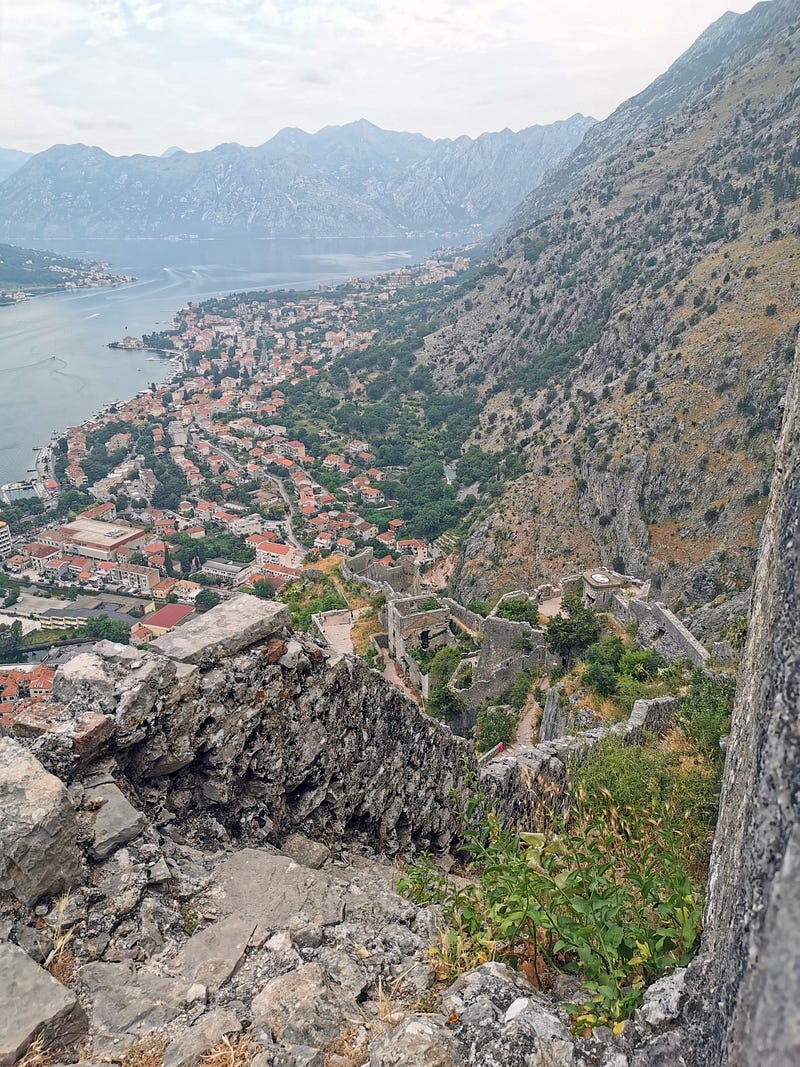
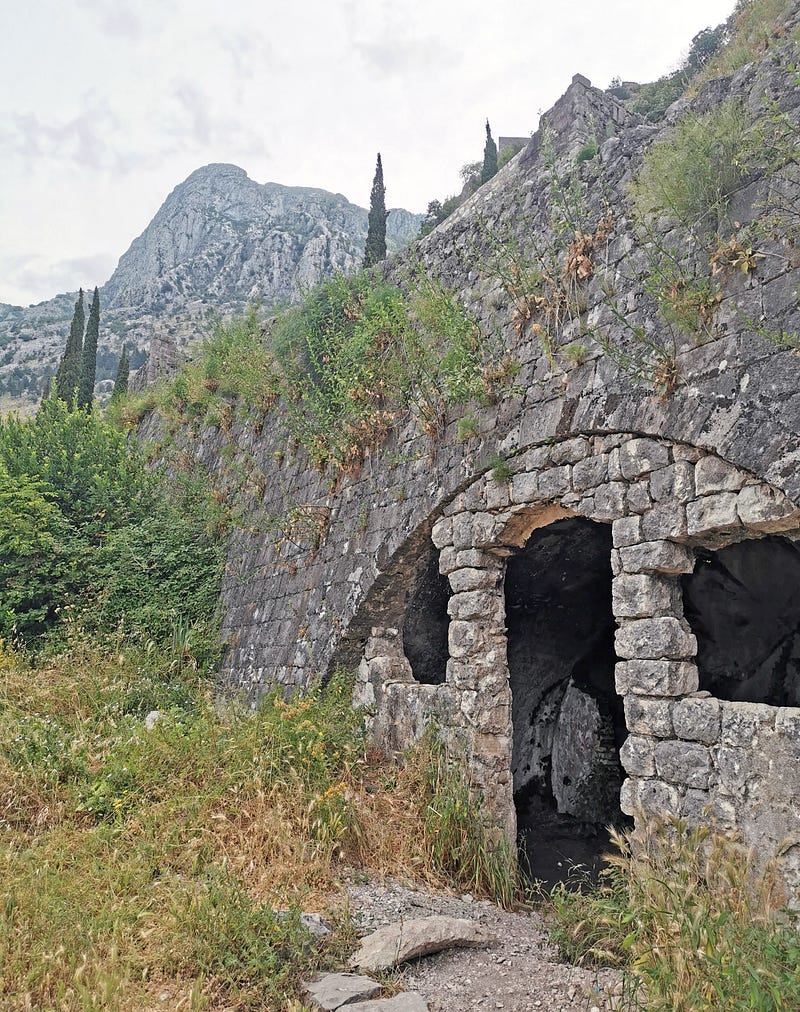
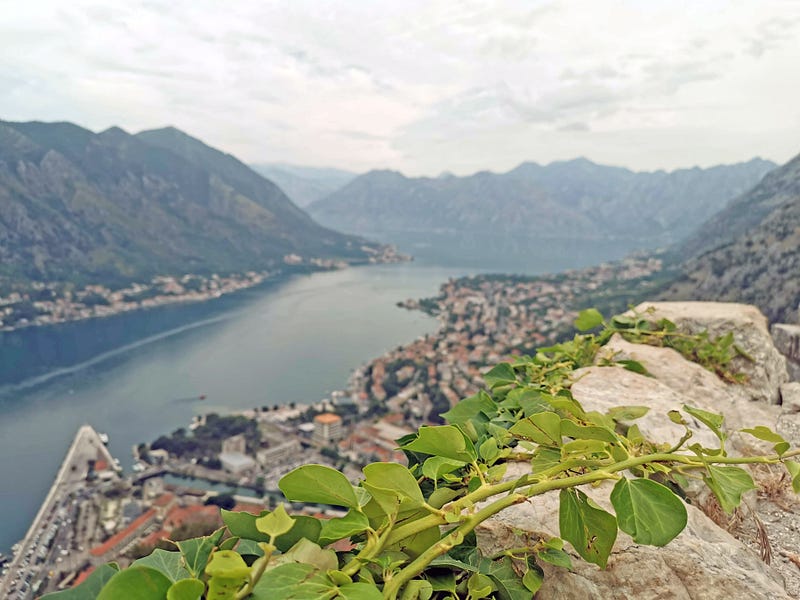
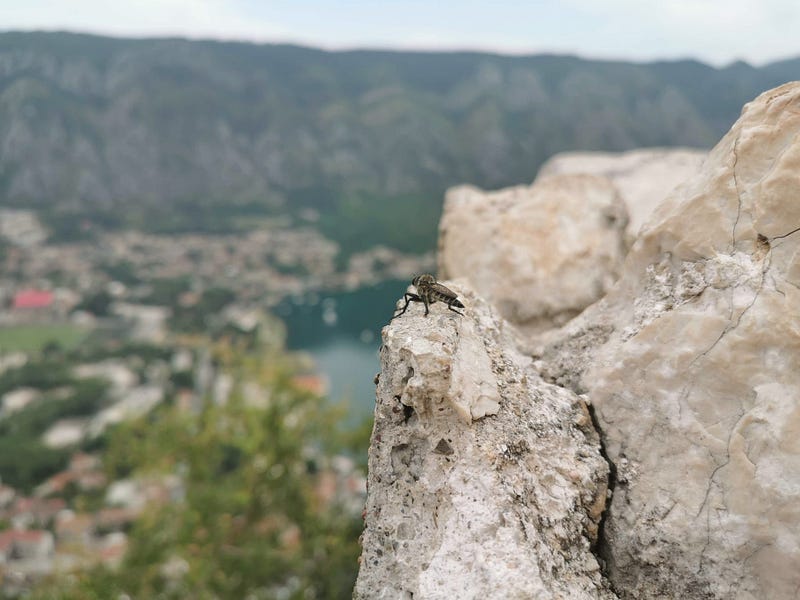
Climbing the walls is now a rite of passage for tourists and offers amazing views over the picturesque bayside town.
It was very hot when I made the 1200m climb up 1350 steps, and I quickly morphed into a sweaty mess by the time I reached the top at 260m above sea level.
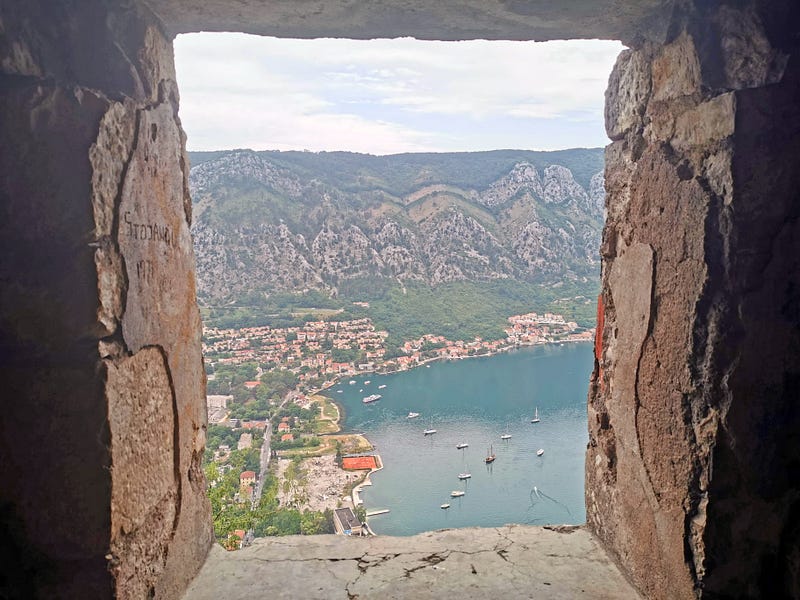
I was a happy, sweaty mess, though, thanks to the breezy views.
(As a relevant side note, the name “Kotor” apparently stems from the old Greek word katareo — which means “hot.”)
NIGHT LIGHTS
Lights have been strung up along the walls to create a dazzling halo above the town at night.
It was hard to decide which time of day was prettier.
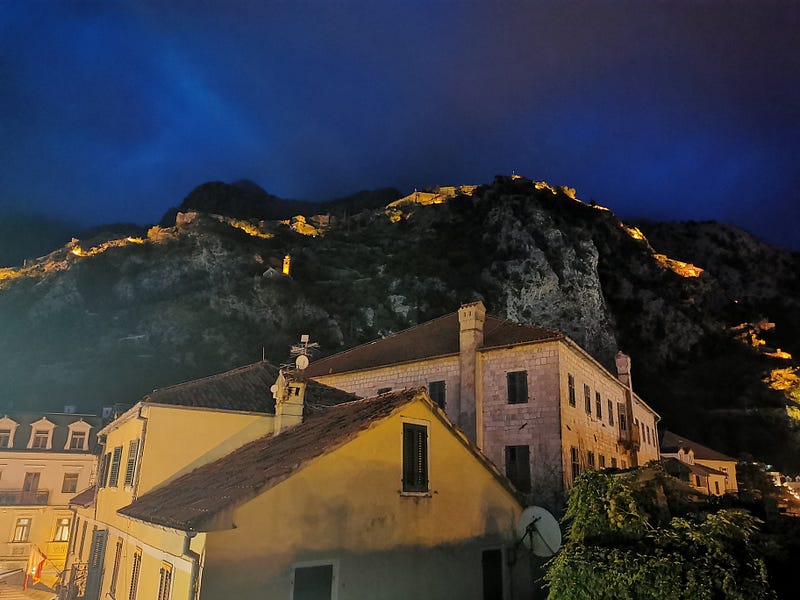
The gates are only open to take admission fees from 8 am to 8 pm May to September, but I’ve heard people go outside of these times, anyway. At their own risk, I assume.
From the other side of the bay, the wall lights reflect across the still water, often creating a full circle or the shape of a heart on its side.
(I didn’t get a decent picture of this, but Google “Kotor walls night” images to see what I mean!)
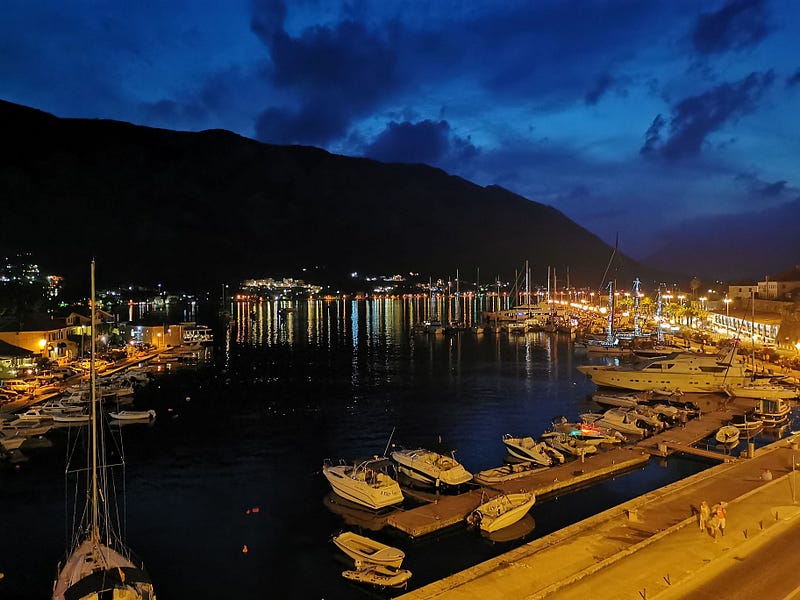
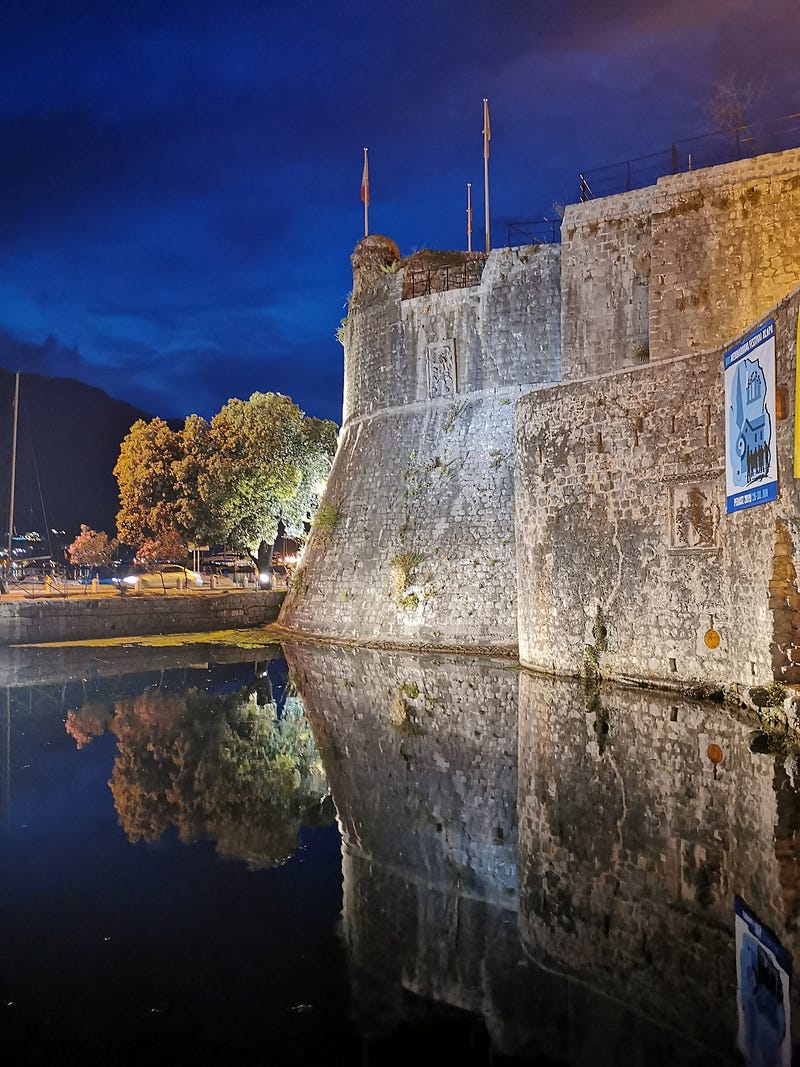
How these structures have stood the test of time only adds to their intrigue and grandeur.
Montenegro remains one of my favourite countries to visit in Europe; I would highly recommend anyone to go— whether it’s a convenient stopover or not.
This piece was prompted by the Globetrotters Monthly Challenge: Ruins of the World.
I 100% agree with Anne Harrison’s article, likening Kotor and its surrounds to a fairy tale:
And the nearby town of Perast is absolutely worth a look if you’re in the region. Draghici Sava has written a great guide:


