
Sailing Into Kotor
And into a fairytale
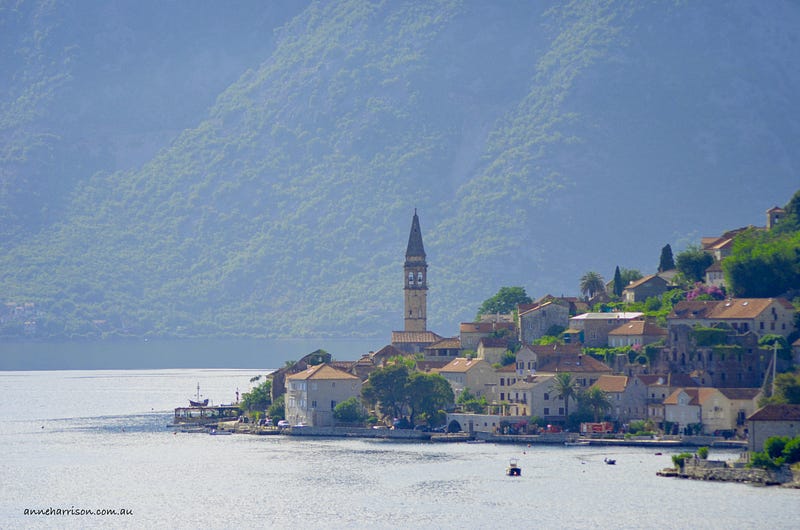
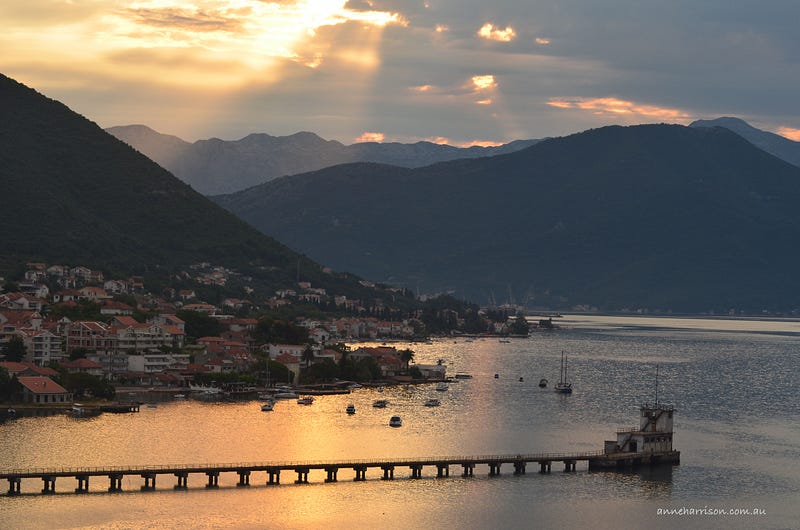
The church bells were calling across the Gulf of Kotor. I’d entered a fairytale. The soft light of dawn danced across a water coloured the blue of minerals. No wind ruffled the surface, as if the bay lay magically protected. When a soft rain fell the place became even more beautiful.
Limestone mountains rose sheer from the water. The strip of land lying at their feet was peppered with quaint villages and the spires of churches. I wondered no horse and carriage trotting along under the morning light.
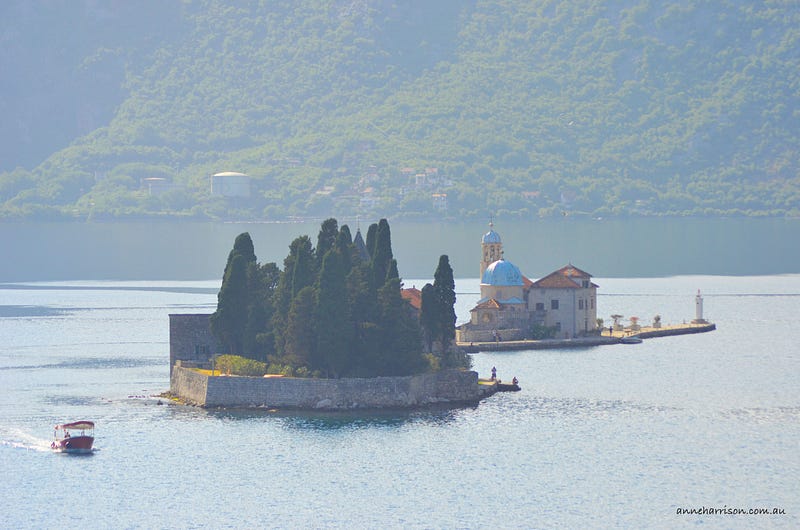
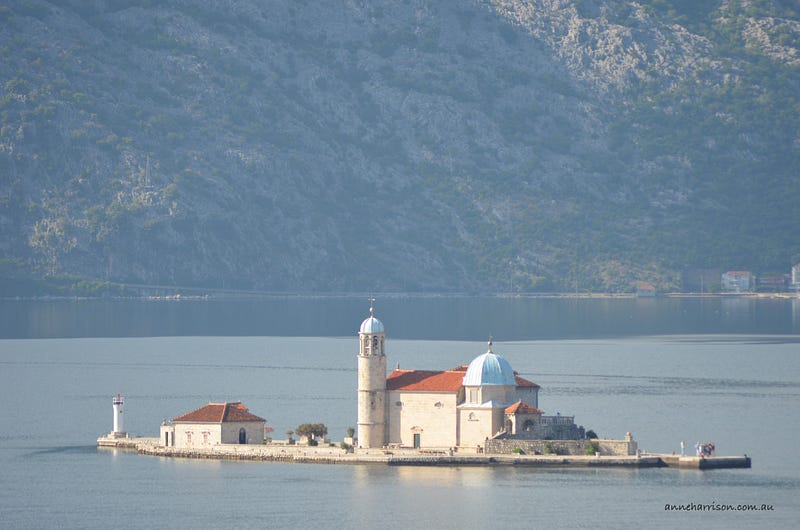
On an islet opposite the small town of Perast stands Our Lady of the Rock. Legends holds how, on swimming to the rock after being shipwrecked, some fishermen found an icon of the Madonna. In thanks for their survival they vowed to build a church here, dedicated to Our Lady, the protector of all who sail the seas. On returning from a voyage fishermen and sailors would place a rock here in thanks for their safe return. Slowly the islet rose from the waters, and the present church Gospa od Skrpjela (Our Lady of the Rock) was built in 1632. Every year during the Festival of Fašinada, locals sail out at sunset to place more stones.
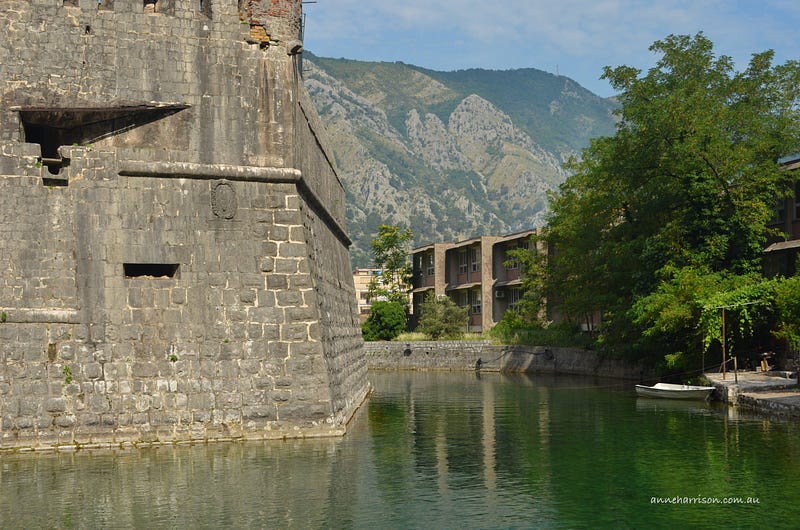
I entered the Old Town via the Sea Gate. Built in 1555, it’s a stout gate in a stout wall which stretches, via towers and bastions, to the Castel of St. John Fortress high in the hills above the town. (Just looking at the Castel gave me chest pain. Any invading army would be exhausted before making it halfway.) For the brave, these walls offer amazing views. By comparison, the walls of Dubrovnik are a gentle stroll. Montenegro means Black Mountain, and Kotor sits where one of these giants rises from the sea, with her walls clambering over the mountain’s feet.
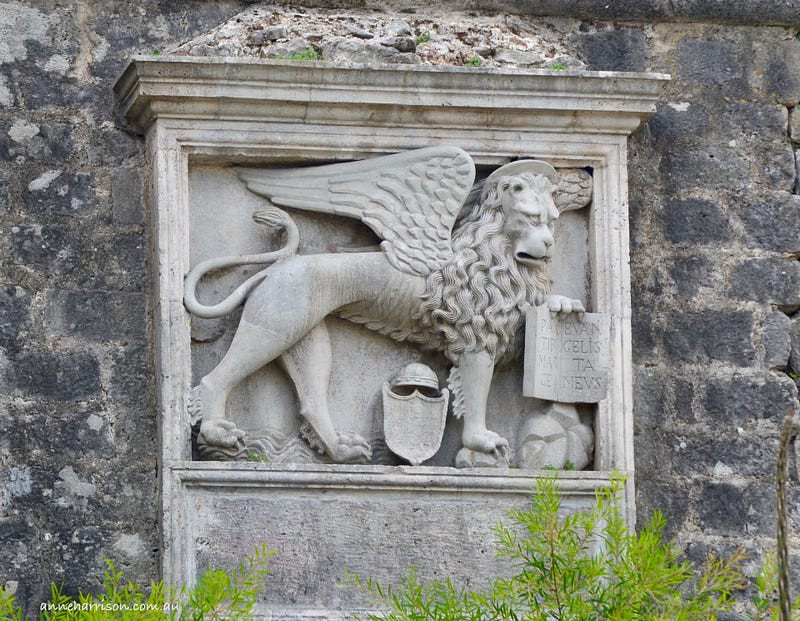
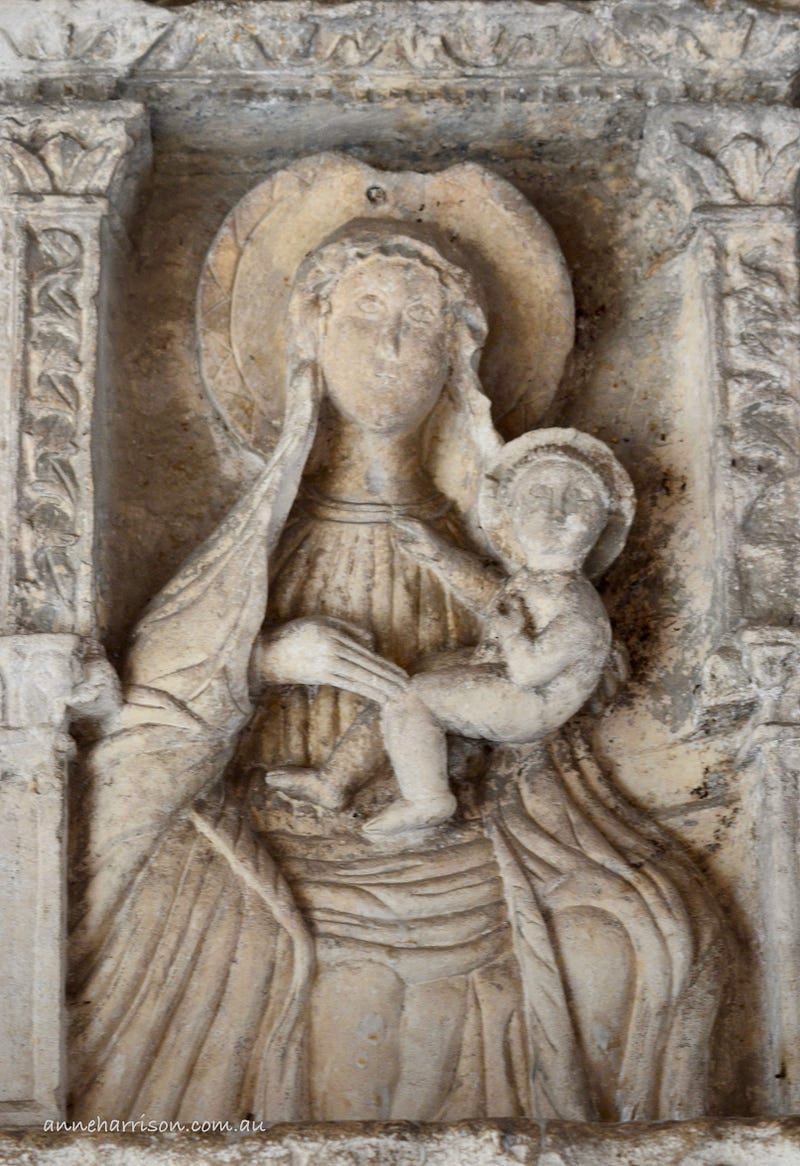
By the Sea Gate stands a winged Lion of Venice, his paw resting on an open book (and so reflecting a time of peace — should the book be closed, Venice was at war when the carving was made). In the vaulted passage, half-hidden by the gloom is a gothic relief of the Virgin and Child. On either side of her, St Tryphon holds the town while St Bernard looks on.
Once inside the Old Town, winding streets become cobbled squares, many with a name reflecting the trade once done here (such as Milk Square and Salad Square). The Sea Gate opens onto Trg od Oruzja (Arms Square), dominated by the former Rector’s Palace and Town Hall, but it is the clock tower that is the most recognisable landmark of Kotor. It stands slightly askew from the many earthquakes which have struck the town.
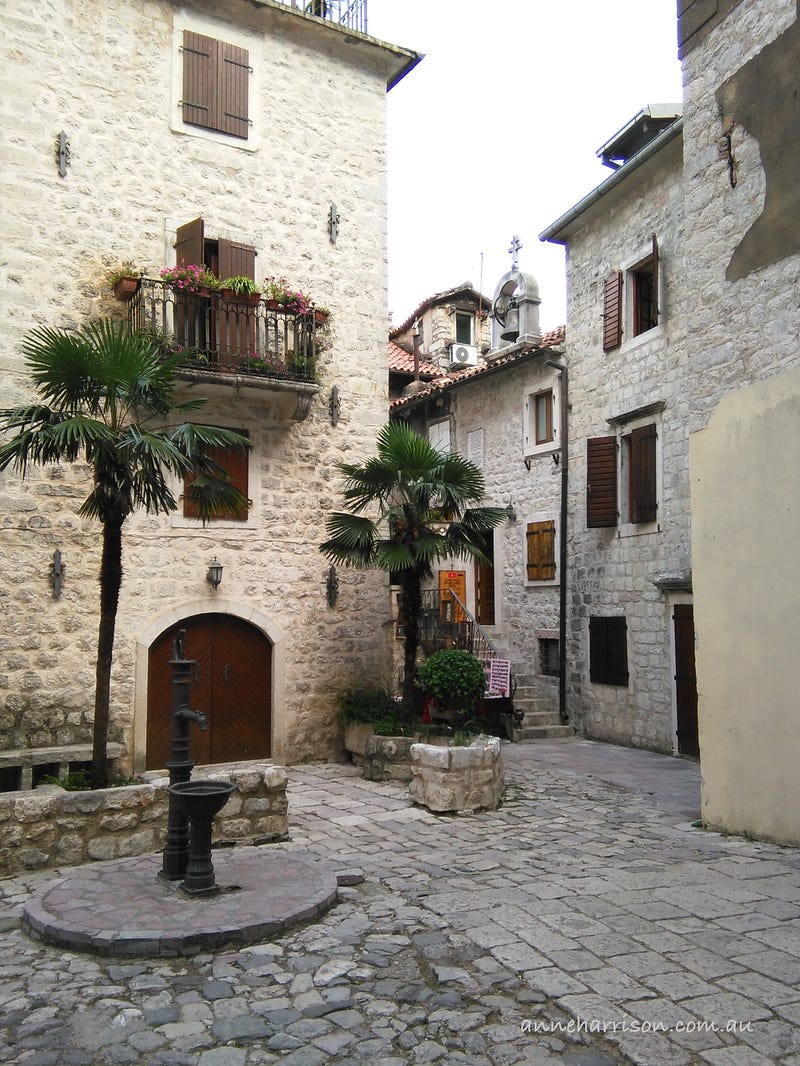
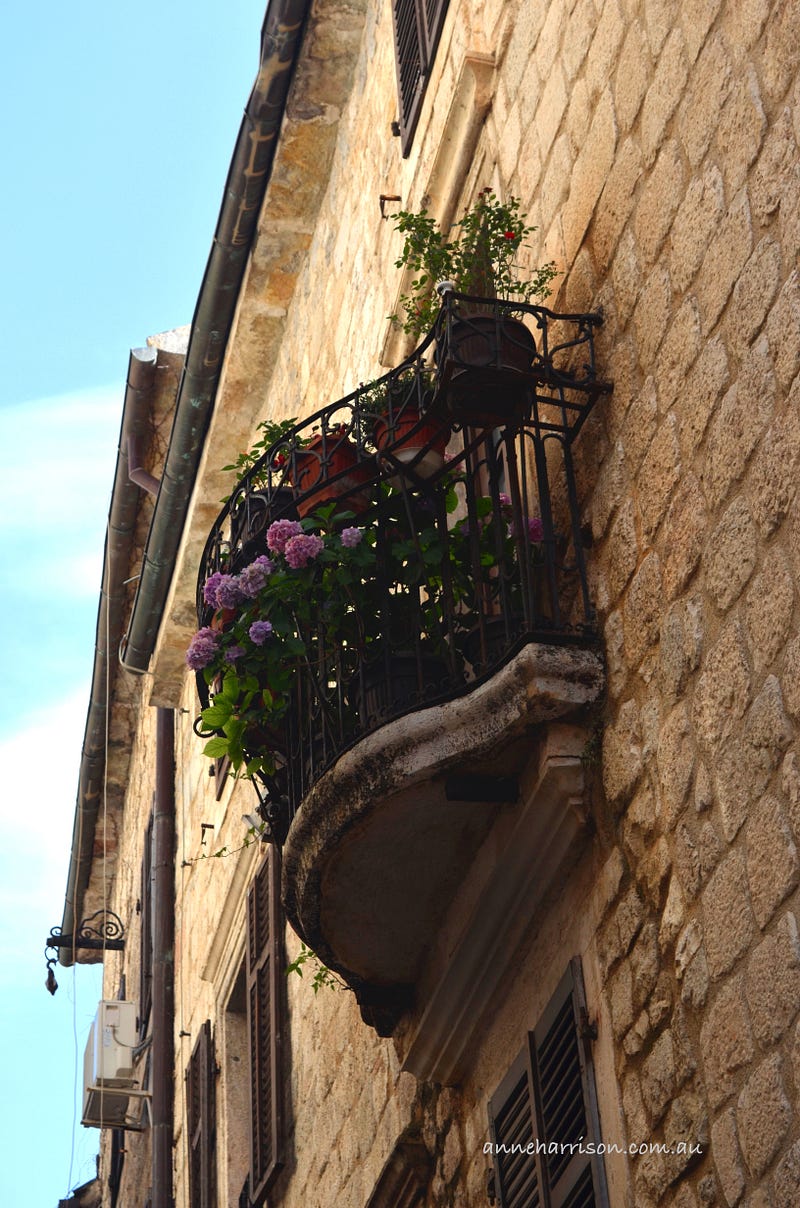
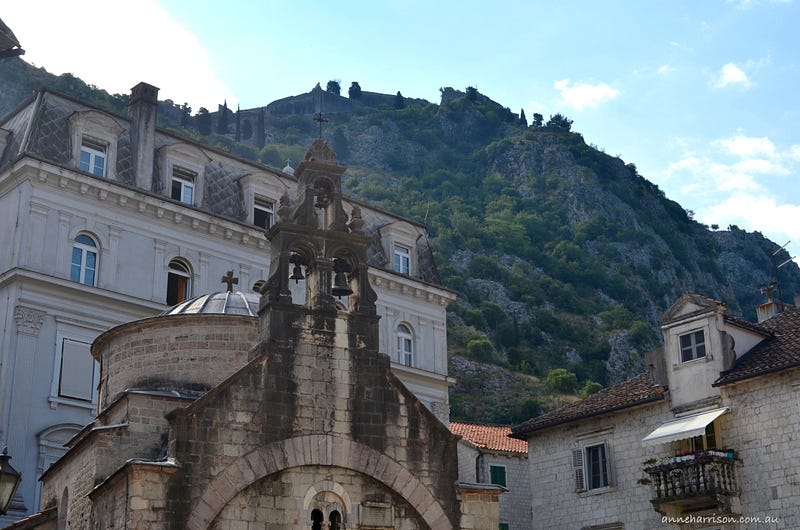
A narrow alley led from Arms Square to Trg od Brasna (Flour Square), now lined with 18th C mansions. From here, another cobble-lined passageway wound to Trg Sv Tripuna, home to St. Tryphon’s Cathedral, which dates from 1166. St. Tryphon became Kotor’s patron saint in 890 when a passing merchant ship sold the head of the hapless saint (who’d died 500 years earlier) to the town fathers. As one does to fund travels around Europe.
The cathedral is a beautiful example of Romanesque-Gothic architecture and art. On one side a flight of stairs leads up to the Treasury, where the relics of St. Tryphon rest in a silver chest. There is also a magnificent collection of votives, sculptures and ecclesiastical paintings.
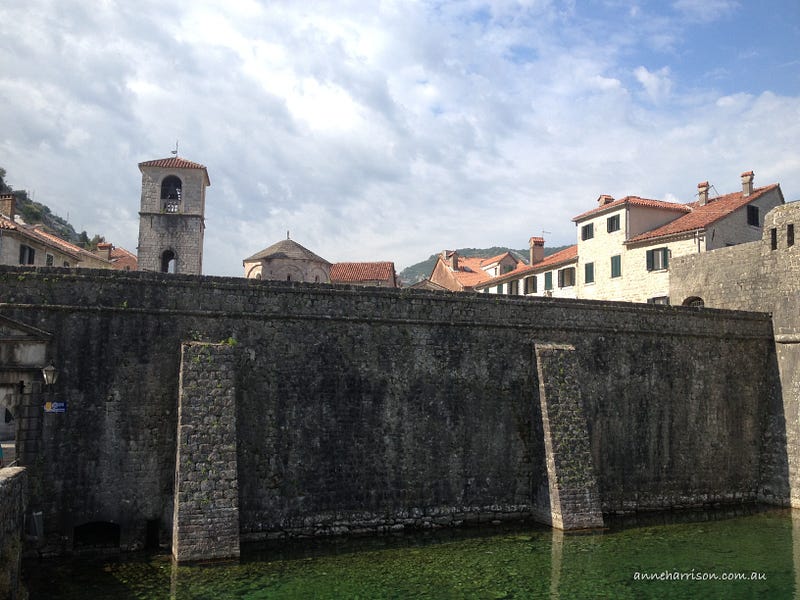
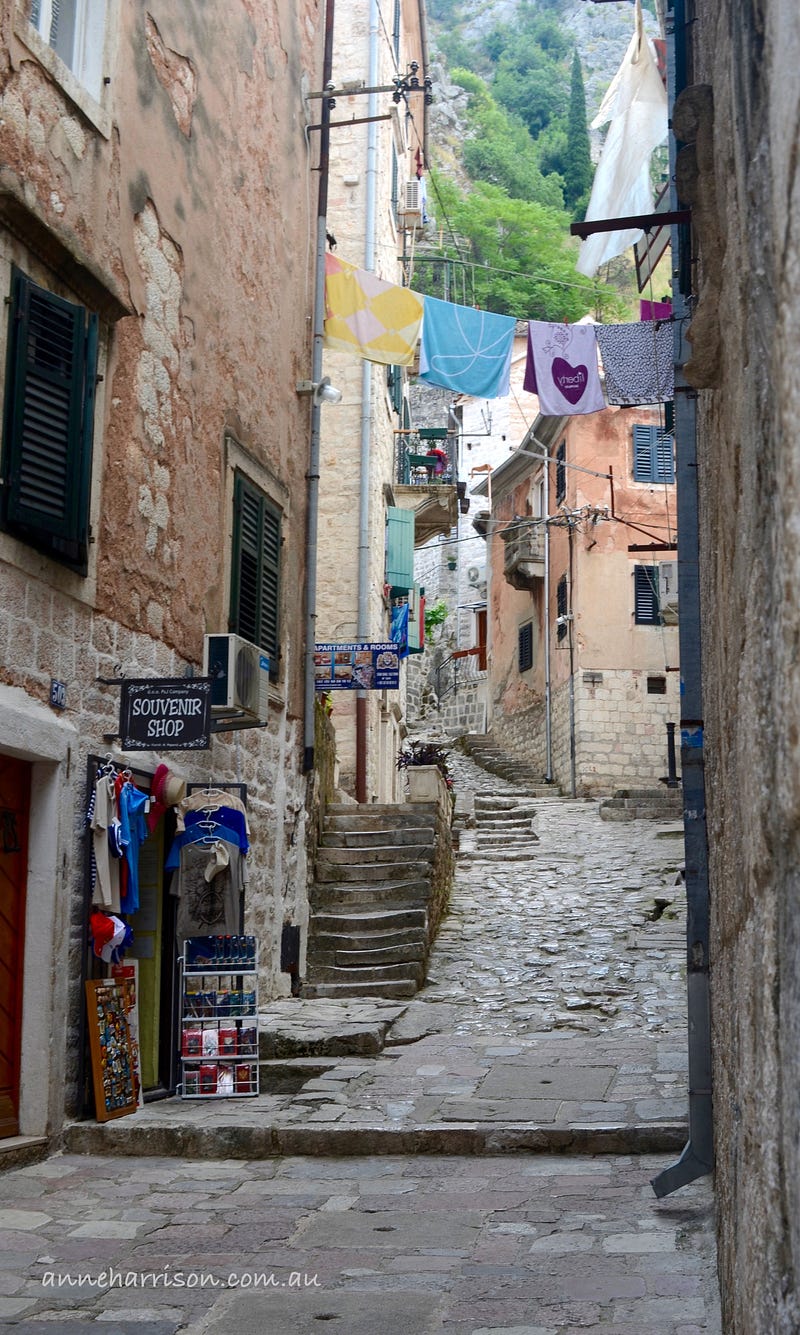
After St. Typhon’s Cathedral, I gave up with the map. The Montenegrin language has a distinct lack of vowels, there were few road names, mysterious alleyways kept appearing, and most of the time I’d no idea where I was. (A not unusual occurrence, as any reader of my blog will soon learn!) Yet, like Venice, the old town of Kotor is car-free and perfect for ambling along. So I simply wandered. Eventually, I ended up at one of the gates in the wall, re-established my bearings, and begin again.
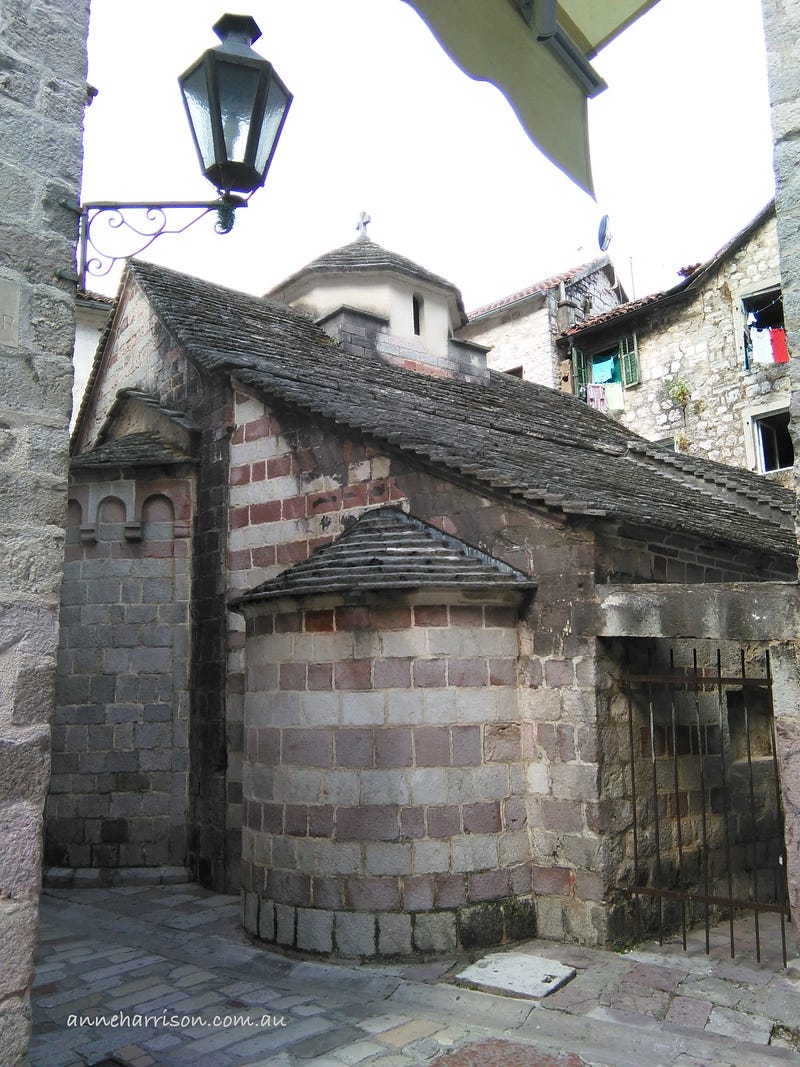
An Orthodox or Christian church stands on nearly every corner. I came across one entirely enclosed by the surrounding buildings, looking old enough to date back to the Crusades. With its walls of striped faded pink and white limestone, it just beckoned to be visited, but the bronze door was firmly closed. I found out later this was the Church of Crkva Sv Marisa (Church of St Maria), built in 1221 in memory of the Blessed Ozana, a local nun who galvanised the people of Kotor into repelling an invasion by Barbarossa.
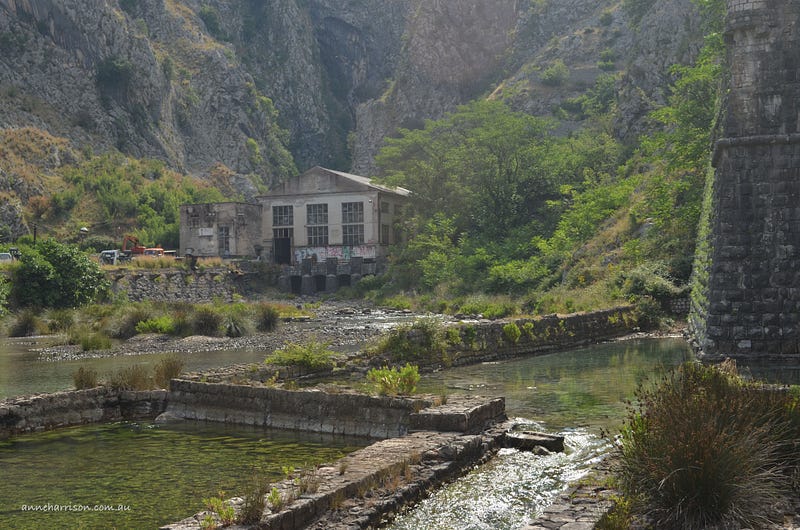
The church adjoins Trg od Drva (Wood Square) which leads to the North or River Gate (dating back to 1540). Just outside a bridge crosses the river to the ruined Monastery of St. Nicolas. The sound of running water filled the air.
Back within the town, in the Trg Sv Luke, the Church of St. Luke and the Orthodox Church of St. Nicholas stand almost opposite one another. Outside St. Nicholas, an elderly Orthodox priest in full regalia warmly greeted all who entered. Unusually for Kotor, this church was built in the early 20th C. Its interior is dominated by four oversized paintings of the Evangelists, done by the Russian School of Art. The works are monumental, with the figures larger than life, solid in stature, and painted in vivid colours. They come straight from the propaganda machine of the 1950s, needing only a hammer and sickle to complete the imagery or the strong arms of a woman ploughing the fields.
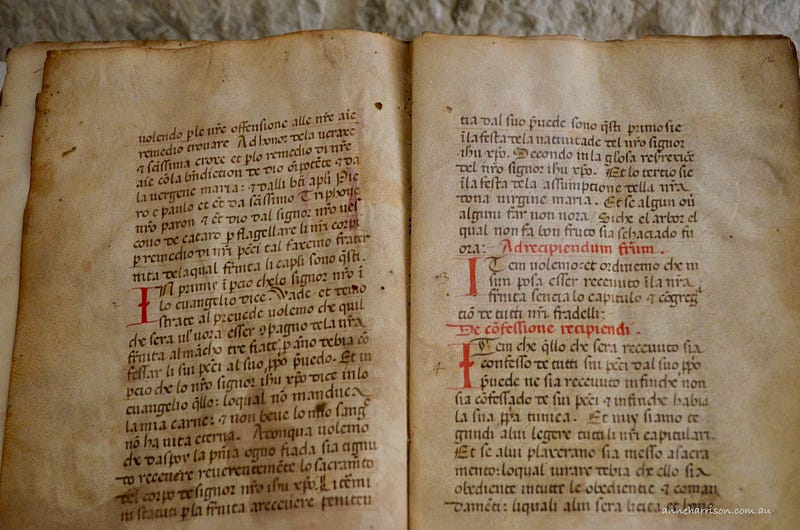
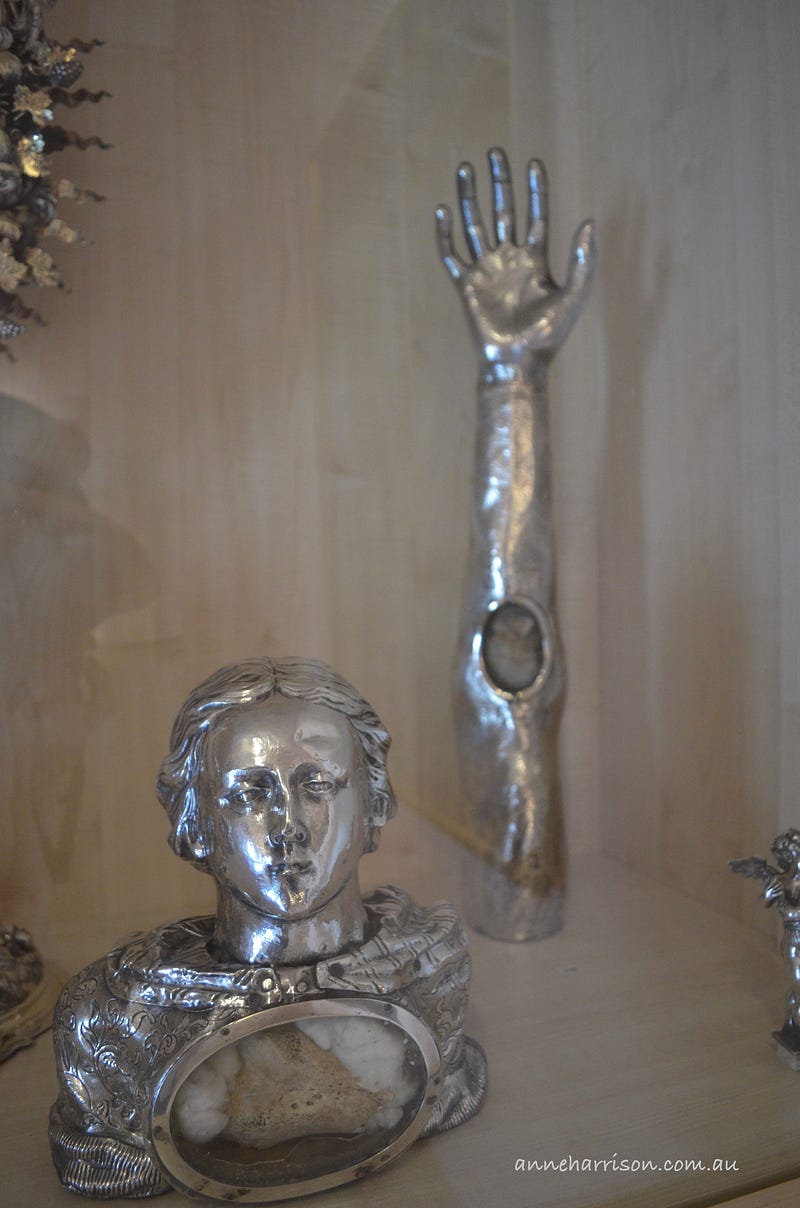
By comparison, St Luke’s required an entrance fee. The interior is quite bare, adorned only with some remnants of medieval frescoes. Upstairs, more frescoes give hints of a bygone world, along with relics encased in crystal, silver and gold, the bones exposed for veneration.
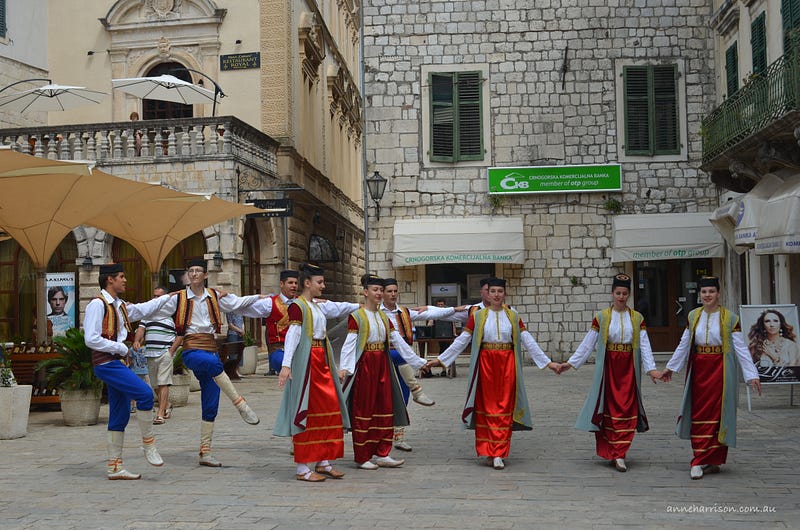
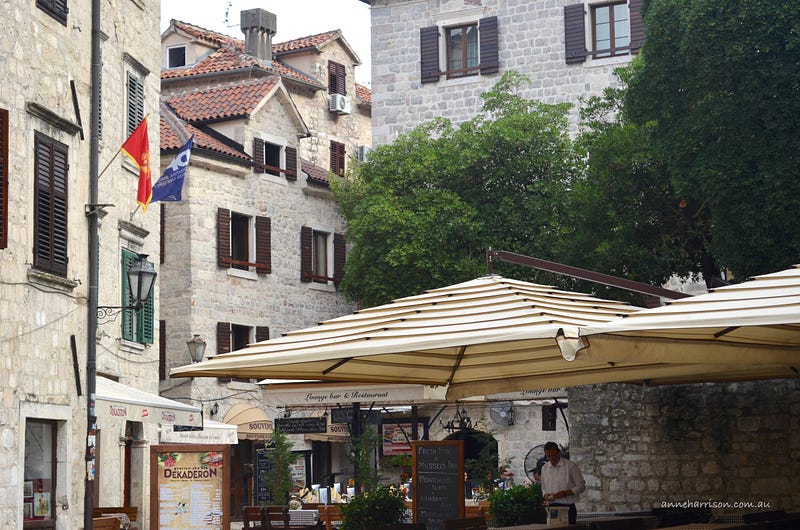
In a forgotten alleyway my husband had his hair cut by a lady who spoke no English, and emerged shorn of his wild locks and with his beard trimmed. Afterward we sat at one of the many cafes with a coffee and a platter of local white cheese, salami and olives. From nearby came the sound of dancers performing for the tourists who were now flooding the town. Yet where I sat, in a quiet square shaded with grapevines, was still the world of my fairy-tale.
If you enjoy my writing, please visit my blog Wise Men Fish Here , where (if you feel like contributing to my coffers) you can also buy my photos and my latest novel, The Gods Themselves. Thank you!


