
Do Not Try to Time the Market
Why Time in the Market Beats Timing the Market

I saw the most incredible table the other day. As a business guy, a clean table or chart can really resonate with me.
This table displayed the perils of market timing. Unfortunately, it was in a magazine and I couldn’t find it online. So I tried to recreate it in Excel.
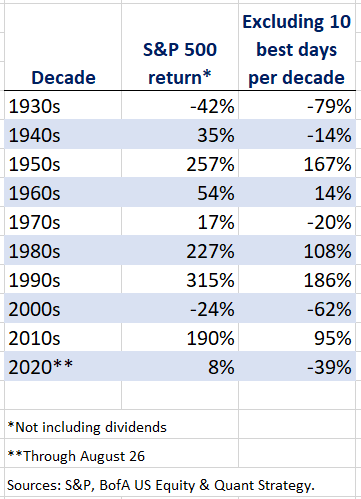
Words really can’t describe the difference between the two returns…but I’m going to try to anyways.
The middle column is the return for the S&P 500 for that decade. The right column is the return for the S&P 500, but it removed the ten days it was up the most.
As you can see, there is a huge swing between the two columns.
To put this into perspective, the market is open about 253 days a year. So in one decade, it's open about 2,530 days. By removing just 10 days, the return for those decades was worse anywhere between 37–129%.
10 days is not even 1% of the days the market is open in a decade. It's not even 0.5%.
Yet the 10 best days had such an impact on the returns for a decade. The consequences of mistiming the market are gruesome.
Value of time in the market
Investing isn’t always easy. Sometimes you have to stomach bad losses. Back in March 2020, many of us watched as our portfolios were down 30%, wondering how much more pain there could be. Could it go any lower?
But then just a few months later, the market was back to previous highs. And several months after that, we're setting new highs once a week.
This brings me to one of my favorite quotes about the stock market,
Time in the market beats timing the market
Most of the time, the best days for the market follow the worst days. The table above shows the danger of missing the best days.
If you think you’ll be able to sell when the market starts going down and perfectly time when to put money back in, it's usually not that easy. Or if you get worried when you see the market down substantially and out of fear, sell, you may also miss the best days. By staying in the market over time, you’ll be able to get the returns on the best days. And your portfolio will be reflective of that.
Why time in is better than timing
No one has a crystal ball. Even the most advanced technical indicators give off false signs at times. Timing the market so you buy at its lowest and sell at its highest is extremely difficult.
An easier approach is to trust that over time, the market will provide solid returns. Warren Buffett didn’t become a billionaire overnight. It took years of steady growth in the market for him to amass his fortune; not constantly buying in and out.
Whether you’re preferred approach is to dollar cost average or dump all your money in at once, use time to your benefit. The chances of timing the market perfectly are a lot lower than the chances the market will increase over time.
Do your future self a favor. Invest in solid companies today, wait a few years or decades, and then reap the rewards.
I hope you found that table to be as eye-opening as I did. Whatever your investment goals are, stick with them, and over time you’ll see the results. If you enjoyed this article, check out some of my other articles about investing.


