
Develop Your Managerial Superpower: Self-Awareness
A Practical Guide to Better Communication, Decision-Making, and Job Satisfaction

Having a good level of self-awareness can benefit you both personally, and in your career, in many ways such as: better communication, better decision-making skills, better leadership skills, higher levels of happiness, more confidence and better job satisfaction.
Sounds great in principle, but how can you actually develop this feeling/ understanding?
Reflection is one of the best tools to start to become more self-aware.
In your personal life, you may want to reflect on a wide variety of different aspects, but in the workplace you can really simplify this down and just focus on generating a good understanding of your strengths and weaknesses.
Having a clear and objective view of your strengths and weaknesses can help you become a more self-aware (and therefore successful) manager.
And this reflection doesn’t just have to be personal reflection, but can also be done incorporating feedback you get from your team, peers and managers. Let’s dive into some practical ways you can develop more self-awareness.
Personal reflection with CliftonStrengths
One of the most famous management books in recent times touched on this, with “Soar with your strengths”. It was written by American psychologist and researcher Don Clifton, who passed away 20 years ago.
The book centered around Clifton’s initial guiding question:
“What would happen if we studied what was right with people versus what’s wrong with people?”
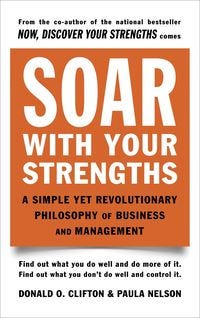
He believed that self-awareness was the first step in development. You cannot develop what you don’t know you have.
So, you need to reflect on your skills and competencies and honestly consider what tasks give you energy versus drain your energy.
For those of you who already know that personal reflection is not one of your strengths 😉 then I can recommend the Clifton Strengths for Managers Assessment.
I’ve used this tool with myself and other managers in my team as it gives a good starting point to begin your thinking and the discussion. It takes about 30–45 minutes and you see 177 paired statements and have to choose which you believe best describes yourself.
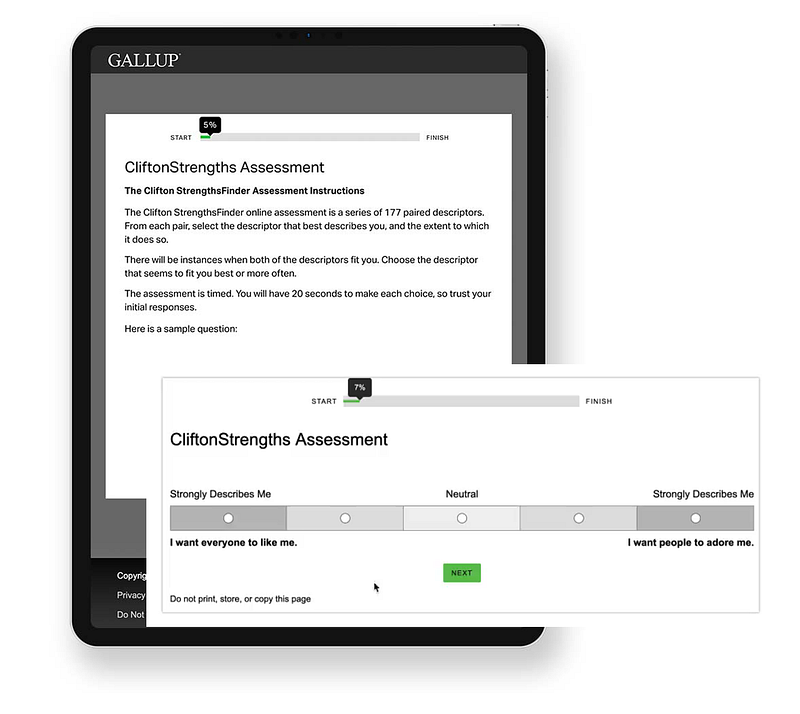
Of course, it’s not going to be 100% accurate in the resulting report, as it’s your own personal assessment of yourself, done relatively quickly.
Nevertheless, I find the areas it identifies at the very least interesting for discussion. Plus, it provides some reflection questions for each identified strength, to help continue your personal reflection.
I’ve used it myself and with my teams to facilitate both the personal reflection and the discussion. As we shared afterwards what were the 3 top strengths the report identified, and whether we believed that was accurate — why or why not.
The classic 360º review
A well-known tool to gather feedback is the 360º review — where you gather anonymous feedback from juniors (if applicable), peers, managers and other stakeholders and compare that to your own self-evaluation.
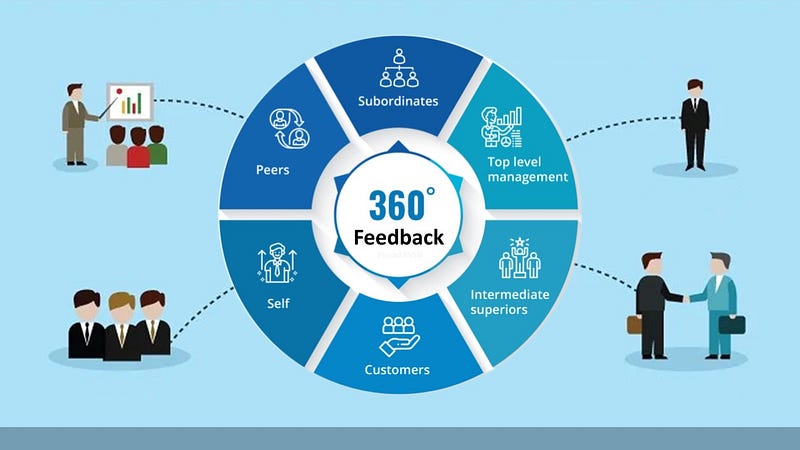
It’s a great tool for finding out how you are perceived not just on the whole, but by specific groups of stakeholders.
You start by doing an anonymous survey of how you are perceived, which you also complete yourself, and then you can see how similar your self-view is to the view of your other stakeholders. You might be able to notice a blind spot that you weren’t even aware of.
The most important thing to remember is that your key learnings from a 360º review are going to come from the written comments and post-survey discussions that take place — not just from analyzing the survey results themselves!
In my experience, people are often more open in anonymous surveys — but they may not want to provide specific examples in the comments, for fear the individual being reviewed can discover who gave what answer.
However, by practicing vulnerability and openly sharing your results in 1:1s with certain stakeholders after it’s completion, you can ask for examples without putting feedback givers on the spot. You can also ask for clarification if their answers were very different from your own self-evaluation.
For example, real questions I asked in my last post-360º 1:1s:
“I noticed that on average my peers rated me as not as strategic in my approach — what factors do you think could be behind this?”
“The juniors consistently rated me as having inspiring leadership, when I myself wouldn’t associate myself with such a strong word — what does inspiring mean to you?”
“I noticed my junior group rated me highly for promoting a good work-life balance, but not as highly as I rated myself. As it’s a point that really matters to me, I’d like to work on this in future. Do you have any ideas or examples where I could have promoted this better this year?”
In any case, whether personal reflection alone, using a tool like the CliftonStrengths Assessment or a 360º review — the most important thing is to discuss with others.
As your objective with self-reflection is to see yourself more clearly and objectively, remember that you cannot do that effectively without getting other peoples’ perspectives.
But, don’t take what they say at complete face value — they don’t have your same level of understanding, bias and/or context of the situation. By doing your own reflection and getting input from others, you’ll be able to form a more accurate picture when putting all the pieces together.
Don’t forget: when done thoughtfully, collaboratively and by practicing vulnerability, self-awareness can be your superpower as a manager.
Takeaways I hope you take from this article:
- A good level of self-awareness can improve your communication, decision-making skills, leadership skills, bring you higher levels of happiness, confidence and better job satisfaction.
- In the workplace, you can simplify self-awareness into having a good understanding of your strengths and weaknesses.
- Personal reflection is the first step, then collect input and discuss with others to uncover potential blind spots, and finally reflect again on your learnings and future actions you will take.
Thanks for reading! If you enjoyed this article, please feel free to give me some 👏👏👏 or follow me on Medium for more.


