
Dear Ernest Hemingway. Write Sober And Edit Drunk?
Maybe I should try it both ways.
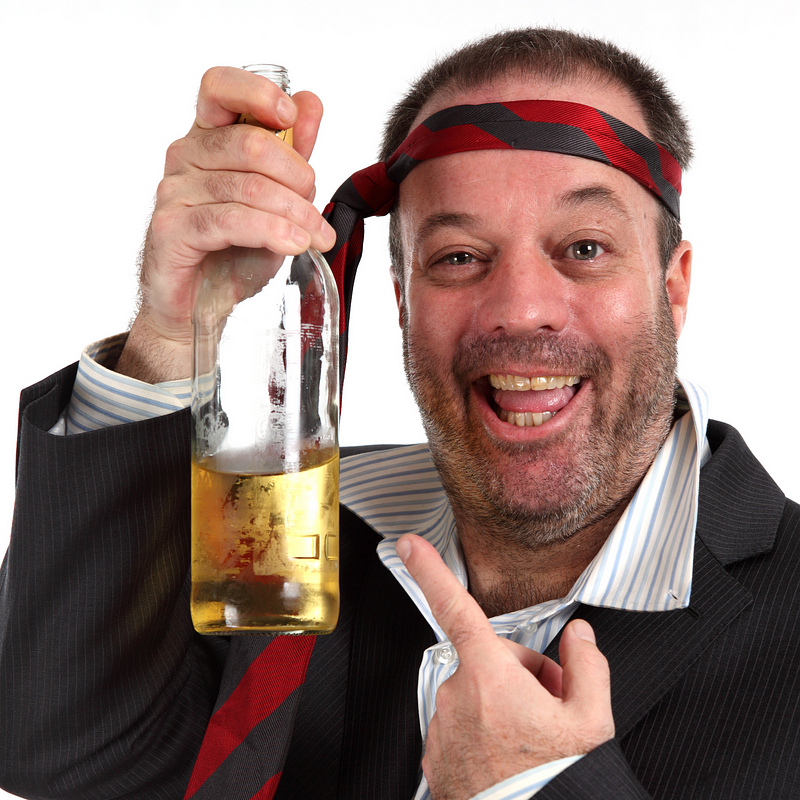
Dear Mr. Ernest Hemingway,
I’m a big fan, truly.
As a fan of distinct writing voices, great literature, and fabulous quotes, there’s so much to love. Plus, if the rumors are true, you proved a professional writer’s life could be filled with vices.
Truly, you lived the dream. Writers today, like myself, could learn so much from you.
Except, I’m worried that we’ve got it all wrong. What if you didn’t write my favorite lines of yours? No, I’m not suggesting you plagiarized For Whom The Bell Tolls, or Old Man And The Sea.
I’m talking about the 6-word story and, more importantly, the 4-word writing advice.
If these two items weren’t from you, then I may have to try it the other way.
What’s the opposite of Write Drunk — Edit Sober?
[I think this is a good way to put in editing comments. I’ll just have to remember to remove them before publishing. — Editing Drunk. Or E.D. for short. No! I’ve not had that much to drink. Editing Scott. E.S.]
The Shortest Story and the Best Advice
I have two quotes of yours memorized. They are my favorite quotes. One is a 6-word story. The other is writing advice. And unfortunately, it has come to my attention that neither may have been written by you.
The 6-word story:
For sale. Baby shoes. Never worn.
Tragic, right? Sure, it drags a bit in the middle, but by the time you get to the end? WHAM! Right in the ticker.
[I wonder if people will get that this means it gets you in the heart. — E.S]
And yet, it probably wasn’t written by you.
[Oh! And I should make my own 6-word story. How about…
Wrote an article. Made millions. Suck it.
I know, I know. It’s not enough words. I’ll add more in later — E.S.]
Almost every writer, I believe, knows the 4-word advice quote.
Write drunk. Edit sober — Ernest Hemingway (maybe.)
The takeaway of this astoundingly simple advice is this:
- Write with freedom and abandon.
- Edit carefully and clearly.
It is straight-forward, both timely and true, and just possibly not really something you said.
What’s a writer to do in light of this!? Just in case you didn’t give this advice, we should try it both ways.
We’ve all written drunk. Even my teetotaler writing friends have. After all. It’s what Ernest Hemingway did. What is a writer supposed to do? Not drink?
[pfft. That’s like telling an alcoholic to not drink. — ]
Most of us have tried editing sober as well.
[Not this time! — E.D.]
There’s only one thing left to try.
Write Sober, Edit Drunk? This Is The Result.
As I write this, I’m 100%, stone-sober. I’m not so much as putting it through Grammarly or even rereading it. Not yet.
[And not now either. I nearly lost the entire article trying to cut and paste. I mean cut and paste. I mean cut — dangit! I mean copy and cut. Blast! Copy and paste!-E.S]
Tomorrow (it’s a workday) I’ll come back to it, make sure I’m in a state to make you proud and edit the life into it.
To keep me honest, I’ll send it off to the wonderful editing team at Open Letters To. Hi Deborah Weir and Courtney Burry! They’ll either schedule it for publication or start planning an intervention on my behalf.
[Hey you two! You’re the best! No, I mean it. The best. Your articles on this pub have more views and reads than any of mine. Also, you’re fired. — E.D. NO! I forgot. E.S.]
I’m a bit nervous. This is a bit like drunk texting, only on a grander scale, and most people don’t pre-plan that kind of text.
I know what I’ve said here today. Now I just have to wait and see how I’ll fix it tomorrow.
If the end result is better than doing the writing process attributed to you, I’ll know that write drunk, edit sober isn’t something you said at all.
I’ll bet that would mean you didn’t really sell any unworn baby shoes, either.
Thanks for nothing,
A possible fan.
[You’re better than Hemingway at least. I mean better than Hawthrone.]
Scott Hughey is ashamed to admit that he never read For Whom The Bell Tolls. Not unless his eighth-grade English teacher is reading this, in which case he promises that he loved it as much as his book report said.
[Scott Hughey is a know-it-all wanna-be narcissist. He knows the world doesn’t revolve around him and secretly this makes him angry. He isn’t a narcissist but he sees the appeal. Don’t tell him I said so. — E.D.]
[Dammit! I meant E.S — E.D.]
More open letters:


